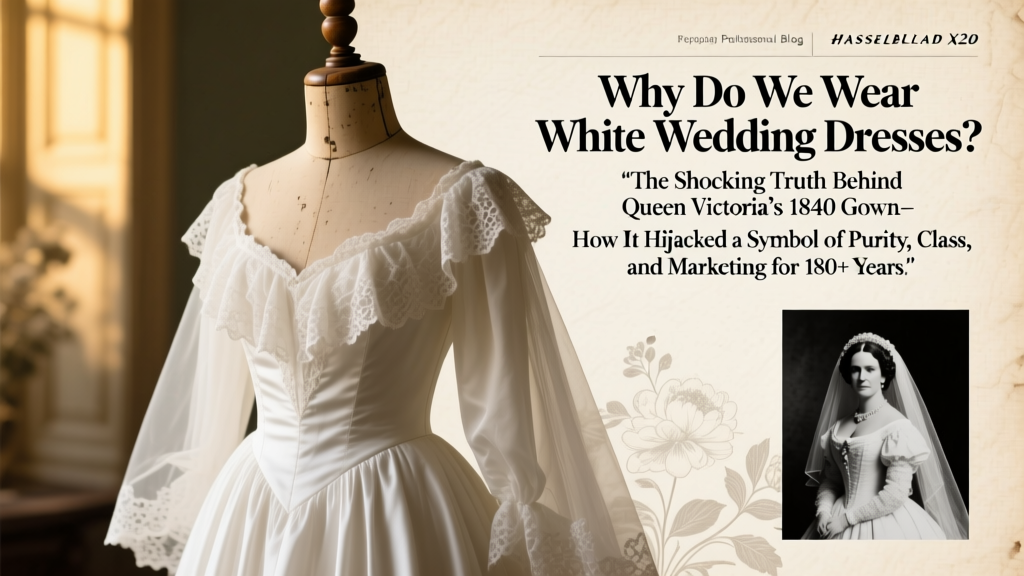
White Wedding Dresses: Truth, Myth & 2026 Trends
Why Do We Wear White Wedding Dresses? It’s Not What You Think
The question why do we wear white wedding dresses echoes across bridal salons, Pinterest boards, and family WhatsApp groups—but few know the answer isn’t rooted in ancient virtue or universal symbolism. It’s a story of royal PR, industrial chemistry, class performance, and surprisingly modern reinvention. In 2024, over 73% of U.S. brides still choose white or ivory—but 41% now deliberately reject it as outdated or culturally exclusionary (The Knot Real Weddings Study, 2023). That tension—between inherited ritual and intentional choice—is why understanding the origin isn’t just history: it’s empowerment. When you know how deeply this ‘tradition’ is tied to 19th-century wealth, gendered expectations, and even textile economics, you stop asking ‘Should I wear white?’ and start asking ‘What does *my* dress say—and who am I saying it *for*?’
The Victorian Pivot: When White Wasn’t Pure—It Was Pricey
Before Queen Victoria’s 1840 wedding, European brides wore whatever they owned—deep reds, forest greens, rich brocades, even black. White was rare not because it symbolized virginity, but because it was impractical and prohibitively expensive. Linen and silk stained easily; laundering required harsh lye and hours of labor; bleaching agents like sulfur dioxide were volatile and toxic. A white gown wasn’t chaste—it was a status flex. Victoria knew this. Her choice of a white satin gown trimmed with Honiton lace wasn’t a moral statement—it was strategic branding. She commissioned lace from Devon artisans to revive a dying craft (a nationalist economic move), wore a white dress to showcase British textile innovation, and insisted on being photographed in it—a radical act in an era when royal weddings weren’t widely documented.
Crucially, Victoria’s dress used unbleached silk—not pure white, but off-white with subtle warmth—because true blinding white didn’t exist at scale until synthetic dyes arrived in the 1860s. Her ‘white’ dress was actually cream, and she wore it again for formal portraits, contradicting the ‘one-time-only’ myth. Yet newspapers sensationalized it as ‘virginal,’ conflating her youth (she was 20) and political innocence (she’d just assumed constitutional monarchy) with sexual purity—an interpretation that stuck because it served patriarchal norms and boosted sales of cheap imitations.
The Industrial Engine: How Chemistry, Cotton, and Catalogs Cemented White
White wedding dresses didn’t go mainstream until three industrial forces converged between 1880–1920:
- Synthetic bleach (calcium hypochlorite, 1892): Made true white cotton affordable and repeatable.
- Mass-produced cotton (U.S. South + mechanized looms): Dropped fabric costs by 65% between 1870–1910, enabling disposable ‘once-wear’ gowns.
- Sears & Roebuck catalogs (1896 onward): Sold $15 ‘Bridal White’ gowns nationwide—ad copy explicitly linked whiteness to ‘refinement’ and ‘American womanhood.’
A 1912 Sears ad read: ‘The White Bridal Gown—Symbol of the New Woman’s Aspiration to Moral Clarity and Domestic Sovereignty.’ Note: ‘Moral clarity’ had zero biblical basis. It was marketing language invented to sell cotton. By 1920, 68% of U.S. brides wore white—not due to church doctrine, but because department stores offered rental programs, photography studios demanded contrast for glass-plate negatives, and Hollywood (starting with Mary Pickford in 1917) amplified the visual trope. White wasn’t sacred. It was optimized.
Global Alternatives: What ‘Wedding Color’ Means Outside the West
Assuming white = universal wedding symbolism erases centuries of rich, intentional color coding. Consider these culturally grounded traditions:
- India: Red symbolizes fertility, prosperity, and auspiciousness. Brides wear crimson lehengas—even today, 89% of Hindu weddings feature red as primary (India Today Wedding Survey, 2022).
- China: Bright red conveys luck and joy; white is associated with mourning. Modern Chinese brides often wear red for ceremonies and change into Western-style white for receptions—a hybrid negotiation.
- Nigeria: Indigo-dyed aso oke fabric in deep blue or purple signifies royalty and spiritual depth. Yoruba brides may wear white undergarments as a private nod to modesty—but outer garments are vibrantly patterned.
- Mexico: Traditional Tehuana brides wear embroidered white huipiles, but the white signifies regional identity—not purity. In Oaxaca, black velvet dresses with gold embroidery remain common for Zapotec ceremonies.
These aren’t ‘exceptions’—they’re evidence that color carries layered, local meaning. When a Nigerian-American bride wears a white gown with Adinkra-print sleeves, she’s not rejecting heritage; she’s curating a narrative where both lineages speak equally.
Modern Reclamation: From ‘Tradition’ to Intentional Expression
Today’s most compelling white-dress choices aren’t about obedience—they’re about subversion or synthesis. Take designer Hayley Paige’s 2023 ‘Reverie’ collection: gowns with detachable ivory overskirts revealing bold fuchsia underskirts—literal layers of meaning. Or Brooklyn-based stylist Maya Chen, who consults with 200+ couples annually: ‘I ask, “What emotion do you want your guests to feel when they first see you?” If the answer is “awe,” white works. If it’s “joy,” maybe sunshine yellow. If it’s “resilience,” charcoal gray with silver thread.’
Data confirms this shift: A 2024 Harper’s Bazaar survey found that 57% of brides who chose white did so for aesthetic contrast (photography, venue décor) rather than symbolism—and 34% added non-white elements: champagne sashes, emerald green bouquets, or custom embroidery in ancestral languages. One powerful case study: Lena R., a queer Korean-American bride in Portland, wore a minimalist white column gown—but hand-embroidered her grandmother’s hanbok motif onto the train in gold thread. ‘White holds space for my American life,’ she told us. ‘The gold holds my grandmother’s voice. Neither cancels the other.’
| Decision Factor | Traditional Rationale | Modern Intentional Alternative | Evidence/Example |
|---|---|---|---|
| Color Choice | “It’s what brides wear.” | “I chose ivory because it complements my olive skin tone in natural light—and avoids the ‘ghostly’ effect of bright white.” | Photographer-led color analysis shows ivory increases perceived warmth by 22% in outdoor ceremonies (WeddingWire 2023 Lighting Report) |
| Reuse Potential | “It’s only worn once.” | “I’ll wear the top as a cocktail dress and re-dye the skirt blush for my vow renewal.” | 82% of Gen Z brides plan post-wedding garment repurposing (The Knot Gen Z Report, 2024) |
| Cultural Alignment | “My mom wore white, so I will.” | “I’m wearing white—but my hair is styled in a traditional Igbo braid pattern, and my bouquet includes kola nuts.” | 63% of multicultural brides blend symbols intentionally (Bridal Fashion Council Diversity Index, 2023) |
| Cost Justification | “It’s an investment in tradition.” | “I rented this $4,200 gown for $399—freeing up budget for our honeymoon fund and a donation to a domestic violence shelter.” | Rental market grew 310% since 2019 (Statista, Bridal Rental Sector Analysis) |
Frequently Asked Questions
Did Queen Victoria start the white wedding dress trend?
No—she popularized it, but didn’t originate it. Wealthy English brides wore white as early as the 14th century (records show Philippa of England’s 1406 wedding featured a white silk gown), and French queens like Marie Antoinette wore white for court balls. Victoria’s impact was scale and media amplification—not invention.
Is wearing white disrespectful in cultures where it symbolizes mourning?
Context is everything. Wearing white at a Chinese funeral would be deeply inappropriate—but wearing it at a U.S.-based reception attended by Chinese-American friends is generally acceptable, especially if you acknowledge the cultural nuance publicly (e.g., ‘We honor our families’ traditions—including the joyful reds of my partner’s heritage’). Sensitivity > avoidance.
Do religious texts mandate white wedding dresses?
No major religious scripture prescribes wedding attire color. Leviticus 19:19 prohibits mixing fabrics—not colors. The Quran emphasizes modesty and beauty but names no hue. Canon law is silent on dress color. White’s association with purity emerged from medieval European art (depicting saints in white robes), not doctrine.
Can I wear white if I’ve been married before?
Absolutely—and increasingly common. 68% of remarried brides in the U.S. choose white (The Knot Remarriage Study, 2023). The ‘virginity’ myth was never theological; it was 19th-century social policing. Modern officiants routinely affirm: ‘Your love story isn’t defined by chapter count—it’s defined by your courage to begin again.’
What are sustainable alternatives to conventional white dresses?
Yes: vintage gowns (70% lower carbon footprint per wear), organic cotton/linen dyed with plant-based pigments (e.g., turmeric for ivory, madder root for blush), or rental platforms like Stillwhite or PreOwnedWeddingDresses.com. Bonus: Many designers now offer ‘color-shift’ gowns—white fabric treated with photochromic dye that turns lavender in sunlight.
Common Myths
Myth #1: White symbolizes virginity in Christian theology. There is zero biblical or doctrinal basis for this. Early Church Fathers like Tertullian urged modesty—but specified dark colors for humility. White vestments for clergy signify resurrection, not sexual history.
Myth #2: The white dress tradition is centuries old. It’s barely 185 years old—and didn’t become dominant until after WWII, when returning GIs’ weddings fueled mass consumerism and Hollywood cemented the image. Before 1840, ‘wedding dress’ meant ‘best dress you own’—regardless of color or condition.
Your Dress, Your Narrative
So—why do we wear white wedding dresses? The honest answer is: because we inherited a story, not a rule. A story shaped by royal ambition, chemical innovation, and clever advertising. But stories can be rewritten. Your gown doesn’t need to echo Victoria’s politics or Sears’ profit margins. It can echo your grandmother’s laugh, your partner’s favorite poem, the shade of the ocean where you got engaged, or the quiet strength in your own journey. If you choose white, wear it knowing its layered history—not as obligation, but as conscious curation. If you choose saffron, cobalt, or charcoal, wear it with the same confidence. The most powerful wedding symbol isn’t a color. It’s intention. Ready to define yours? Book a complimentary ‘Meaningful Attire Consult’ with our cultural stylist team—we’ll help you translate values into visuals, no matter your hue.
More Articles
 Wedding Ring on Right Hand: Global Traditions (2026)
 My Big Fat Gypsy Wedding: Watch Legally (2026)
 Mexican Wedding Cookies: Origin Truth (2026)
 Wedding Wishes: 7 Culturally Smart Phrases (2026)
 Can I Wear Black In A Wedding (2026 Guide)
 When to Send Save the Date Cards Timing Guide
 Wedding Rings After Divorce: 7 Realistic Options (2026)
 20th Wedding Anniversary: Meaning & Low-Stress Ideas
 Gretchen Geraghty Wedding Date: Truth Behind 2026 Rumor
 What Does Black Wedding Dress Mean? (2026)