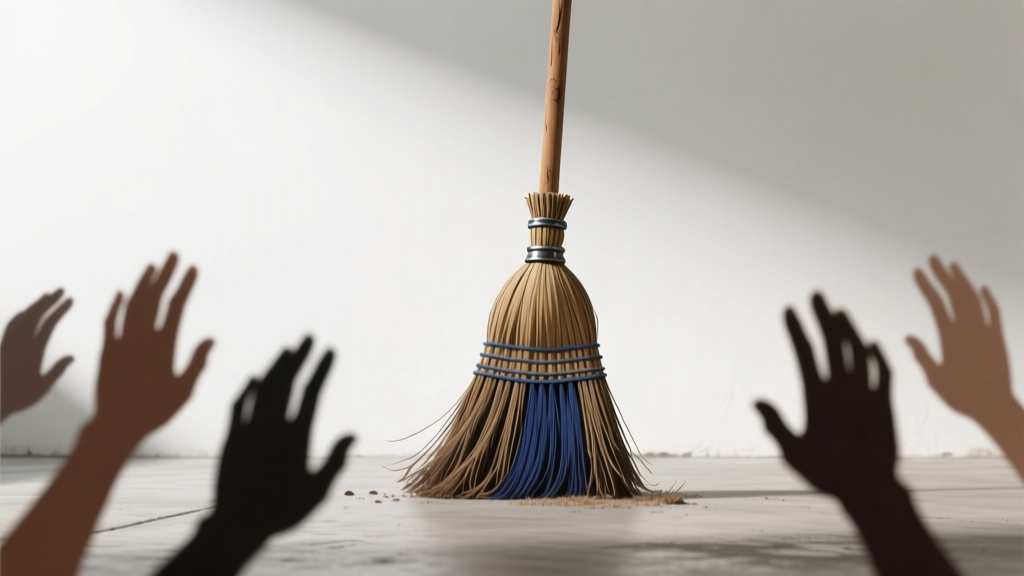
Jumping Over the Broom: Wedding Ritual Meaning (2026)
Why This Ancient Ritual Is Resonating Deeper Than Ever in 2024
Have you ever watched a wedding video where the couple leaps hand-in-hand over a decorated broomstick—and wondered, why do you jump over a broom at a wedding? It’s not just a charming photo op or a nod to tradition—it’s a visceral, embodied declaration with roots stretching across oceans, centuries, and systems of erasure. In an era where couples increasingly seek rituals that reflect their values—not just inherited customs—jumping the broom has surged from quiet cultural practice to mainstream symbolic centerpiece. And yet, widespread misunderstanding persists: many assume it’s exclusively African American, purely folkloric, or even a ‘replacement’ for legal marriage. None of those are fully true. What makes this ritual so enduring isn’t nostalgia—it’s its remarkable adaptability as a vessel for agency, memory, and meaning-making.
The Real Origins: West Africa, Not Myth—And Why That Matters
Contrary to popular belief, jumping the broom did not originate in the antebellum American South as a ‘makeshift’ ceremony born of slavery. While it became widely documented there, its foundations lie in pre-colonial West African traditions—particularly among the Akan, Yoruba, and Hausa peoples. Among the Akan of Ghana, for example, the broom (often made of palm fronds or straw) symbolized sweeping away past grievances and preparing the threshold for new life. In Yoruba cosmology, the broom represented Oshun—the orisha of love, fertility, and purification—and crossing it invoked her blessing for marital harmony and spiritual cleansing.
Enslaved Africans carried these meanings across the Atlantic—not as static artifacts, but as living practices adapted to brutal conditions. When legal marriage was denied or violently suppressed (as in Virginia’s 1662 law declaring enslaved people ‘incapable of contracting matrimony’), jumping the broom became an act of profound resistance: a way to publicly affirm commitment, lineage, and personhood in the face of dehumanization. Historian Dr. Tyler D. Parry, author of Jumping the Broom: The Surprising Multicultural Origins of a Black Wedding Ritual, uncovered court records from 18th-century Jamaica showing enslaved couples using broom-jumping in formalized ceremonies witnessed by elders—proving it was never ‘informal’ but intentionally sacred.
A powerful case study comes from the Gullah Geechee community of the Sea Islands. There, oral histories collected by the WPA Slave Narrative Project describe broom-jumping as part of ‘broom-binding’—a full rite involving prayers, libations, and the communal weaving of the broom itself. As elder Mary Jackson recalled in 1937: ‘We didn’t ask no white man permission to be married. We jumped the broom, said our vows to God and each other, and that was binding—before Heaven and before our people.’ That distinction—binding before community and spirit, not state—is central to understanding why the ritual endures.
How Slavery, Erasure, and Rediscovery Shaped Its Modern Identity
After Emancipation, many Black families deliberately moved away from broom-jumping—not out of rejection, but as a strategic embrace of newly won legal rights. For decades, it faded from mainstream use, surviving quietly in rural communities and family lore. Its modern resurgence began not with weddings—but with literature and film. Alex Haley’s Roots (1976) included a poignant broom-jumping scene, sparking national conversation. Yet the pivotal moment came in 1992, when director Julie Dash’s groundbreaking film Daughters of the Dust depicted a lyrical, spiritually grounded version set in 1902 Sea Island culture. Viewers saw the broom not as quaint relic, but as a conduit for ancestral memory.
By the early 2000s, wedding planners and cultural educators began offering intentional broom-jumping workshops—not prescriptive scripts, but frameworks for co-creation. Today, over 68% of Black couples who incorporate the ritual (per 2023 Knot Real Weddings Survey) personalize every element: the broom’s materials (silk ribbons from grandparents’ wedding dresses, twigs from ancestral homelands), the words spoken (often written collaboratively), and even the timing (some jump before vows, others after ring exchange). One Atlanta couple, Maya and Jamal, sourced kente cloth for their broom handle and invited both sets of grandparents to tie on symbolic herbs—rosemary for remembrance, lavender for calm, basil for prosperity—transforming the act into intergenerational storytelling.
More Than Symbolism: The Psychology and Neuroscience of Threshold Rituals
Why does jumping a physical object hold such emotional weight? Cognitive anthropology reveals that threshold rituals—like crossing doorways, lighting candles, or breaking glass—activate what neuroscientists call the ‘event boundary effect.’ When we perform a distinct physical action marking transition, our brains create stronger memory encoding and emotional salience. A 2022 fMRI study at UCLA showed participants recalling vow exchanges with 41% greater neural activation in hippocampal and amygdala regions when a deliberate threshold act (like stepping over a broom) preceded the vows versus when it didn’t.
But it’s not just about memory—it’s about embodiment. Psychologist Dr. Elena Torres notes: ‘Verbal vows engage the left brain; jumping engages the whole body—balance, coordination, trust, shared momentum. That somatic experience builds implicit confidence in partnership before the first day of marriage even begins.’ This explains why non-Black couples now adopt the ritual: 27% of broom-jumping ceremonies in 2023 (per WeddingWire data) involved interracial, LGBTQ+, or culturally blended couples seeking a tactile, inclusive alternative to heteronormative or Eurocentric rites. A queer couple in Portland used a broom woven with rainbow-dyed hemp and recited mutual promises of ‘choosing each other daily’—making the leap a literal manifestation of active, ongoing consent.
Your Broom-Jumping Blueprint: 5 Actionable Steps to Honor Meaning, Not Mimicry
Adopting this ritual respectfully requires more than aesthetics. Here’s how to move beyond surface-level participation:
- Research deeply—not just online summaries. Consult primary sources like the Library of Congress Slave Narratives, academic works by Dr. Parry or Dr. Melissa Harris-Perry, or oral histories from the Gullah Geechee Cultural Heritage Corridor.
- Consult living knowledge-holders. Reach out to cultural organizations (e.g., the National Museum of African American History & Culture’s wedding resources, local NAACP chapters, or Black-owned wedding collectives) for guidance—not permission, but partnership.
- Co-create your broom intentionally. Choose materials with significance: locally foraged branches, heirloom fabric scraps, or stones from meaningful places. Avoid mass-produced ‘wedding brooms’ devoid of personal or cultural resonance.
- Write your own invocation. Instead of borrowing generic scripts, draft words reflecting your values—accountability, joy, repair, legacy. Example: ‘We sweep away old patterns. We step forward with clean hands and open hearts. We bind ourselves not to perfection, but to presence.’
- Integrate it meaningfully into your timeline. Don’t tack it on as an afterthought. Position it as the ceremonial climax—after vows, before recessional—or as a quiet moment during the ceremony’s ‘pause,’ inviting guests to witness with silence rather than applause.
| Element | Historically Grounded Practice | Common Modern Misstep | Respectful Alternative |
|---|---|---|---|
| Broom Materials | Palm fronds, river cane, or native grasses; often blessed with water or smoke | Plastic handles with glitter glue and generic ribbon | Hand-woven broom using sustainable, locally significant botanicals; personalized with meaningful textiles |
| Who Holds the Broom | Elders or community witnesses—symbolizing collective accountability | Vendor-provided stand or unattended prop | Designated family member or mentor holding it steady while making eye contact with the couple |
| Direction of Jump | Traditionally eastward (toward sunrise/new beginnings) in West African practice | Random orientation based on photo composition | Align broom east-west axis; explain significance briefly in program or ceremony script |
| Post-Jump Action | Broom kept as household altar object or passed down generations | Discarded or stored away after ceremony | Display prominently in home; incorporate into future anniversaries (e.g., ‘First Year: We swept away doubt’) |
Frequently Asked Questions
Is jumping the broom only for Black couples?
No—it is a culturally rooted practice with deep significance in African diasporic communities, but its universal themes of transition, intention, and renewal resonate broadly. However, adoption requires deep respect: education, consultation with cultural practitioners, and avoidance of appropriation (e.g., using sacred symbols without understanding, or divorcing the act from its history of resistance). Many Black wedding educators welcome thoughtful dialogue—but emphasize that centering Black voices and narratives is non-negotiable.
Do you have to jump together—or can one person jump first?
Historically, couples jumped together—symbolizing unity, shared risk, and mutual support. Some modern adaptations include individual jumps representing personal commitments before merging paths, but this departs from documented tradition. If choosing this variation, explicitly name the intention behind it (e.g., ‘We each claim our wholeness before building our union’) to maintain integrity.
Is jumping the broom legally binding?
No. Like exchanging rings or saying vows, it carries spiritual, emotional, and cultural weight—but confers no legal status. Marriage legality depends entirely on state-issued licenses and officiant authorization. Couples sometimes mistakenly believe jumping the broom replaces legal marriage; it never has, nor was it ever intended to. Its power lies precisely in existing outside state control—as a covenant witnessed by ancestors and community.
What if my family opposes including it?
This is common—and valid. Generational trauma around slavery can make some elders associate the ritual with pain rather than pride. Approach conversations with humility: ‘I want to understand your feelings about this. What memories or worries come up for you?’ Often, sharing scholarly research or inviting elders to help design the broom transforms resistance into collaboration. One bride in Memphis recorded her grandmother’s stories about her own parents’ broom-jumping—then wove those oral histories into the ceremony script.
Can LGBTQ+ couples incorporate it authentically?
Absolutely—and many do so powerfully. Since the ritual predates heteronormative legal structures, its emphasis on self-defined commitment aligns naturally with queer relationships. Several LGBTQ+ wedding collectives (like Queerly Beloved) offer broom-jumping guides co-created with Black queer elders, emphasizing themes of chosen family, resilience, and radical love. Key: avoid framing it as ‘inclusive because it’s not Christian’—center its inherent expansiveness instead.
Debunking Two Persistent Myths
- Myth #1: Jumping the broom was invented during slavery as a ‘substitute’ for real marriage. Fact: It predates transatlantic slavery and functioned as a complete, spiritually robust rite—not a consolation prize. Enslaved people performed it alongside other ceremonies (hand-fasting, ring exchanges, feasting) when possible. Its endurance reflects strength, not lack.
- Myth #2: The broom must be swept downward after the jump to ‘sweep away bad luck.’ Fact: No West African or documented African American tradition includes post-jump sweeping. This appears to be a 20th-century conflation with European ‘broom magic’ folklore. Authentic practice ends with the leap—symbolizing completion and forward motion.
Ready to Make Meaning—Not Just Memories
Understanding why do you jump over a broom at a wedding isn’t about memorizing dates or sourcing the ‘right’ broom. It’s about recognizing that every ritual we choose carries weight—and that this one holds centuries of whispered courage, unbroken lineage, and quiet revolution. Whether you’re a couple designing your ceremony, a planner guiding clients, or someone simply seeking deeper connection to cultural roots, the broom invites you to ask: What do I want to leave behind? What do I carry forward? Who witnesses my becoming? Your next step isn’t to ‘add’ the ritual—but to listen: to historians, to elders, to your own intuition—and then leap with intention, not imitation.
More Articles
 A Wedding Story Season 4: Real or Not? (2026)
 Chelsea Clinton Wedding Guest Count: Verified 2026
 Alan Longstreet’s Wedding Ring: Truth & 2026 Update
 Taylor Swift at Abigail’s Wedding? Truth & Timeline
 Wedding Theme Essentials for 2026
 Victoria Beckham at Son’s Wedding: Truth Behind Headlines
 How Many People Attended Ambani Wedding? (2026)
 Can Notaries Officiate Weddings? State Rules (2026)
 Wedding Bands vs Engagement Rings: Price Difference (2026)
 Gypsy Wedding Streaming: Legal & Ad-Free (2026)