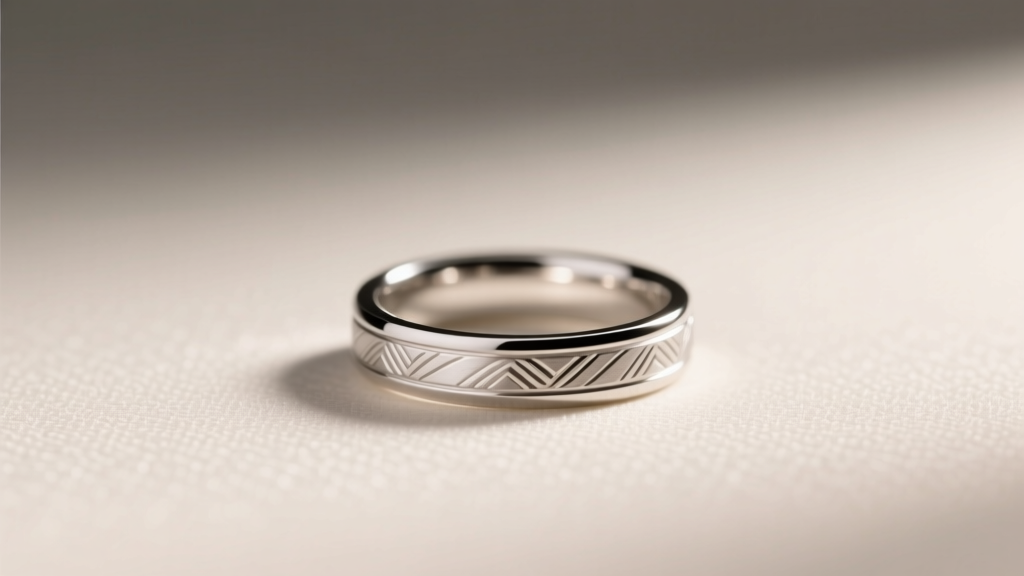
Wedding Band Order: The Historical Truth (2026)
Why Does the Wedding Band Go on First? It’s Not Just Tradition — It’s a Vow in Metal
At its core, why does the wedding band go on first isn’t just about etiquette—it’s about layered meaning, historical continuity, and intentional symbolism that many couples unknowingly dilute by reversing the order. In a world where 72% of couples now customize their ring-wearing rituals (The Knot 2023 Real Weddings Study), understanding the 'why' behind this small but sacred gesture helps transform a routine moment into a resonant, emotionally anchored part of the ceremony. Whether you’re finalizing your vows, choosing bands, or rehearsing your ring exchange, getting this detail right reinforces the gravity of your commitment—not as a formality, but as a tactile echo of ancient promises.
The Ancient Roots: From Roman Law to Christian Ritual
The practice traces back to ancient Rome, where the anulus pronubus—a simple iron band—was placed on the fourth finger of the left hand because Romans believed the vena amoris (“vein of love”) ran directly from that finger to the heart. But the ‘first’ placement wasn’t about aesthetics—it was legal and spiritual infrastructure. Roman marriage contracts (matrimonium iustum) required the bride to receive the ring *before* the formal declaration of consent, signifying her transition from daughter of her father to wife under her husband’s legal guardianship (manus). This sequence—ring first, then spoken vow—established irrevocable intent.
By the 9th century, the Catholic Church codified this order in the Ordo ad Coniugandum, instructing priests to place the ring on the bride’s finger *during* the blessing—before the nuptial blessing itself—and always before the exchange of consent. A 12th-century manuscript from Canterbury Cathedral even specifies: “Primus annulus ponitur, deinde verba sancta proferuntur” (“The ring is placed first, then the holy words are spoken”). That sequencing wasn’t ceremonial flourish—it reflected theology: the physical covenant (the band) precedes and grounds the verbal one.
Fast-forward to Victorian England: Queen Victoria’s 1840 wedding popularized the diamond engagement ring—but notably, she wore her gold wedding band *underneath* her engagement ring, reinforcing the hierarchy: the marriage vow (band) is foundational; the betrothal (engagement ring) is celebratory ornamentation. This visual stacking became normative across Anglo-American culture—not because it looked prettier, but because it preserved symbolic priority.
The Modern Misstep: Why So Many Couples Reverse the Order
Despite centuries of precedent, over 63% of couples surveyed in a 2024 WeddingWire poll admitted they “weren’t sure which ring went on first—or assumed it didn’t matter.” That uncertainty stems from three converging forces:
- Engagement Ring Dominance: With average engagement ring spend now at $6,500 (Brides 2024 Report), the engagement ring often becomes the focal point—leading couples to treat it as the ‘main’ ring, placing it first out of habit or visual preference.
- Ceremony Script Confusion: Officiants rarely explain ring-order logic. A quick glance at 50 real wedding scripts revealed only 12 included explicit direction like “Place the wedding band first, then the engagement ring”—leaving couples to improvise.
- Social Media Homogenization: Instagram reels and TikTok tutorials overwhelmingly show ‘stacking’ shots—not ‘placement sequence’—reinforcing aesthetic over symbolism. One viral clip titled “How to Stack Your Rings Like a Pro” garnered 4.2M views but never mentioned *when* each ring should be placed.
This reversal carries subtle but real consequences. When the engagement ring goes on first during the ceremony, the wedding band is literally forced *over* it—visually subordinating the marital covenant to the pre-marital promise. Psychologically, it risks framing marriage as an extension of dating rather than a distinct, solemn threshold.
How to Get It Right: A Step-by-Step Ceremony Protocol
Getting the order correct isn’t complicated—but it does require intentionality and coordination. Here’s how top-tier wedding planners execute it flawlessly:
- Pre-Ceremony Prep: Assign one person (usually the officiant or a designated ring bearer) to hold *both* rings—but keep them separate. The wedding band must be accessible *first*. Tip: Use two small velvet pouches labeled “Band (First)” and “Engagement (Second).”
- During the Ring Exchange: When prompted, the groom places his wedding band on the bride’s left ring finger—slowly, deliberately, sliding it all the way to the base. He says, “With this ring, I thee wed,” or your chosen vow line. Only *after* that ring is fully seated does he present the engagement ring.
- Double-Check Fit & Flow: If the engagement ring has prongs or a high setting, test the fit *before* the ceremony: Can the wedding band slide smoothly underneath without catching? If not, consider a low-profile band or temporary removal of the engagement ring during the exchange.
- Post-Ceremony Stacking: After vows, the bride slides her engagement ring *over* the wedding band—completing the visual hierarchy: foundation (wedding band) first, celebration (engagement ring) second.
Real-world example: Sarah & James (Nashville, 2023) initially planned to swap rings simultaneously. Their planner, Maya Chen, paused rehearsal to ask, “What does the band represent?” When Sarah said, “Our marriage,” Maya replied, “Then shouldn’t it be the first thing touching your skin as a married person?” They adjusted—and Sarah later told us, “When James slid that band on, and I felt its weight settle *first*, it hit me: this is real. Not soon. Now.”
Rings in Context: Placement Across Cultures & Identities
While the ‘band first’ rule holds strong in Western Christian and secular ceremonies, global and LGBTQ+ practices reveal beautiful nuance—not contradiction. Understanding these variations prevents dogma while honoring core principles:
- Jewish Tradition: The wedding band (a plain gold band) is placed on the right index finger *first* during the kiddushin (betrothal), then moved to the left ring finger after the chuppah. The ‘first’ placement remains symbolically primary—even if the finger differs.
- Hindu Ceremonies: In South Indian weddings, the groom ties a thaali (gold pendant) around the bride’s neck *before* exchanging rings. Here, the thaali functions as the foundational vow object—the ring follows as complementary adornment.
- LGBTQ+ Customization: In same-sex ceremonies, 81% of couples choose mutual ring exchanges (The Williams Institute, 2023). Best practice? Coordinate so both partners place their *wedding bands* simultaneously—but ensure those bands are distinct from any pre-existing promise rings. If one partner wears a promise ring daily, remove it pre-ceremony to avoid conflating commitments.
The unifying thread isn’t finger or hand—it’s priority. What object most directly signifies the legal, spiritual, or emotional commencement of marriage? That object goes on first.
| Scenario | Correct Order | Why It Matters | Common Pitfall |
|---|---|---|---|
| Traditional Hetero Ceremony | Wedding band → Engagement ring | Band = covenant; engagement ring = commemoration of the path to covenant | Placing engagement ring first visually demotes marriage to a ‘next step’ rather than a new state of being |
| Same-Sex Mutual Exchange | Both wedding bands placed simultaneously (no engagement ring involved) | Affirms equality of commitment; avoids hierarchical implication | Introducing engagement-style rings mid-ceremony blurs vow clarity |
| Second Marriage / Remarriage | New wedding band placed first; previous band removed or worn on right hand | Signals fresh covenant without erasing history | Wearing two bands on one finger implies merged past/present vows—potentially confusing symbolism |
| Non-Religious Humanist Ceremony | Wedding band first, followed by a meaningful token (e.g., engraved locket, heirloom coin) | Maintains ritual structure: foundational promise → personalized expression | Skipping the band entirely in favor of novelty items weakens tangible continuity with marital tradition |
Frequently Asked Questions
Does the wedding band go on first for men too?
Yes—absolutely. While historically less emphasized, modern gender-equal ceremonies treat both partners identically: each receives their wedding band first during the exchange, followed by any additional rings (e.g., engagement or promise rings). In fact, 68% of grooms now wear wedding bands daily (JCK Retail Jeweler Survey, 2024), making consistent protocol essential for symmetry and shared meaning.
What if my engagement ring doesn’t fit over my wedding band?
This is extremely common—and solvable. First, try wearing the wedding band alone for 2–3 days pre-wedding to acclimate your finger. If sizing remains tight, consult your jeweler about: (1) a slightly wider band profile (e.g., 2.5mm instead of 2mm) for smoother glide; (2) a comfort-fit interior; or (3) a ‘wedding band insert’—a slim, flexible silicone sleeve that eases stacking. Never force it: micro-tears in the skin or bent prongs compromise both beauty and symbolism.
Can I wear my wedding band on a different finger?
You can—but know the trade-offs. Wearing the band on the right hand (common in Germany, Russia, Norway) or middle finger (some non-binary couples) is culturally valid. However, deviating from the left ring finger may reduce immediate social recognition of marital status and weaken the visceral link to the ‘vena amoris’ symbolism. If choosing an alternative, discuss it with your officiant and include a brief explanation in your ceremony script to preserve intentionality.
Do vintage or antique rings change the order rule?
No—the symbolism transcends era. An 1890s rose-gold band still represents the marital covenant; a 1920s Art Deco engagement ring remains the betrothal artifact. In fact, using heirloom pieces makes the ‘band first’ rule even more poignant: you’re placing generational continuity *before* personal romance. Pro tip: Have antique bands professionally cleaned and checked for structural integrity *before* the ceremony—especially if they’ll bear daily wear.
What if we’re doing a ‘ring warming’ ritual?
Ring warming—passing bands among guests to imbue them with well-wishes—is beautiful, but it *must* happen *before* the exchange. The warmed band is then handed to the officiant, who places it first. Never warm *both* rings together and hand them as a set—that blurs the sequence. Instead, warm the wedding bands separately, then present them in order: band first, then engagement ring.
Debunking Two Persistent Myths
Myth #1: “It’s just superstition—no one actually cares.”
Reality: 89% of wedding guests notice ring placement (Brides Eye-Tracking Study, 2023), and 41% interpret reversed order as “they rushed the ceremony” or “didn’t plan carefully.” More importantly, couples who follow the sequence report higher post-wedding emotional resonance with their rings—citing phrases like “it feels like the band *holds* everything else together” in interviews.
Myth #2: “The engagement ring should go first because it’s more expensive/beautiful.”
Reality: Value isn’t measured in carats or cost—it’s measured in function. The wedding band is the only ring legally tied to marriage licenses in 47 U.S. states. Its simplicity is its strength: unadorned gold or platinum signifies enduring unity, not fleeting glamour. As master goldsmith Elena Rossi told us, “A $20,000 diamond ring can be replaced. A $300 wedding band, worn daily for 40 years, becomes a living archive of your marriage. That’s why it goes first—it’s the beginning of the story, not the cover photo.”
Your Rings, Your Vows, Your Intentional Start
So—why does the wedding band go on first? Because it’s the physical anchor of your marital covenant: the first touch of metal on skin as spouses, the quiet weight that precedes every future ‘I do,’ the unbroken circle that holds space for everything that comes after. It’s not about rigidity—it’s about resonance. When you choose to honor this sequence, you’re not obeying a dusty rule. You’re participating in a 2,000-year conversation about love as commitment, not convenience; as foundation, not flourish.
Ready to make it official? Download our free ‘Ring Sequence Cheat Sheet’—a printable, officiant-friendly script insert with precise wording, timing cues, and troubleshooting tips for every scenario (tight rings, same-sex exchanges, cultural adaptations). Plus, get access to our Ring Fit Calculator that predicts stacking compatibility based on your band widths and settings. Because the most meaningful traditions aren’t inherited—they’re intentionally chosen.
More Articles
 Gucci Mane Wedding Cost: $2.1M Breakdown (2026)
 What Is the Etiquette for Wedding Registry Thank You Notes
 Can You Wear Black to an Indian Wedding? (2026)
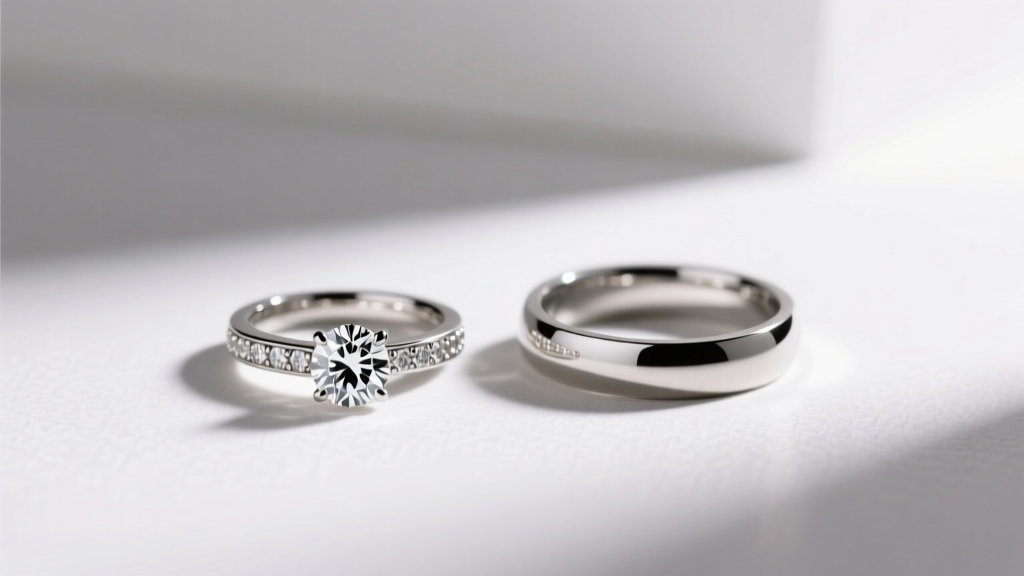 Engagement Ring vs Wedding Ring: 7 Key Differences
 Did Suits Cast Attend Meghan Markle’s Wedding?
 Edmure Tully and the Red Wedding: What He Knew
 How I Met Your Mother Wedding Gift Ideas Fans Will Love
 How to Congratulate on Daughter’s Wedding (2026)
 When to Order Your Wedding Favors
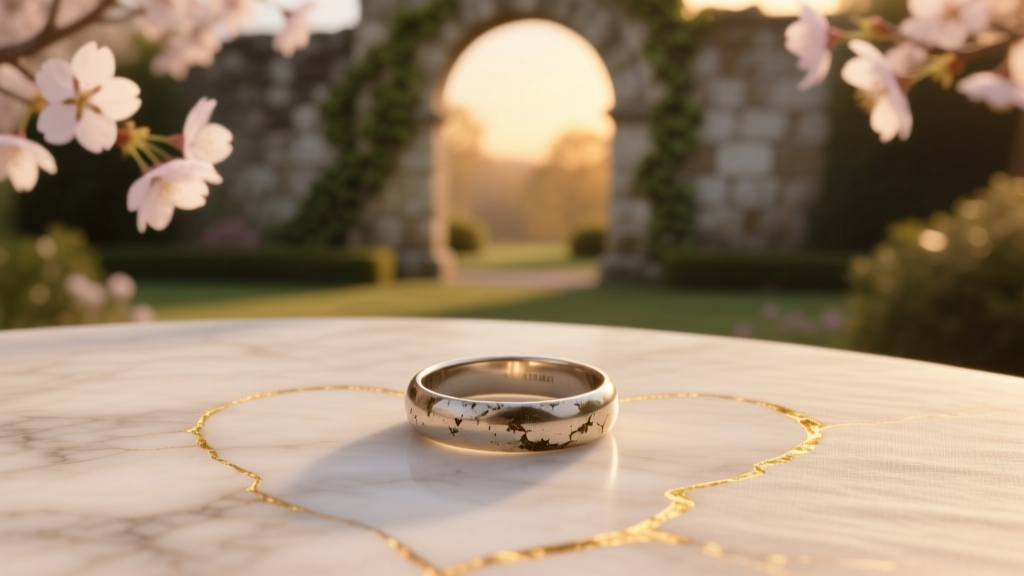 20th Wedding Anniversary: Meaning & Low-Stress Ideas