## Can I Wash My Hands With My Wedding Ring On? The Truth Revealed
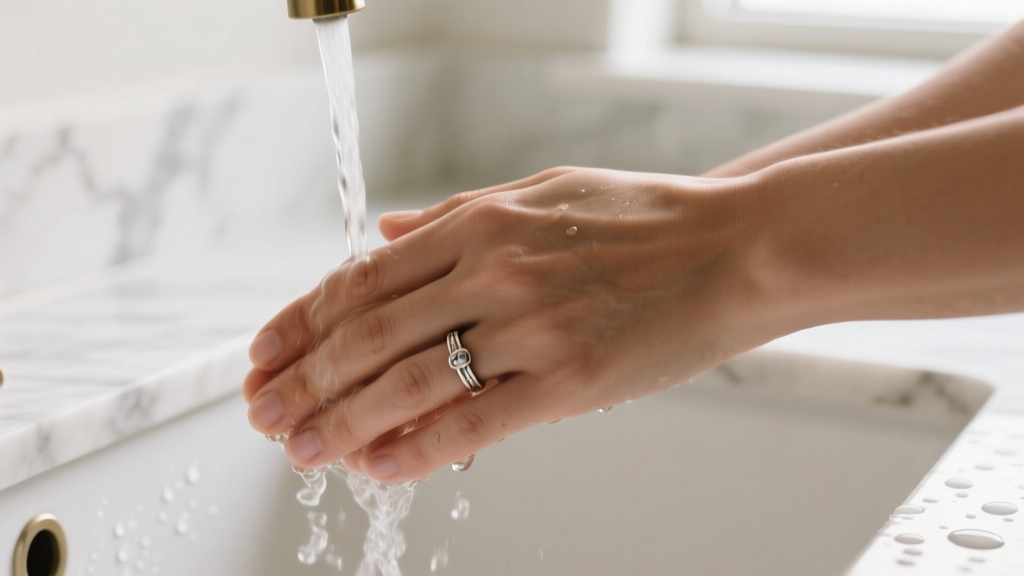
You're at the sink, hands lathered up, and suddenly you wonder: should I take my ring off first? It's a question nearly every married person has asked. The short answer is — it depends on your ring. But the full answer could save you from a costly repair or a lost stone down the drain.
---
## What Actually Happens When Water Hits Your Ring
Plain water alone won't damage most wedding rings. Gold, platinum, and titanium are water-resistant metals. A quick rinse under the tap is generally harmless.
The real culprits are what comes *with* the water:
- **Soap and hand wash**: Many soaps contain surfactants and moisturizers that leave a filmy residue inside prong settings and under stones. Over time, this buildup dulls the sparkle of diamonds and gemstones.
- **Hot water**: Repeated exposure to hot water can loosen the adhesive in rings that use glue-set stones (common in fashion jewelry and some vintage pieces).
- **Antibacterial gels and sanitizers**: Alcohol-based sanitizers are far more damaging than soap. Alcohol can erode the finish on rose gold, strip rhodium plating from white gold, and cloud certain gemstones like emeralds, opals, and pearls.
**Bottom line**: Washing with mild soap and cool water occasionally is low-risk. Daily exposure to harsh soaps, hot water, and sanitizers adds up.
---
## Rings That Need Extra Protection
Not all rings are created equal. Some materials are significantly more vulnerable:
**High-risk rings to remove before washing:**
- **Pearl rings**: Pearls are organic and porous. Soap and water weaken the silk thread on strung pieces and erode the nacre surface over years.
- **Opal rings**: Opals contain water in their structure. Sudden temperature changes from hot water can cause cracking (called "crazing").
- **Emerald rings**: Most emeralds are treated with oils or resins to fill fractures. Soap strips these treatments, making inclusions more visible.
- **Vintage or antique rings**: Older settings often use open-back designs where moisture can get trapped, accelerating tarnish.
- **Rose gold rings**: The copper alloy that gives rose gold its color is more reactive and can tarnish faster with repeated soap exposure.
**Lower-risk rings:**
- Solid platinum with diamond solitaires
- Solid 14k or 18k yellow gold with bezel-set stones
- Titanium or tungsten bands (no stones)
---
## How to Wash Your Hands Safely With Your Ring On
If removing your ring every time isn't practical, here's how to minimize damage:
1. **Use a gentle, fragrance-free soap** — fewer harsh chemicals mean less residue buildup.
2. **Rinse thoroughly** — make sure no soap sits under the setting or between the band and your finger.
3. **Pat dry immediately** — don't let water pool under the stone. Use a soft lint-free cloth.
4. **Avoid hot water** — lukewarm is fine; scalding is not.
5. **Skip the ring during sanitizer use** — slide it off before applying alcohol-based gel, then put it back on once your hands are dry.
6. **Clean your ring weekly** — a 10-minute soak in warm water with a drop of dish soap, followed by a soft toothbrush scrub, removes buildup before it becomes permanent dullness.
---
## Common Misconceptions About Rings and Water
**Misconception #1: "Gold is indestructible, so water can't hurt it."**
Gold the metal is durable, but gold rings are rarely pure gold. 14k gold is 58.5% gold mixed with silver, copper, and zinc — metals that *do* react to chemicals in soaps and sanitizers. The setting, the prongs, and any surface treatments are all vulnerable even when the gold itself isn't.
**Misconception #2: "If my ring looks fine, it's fine."**
Damage from soap and water is cumulative and invisible until it isn't. Prongs weaken gradually. Stone-securing settings loosen over months. Many people only discover a problem when a stone falls out — often down a drain. A jeweler can spot micro-damage during a routine inspection long before you lose a stone.
---
## The Simple Rule to Follow
Washing your hands with your wedding ring on is generally safe if you're using mild soap, cool water, and rinsing well. The risk rises sharply with hot water, harsh soaps, and especially alcohol sanitizers.
For rings with organic gemstones (pearls, opals, emeralds) or vintage settings, make it a habit to remove the ring before washing. Keep a small dish by every sink as a reminder.
And regardless of your daily habits, have your ring professionally inspected and cleaned once a year. A jeweler will check prong integrity, re-tip worn prongs, and restore the brilliance that daily life quietly steals.
Your ring is meant to last a lifetime — a few seconds of care each day makes that possible.
 26th Anniversary Jewelry: Jade and Green Gemstone Guide
 Does Priscilla Presley Still Have Elvis’s Wedding Ring?
 How to Choose a Wedding Band With a Flat Profile
 How to Protect and Store Wedding Jewelry
 How to Keep Wedding Ring and Engagement Ring Together
 Wedding Band Stacking Trends for 2026
 Engagement Ring Insurance: What to Know
 Wedding Ring Sizing: 5 Safe, Permanent Methods (2026)
 Who Buys the Groom's Wedding Ring? (2026)
 DIY Wedding Centerpiece Flowers on Any Budget