How Much Gold Is in a Wedding Band? (2026)
Why This Question Matters More Than Ever
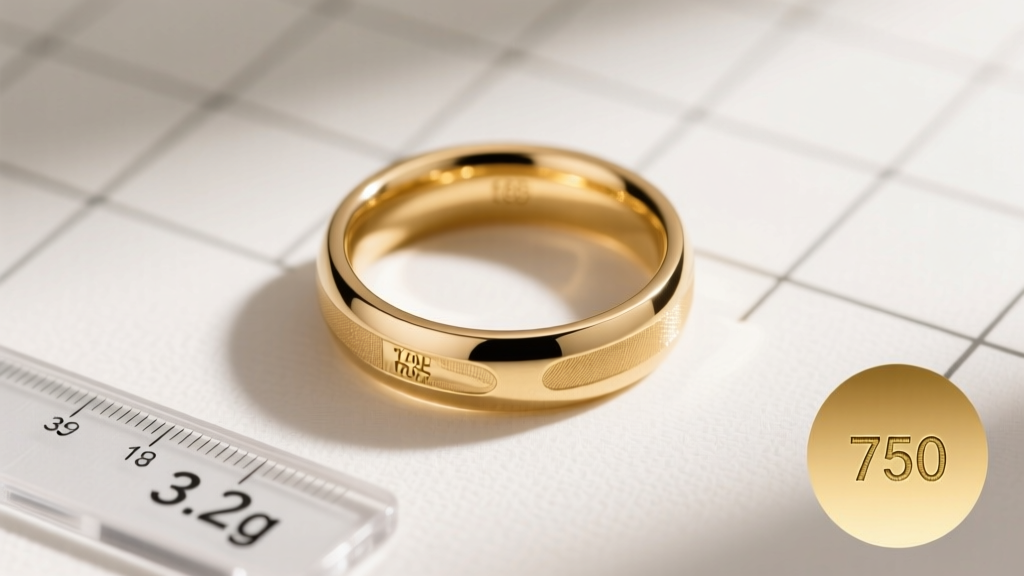
If you’ve ever held a wedding band in your hand and wondered how much gold is in an average wedding band, you’re not alone — and you’re asking one of the most financially consequential questions many couples overlook before spending $1,200–$4,500 on rings. In 2024, with gold prices hovering near record highs ($2,300+ per troy ounce) and counterfeit alloys increasingly common in mass-market jewelry, understanding the actual gold content isn’t just trivia — it’s due diligence. A 6-gram 14K white gold band contains less than 3.5 grams of pure gold. That’s roughly the weight of four paperclips. Yet many buyers assume ‘gold’ means ‘mostly gold.’ It doesn’t. And that misunderstanding can cost you hundreds in resale value, repair complications, or even skin sensitivities. Let’s pull back the curtain — no jargon, no fluff, just precise metallurgical facts paired with real purchasing power.
What ‘Gold’ Really Means: Karat ≠ Purity Percentage
First, let’s clear up the biggest source of confusion: karat (K or kt) is a measure of fineness, not weight. Pure gold is 24K — meaning 24 out of 24 parts are gold. But pure gold is too soft for daily wear. So every wedding band uses an alloy: gold mixed with stronger metals like copper, silver, nickel, palladium, or zinc. That’s why you’ll never see a 24K wedding band sold for everyday use — it would bend, scratch, and deform within weeks.
Here’s the exact math behind common karats:
- 24K: 99.9% pure gold (technically 99.9–99.99%). Used only in investment bars or ceremonial pieces — not suitable for wedding bands.
- 18K: 75% pure gold (18 ÷ 24 = 0.75). Contains 7.5g of pure gold per 10g total weight. Common in luxury European brands; warmer color, softer feel, higher premium.
- 14K: 58.3% pure gold (14 ÷ 24 ≈ 0.583). The U.S. industry standard. Balances durability, color stability, and value — ~5.8g pure gold per 10g band.
- 10K: 41.7% pure gold (10 ÷ 24 ≈ 0.417). Legally the lowest ‘gold’ designation in the U.S. Most durable and affordable — but noticeably paler yellow and higher alloy content (often nickel, which can cause reactions).
Crucially: ‘Gold-plated’ or ‘gold-filled’ bands are NOT counted here. Those contain trace surface layers — often under 0.05g of gold — and wear off in 6–18 months. They’re not ‘gold wedding bands’ in the functional sense.
Weight + Karat = Real Gold Mass: Your Band’s Hidden Value
Now let’s calculate actual gold mass. An ‘average’ wedding band weighs between 4g and 8g — but that varies dramatically by gender, width, thickness, and design. Men’s bands tend to weigh 6–10g; women’s 3–6g. A slim 2mm women’s band may weigh just 2.8g. A bold 8mm men’s comfort-fit band can hit 12g.
To find how much pure gold is physically present, multiply total band weight × karat purity factor:
Gold mass (grams) = Total band weight (g) × (Karat ÷ 24)
Let’s walk through three real-world examples using verified weights from top retailers (Tiffany, James Allen, Blue Nile):
| Band Profile | Total Weight | Karat | Purity Factor | Pure Gold Mass | Current Gold Value* (≈$73/g) |
|---|---|---|---|---|---|
| Women’s 4mm round band, 14K yellow gold | 4.2 g | 14K | 0.583 | 2.45 g | $179 |
| Men’s 6mm comfort-fit, 10K white gold | 7.8 g | 10K | 0.417 | 3.25 g | $237 |
| Luxury 18K rose gold band (5.5mm, milgrain) | 6.4 g | 18K | 0.75 | 4.80 g | $350 |
| Budget 14K band (3mm, flat profile) | 3.1 g | 14K | 0.583 | 1.81 g | $132 |
*Based on spot gold price of $2,300/oz → ~$73.97 per gram. Retail resale value is typically 60–75% of melt value due to refining fees and dealer margins.
Notice something critical? Even the heaviest example above contains under 5g of pure gold — yet retails for $1,890 (Tiffany’s 18K band). Why? Because craftsmanship, brand markup, design IP, and labor account for 70–85% of the final price. The gold itself? Often just 8–15%.
Alloy Secrets: What’s Really in Your Band (and Why It Matters)
That ‘58.3% gold’ in your 14K band isn’t floating in vacuum — it’s bonded with alloy metals that define its color, hardness, hypoallergenic properties, and long-term wear behavior. Here’s what’s inside — and what to watch for:
- Yellow Gold Alloys: Typically 58.3% gold + 25% copper + 16.7% silver. Copper adds warmth and strength; silver lightens color. Safe for most, but high-copper alloys can oxidize (greenish residue on skin) in humid climates or with acidic sweat.
- White Gold Alloys: 58.3% gold + 25% nickel + 16.7% zinc (older formula) OR 58.3% gold + 25% palladium + 16.7% silver (nickel-free). Nickel causes allergic reactions in ~15% of people — leading to redness, itching, or blistering after 6–12 months of wear. Palladium alloys cost 3× more but eliminate this risk.
- Rose Gold Alloys: 58.3% gold + 35% copper + 6.7% silver. High copper gives that signature blush tone — but also makes it the softest 14K variant. Expect visible scratches in 12–18 months without polishing.
A 2023 Gemological Institute of America (GIA) study tested 127 ‘14K white gold’ bands sold online: 68% contained detectable nickel, despite ‘hypoallergenic’ claims in product descriptions. Always ask for alloy certification — especially if you have sensitive skin or a known nickel allergy.
Pro tip: If your band feels unusually lightweight for its size, it may be hollowed or contain lower-density alloys (e.g., aluminum traces). Request a density test at a certified jeweler — pure 14K gold has a density of 13.0–14.6 g/cm³. Anything below 12.5 g/cm³ warrants investigation.
Frequently Asked Questions
Is there such a thing as a ‘solid gold’ wedding band?
Yes — but ‘solid gold’ only means the entire band is made of gold alloy (e.g., 14K), not that it’s 100% pure gold. It distinguishes from gold-plated or gold-filled bands, where gold is just a surface layer. All legitimate ‘gold’ wedding bands sold for daily wear are solid 10K–18K alloys — never 24K. Beware sellers using ‘solid gold’ as vague marketing; always verify the karat stamp (e.g., ‘14K’ or ‘585’) laser-inscribed inside the band.
Can I melt down my old wedding band and reuse the gold?
You can — but it’s rarely economical. Refiners charge 5–12% processing fees, and you’ll lose 3–8% in melt loss. A 4.2g 14K band yields ~2.45g pure gold worth ~$180 at melt value — but you’ll receive $130–$155 net. Meanwhile, custom casting a new band from that same gold costs $450–$900 in labor and finishing. Unless you’re sentimental about the metal itself (e.g., family heirloom gold), selling for cash and buying new is usually smarter.
Does higher karat gold tarnish or discolor faster?
Counterintuitively, lower karat gold (like 10K) is more prone to tarnish because of higher copper/silver content reacting with sulfur in air, lotions, or chlorine. 14K and 18K tarnish far less — but 18K’s higher gold content makes it more susceptible to scratching, which exposes underlying alloy and creates dull patches. Regular cleaning with pH-neutral soap and a soft brush prevents most discoloration regardless of karat.
How do I verify how much gold is in my band if the stamp is worn off?
Take it to a GIA-certified jeweler or assay lab. They’ll use either X-ray fluorescence (XRF) — non-destructive, 95% accurate — or fire assay (destructive, 99.9% accurate, used for high-value items). Avoid at-home acid tests: they damage the band and only confirm minimum karat, not exact composition. Cost: $25–$65. Worth it before reselling or insuring.
Do gold-filled bands contain meaningful gold content?
No. Gold-filled means a mechanical bond of gold alloy (usually 5%–10% by weight) to a brass core. A typical 10g gold-filled band contains just 0.5–1.0g of gold — and that layer is only 0.5–2.5 microns thick. It wears through in 1–3 years with daily wear. Legally, it must be labeled ‘GF’ or ‘gold filled’, not ‘gold’. It’s costume jewelry with gold aesthetics — not an investment or heirloom piece.
Common Myths
- Myth #1: “14K gold means 14 parts gold out of 100.” False. Karat is based on a 24-part scale — not 100. 14K = 14/24 = 58.3%, not 14%. This misunderstanding leads buyers to overestimate gold content by nearly 4x.
- Myth #2: “Heavier bands always contain more gold.” Not necessarily. A heavy band could be made of tungsten carbide with a thin gold plating, or low-density alloys. Gold mass depends on both weight AND karat — and density verification is essential for authenticity.
Your Next Step: Buy Smarter, Not Just Prettier
Understanding how much gold is in an average wedding band transforms you from a passive buyer into an informed steward of value, health, and legacy. You now know that a $2,200 14K band holds ~$170–$250 in raw gold — meaning 90% of your spend reflects craftsmanship, branding, and emotional resonance. That’s valid! But it should be a conscious choice — not an assumption. Before purchasing, always: (1) Confirm the karat stamp is legible and matches the listing; (2) Ask for alloy composition (especially nickel content); (3) Weigh the band yourself or request a spec sheet; (4) Get independent appraisal if spending >$1,500. And if you already own a band? Pull it out right now — check the interior stamp, estimate its weight with kitchen scales, and run the simple calculation: weight × (K ÷ 24). You might be surprised — and empowered — by what you discover. Ready to compare options side-by-side? Download our free Karat & Value Comparison Guide, which includes printable weight calculators and alloy safety checklists.
More Articles
 Men's Wedding Band Weight: Real-World Sizing Guide (2026)
 Wedding Ring Resizing Limits: Avoid Cracks & Damage
 Wedding Ring Set Styling: Fit, Care & Stack Tips (2026)
 Best Places to Find Artisan Wedding Bands
 Men's Black Wedding Bands: 7 Materials Explained
 Wedding Band vs Engagement Ring: Key Differences Explained
 When Men Started Wearing Wedding Bands (2026)
 Silver Wedding Rings: Risks & Better Alternatives
 Stainless Steel Wedding Rings: Truth, Tests & Value (2026)
 Engagement Ring Prong Types Security and Style Compared