## Is the Wedding Ring Biblical? The Truth Most Couples Don't Know
You're planning your wedding and someone raises the question: are wedding rings actually in the Bible? It's a fair thing to wonder. For couples who want their marriage rooted in faith, the origins of this tradition matter. The answer is more nuanced — and more interesting — than a simple yes or no.
## What the Bible Actually Says About Rings
The Bible doesn't explicitly command the exchange of wedding rings as part of a marriage ceremony. However, rings appear throughout Scripture as powerful symbols of covenant, authority, and commitment.
In Genesis 41:42, Pharaoh places his signet ring on Joseph's finger as a sign of authority and trust. In Luke 15:22, the father of the prodigal son orders a ring placed on his returning son's hand — a symbol of restored relationship and belonging. The Song of Solomon is rich with imagery of love and adornment, celebrating the beauty of committed partnership.
Rings in the ancient Near East weren't decorative accessories — they were binding tokens of covenant. A signet ring carried legal weight. Giving one meant transferring trust, identity, and promise. That context makes the wedding ring tradition deeply consistent with biblical values, even if the specific ceremony isn't prescribed.
## The Historical Origins of the Wedding Ring
The practice of exchanging rings at marriage predates Christianity. Ancient Egyptians exchanged rings made of braided reeds around 3,000 years ago, believing the circle — with no beginning or end — symbolized eternal love. Romans adopted the tradition, using iron rings called *anulus pronubus* to signify a legal contract.
By the 9th century, Christian ceremonies began incorporating rings. Pope Nicholas I declared the ring an official part of the Christian betrothal process in 860 AD, citing it as a symbol of the groom's intent and commitment. By the 13th century, the ring was a standard part of Western Christian wedding liturgy.
So while the wedding ring isn't a biblical mandate, it was deliberately adopted by the Church as a symbol that *aligns with* biblical principles — covenant, fidelity, and unending love.
## What Theologians and Denominations Say
Most mainstream Christian denominations — Catholic, Protestant, and Orthodox — embrace the wedding ring as a meaningful symbol, not a requirement for a valid marriage. The ring is understood as an *outward sign of an inward covenant*, much like baptism is an outward sign of an inward transformation.
Some conservative or plain-dressing communities (certain Mennonite and Quaker groups, for example) historically avoided jewelry including wedding rings, citing 1 Timothy 2:9's caution against excessive adornment. However, most theologians distinguish between vain ornamentation and a covenant symbol worn with humility and purpose.
The consensus: wearing a wedding ring is neither commanded nor forbidden by Scripture. It is a tradition the Church has sanctified over centuries to represent something deeply biblical — the unbreakable bond of marriage.
## Common Misconceptions Corrected
**Misconception 1: "If it's not in the Bible, it's not Christian."**
Many beloved Christian practices — Christmas trees, church buildings, wedding ceremonies themselves — aren't explicitly prescribed in Scripture. Christianity has always contextualized timeless truths within cultural forms. The wedding ring is a cultural vessel carrying a biblical message: covenant love that doesn't end.
**Misconception 2: "Wearing a wedding ring is about vanity or materialism."**
The concern about jewelry in Scripture (1 Peter 3:3, 1 Timothy 2:9) is about *priority*, not prohibition. Peter and Paul warn against making outward appearance the source of identity or worth — not against wearing a ring that symbolizes your marriage vow. A simple band worn as a daily reminder of your commitment is the opposite of vanity.
## Conclusion: A Tradition Worth Keeping
The wedding ring isn't a biblical command — but it is a biblically coherent symbol. It echoes the covenant language woven throughout Scripture: a circle with no end, worn close to the heart, visible to the world. For couples of faith, the ring can be a daily, tangible reminder of vows made before God.
Whether you choose a simple gold band or an heirloom stone, what matters most is the intention behind it. Let your ring be what the Church has always meant it to be: not a status symbol, but a covenant seal.
**Ready to choose a ring that reflects your values?** Explore our guides on meaningful, faith-inspired wedding jewelry that honors both tradition and your personal story.
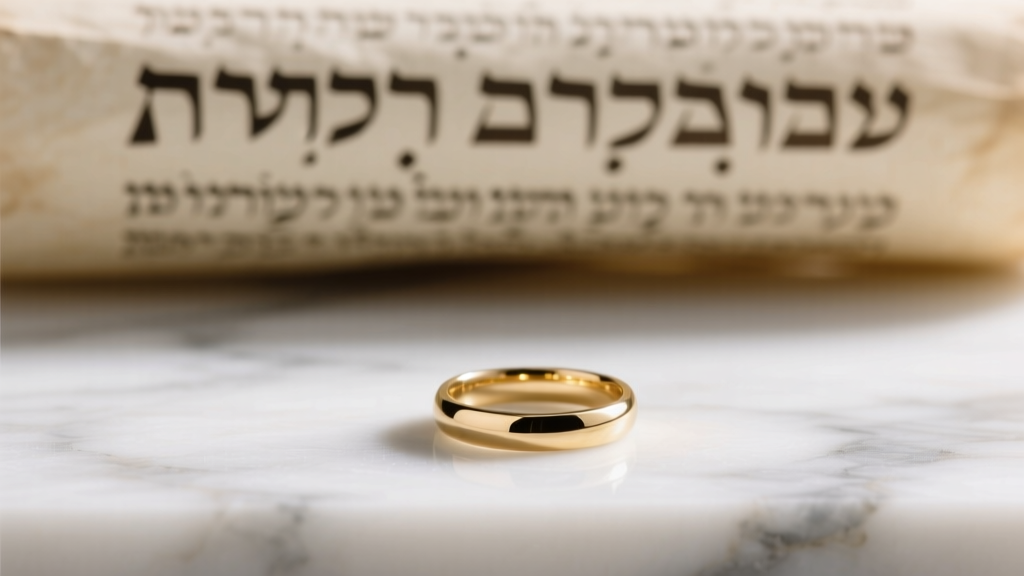
 Do Wedding Rings Get Scratched? (2026)
 Common Mistakes in Fine Jewelry Care, Sizing, and Purchase — A Metalsmith’s Field Guide
 Do People Wear Wedding Rings on the Right Hand? The Truth
 Can You Use Engagement Ring as Wedding Band?
 Does The Wedding Band Go Above Or Below
 Wedding Jewelry Timeline: When to Buy Each Piece
 How to Choose a Wedding Band With a Polished Finish
 Diamond Bezel Settings Protection and Modern Appeal
 Artisan Wedding Bands: 7 Handcrafted Sources (2026)
 How to Choose a Wedding Band With a Zirconium Material