How to Choose a Wedding Band With a Polished Finish
A polished wedding band has a certain unmistakable look: crisp reflections, clean lines, and a bright “just-made” glow that reads beautifully in person and in photos. For many couples, that shine feels symbolic—fresh, classic, and intentionally chosen—whether you’re pairing it with an engagement ring or wearing it as a standalone statement.
At the same time, polished finishes are practical decisions, not just aesthetic ones. The metal you choose, how the band is shaped, and the type of polish used all affect how the ring wears over time. Some polished bands stay glossy with minimal upkeep; others show fine scratches quickly and need occasional refreshing. Knowing what you’re buying helps you get that bright finish without surprises.
This guide breaks down how polished wedding bands are made, which metals and styles wear best, what quality details matter, and how to shop smart—so your wedding ring looks great now and continues to look great years from now.
What a “Polished Finish” Really Means
A polished finish (often called a high-polish finish) is achieved by smoothing the metal surface and buffing it to a reflective shine. The goal is a uniform, mirror-like surface that highlights the band’s silhouette and any design details like milgrain edges, engraving, or a comfort-fit profile.
High polish vs. other common finishes
- High polish: Bright, reflective, classic; shows fine scratches more easily.
- Brushed/satin: Soft sheen with visible directional grain; hides scratches well.
- Matte: Low-reflective, modern; may “polish up” slightly with wear.
- Hammered: Faceted texture; disguises wear and adds artisan character.
- Sandblasted: Even, frosted look; can require refinishing to maintain consistency.
Many couples choose a polished wedding band because it complements almost any engagement ring style—from solitaire and pavé to halo and vintage-inspired designs.
Choosing the Right Metal for a Polished Wedding Band
Metal choice is the biggest factor in how a polished band will age. Every ring will pick up micro-scratches from daily life, but different metals show wear differently and vary in how easily they can be refinished.
14K vs. 18K gold (yellow, white, and rose)
Gold is a top choice for polished wedding bands because it takes a beautiful shine and is easy to maintain.
- 14K gold: More durable for everyday wear because it has a higher percentage of alloy metals. Great for active lifestyles and couples who want a polished look with fewer visible dents.
- 18K gold: Richer color and slightly heavier feel. It’s still durable, but it can show wear a bit faster than 14K due to its higher gold content.
White gold is commonly rhodium-plated for a bright, silvery finish. A high-polish white gold wedding band may need rhodium re-plating over time to maintain that crisp white look, depending on skin chemistry and wear habits. Yellow gold and rose gold don’t require plating, so maintaining the polish is typically straightforward.
Platinum
Platinum has a naturally white luster and a premium weight. It’s excellent for a polished finish, especially if you want a timeless, heirloom feel. Platinum develops a “patina” over time—a soft sheen from micro-scratches—rather than losing metal quickly. A jeweler can polish it back to a high shine when you want that mirror finish again.
Palladium
Palladium is part of the platinum family and offers a similar white tone with a lighter feel. It can be a smart choice for couples who want a bright, polished look without the weight of platinum. Availability varies by region and retailer, so sizing and repair services are worth confirming before you buy.
Titanium, tungsten, and alternative metals
Alternative metals can look sleek in a polished finish and often cost less, but they come with trade-offs:
- Tungsten carbide: Extremely scratch-resistant and stays shiny, but it can crack under heavy impact and generally can’t be resized.
- Titanium: Lightweight and durable; can be difficult to resize, and deep scratches may be harder to refinish perfectly.
- Stainless steel: Budget-friendly and bright; not as traditional for wedding bands, and long-term refinishing varies.
If you anticipate future resizing (weight fluctuations, pregnancy, temperature-related swelling, or simply wanting a different fit), gold and platinum remain the most flexible choices.
Band Style Details That Affect Shine and Wear
Two polished bands can look similar in the box but wear very differently. The profile, width, and edges influence comfort, scratch visibility, and how the ring pairs with an engagement ring.
Comfort-fit vs. standard fit
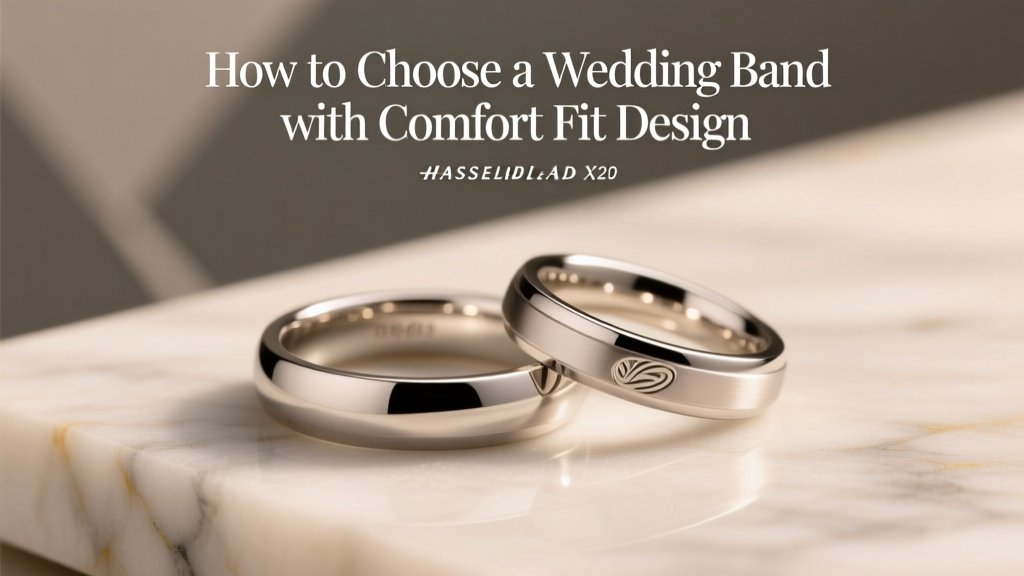
A comfort-fit wedding band has a slightly rounded interior, making it easier to slide on and off and often more comfortable for wider bands. Comfort-fit styles are popular in current bridal jewelry trends because they balance a clean, modern look with all-day wearability.
Band width and thickness
- 2mm–3mm: Delicate, refined, ideal for stacking or pairing with intricate engagement rings.
- 4mm–6mm: Classic “everyday” widths; a sweet spot for durability and presence.
- 7mm–10mm: Bold, modern look; often chosen as a standalone polished men’s wedding band.
Thicker bands can handle more polishing over the years because there’s more metal to work with, especially in gold and platinum.
Edge style: rounded, flat, knife-edge
Rounded edges hide dings better and feel softer against adjacent fingers. Flat bands read sleek and contemporary but can show scratches more prominently due to larger reflective planes. A knife-edge profile creates a sharp center ridge and can look striking in high polish—great for couples drawn to architectural, minimalist wedding ring styles.
Mixed finishes (a modern trend that still feels timeless)
One of the biggest current trends is mixed-finish wedding bands: a polished edge with a brushed center, or a polished band with subtle hammered sections. This gives you the bright look you love while disguising everyday wear. It also adds depth in photos without feeling overly flashy.
Polished Wedding Bands With Diamonds or Gemstones
A polished finish pairs beautifully with diamonds because the shine of the metal amplifies sparkle. If you’re considering a diamond wedding band (or a band with colored gemstones), focus on stone security and craftsmanship.
Best settings for a polished look
- Pavé: Tiny diamonds set closely together; very popular for pairing with solitaires. Look for even beadwork and consistent stone size.
- Channel setting: Diamonds set between two metal walls; clean, modern, and more protected for daily wear.
- Bezel setting: Metal rim encircles each stone; ultra-secure and sleek, especially in platinum or yellow gold.
- Prong/shared prong: Maximum sparkle and airiness; requires attentive inspection and occasional maintenance.
Diamond quality and cut considerations
For small accent diamonds, prioritize cut quality and consistent matching. Even in tiny sizes, well-cut stones look brighter and more uniform. Many wedding bands use round brilliant melee diamonds for maximum sparkle, while princess or baguette cuts offer a cleaner, geometric look that pairs well with polished metal.
Colored gemstones—like sapphires (especially blue or white), rubies, and emeralds—can add meaning and contrast. For everyday wear, sapphires are particularly durable and are a timeless alternative to all-diamond styles.
Quality Factors: What to Check Before You Buy
Polish consistency and symmetry
Under bright light, a quality high-polish band should reflect evenly without cloudy patches, ripples, or uneven edges. Check that the band is symmetrical and that the polish reaches tight areas near settings or design details.
Hallmarks and metal verification
Look for stamps such as 14K, 18K, PT950 (platinum 95%), or brand hallmarks. If you’re shopping online, confirm the metal purity is clearly listed and supported by documentation.
Stone setting craftsmanship
If your polished band includes diamonds or gemstones, inspect:
- Prongs: even, smooth, and not snaggy
- Stones: aligned, consistent, and not rattling
- Edges: comfortable against skin and neighboring fingers
Practical Buying Tips for Couples
- Match the metal to your engagement ring: Mixing metals can be stylish, but mismatched hardness can cause wear where rings rub. If you stack rings daily, similar metals often age more evenly.
- Try it with your engagement ring: A polished band can reflect light into your center stone, but check for gaps, spinning, or rubbing against prongs.
- Consider a spacer band: If your engagement ring has a low-set basket or delicate pavé, a thin polished spacer can prevent abrasion.
- Plan for resizing: Choose gold or platinum if resizing is likely. Confirm the store’s resize policy before purchase.
- Ask about maintenance: Many jewelers offer complimentary polishing/cleaning for a period—valuable for high-polish rings.
Care and Maintenance: Keeping a Polished Finish Bright
Polished wedding bands look their best with simple, consistent care.
- Weekly gentle cleaning: Warm water, mild dish soap, and a soft toothbrush. Rinse well and pat dry with a lint-free cloth.
- Avoid harsh chemicals: Chlorine, bleach, and strong cleaners can damage alloys and discolor white gold plating.
- Remove for heavy work: Gym lifting, gardening, and DIY projects can cause deeper scratches or dents—even on durable metals.
- Store separately: Keep rings in a soft pouch or divided box so diamonds and metal edges don’t scratch other jewelry.
- Schedule professional polishing: Once or twice a year is common. If you have pavé, ask for a prong check at the same time.
Price Range and Value Tips
Wedding band pricing depends on metal, width/weight, and any diamonds or custom details. Typical ranges:
- Plain polished 14K gold band: often $300–$1,200 depending on width and weight
- Plain polished platinum band: often $800–$2,500+
- Polished diamond wedding band (pavé/channel): often $700–$3,500+ based on total carat weight, diamond quality, and craftsmanship
- Tungsten/titanium polished bands: often $50–$400
Getting the best value
- Prioritize craftsmanship over extra width: A well-made 4mm band can outlast a poorly finished 6mm band.
- Choose 14K for durability: If you love high polish but want fewer dings, 14K can be a practical sweet spot.
- Consider mixed finish for longevity: A polished edge with a brushed center gives you shine with less visible wear.
- Buy from a jeweler with service support: Polishing, inspections, and resizing policies are part of the long-term value.
Common Mistakes to Avoid
- Choosing a polished finish without considering scratch visibility: High polish is stunning, but it will show micro-scratches. If that will bother you, consider mixed finishes or a brushed center.
- Buying the wrong size due to temperature: Fingers swell in heat and shrink in cold. Get sized at a neutral time of day and confirm comfort-fit sizing guidance.
- Ignoring how rings sit together: A polished band can rub an engagement ring’s pavé or prongs if the fit isn’t right. Test them as a set.
- Overlooking white gold maintenance: If you want that bright white mirror look, plan for rhodium re-plating as needed.
- Assuming alternative metals can be resized: Tungsten and titanium are often not resizable. Confirm before committing.
FAQ: Polished Wedding Bands
Do polished wedding bands scratch easily?
They show fine scratches more easily because the surface is reflective. All metals scratch with wear, but high polish makes those micro-marks more visible. Regular cleaning and occasional professional polishing keep the shine looking fresh.
Is platinum or white gold better for a polished finish?
Platinum has a naturally white luster and can be re-polished easily, though it may develop a soft patina over time. White gold often relies on rhodium plating for a bright white shine, which may need re-plating periodically. Both are excellent—choose based on maintenance preference and budget.
Can a polished wedding band be resized?
Gold and platinum bands are typically resizable within a reasonable range. Bands with full eternity settings, certain intricate designs, and many alternative metals (like tungsten) may not be resizable or may be limited.
What’s the best polished band style for active lifestyles?
A comfort-fit 14K gold or platinum band with slightly rounded edges is a dependable choice. If you want diamonds, channel settings or bezels offer more protection than delicate shared-prong pavé.
How often should I get a polished wedding band re-polished?
Many people do it once a year or before major events (photos, anniversaries). If you prefer a consistently mirror-like finish, you may opt for polishing every 6 months—especially with wider flat bands that show wear sooner.
Will a polished band look good with a vintage-style engagement ring?
Yes. A polished band can highlight vintage details like milgrain and engraving by contrast. If your engagement ring is very detailed, consider a slimmer polished band or a polished edge with subtle texture so the set looks balanced.
Choosing Your Polished Wedding Band: A Confident Next Step
If you love a bright, classic look, a polished wedding band is one of the most timeless choices you can make—clean enough for modern minimalism, traditional enough to feel forever. Start by choosing a metal that fits your lifestyle (14K gold for durability, platinum for heirloom weight and naturally white luster), then select a profile and width that feel comfortable every day. If you want extra sparkle, focus on secure settings like channel or bezel and well-matched diamonds with strong cut quality.
Once you’ve narrowed it down, try the band with your engagement ring, confirm resizing and maintenance options, and choose the piece that feels right on your hand—not just right on a screen. For more practical shopping advice, metal comparisons, and wedding ring style guides, explore the latest articles on weddingsift.com.
More Articles
 Wedding Ring Fit Test: Avoid Regret (2026)
 Engagement and Wedding Ring Order: The Right Way
 Necklace Tips for Strapless Wedding Dresses
 Custom Jewelry Planning: A Metalsmith's Roadmap
 How to Tighten Wedding Ring Safely (2026)
 Engagement Ring Settings Explained for First-Time Buyers
 How to Choose an Engagement Ring With an East-West Setting
 How to Match a Wedding Band to an Engagement Ring
 How to Choose a Wedding Band With Comfort Fit Design
 How Do You Stack Wedding Rings Without Ruining Either One