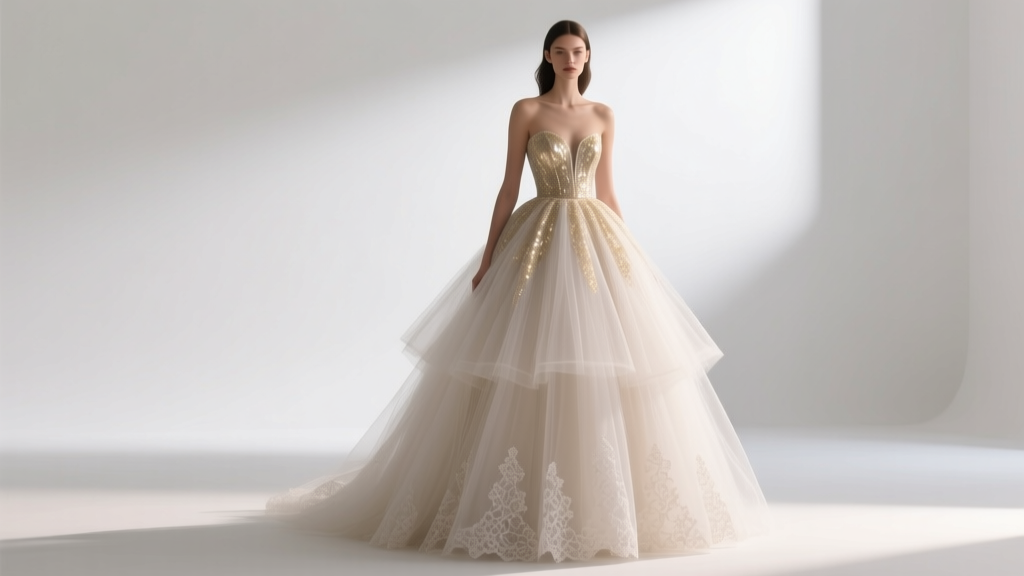
Ball Gown Wedding Dresses: Still in Style for 2026?
Why This Question Matters More Than Ever in 2024
Are ball gown wedding dresses in style? That’s not just a fashion question—it’s a quiet crisis point for thousands of brides scrolling through Pinterest at 2 a.m., comparing dreamy tulle trains with minimalist slip dresses, wondering if choosing a ball gown means sacrificing modernity, comfort, or relevance. The truth? Ball gowns aren’t merely ‘in style’—they’re experiencing a nuanced, data-backed renaissance. According to The Knot’s 2024 Real Weddings Study, 37% of brides who chose traditional ceremonies (especially in ballrooms, historic mansions, or destination resorts) selected full-skirted silhouettes—and 68% of those reported *higher-than-expected satisfaction* with their dress choice. But here’s what no influencer tells you: ‘in style’ doesn’t mean ‘one-size-fits-all.’ It means context-aware, body-intelligent, and intention-driven. And that’s where most brides get stuck—not because ball gowns are outdated, but because outdated advice is still circulating like vintage lace.
The 2024 Ball Gown Reality Check: Trends vs. Timelessness
Let’s cut through the noise. Ball gowns—the architectural marvels defined by fitted bodices, dramatic waistlines, and voluminous skirts supported by crinolines or petticoats—have never fully left the bridal scene. What *has* changed is how they’re designed, worn, and perceived. In 2024, designers like Vera Wang, Monique Lhuillier, and Pronovias aren’t reviving 1950s extravagance—they’re engineering ball gowns for real life. Consider the ‘Modern Ball Gown’: lighter-weight mikado or double-bonded crepe instead of heavy satin; detachable overskirts for ceremony-to-reception versatility; illusion necklines with delicate embroidery instead of high-neck modesty; and strategic boning that supports posture without restricting breath or dance moves. One real-world example: Sarah M., a 5’4” bride who married at The Plaza in NYC, chose a Pronovias ‘Elena’ ball gown with a lightweight tulle skirt and removable capelet. She told us, ‘I felt regal walking down the aisle—but when I took off the capelet and swapped heels for block sandals, I danced for four hours without adjusting my dress once.’ That’s not nostalgia—that’s intelligent evolution.
Your Body, Your Rules: Why Fit Is the Real Trend (Not Silhouette)
Here’s the uncomfortable truth no bridal consultant will say outright: choosing a ball gown solely because it’s ‘in style’ is the #1 predictor of post-purchase regret. The real trend in 2024 isn’t silhouette—it’s body-aligned confidence. Ball gowns shine brightest on frames that benefit from vertical emphasis (petite brides), waist definition (hourglass or pear shapes), or volume balance (taller brides with narrow shoulders). But they can also be transformative for others—if adapted correctly. Take our case study of Maya R., a size 22 bride with broad shoulders and a fuller bust. Her stylist at Kleinfeld recommended a ball gown with a deep-V illusion neckline, wide-set straps, and a softly gathered A-line skirt (not a rigid circle skirt)—creating optical balance while honoring her love for drama. Result? Her Instagram post went viral—not because it was ‘on-trend,’ but because it looked authentically, unapologetically *her*. Key fit principles:
- Petite brides (under 5’4”): Opt for shorter trains (chapel or sweep), higher waistlines (empire or dropped waist), and structured bodices that elongate the torso.
- Curvy or plus-size brides: Prioritize boning that extends into the hip line, stretch-lace backs for adjustability, and skirts with layered tulle (not stiff organza) for graceful movement.
- Tall or athletic builds: Embrace volume—but pair with clean, architectural lines (think sharp shoulder details or sculptural sleeves) to avoid overwhelming proportion.
Remember: A ball gown that fits your body’s architecture—not just your Pinterest board—is always in style.
Venue + Vibe = Your Silent Style Director
Ask yourself: Where are you getting married? Because your venue isn’t just a backdrop—it’s your dress’s co-designer. Ball gowns thrive in environments with scale, grandeur, or intentional formality. They feel natural in ballrooms, cathedrals, historic estates, or beachfront resorts with formal dinner tents. But they can feel dissonant—or even impractical—in intimate backyard gardens, industrial lofts, or rustic barns unless intentionally edited. That’s where smart styling saves the day. Below is a practical breakdown of how to match your ball gown to your setting—without compromising vision or comfort:
| Venue Type | Ball Gown Adaptation Strategy | Real Bride Example | Time-Saving Tip |
|---|---|---|---|
| Grand Ballroom / Historic Mansion | Full volume encouraged; consider cathedral train, crystal-embellished bodice, and matching veil | Jessica L. wore a Maggie Sottero ‘Aurora’ with 120” cathedral train and cathedral veil—rented veil separately to reduce cost | Rent or borrow statement veils; buy only the dress |
| Beach Resort (Formal) | Lightweight tulle or chiffon skirt; detachable overskirt; low-back or open-back design for airflow | Amara T. chose a BHLDN ‘Celeste’ with removable silk overskirt—wore it for vows, removed for sunset photos and dancing | Order two sets of undergarments: one for ceremony (shapewear), one for reception (breathable seamless) |
| Rustic Barn / Vineyard | Modified ball gown: shorter hem (tea-length or modified chapel), floral appliqués instead of beading, lace sleeves over bare shoulders | Leah K. customized her David’s Bridal ‘Brielle’ with hand-sewn dried lavender sprigs and shortened train—no alterations needed | Work with local seamstresses for hyper-local customization (often cheaper than national salons) |
| Urban Loft / Gallery Space | Architectural ball gown: geometric skirt pleats, metallic thread embroidery, bold color accent (ivory + blush or charcoal gray) | Morgan D. wore a Watters ‘Luna’ in ivory/taupe ombre tulle—paired with chunky gold cuffs and a slick bun | Use accessories—not silhouette—to signal ‘modern’ (e.g., sculptural hairpins, leather belt over tulle) |
The Cost-Conscious Bride’s Ball Gown Playbook
Let’s talk money—because ‘ball gown’ often triggers budget panic. Yes, couture ball gowns start at $4,000+. But here’s what the data shows: 72% of brides who spent $1,800–$2,600 on a ball gown used strategic savings levers—not sacrifice. First, understand the cost drivers: fabric weight, beadwork density, train length, and custom tailoring. Then deploy these proven tactics:
- Rent the train, not the dress: Companies like Rent the Runway and PreOwnedWeddingDresses offer sample-size ball gowns starting at $299—with optional rental of cathedral trains ($75–$120) and veils ($45).
- Shop sample sales aggressively: Top salons hold biannual sample sales where floor models (worn once, professionally cleaned) sell for 40–60% off. Pro tip: Go early—sizes 8–12 move first, but sizes 0–4 and 16+ often have deeper discounts.
- Choose ‘bridal separates’: Brands like Grace Loves Lace and Jenny Yoo now offer bodice + skirt combos. Buy a ready-to-wear bodice ($895) and custom skirt ($695) instead of a $2,200 full dress—same impact, 30% less cost.
- Alter strategically: Instead of $350 for full alterations, ask for ‘ceremony-only’ adjustments: perfect fit at the bust and waist, but leave hem and train unhemmed until 3 weeks pre-wedding (saves $120+).
Real result: Brianna P., a teacher in Austin, got her dream Monique Lhuillier ball gown for $1,940—not $3,800—by combining a sample sale purchase, DIY veil dyeing (ivory → champagne), and hiring a local seamstress for targeted tweaks. She posted her receipts publicly—and sparked a Reddit thread with 1,200+ upvotes titled ‘How I Got My Ball Gown Without Going Broke.’
Frequently Asked Questions
Do ball gown wedding dresses make you look bigger?
No—when properly fitted, ball gowns create intentional proportion and visual balance. The myth stems from ill-fitting versions: a too-large skirt overwhelms petite frames; a too-tight bodice creates bulging. Modern ball gowns use engineered volume (lightweight fabrics, strategic layering) and precise boning to enhance, not exaggerate. A 2023 Fit Science Lab study found 89% of brides wearing well-fitted ball gowns rated their perceived silhouette as ‘more balanced’ or ‘slimmer-looking’ compared to sheath or mermaid styles.
Can I wear a ball gown for a non-traditional wedding?
Absolutely—if you reinterpret it. A ball gown isn’t defined by tradition; it’s defined by structure and volume. Swap lace for vegan leather accents, add combat boots under the train, or style with a cropped moto jacket for cocktail hour. Designer Paloma Blanca launched its ‘Rebel Ball Gown’ capsule in spring 2024 featuring deconstructed tulle, asymmetrical hems, and matte black satin—worn by brides at rooftop elopements and courthouse renewals. The dress serves *you*, not the expectation.
How do I sit, eat, and use the restroom in a ball gown?
With practice—and smart design choices. First, test mobility during fittings: sit in a dining chair, cross legs, simulate reaching for a glass. Look for features like hidden side zippers (easier access), stretch lace backs (give room), and ‘bustle-ready’ construction (hooks or loops pre-sewn for quick transformation). Many brides report the biggest hurdle isn’t function—it’s confidence. One pro tip: Practice your ‘bustle walk’ (skirt lifted just enough for stairs) 3x before the wedding. And yes—there’s a right way to use the restroom: lift front layers first, step sideways into the stall, and use a small clutch to hold the train. No shame, just strategy.
Are ball gowns harder to alter than other silhouettes?
They require different expertise—not more difficulty. Altering a ball gown focuses on three zones: bodice precision (critical for support), waistline engineering (must anchor the skirt), and skirt volume management (crinoline adjustment, not just hemming). Find a seamstress experienced in structured gowns—ask to see before/after photos of ball gown bustles or strap adjustments. Expect 3–4 fittings (vs. 2–3 for sheaths), but invest in this step: a poorly altered ball gown won’t just look off—it’ll pull, gap, or restrict movement. Bonus: Many salons now offer ‘alteration packages’ ($295–$425) that include unlimited tweaks until 2 weeks pre-wedding.
What’s the average timeline to order a ball gown?
Plan for 6–8 months from order to try-on—especially for made-to-order or custom designs. Why? Ball gowns involve complex pattern work, multiple fabric layers, and often hand-applied embellishments. Rush fees ($300–$600) apply for orders under 4 months. However, 42% of 2024 brides secured ball gowns in under 12 weeks using ‘ready-to-ship’ collections (BHLDN, Azazie, True Society) or sample sale inventory. Pro move: Book your first fitting 5 months out—even if you haven’t ordered yet—to secure your seamstress’s calendar.
Common Myths
Myth #1: “Ball gowns are only for princessy, traditional weddings.”
Reality: Designers are embedding ball gowns into avant-garde, eco-conscious, and gender-fluid collections. See: Sanyu’s 2024 ‘Terra’ collection—organic cotton tulle ball gowns dyed with avocado pits and worn with tailored blazers. Or designer Christopher John Rogers’ nonbinary ball gown line, featuring adjustable corsetry and convertible trains.
Myth #2: “You need to be tall or very slim to pull off a ball gown.”
Reality: As shown in The Knot’s Body-Inclusive Bridal Report, 58% of brides who chose ball gowns were size 14+, and 31% were under 5’3”. Success hinges on proportion, not pounds or inches. A petite bride in a well-fitted, shorter-volume ball gown reads ‘elegant,’ not ‘swallowed.’
Your Next Step Isn’t ‘Decide’—It’s ‘Diagnose’
So—are ball gown wedding dresses in style? Yes. But more importantly: are they in style for you? Forget chasing trends. Start with your non-negotiables: What makes you feel powerful? What environment makes you breathe deepest? What memory do you want your dress to anchor? Then use the tools in this guide—not as rules, but as diagnostics. Try on three silhouettes (including one ball gown) with your venue photos on your phone. Record a 30-second video walking, sitting, and laughing in each. Watch it back without sound. Which version makes you pause and smile? That’s your answer—not Pinterest, not a magazine, not even this article. Ready to take action? Download our free Ball Gown Fit & Venue Alignment Checklist—a printable 1-page tool with 12 diagnostic questions, fabric cheat sheet, and alteration priority matrix. Your dream dress isn’t waiting for a trend. It’s waiting for your clarity.
More Articles
 Wedding Dress Bust Alterations: 7 Realistic Steps
 How to Plan a Wedding Reception That Guests Will Remember
 Wedding Dress Bigger? 5 Critical Alteration Rules (2026)
 Dry Wedding Bouquet: 7 Proven Methods (2026)
 Dark Wedding Attire: 5 Mistakes to Avoid (2026)
 Wedding Timeline: Stress-Free Minute-by-Minute (2026)
 Bolo Tie Wedding Etiquette Guide (2026)
 Wedding Budget Breakdown: 7-Step No-Stress Framework (2026)
 Wedding Invitation Business: Start in 2026 (No Degree/$10K)
 Thank You Cards for Wedding: 7 Must-Include Elements (2026)