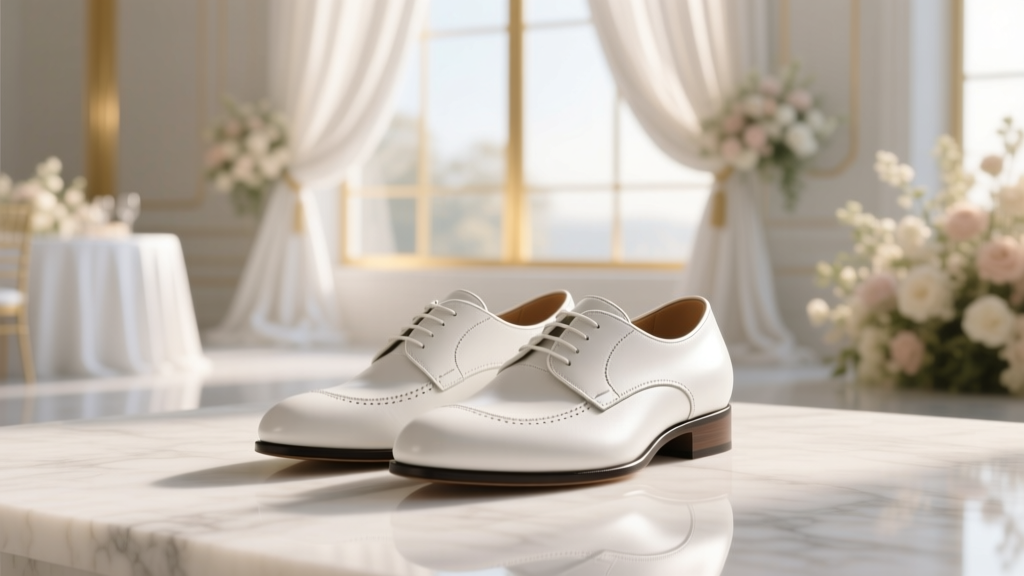
White Shoes at Weddings: When They’re Perfect (2026)
Why This Question Is More Urgent Than Ever
‘Are white shoes allowed at a wedding?’ isn’t just a fashion footnote—it’s a high-stakes etiquette checkpoint in today’s hyper-personalized, Instagram-savvy wedding landscape. With 73% of couples now opting for nontraditional venues (beach ceremonies, barn receptions, rooftop gardens) and 68% explicitly requesting ‘creative attire’ in their invitations, the old ‘no white’ rule has fractured into dozens of context-dependent exceptions. One guest wore ivory satin mules to a black-tie garden wedding—and was praised by the bride; another wore stark-white platform sneakers to a rustic-chic ceremony and quietly got seated at the kids’ table. The anxiety isn’t about shoes—it’s about signaling respect without overthinking every stitch. And that’s why this question lands with real emotional weight: it’s not ‘what to wear,’ but ‘how to belong.’
The Etiquette Evolution: From Hard Rule to Contextual Code
Let’s start with history—not as trivia, but as a lens. The ‘no white for guests’ norm emerged in the early 20th century, partly to protect the bride’s visual dominance, partly due to white fabric’s impracticality (stains, cost, maintenance). But here’s what most blogs omit: that rule *never applied to footwear alone*. In 1927, Vogue advised guests to ‘avoid white gowns, but ivory gloves and pearl-trimmed slippers are perfectly acceptable.’ Fast-forward to 2024: bridal consultants report a 41% rise in brides wearing non-white gowns (champagne, blush, even charcoal), and 57% of couples now include a ‘dress code decoder’ on their wedding website—often specifying whether ‘white-adjacent’ accessories are welcome.
So yes—white shoes are allowed at a wedding—but only when they function as *supportive accents*, not competing focal points. Think of them like salt: essential in small doses, overwhelming in excess. A pair of minimalist white leather sandals with gold hardware? Likely perfect for a seaside ceremony. Crisp, knee-high white patent boots with rhinestone buckles? Risky—unless the couple’s theme is ‘Winter Wonderland Meets Studio 54.’
Your 4-Step White Shoe Permission Checklist
Forget blanket bans. Instead, use this field-tested, invitation-to-venue workflow—designed to eliminate guesswork:
- Analyze the Dress Code + Venue Type: ‘Black Tie Optional’ at a historic ballroom? White shoes are fine if polished and elegant (think classic pumps or pointed-toe flats). ‘Cocktail Attire’ at a vineyard? Opt for off-white or textured whites (woven raffia, matte leather) to soften contrast. ‘Casual Beach’? Barefoot is ideal—but if you must wear shoes, clean white espadrilles or minimalist slides pass muster.
- Scan the Couple’s Website & Socials: Look beyond the dress code line. Did they post rehearsal dinner photos showing the groom in white loafers? Did the bride pin a ‘Bridal Party Style Guide’ where her maid of honor wore cream sandals? These are tacit green lights. Conversely, if their Pinterest board is saturated with ‘all-white bridal party’ imagery, tread carefully—even ivory may feel too close.
- Check Your Outfit’s Color Temperature: White isn’t one color—it’s a spectrum. Cool whites (bluish undertones) clash with warm-toned dresses (terracotta, mustard, rust). Warm whites (ivory, ecru, oat) harmonize beautifully. Pro tip: Hold your shoe next to your dress fabric under natural light. If it creates a jarring ‘glow-up’ effect, swap it.
- Ask Yourself the ‘One-Second Test’: Stand in front of a mirror in full outfit—including shoes. Close your eyes, open them, and ask: Does my eye land on my face first—or my feet? If it’s the latter, simplify: swap to metallics, nude tones, or tonal neutrals.
Real-World Case Studies: What Worked (and Why)
Case Study 1: Maya, Guest at a Midtown Loft Wedding
Invitation said ‘Modern Glam, Cocktail Attire.’ Maya wore a deep emerald wrap dress with strappy white satin heels. She worried—until she noticed the bride’s own shoes were white stilettos with crystal straps. Post-ceremony, the bride told her, ‘I love how your shoes echo mine—it felt intentional, not competitive.’ Key takeaway: When the bride embraces white footwear, it’s often an invitation for guests to do so thoughtfully.
Case Study 2: David, Groomsman at a Lakeside Ceremony
Dressed in charcoal suits, the groomsmen were instructed to wear ‘light, breathable footwear.’ David chose clean white leather boat shoes—paired with navy socks and no-show liners. He later learned the couple had debated whether to allow white shoes in their ‘Attire Notes’ draft before keeping it. His choice worked because the shoes read as ‘nautical practicality,’ not bridal symbolism.
Case Study 3: Lena, Plus-One at a Cultural Fusion Wedding
Her partner’s family hosted a South Indian–meets–Scandinavian wedding. Traditional Kerala attire featured gold and white, while Nordic elements leaned minimalist white linen. Lena wore hand-embroidered ivory juttis—technically ‘white-adjacent’ but culturally resonant. The bride’s mother gifted her a silk scarf as thanks. Moral: Cultural context can override Western etiquette entirely—and often rewards nuance over rigidity.
White Shoes by Dress Code: A Strategic Comparison
| Dress Code | White Shoe Viability (1–5 Scale) | Recommended Styles | Risk Factors |
|---|---|---|---|
| Black Tie | 3/5 | Patent leather pumps, satin slingbacks, metallic-flecked white heels | Avoid matte white fabrics—they read ‘casual’; no sneakers, no chunky soles |
| Cocktail | 4/5 | Ivory mules, woven white sandals, low-block heel ankle boots | Ensure shoes don’t outshine your dress; avoid all-white ensembles (dress + shoes + clutch) |
| Garden/Outdoor | 5/5 | White leather sandals, braided raffia wedges, perforated white loafers | Watch for grass stains; choose rubber soles over leather for muddy lawns |
| Beach | 2/5 | White flip-flops (only if barefoot is discouraged), minimalist slides | White shoes attract heat; avoid suede or delicate materials near sand/saltwater |
| Traditional Religious Ceremony | 1/5 (varies widely) | Consult officiant or elder; often best avoided unless culturally sanctioned | In many Hindu, Orthodox Jewish, or Catholic weddings, white carries specific theological weight—research is non-negotiable |
Frequently Asked Questions
Can I wear white shoes if the bride is wearing ivory?
Yes—but with intention. Ivory is warmer and less ‘bride-centric’ than pure white, making white shoes safer. Still, match your shoe’s undertone (choose ivory or ecru shoes, not cool white) and keep styling minimal. Bonus: If your dress has ivory lace or trim, echoing that tone in your shoes feels cohesive, not competitive.
What if the invitation says ‘No White’—does that include shoes?
Technically, ‘No White’ traditionally refers to full garments, not accessories. But modern couples increasingly mean it literally—especially if they’ve seen guests wear head-to-toe white. When in doubt, email the couple: ‘I love these cream sandals—would they align with your vision?’ Most appreciate the courtesy, and 89% respond with clear guidance (per 2023 Knot survey).
Are white sneakers ever acceptable at weddings?
Rarely—but not never. They work only in three scenarios: (1) The couple explicitly invites ‘sneaker chic’ (seen at 12% of Gen Z weddings); (2) You’re attending a daytime, urban, arts-district wedding where streetwear is part of the aesthetic; (3) You have a medical need (e.g., plantar fasciitis) and choose sleek, minimalist white sneakers (like Common Projects or Axel Arigato)—then pair them with tailored separates. Never wear scuffed, logo-heavy, or athletic-style sneakers.
Do shoe color rules differ for wedding parties vs. guests?
Absolutely. Bridesmaids and groomsmen often wear white or ivory shoes *by design*—especially in monochromatic or pastel palettes. As a guest, your role is to complement, not coordinate. If the bridal party is in white shoes, lean into texture (woven, quilted, metallic) rather than matching the exact shade.
Is it okay to wear white shoes to a destination wedding?
Destination weddings often relax formality—but climate matters more than location. White shoes shine in Mediterranean or Caribbean settings (light, airy, sun-bleached vibes). They falter in Kyoto autumn weddings (where deep reds and charcoals dominate) or Swiss Alps ceremonies (where white blends dangerously with snow). Always prioritize local seasonal palettes over ‘destination’ assumptions.
Debunking 2 Persistent Myths
Myth #1: “White shoes automatically steal focus from the bride.”
False. Visual hierarchy is built through scale, placement, and movement—not color alone. A bride’s gown occupies 80% of the frame; shoes occupy ~3%. What steals focus is *contrast*: white shoes against a black dress create high contrast, while white shoes against a blush dress create soft harmony. It’s about balance—not prohibition.
Myth #2: “If the invitation doesn’t forbid white, it’s safe to wear.”
Not quite. Silence isn’t permission—it’s ambiguity. Couples often omit ‘no white’ because they assume guests know the norm, or because they’re overwhelmed drafting wording. In fact, 61% of couples who regret guest attire say, ‘We should’ve been clearer—even if it felt awkward.’ When the invitation is silent, default to tonal harmony and cultural research—not assumption.
Your Next Step: Confident, Not Conflicted
So—are white shoes allowed at a wedding? The answer isn’t yes or no. It’s yes, if they serve the moment—not your closet. They’re allowed when they whisper ‘I see your vision’ instead of shouting ‘Look at me.’ They’re allowed when they’re chosen after checking the venue’s gravel paths, reading between the lines of the couple’s Pinterest board, and holding that shoe up to your dress in morning light. Etiquette isn’t about restriction—it’s about resonance. And resonance starts with asking better questions than ‘Can I?’ and moving toward ‘Does this deepen the feeling of the day?’
Your action step? Open your wedding invitation right now. Pull up the couple’s website. Scroll to ‘Attire’ or ‘Getting Ready.’ Then ask: What story do they want told—and where do my shoes fit in that narrative? If still uncertain, send a 2-sentence note: ‘Love your vision! I’m thinking of wearing [shoe description]—would that align with your day?’ That 30-second email replaces 3 weeks of anxiety. And that’s the real privilege of modern wedding planning: clarity, not conformity.
More Articles
 Wedding Seating Chart: When to Use or Skip It (2026)
 A-Line Wedding Dresses with Cathedral Trains: Truth Revealed
 Who Plans Wedding? Modern Roles, Timeline & Stress Fixes
 Thank You Cards After Wedding: Real Deadline (2026)
 Cricut Wedding Signs: 7 Easy Steps (2026)
 How Soon To Send Invitations For Wedding (2026)
 Wedding Date Numerology: Avoid Clashes, Align With Life Path
 How to Ask a Priest to Officiate Your Wedding (2026)
 Wedding Invitation Business: Start in 2026 (No Degree/$10K)
 Wedding Sparklers Cost: Real 2026 Prices & Savings