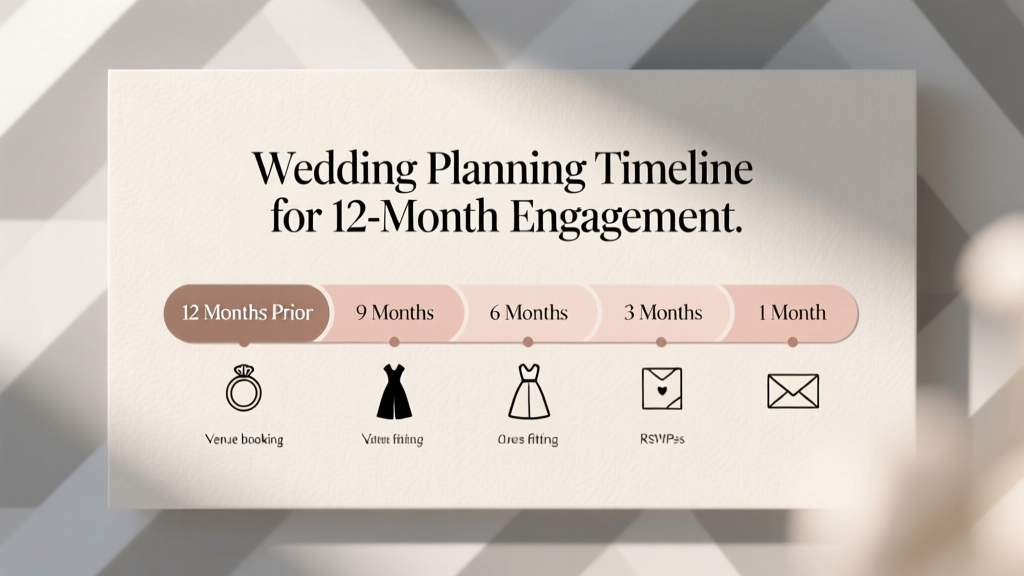
Wedding Planning Timeline for 12-Month Engagement
You’re engaged—soak it in for a second. The texts, the phone calls, the “show me the ring again” moments… it’s all part of the magic. And then, almost immediately, your brain starts doing that thing: Where do we even start?
A 12-month engagement is one of the most comfortable planning windows you can give yourselves. It’s long enough to secure great vendors and keep options open, but short enough to stay excited and focused. The key is having a clear wedding planning timeline—one that tells you what to do when, without turning your evenings into a second job.
This guide breaks the year down month-by-month with practical checklists, budget tips, and real-life examples. Think of it as a trusted wedding planner friend walking alongside you—calm, organized, and fully on your team.
Before You Start: 3 Decisions That Make Everything Easier
1) Decide what matters most (your top 3 priorities)
Before you tour venues or pin 200 dresses, align on what you care about most. This helps you spend intentionally and avoid decision fatigue.
- Examples of top priorities: amazing food, live band, photography, a specific date/season, a meaningful venue, guest experience, cultural traditions.
- Real-world scenario: If your priority is photography and you’re eyeing a sought-after photographer, you’ll book them early—even if your florist comes later.
2) Set a realistic budget (with a cushion)
A healthy wedding budget has room for the things you forget until they pop up: alterations, delivery fees, vendor meals, gratuities, marriage license costs, last-minute décor, and day-of emergencies.
- Start with a total number you can comfortably afford.
- Ask family about contributions early (and what, if any, expectations come with them).
- Add a 5–10% buffer for surprise costs.
3) Create a “living” guest list estimate
You don’t need your final guest list on day one, but you do need a strong estimate. Guest count drives venue options, catering costs, rentals, and invitation budget.
- Create tiers: Must invite, Would love, If space allows.
- Keep your estimate updated as you plan—this helps you avoid venue regret later.
Your 12-Month Wedding Planning Timeline (Month-by-Month)
12 Months Out: Lock the big picture
This month is about choosing direction, not details.
- Choose your wedding date (and a backup if you’re flexible).
- Discuss your wedding style: classic, garden, modern, rustic, city chic, destination, etc.
- Build your first draft of the wedding budget.
- Draft a guest count estimate.
- Start researching venues and availability.
Pro tip: If you’re planning a peak-season Saturday wedding, book your venue as early as possible. Popular dates go fast—especially in spring and fall.
11 Months Out: Book your venue + core vendors
Once your venue is set, everything else starts to click.
- Tour venues and book your ceremony/reception space.
- Hire a wedding planner (full-service) or month-of coordinator if you want support.
- Research and book your photographer (and videographer, if desired).
- Start your venue-required vendor list (some venues require insured vendors).
Budget consideration: Venues often require a deposit and signed contract. Read cancellation, overtime, and rain plan clauses carefully.
10 Months Out: Secure the “availability” vendors
These vendors are often booked based on date availability.
- Book your caterer (if not included with venue).
- Book entertainment: DJ or live band.
- Book your officiant (especially for personalized ceremonies).
- Start researching hair and makeup artists.
- Reserve rentals if your venue is a blank slate (tables, chairs, linens).
Real-world scenario: If you’re planning a backyard wedding, rentals and restroom trailers can become a major line item. Get those quotes early so your budget doesn’t get squeezed later.
9 Months Out: Dress shopping + wedding website
Now we get into the fun stuff—without losing momentum.
- Shop for your wedding dress (many designers require 6–9 months plus alterations).
- Begin attire planning for partner(s) and wedding party.
- Create your wedding website (date, location, travel, FAQs).
- Start your registry (do it in phases; you can add later).
Common mistake to avoid: Waiting too long to order attire, then paying rush fees—or settling for a second-choice outfit.
8 Months Out: Design direction + florals planning
This is the month for making your wedding feel like your wedding.
- Choose a color palette and general design vibe.
- Consult with a florist or floral designer.
- Plan your décor needs (ceremony arch, candles, signage, table details).
- Book hair and makeup if you haven’t already.
Pro tip: Save money on florals by focusing on high-impact areas (ceremony backdrop, bridal bouquet, sweetheart table) and using candles/greenery for the rest.
7 Months Out: Guest experience + travel logistics
This is where planning gets thoughtful: how will guests experience the day?
- Reserve hotel blocks (especially for out-of-town guests).
- Research transportation if needed (shuttle, valet, ride-share plan).
- Plan additional events: welcome party, rehearsal dinner, farewell brunch.
- Start planning ceremony elements: readings, rituals, cultural traditions.
Real-world scenario: If your venue is rural with limited ride-share, a shuttle can be a safety and comfort upgrade your guests will truly appreciate.
6 Months Out: Send Save the Dates + finalize key choices
Six months out is a sweet spot—enough time to build, but close enough to commit.
- Finalize guest list for your Save the Dates and send them.
- Book your baker (cake/dessert) and schedule tastings.
- Book your rental company if needed (tent, dance floor, lighting).
- Choose wedding party attire direction and timeline.
- Start planning your music: ceremony moments, first dance vibe.
Budget consideration: If you’re trying to reduce costs, this is often the time couples decide between a full open bar, beer/wine, or a signature cocktail setup.
5 Months Out: Invitations and ceremony details
- Choose and order wedding invitations (and day-of paper items if you want matching design).
- Confirm your ceremony structure with the officiant.
- Plan your vows approach: personal vows, traditional vows, or a mix.
- Start researching wedding bands and timing for ordering.
Common mistake to avoid: Ordering invitations before you confirm wording, start times, and addresses. Proofread like it’s your job—and have at least two other people check it too.
4 Months Out: Tastings, timeline drafts, and attire fittings
- Attend your catering tasting and finalize a menu direction.
- Schedule your first dress fitting (and suit/tux fittings).
- Start building a day-of timeline draft with your planner/coordinator or photographer.
- Choose ceremony and reception details: grand entrance, speeches, special dances.
Pro tip: A realistic timeline includes buffer time. Add 10–15 minutes to transitions (photos, travel, bustle, touch-ups). That’s the difference between “relaxed and glowing” and “running on adrenaline.”
3 Months Out: Mail invitations + finalize vendors
- Mail wedding invitations (typically 8–12 weeks before the wedding).
- Finalize major vendor bookings: lighting, photo booth, musicians, additional rentals.
- Confirm hair/makeup schedule and who is receiving services.
- Plan seating strategy and start a seating chart draft.
- Book marriage license appointment details based on your location’s requirements.
Real-world scenario: If you’re inviting a large number of families with kids, confirm whether children are invited before invitations go out. Mixed messages create awkward conversations later.
2 Months Out: Confirm counts, details, and payments
- Track RSVPs and follow up politely with non-responders.
- Finalize ceremony readings, processional order, and music selections.
- Confirm décor items, signage, and any DIY plans.
- Create a vendor payment plan and note final payment due dates.
- Arrange vendor meals with your caterer (often required in contracts).
Common mistake to avoid: Overcommitting to DIY in the final two months. If it can’t be completed a month before the wedding, simplify or delegate.
1 Month Out: Final walk-through + final counts
- Do a final venue walk-through with your planner/coordinator.
- Provide your final guest count to the caterer by their deadline.
- Finalize seating chart and place cards/escort cards.
- Confirm vendor arrival times and share the timeline.
- Pack an emergency kit (fashion tape, stain remover, pain reliever, snacks).
Pro tip: Assign a “go-to person” who isn’t you for day-of questions—someone who can approve small decisions and keep you in celebration mode.
2 Weeks Out: The calm-before checklist
- Confirm final details with all vendors via email (timeline, addresses, contact numbers).
- Pick up attire and do a full try-on (including shoes and undergarments).
- Prepare tips/gratuities in labeled envelopes if you plan to tip.
- Write vows and speeches, then print backups.
Wedding Week: Protect your energy
- Pick up your marriage license (based on local rules and expiration windows).
- Hydrate, eat real meals, and keep evenings light.
- Do final beauty appointments (hair color, nails) with enough time for fixes.
- Hand off décor items to your coordinator or a trusted helper.
Real-world scenario: Many couples schedule a late-night DIY assembly two days before the wedding and end up exhausted. If you need to assemble favors or welcome bags, do it earlier—or outsource it.
Common Wedding Planning Mistakes (and How to Avoid Them)
- Booking vendors without reading contracts: Confirm overtime fees, payment schedules, rain plans, and cancellation terms.
- Underestimating the true guest cost: Each guest affects catering, rentals, stationery, favors, and bar. Use a per-guest estimate as you build your budget.
- Skipping a coordinator: Even a month-of coordinator can protect your timeline, manage vendors, and solve problems without you knowing.
- Not building buffer time: Hair/makeup runs late, bustle takes longer, family photos expand—buffer keeps the day enjoyable.
- Trying to please everyone: Filter advice through your priorities. You can honor family while still planning a wedding that feels like you.
Planner Pro Tips for a Smooth 12-Month Engagement
- Create a shared planning hub: One spreadsheet for budget, one for guest list, one folder for contracts.
- Use “decision deadlines”: For example: finalize attire by month 7, stationery by month 5, music by month 2.
- Plan for weather: Even indoor weddings need an arrival plan (umbrellas, coats, heat). Outdoor weddings need a backup plan you actually like.
- Protect your relationship time: Schedule at least one no-wedding-talk night each week.
- Be strategic with splurges: Spend on what guests feel (food, comfort, music) and what you keep forever (photos/video). Save on what fades fast.
FAQ: 12-Month Wedding Planning Timeline
When should we book our venue during a 12-month engagement?
Ideally in the first 1–2 months. Your venue determines your date, guest capacity, and often your vendor options. If you’re aiming for a popular season or a Saturday, earlier is better.
What vendors should we book first after the venue?
Start with date-sensitive vendors: photographer, planner/coordinator, caterer (if separate), DJ/band, and officiant. These tend to book up quickly and shape the rest of your planning.
When should we send Save the Dates and invitations?
Save the Dates usually go out 6–8 months before the wedding (earlier for destination weddings). Invitations typically go out 8–12 weeks before, with RSVPs due about 3–5 weeks before the wedding.
How can we stick to our wedding budget without feeling deprived?
Anchor spending to your top three priorities, then set caps for everything else. Consider guest count adjustments, seasonal flowers, simplified bar options, and using one statement décor moment instead of decorating every corner.
Is a 12-month timeline enough for a destination wedding?
Yes, for many destinations—but you’ll want to book travel-friendly venues and key vendors earlier (often at 12–10 months out). Send Save the Dates sooner and provide clear travel info on your wedding website.
What if we’re behind schedule at 6 months out?
Don’t panic. Focus on locking the essentials first: venue, photographer, catering, entertainment, and attire orders. Then work outward into details. A coordinator can also help you catch up fast and avoid costly last-minute choices.
Your Next Steps (So You Feel on Track by Tonight)
- Write down your top three wedding priorities with your partner.
- Build a rough budget with a 5–10% cushion.
- Create a guest count estimate and pick 2–3 venue options to tour.
- Start a shared folder for contracts, inspiration, and planning notes.
You don’t have to plan a perfect wedding—you just need a plan that supports you. Take it month by month, make decisions that reflect your relationship, and leave room for joy along the way.
Want more step-by-step help? Explore more wedding planning guides on weddingsift.com—we’re here for every checklist, decision, and happy moment.
More Articles
 Say No to Wedding Plus Ones: Respectful, Budget-Savvy Tips
 Ave Maria Wedding Song: 7 Factors to Weigh (2026)
 What Do Groom’s Parents Pay For? (2026)
 Groom’s Wedding Responsibilities (2026)
 Can You Have 2 Best Men? A 2026 Guide
 Scroll Wedding Invitations: Easy DIY (2026)
 Wedding Officiant in 2026: Minimal Steps, No Seminary
 Average Wedding Gift Amount 2026: Real Data Revealed
 How to Ask Groomsmen: 7 Stress-Free Ways (2026)
 Cheap Wedding Catering: 7 Strategies That Save $3,200–$8,900