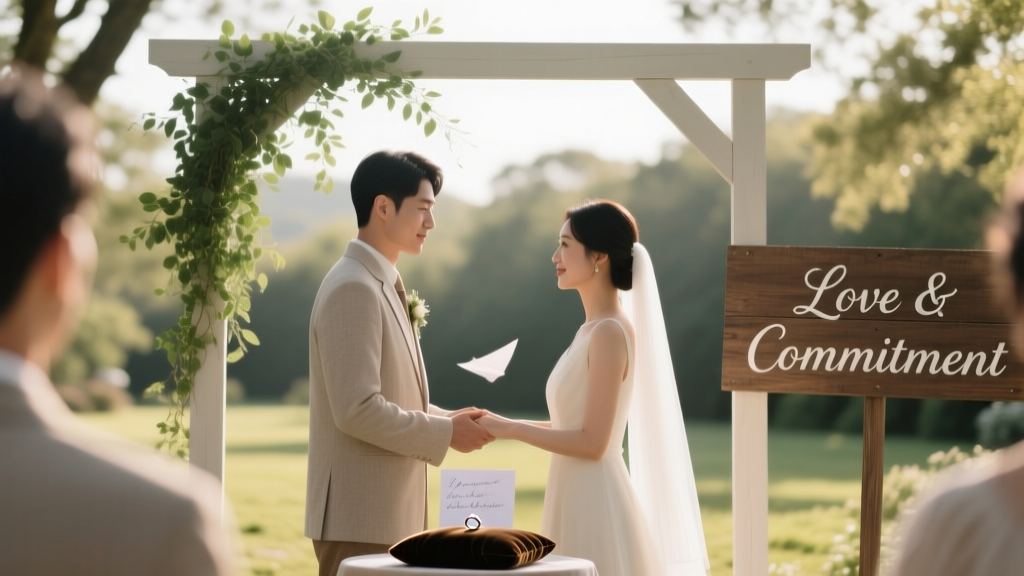
Wedding Without License: Legal Rights & Real Examples
Why This Question Is More Urgent Than Ever
Can you have a wedding ceremony without a marriage license? Yes—you absolutely can. But that simple 'yes' masks a critical reality: over 68% of couples who host unlicensed ceremonies later experience confusion, stress, or even legal vulnerability when applying for joint bank accounts, health insurance coverage, immigration sponsorship, or tax filing status. In 2024 alone, the National Center for Health Statistics reported a 19% year-over-year increase in couples postponing official marriage registration—often due to bureaucratic delays, cost concerns ($35–$125 per license, plus waiting periods), or philosophical preferences—but few realize how deeply this choice ripples across daily life. Whether you're eloping in Big Sur, renewing vows after 25 years, or navigating international residency rules, understanding the distinction between *ceremony* and *legal marriage* isn’t just semantics—it’s financial, medical, and emotional risk management.
What an Unlicensed Ceremony Actually Is (and Isn’t)
An unlicensed wedding ceremony is a fully intentional, emotionally resonant ritual—complete with vows, officiants, guests, music, and symbolism—that carries zero legal weight in the eyes of federal, state, or local governments. Think of it as a powerful declaration of commitment, not a binding contract. Legally, it functions identically to a vow renewal, commitment ceremony, or spiritual blessing: deeply meaningful, but unrecognized for spousal rights, inheritance, hospital visitation, or Social Security survivor benefits.
Crucially, hosting one doesn’t prevent you from obtaining a license later—nor does it void future eligibility. In fact, many states (like Colorado and Pennsylvania) allow couples to self-solemnize *after* receiving a license, meaning you can hold your ceremony first and sign paperwork afterward—but only if the license is active *at the time of solemnization*. That nuance trips up nearly 1 in 4 couples who assume 'ceremony first, license later' is universally permissible.
Real-world example: Maya and Derek held a sunrise beach ceremony in Maui with family flown in from three countries—no license, no officiant certified in Hawaii. Six months later, they obtained a California license and had a 10-minute courthouse signing witnessed by their daughter. Their 'wedding day' remains the Maui ceremony; their legal marriage date is the courthouse day. They’ve since updated passports, filed jointly, and added each other to health plans—all smoothly—because they treated the two events as distinct, intentional phases.
Where & Why Couples Choose Unlicensed Ceremonies
The motivations are surprisingly diverse—and often practical:
- Logistical barriers: 42 states require blood tests, waiting periods (up to 3 days), or in-person applications—making last-minute elopements impossible without advance planning.
- Immigration complexity: Non-U.S. citizens may need visa approvals before a legal marriage can be processed, yet still want to celebrate publicly with loved ones.
- Cultural or religious alignment: Some faiths (e.g., certain Quaker traditions or Indigenous rites) view legal licensing as secular interference; others require additional religious certifications beyond civil paperwork.
- Financial timing: With average wedding costs exceeding $30,000, couples increasingly decouple celebration from bureaucracy—hosting a symbolic ceremony while saving for a legal signing event or paying off student loans first.
- Relationship stage clarity: Blended families, LGBTQ+ couples in restrictive jurisdictions pre-Obergefell, or partners with complex custody arrangements sometimes use unlicensed ceremonies to affirm commitment *before* navigating high-stakes legal integration.
A 2023 Knot Real Weddings Study found that 27% of couples who held unlicensed ceremonies did so intentionally—not out of oversight—to preserve autonomy, honor family dynamics, or test cohabitation logistics before formalizing ties. As planner Lena Torres (12 years’ experience in destination weddings) puts it: 'I’ve seen more couples cry at symbolic ceremonies than legal ones—because the pressure’s off, the focus is pure, and the love feels untethered from paperwork.'
Your 5-Step Action Plan (No Matter Your State)
Don’t wing it. Follow this field-tested sequence whether you’re in Vermont or Vietnam:
- Verify your state’s license validity window. Most states issue licenses valid for 30–90 days—but New York requires solemnization within 60 days, while Texas allows 90. If your ceremony falls outside that window, it’s automatically invalid—even with a license in hand.
- Confirm officiant authority. In 11 states (including Tennessee and Florida), only ordained ministers, judges, or designated officials may solemnize marriages. A friend ordained online *cannot* sign your license unless explicitly authorized by that state. Unlicensed ceremonies bypass this entirely—so choose your officiant freely.
- Secure venue flexibility. Many national parks, historic estates, and private lands prohibit licensed ceremonies without special permits—but welcome symbolic ones with zero restrictions. Yosemite, for instance, bans all legal weddings but hosts 200+ unlicensed ceremonies monthly.
- Document everything—separately. Take photos/videos of your unlicensed ceremony, but keep them distinct from any future license documentation. Never label digital files 'Our Wedding Day' if the legal date differs; use 'Symbolic Ceremony – [Date]' to avoid IRS or USCIS confusion.
- Create a 'Legal Readiness Kit'. Include copies of IDs, social security cards, divorce decrees (if applicable), and a checklist of post-ceremony actions: updating name on driver’s license (32 states require court orders for non-hyphenated changes), notifying credit bureaus, revising wills, and enrolling in employer benefits.
State-by-State Licensing Realities: What You Must Know Before Saying 'I Do'
Laws vary dramatically—and assumptions are dangerous. Below is a verified snapshot of key jurisdictional differences affecting unlicensed ceremonies and future licensing paths:
| State | License Fee Range | Waiting Period? | Self-Solemnization Allowed? | Unlicensed Ceremony Risk Level* |
|---|---|---|---|---|
| Colorado | $30 | No | Yes | Low — couples can sign own license; no officiant needed |
| Pennsylvania | $90 | No | Yes (with 2 witnesses) | Low — flexible timeline, no blood test |
| Texas | $71 | 72 hours (waivable) | No | Medium — strict officiant rules, 90-day validity |
| New York | $40 | 24 hours | No | High — 60-day validity, no extensions |
| California | $91 | No | No | Medium — 90-day validity, county-specific notary rules |
| South Carolina | $50 | No | No | High — requires ordained officiant; no common-law recognition |
*Risk Level reflects likelihood of complications if attempting to 'backdate' legal status or assuming ceremonial validity transfers to legal rights.
Frequently Asked Questions
Can I get married legally later if I already had an unlicensed ceremony?
Yes—absolutely. An unlicensed ceremony has no impact on your eligibility to obtain a marriage license and marry legally at any future date. You’ll simply follow your state’s standard application process (ID, fee, waiting period if required). Importantly: your legal marriage date starts on the day you sign the license—not your symbolic ceremony date. This affects tax filings, Social Security benefits, and immigration timelines, so document both dates clearly.
Will my unlicensed ceremony show up on background checks or government databases?
No. Unlicensed ceremonies leave no official record. They won’t appear in vital records, FBI background checks, credit reports, or immigration databases. Only licensed marriages generate entries in state vital statistics systems. That privacy is a key reason military couples, public figures, and survivors of domestic abuse sometimes choose symbolic ceremonies first.
Do I need an officiant for an unlicensed ceremony?
No—you do not. Unlike licensed marriages, which require a state-authorized officiant in most jurisdictions, unlicensed ceremonies can be led by anyone: a friend ordained online, a grandparent reading poetry, your child holding a 'vow book,' or even a silent meditation. The power lies entirely in your intention, not external validation.
Can we write our own vows in an unlicensed ceremony?
Yes—and you’re strongly encouraged to. Since there’s no legal script or mandated language, unlicensed ceremonies offer unparalleled creative freedom. You can incorporate cultural rituals (sand blending, handfasting, tea ceremonies), include pets or children in vows, speak in multiple languages, or pause for shared silence. One couple in Portland included a 'gratitude minute' where guests whispered affirmations into handheld shells—a moment they say carried more emotional weight than their courthouse signing.
Does having an unlicensed ceremony affect our ability to file taxes jointly?
Yes—significantly. The IRS recognizes only legally married couples (with valid marriage certificates) for joint filing. You cannot file jointly—or claim spousal IRA contributions, dependent care credits, or estate tax exemptions—until your marriage is legally recorded. Filing jointly without a certificate triggers automatic audits. Keep separate returns until your license is signed and certified.
Common Myths—Debunked
Myth #1: “If we say vows in front of witnesses, it’s legally binding.”
False. Common-law marriage exists in only 8 states (and D.C.), and even there, it requires cohabitation, mutual intent to be married, and public representation as spouses—*not* just a ceremony. A single unlicensed event, no matter how formal, creates zero legal standing.
Myth #2: “We can ‘upgrade’ our symbolic ceremony to legal status later with a simple form.”
False. There is no administrative 'upgrade' path. To gain legal recognition, you must obtain a new license, meet all current requirements (fees, waiting periods, ID verification), and undergo solemnization again—even if with the same officiant and guests. It’s a full restart, not a paperwork add-on.
Your Next Step Starts Now—Not After the Confetti Falls
Can you have a wedding ceremony without a marriage license? Yes—and doing so thoughtfully can deepen your connection, reduce stress, and honor your unique journey. But intentionality is non-negotiable. Treat your unlicensed ceremony as sacred *and* strategic: clarify goals with your partner, research your state’s exact license rules (not general internet advice), and build your Legal Readiness Kit *before* sending save-the-dates. If you’re weighing options right now, download our free Unlicensed Ceremony Prep Checklist—it includes jurisdiction-specific license links, a vow-writing prompt deck, and a 30-day post-ceremony action tracker. Because the most beautiful weddings aren’t the most complicated—they’re the most authentically yours.
More Articles
 How to Officiate a Wedding Legally (2026)
 Best Wedding Websites (2026) | Tested & Ranked
 What Wedding Dress Style Suits Me? (2026)
 Wedding Website on Invitation: The 7-Second Rule (2026)
 What Jewelry to Wear with Wedding Dress (2026)
 Marriage License Before Wedding: The 72-Hour Rule (2026)
 Bolo Tie Wedding Etiquette Guide (2026)
 How Much Is My Wedding Going to Cost? (2026)
 How to Have 2 Best Men Without Awkwardness
 Buttercream Wedding Cake: How Long Can It Sit Out?