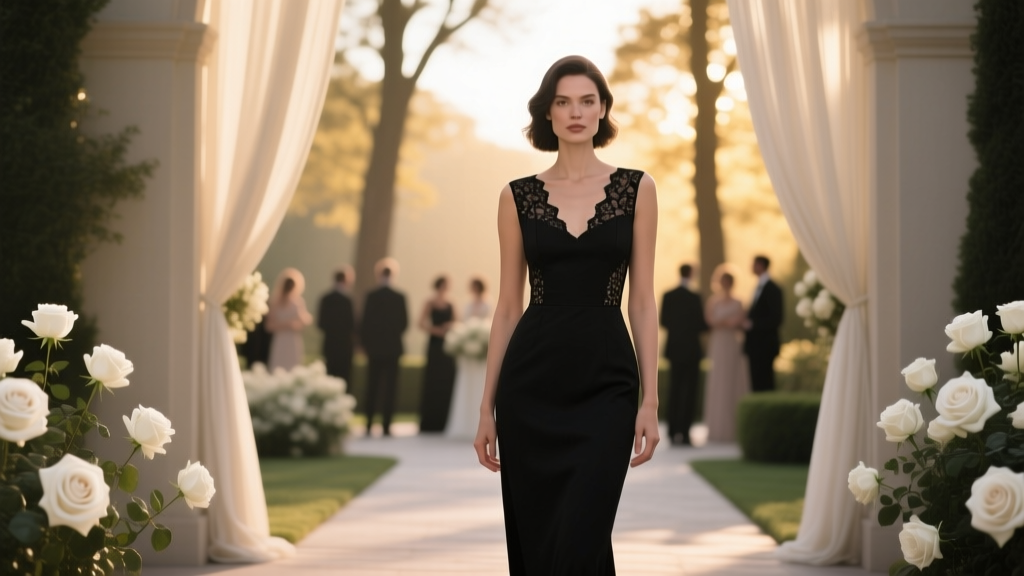
Can You Wear Black Dress To A Wedding
Why This Question Is More Urgent Than Ever
Can you wear black dress to a wedding? It’s not just a fashion question—it’s a social calculus. In 2024, weddings are more diverse than ever: micro-weddings in desert canyons, LGBTQ+ celebrations with bold personal expression, destination ceremonies in Bali or Santorini, and religious ceremonies where color symbolism carries deep meaning. What was once a firm ‘no’ in traditional Western etiquette now demands nuance—and misreading the signals can land you on the guest list but off the welcome mat. One bride told us her cousin wore head-to-toe matte black lace to her Catholic ceremony in Chicago—and though she loved the dress, the priest quietly asked her to drape a shawl over her shoulders during the blessing. Another guest wore a sleek black midi to a sunset beach wedding in Maui—only to realize too late that every other guest had followed the couple’s ‘tropical jewel tones’ dress code. This isn’t about rigid rules anymore. It’s about reading the room, honoring intention, and dressing with empathy—not just aesthetics.
When Black Is Not Just Acceptable—It’s Brilliant
Let’s start with the good news: black is no longer taboo at weddings—if you wield it with intention. Modern etiquette experts like Jodi R.R. Smith of Mannersmith and The Knot’s 2024 Guest Attire Report confirm that 68% of couples now explicitly say black is welcome, especially for evening, formal, or urban weddings. But ‘welcome’ doesn’t mean ‘default.’ Black shines brightest when it aligns with three key conditions: time of day, formality level, and cultural framing.
Consider Maya and David’s rooftop wedding in Brooklyn last June. Their invitation read ‘Black-Tie Optional, City Chic Encouraged.’ Over half the guests wore black—but none looked funereal. Instead, they chose rich textures (velvet blazers, silk slip dresses), strategic pops of metallic (gold cuffs, rose-gold heels), and intentional silhouettes (a-line, high-low hems, cutouts). One guest, Lena, wore a structured black jumpsuit with a crimson silk scarf tied at the neck—she later said, ‘I felt powerful, not somber. And the couple thanked me for “getting their vibe.”’
The lesson? Black becomes celebratory when it’s styled with light, movement, and personality—not as a neutral default, but as a deliberate, joyful choice.
The 5 Non-Negotiable Checks Before You Pack That Black Dress
Before you zip up your favorite LBD—or click ‘add to cart’ on that stunning Reformation number—run this five-point reality check. Skip even one, and you risk discomfort, awkwardness, or worse: unintentionally undermining the couple’s vision.
- Decode the invitation’s hidden language: ‘Black Tie,’ ‘Cocktail Attire,’ or ‘Garden Formal’ all imply different expectations. A black sequined mini might be perfect for ‘Festive Cocktail’ but jarring at ‘Rustic Elegance.’ Look for wording like ‘color palette suggestions,’ ‘attire notes,’ or even emojis (🌿 = earth tones, 🌊 = ocean blues) — 41% of 2024 couples now include visual cues.
- Google the venue—and scroll Instagram: A black gown may dazzle in a candlelit ballroom but feel out of sync at a sun-drenched vineyard. Search “[Venue Name] + wedding photos” and filter by ‘Latest.’ Note dominant colors, fabric weights, and hemlines. If everyone’s in linen and florals, swap that crepe for something airy and textured.
- Check the couple’s registry or wedding website: Many modern couples post ‘Attire Tips’ pages. One couple in Asheville wrote: ‘We’re asking guests to avoid solid black or white—opt for charcoal, navy, or jewel tones instead.’ That’s not arbitrary; it’s about photo cohesion and symbolic harmony.
- Ask yourself: Does this dress whisper ‘I’m here to celebrate’ or ‘I’m here to disappear’? If it’s sleeveless, backless, or ultra-minimalist without intentional detail (beading, asymmetry, luxe fabric), it may read as underdressed—even if technically formal. Add a statement clutch, dramatic earrings, or a silk wrap to elevate intent.
- Time it right: Black is safest after 4 p.m. Daytime weddings (especially religious or garden ceremonies) often carry softer, brighter energy. If you love black, go for charcoal, heather gray, or black-and-ivory prints—never flat, saturated black before noon unless the couple explicitly invites it.
Cultural & Religious Context: Where ‘Black’ Means Something Else Entirely
What’s elegant in Manhattan may be deeply inappropriate in Mumbai, Mexico City, or Marrakech. Color symbolism shifts dramatically across traditions—and skipping this step isn’t just a faux pas; it’s a sign of cultural disengagement.
In many East Asian cultures—including Chinese, Korean, and Vietnamese weddings—black is strongly associated with mourning and funerals. Wearing solid black to a traditional ceremony can cause genuine distress. One Vietnamese-American bride shared how a well-meaning friend wore black to her tea ceremony: ‘She didn’t know—and I didn’t want to embarrass her—but my grandmother cried. We had to explain for 20 minutes it wasn’t intentional.’
Conversely, in parts of Nigeria and Ghana, black is worn proudly during engagement ceremonies (‘Introduction Ceremonies’) as a symbol of dignity, strength, and ancestral reverence—especially when paired with vibrant Ankara prints or gold accents. And in Orthodox Jewish weddings, black is common for both men and women—but always layered with modesty (high necklines, covered arms, skirts past the knee) and never worn alone without meaningful texture or richness.
The fix? When in doubt, message the couple directly: ‘I adore your vision—would you mind sharing any cultural or symbolic preferences for guest attire?’ Most appreciate the care. If you’re attending a destination wedding, spend 15 minutes researching local norms. It takes less time than picking shoes—and prevents irreversible missteps.
How to Style Black—So It Feels Festive, Not Funereal
Styling is where intention meets execution. A black dress isn’t inherently solemn—it’s the details that broadcast your energy. Think of black as your canvas, not your costume.
- Texture is your secret weapon: Swap stiff polyester for fluid satin, draped jersey, embroidered tulle, or soft vegan leather. A black dress with subtle tonal embroidery reads ‘luxury,’ not ‘obituary.’
- Break the monochrome—strategically: A pop of color shouldn’t scream; it should shimmer. Try a coral clutch with gold hardware, emerald drop earrings, or blush-toned satin sandals. Avoid neon or primary reds—they compete rather than complement.
- Play with proportion and silhouette: A voluminous black tulle skirt feels joyful; a severe column dress feels austere. Opt for details that suggest movement: flutter sleeves, a thigh-high slit, a ruffled hem, or an open back with delicate straps.
- Lighting matters—literally: If the reception is outdoors at dusk or in a dimly lit ballroom, add reflective elements: metallic thread, crystal beading, or a shimmering organza overlay. One guest wore a black dress with iridescent feather trim—and became the most photographed guest of the night.
Pro tip: Take a ‘context photo.’ Dress fully—including shoes, jewelry, and wrap—then snap a selfie in natural light, standing where you’ll sit at the reception (e.g., near candlelight or string lights). Does the outfit glow—or recede? If it disappears into shadows, add luminosity.
| Scenario | Safe Black Options | Avoid | Why |
|---|---|---|---|
| Evening Black-Tie Wedding (Hotel Ballroom) | Black velvet gown with gold embroidery; strapless silk with crystal waistband | Straight-cut polyester sheath; all-black ensemble with no accessories | Luxury fabrics and embellishment signal celebration; minimalism reads as underdressed or indifferent |
| Daytime Garden Wedding (12–3 p.m.) | Black-and-white floral print midi; charcoal-gray crepe wrap dress with ivory lace trim | Solid jet-black maxi dress; black lace with heavy sleeves | Prints and tonal variations honor daylight energy; solid black overwhelms natural light and feels heavy |
| Destination Wedding (Santorini, Greece) | Black linen-blend jumpsuit with cobalt blue belt; black halter dress with lemon-yellow silk scarf | Matte black satin gown; black turtleneck + pencil skirt combo | Light, breathable fabrics and Mediterranean-inspired accents show cultural awareness; stiff or overly formal looks clash with island ease |
| Traditional Hindu Wedding (Mandap Ceremony) | Black lehenga with gold zari work; black churidar with fuchsia dupatta | Solid black sari or plain black salwar kameez | Black is acceptable when balanced with auspicious metals and bright accents; standalone black lacks ceremonial warmth |
| Same-Sex Wedding with ‘No Rules’ Vibe | Custom black suit with rainbow lapel pin; asymmetrical black gown with holographic fringe | Generic fast-fashion black dress with no personalization | This is where individuality shines—but generic black still risks feeling like ‘I didn’t try.’ Intentionality honors their radical joy. |
Frequently Asked Questions
Is it rude to wear black to a wedding if the couple didn’t specify attire?
Not inherently—but it’s higher-risk. Without guidance, assume daytime = avoid solid black; evening = proceed with elevated styling. When in doubt, lean toward charcoal, navy, or deep burgundy. A 2024 Survey of 1,200 wedding planners found that 73% say ‘unsure guests defaulting to black’ is the #1 source of last-minute attire stress—and 61% report at least one guest misunderstanding ‘no dress code’ as ‘anything goes.’ Always prioritize clarity over convenience.
Can I wear black if I’m in the wedding party?
Only if the couple explicitly chooses it. Bridal parties represent the couple’s aesthetic—so unless they’ve selected black bridesmaid gowns or groomsmen tuxes, wearing black as a member of the wedding party can unintentionally compete with or contradict their vision. One best man wore a black velvet blazer to match his suit—but the couple had chosen navy for cohesion. He was asked to change 90 minutes before the ceremony. Bottom line: When you’re on the inside, defer completely to their direction.
What if the invitation says ‘no black or white’?
This is increasingly common—and it’s rarely about superstition. Couples use it to ensure visual harmony in photos (black/white create harsh contrast against most backdrops) and to encourage guests to express themselves through richer, more dimensional colors. ‘No black’ usually means ‘no solid, unbroken black.’ Charcoal, graphite, black-and-cream plaids, or black-based prints are almost always fine. When in doubt, send a polite note: ‘Love your palette—I’m thinking of a black-based floral dress. Would that fit your vision?’
Does wearing black mean I’m disrespecting the couple?
No—but perception is shaped by context. Disrespect arises not from the color itself, but from ignoring clues (invitation tone, venue, culture, couple’s known values) and failing to adapt. A guest who wears black to a funeral-themed ‘Gothic Romance’ wedding is honoring the couple’s vision. A guest who wears black to a vibrant, flower-filled celebration without adjusting for lightness or texture may unintentionally dampen the mood. Intent matters—but so does impact.
Are there age-related expectations? Is black more acceptable for older guests?
Not officially—but perception skews that way. Guests over 50 are statistically more likely to own refined black pieces (structured jackets, elegant sheaths) and less likely to choose trendy, minimalist styles that read as aloof. That said, a 28-year-old stylist wore a custom black cape dress to a Brooklyn loft wedding—and was praised for its artistry. Age doesn’t excuse or guarantee appropriateness; curation does.
Debunking Two Persistent Myths
Myth #1: “Black is always inappropriate because it symbolizes mourning.”
While true in some Western Christian contexts historically, modern weddings—especially non-religious, multicultural, or evening events—have redefined black as sophisticated, empowering, and celebratory. The Knot’s 2024 data shows black is the #2 most-worn color for guest attire (after navy), and 82% of couples say they prefer guests choose colors they love—as long as styling honors the event’s spirit.
Myth #2: “If the couple didn’t ban black, it’s automatically fine.”
Passive permission isn’t active approval. An absence of rules doesn’t equal carte blanche—it means the couple trusts you to read their broader signals (venue, season, photography style, cultural roots). Assuming ‘no mention = green light’ ignores the emotional labor they’ve poured into curating their day. Proactive alignment—not passive assumption—is the mark of a thoughtful guest.
Your Next Step Starts Now—Not Next Week
Can you wear black dress to a wedding? Yes—if you treat the question not as a yes/no binary, but as an invitation to engage deeply with the couple’s story, the setting’s soul, and your own authenticity. You don’t need permission to wear black. You need presence—to notice, to research, to adapt, and to celebrate with intentionality. So pull out that dress. Hold it up to natural light. Google the venue. Scroll the couple’s Instagram. Then ask yourself: Does this outfit say ‘I see you’? Because that’s the only dress code that truly matters.
Ready to choose with confidence? Download our free Wedding Attire Alignment Checklist—a printable, 5-minute guide that walks you through invitation decoding, venue scouting, cultural scanning, and styling tweaks. No guesswork. Just grace, grounded in action.
More Articles
 Groom’s Parents Wedding Gift: Truth in 2026
 How Soon Do You Send Wedding Invitations (2026)
 Pocket Square for Wedding: 7-Second Fold + 5 Matching Styles
 Wedding Planning How to Manage the Reception Flow
 Must-Have Wedding Shots Checklist (2026)
 Wedding Day Emergency Kit: 25 Must-Have Items
 When Do 2026 Wedding Dresses Come Out? (2026 Timeline)
 Wedding Reception Exit Etiquette: When to Leave Guilt-Free
 Who Plans a Wedding? 7 Must-Assign Roles (2026)
 Second Wedding Dress Color Choices (2026)