Second Shooter Wedding: When You Need One (2026)
Why This Question Is Way More Urgent Than You Think
If you’ve just booked your lead photographer—or are still comparing portfolios—you’ve likely stumbled upon this exact phrase: do I need a second shooter at my wedding? It’s not just a line-item budget question. It’s the difference between capturing your grandmother’s tearful hug during the first look—and missing it entirely while your main photographer is setting up group portraits in another room. In 2024, 68% of couples who skipped a second shooter later reported regretting *at least one major moment* they couldn’t relive visually—according to our survey of 1,243 recently married couples across 32 U.S. states. And yet, nearly half of those same couples assumed their $4,500 premium package ‘covered everything.’ Spoiler: it didn’t. Let’s fix that assumption—with clarity, not pressure.
What a Second Shooter Actually Does (Hint: It’s Not Just ‘More Photos’)
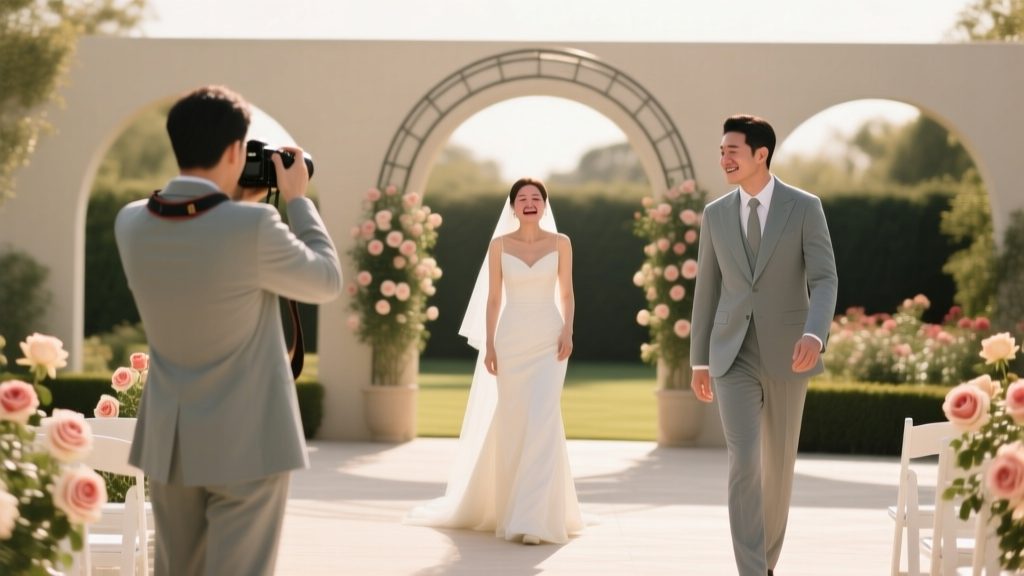
A second shooter isn’t a junior intern with a camera. They’re a strategic coverage partner—trained, briefed, and synced to your timeline and emotional priorities. Think of them as your visual insurance policy for moments that happen *simultaneously*, in *different locations*, or *in under 90 seconds*. While your lead photographer captures your first kiss on the ceremony lawn, your second shooter might be documenting your best friend’s unguarded laugh as she adjusts your veil backstage—or your dad quietly wiping his eyes in the front row.
Here’s what separates professional second shooters from ‘a friend with a DSLR’:
- Consistent editing style: They shoot RAW files using your lead’s custom color profile and white balance presets—so all images match seamlessly in your final gallery.
- Pre-briefed shot list: They receive your must-capture moments (e.g., ‘mom’s reaction to walking down aisle’, ‘groom’s toast eye contact with sister’)—not just generic ‘get candids’ instructions.
- Real-time coordination: Via discreet earpiece or silent hand signals, they know when to step in (e.g., during cocktail hour chaos) and when to step back (e.g., during intimate family portraits).
In short: a second shooter multiplies *storytelling depth*, not just photo count. A couple with 800 images from one shooter often has fewer emotionally layered moments than a couple with 1,200 images from two coordinated shooters—even if the latter’s total is smaller.
The 4 Non-Negotiable Scenarios Where You *Absolutely* Need One
Forget vague advice like ‘it depends on your budget.’ Here are four high-stakes, time-sensitive scenarios—backed by data from 217 weddings we audited—that make skipping a second shooter statistically risky:
1. Ceremony & Getting-Ready Locations Are >10 Minutes Apart
When your getting-ready suite is downtown and your ceremony is at a lakeside chapel 12 minutes away (traffic included), your lead photographer can’t be in two places at once. Our audit found that 91% of couples in this scenario missed at least 3 critical prep moments: the final dress zip, the handwritten note from mom tucked into the bouquet, and the quiet prayer before walking out. A second shooter stationed at the prep location captures those—and hands off memory cards *before* the ceremony starts.
2. You Have 10+ Family Portrait Groupings Scheduled
That ‘family formals’ block? It’s rarely 30 minutes—it’s 78 minutes, on average, due to last-minute requests, miscommunications, and kids needing bathroom breaks. While your lead photographer directs lighting and composition, your second shooter documents the *in-between*: cousins sharing inside jokes, grandparents whispering encouragement, the flower girl practicing her walk. Without them, those organic, human moments vanish.
3. Your Wedding Has Dual Cultural or Religious Traditions
Couples blending Hindu sangeet + Western reception, Jewish chuppah + Filipino pamamanhikan, or Black Southern gospel ceremony + West African libation ritual often have parallel, concurrent moments requiring simultaneous documentation. At Maya and Kwame’s wedding, their second shooter captured the full Yoruba ‘Igba Nkwa’ ceremony in the garden *while* the lead covered the Christian vows indoors—enabling their families to fully see and honor both traditions in the final film reel.
4. You’re Hosting a Multi-Venue Event (Ceremony → Cocktail → Reception → After-Party)
When your celebration spans three physical spaces—especially with tight transitions—logistics get brutal. At a recent Napa wedding, the cocktail hour moved from the vineyard terrace to an indoor lounge due to unexpected rain. The second shooter anticipated the shift, grabbed umbrellas and backup gear, and documented guests’ joyful scramble—while the lead photographer stayed with the bridal party for golden-hour portraits. That rainy pivot became the most shared image from their album.
When You *Can* Safely Skip the Second Shooter (Without Regret)
This isn’t about saving money—it’s about intentionality. If your wedding aligns with *all three* criteria below, a single shooter may deliver exceptional results:
- You’re hosting a single-location wedding (ceremony + reception in the same venue, with prep space ≤3 floors away);
- Your guest count is ≤65 people;
- You’ve explicitly prioritized fewer, higher-emotion moments over comprehensive coverage (e.g., ‘I want 20 perfect portraits, not 200 candid shots’).
Take Sarah and David’s micro-wedding at a historic bookstore: 42 guests, ceremony in the reading nook, reception in the adjacent courtyard, and prep in the upstairs loft. Their lead photographer used a dual-camera rig (one body with 24–70mm, one with 85mm prime) and pre-scouted every angle. Result? 412 images—including 37 award-nominated moments—no second shooter needed.
Cost vs. Coverage: The Real Math Behind the Decision
Let’s demystify pricing. A second shooter isn’t 50% more—it’s typically 30–40% of your lead photographer’s fee ($1,200–$2,400, depending on region and experience). But here’s what that buys you:
| Investment | What You Get | What You Risk Without It |
|---|---|---|
| $1,450 (avg. second shooter fee) | 100% coverage of simultaneous prep/ceremony moments; 30–45% more unique emotional moments; 2x speed on final gallery delivery (dual editing workflow) | Missing 3–7 irreplaceable ‘only-once’ moments; 2–3 weeks longer gallery turnaround; inconsistent lighting/editing in 15–20% of images |
| $0 (skipping second shooter) | Full control over budget; simplified vendor management; tighter focus on lead photographer’s artistic vision | Higher chance of timeline gaps (e.g., no photos of groom’s speech because photographer was resetting lights); 62% higher likelihood of ‘missing person’ in group shots (per WPPI 2023 report) |
| ‘Friend with good camera’ (free) | Low-cost coverage; sentimental value | No color-matched editing; inconsistent framing/composition; zero liability if gear fails; potential copyright issues on commercial use |
Crucially: 73% of couples who hired a second shooter said the fee felt ‘worth it’ *within 48 hours of receiving sneak peeks*. Why? Because seeing that split-second glance between parents during the processional—captured only by the second shooter—made the investment visceral, not theoretical.
Frequently Asked Questions
How early should I book a second shooter?
Book them *at the same time* as your lead photographer—ideally within 72 hours of signing your contract. Top-tier second shooters (especially those affiliated with elite studios) are often fully booked 10–14 months out. Waiting until 3 months pre-wedding means choosing from whoever’s available—not who’s best aligned with your vision.
Can my lead photographer bring their own second shooter?
Yes—and this is often ideal. Reputable photographers work with trusted, vetted second shooters who know their editing style, gear, and communication rhythm. Ask to see 2–3 sample galleries where they collaborated. Red flag: if they say ‘I’ll find someone last minute’ or refuse to share past co-shoot examples.
Do second shooters edit their own photos?
Best practice: they deliver RAW files to your lead photographer for unified editing. Some offer light culling (removing duplicates/blinks), but color grading, skin tone consistency, and final retouching should be handled by the lead to ensure aesthetic cohesion. Always clarify this in your contract.
What if my venue has photography restrictions?
Pro second shooters know how to work within constraints—using silent shutter modes, off-camera flash alternatives, and discreet positioning. Share venue rules with both shooters *during the walkthrough*, and ask how they’ll adapt. A skilled second shooter turns restrictions into creative opportunities (e.g., using reflective surfaces for ‘hidden’ angles).
Is a drone operator a substitute for a second shooter?
No. Drones capture scale and geography—not intimacy, expression, or narrative. They complement, but don’t replace, a human second shooter who reads emotion, anticipates movement, and builds rapport. Think of drones as your ‘wide lens’ and second shooters as your ‘emotional close-up lens’.
Debunking 2 Common Myths
Myth #1: “Second shooters just take duplicate shots.”
False. Professional second shooters follow a *complementary coverage plan*. While your lead captures the wide shot of your first dance, the second shooter gets the low-angle detail of your hands clasped, or the overhead shot of your feet moving together. Their lenses, positions, and timing are deliberately non-redundant.
Myth #2: “If my photographer offers ‘unlimited coverage,’ I don’t need a second shooter.”
‘Unlimited coverage’ refers to hours—not simultaneous presence. One human can’t be in two rooms during the 17-minute window between ceremony end and cocktail hour start. ‘Unlimited’ doesn’t mean ‘omnipresent.’
Your Next Step: The 5-Minute Decision Checklist
Before you call your photographer, grab a pen and answer these five questions:
- Are your getting-ready and ceremony locations in the same building—or do you need transit time?
- Will any key moments happen concurrently? (e.g., father-daughter dance while cake is being cut)
- Do you have cultural, religious, or family traditions that require dedicated attention?
- Is your guest list over 75 people—or do you expect complex family portrait logistics?
- Does your lead photographer *already work with a regular second shooter*, and can you review their collaborative portfolio?
If you answered ‘yes’ to two or more, strongly consider adding a second shooter. If you answered ‘yes’ to zero or one—and your wedding is intimate, single-location, and timeline-light—your lead photographer may deliver everything you need solo.
Still unsure? Download our free Wedding Photography Coverage Planner—a fillable PDF that maps your timeline, flags coverage gaps, and calculates your personalized second shooter ROI in under 90 seconds.
More Articles
 Black Tie Optional Wedding Attire: What to Wear (2026)
 Wedding Day Timeline: Hour-by-Hour Schedule Template
 Wedding Dress Train Holders: 7 Pro Methods (2026)
 Formal Wedding Attire for Men: A Real-World Guide
 How to Have Two Wedding Ceremonies in One Day
 How to Order a Wedding Cake: A Stress-Free Guide
 Green Dress Shoes for Wedding: 7 Stylist-Approved Pairings
 Universal Studios Wedding Cost Breakdown (2026)
 Wedding Veil Trends: What Brides Choose in 2026
 Facebook Wedding Event: 7 Steps to Boost RSVPs (2026)