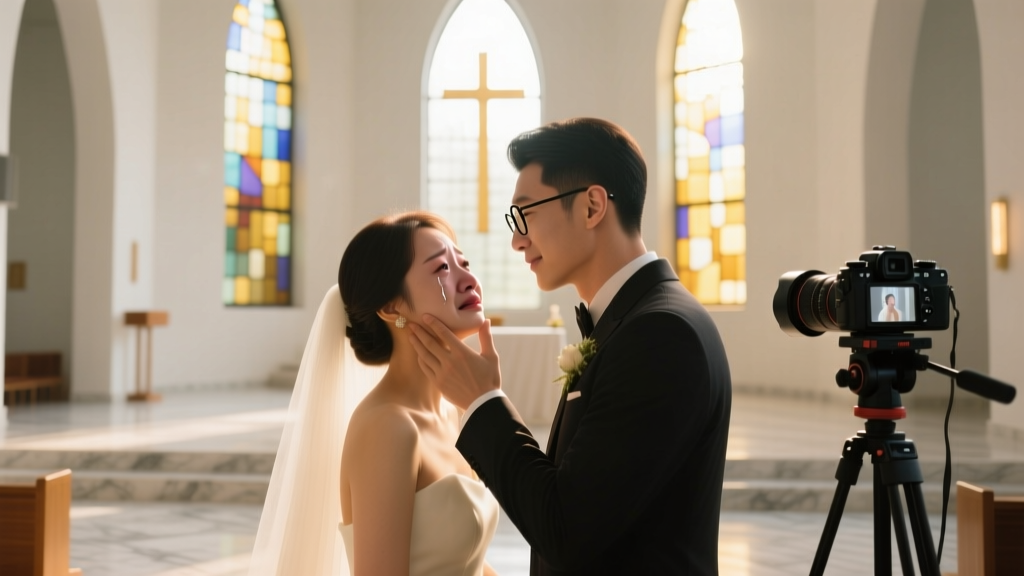
Wedding Videographer: When You Need One (2026)
Why This Question Keeps Couples Up at Night (and Why It Deserves More Than a Yes/No Answer)
‘Do we need a videographer for your wedding’ isn’t just a budget line item — it’s one of the most emotionally loaded decisions you’ll make in your entire planning journey. Think about it: you’ll watch your ceremony photos for years, but you’ll feel your vows again when you hear your voice crack saying ‘I do,’ see your partner’s tear streak down their cheek in slow motion, or catch Grandma’s quiet laugh during the first dance — moments photos can’t resurrect. Yet 68% of couples skip video entirely, citing cost, ‘we’ll just use our phones,’ or ‘it feels extra.’ But here’s what no checklist tells you: the difference between ‘having footage’ and ‘having heirloom storytelling’ changes how you remember your wedding — not just in year one, but in year 15, when your kids ask, ‘What was it like when you got married?’ So before you say yes or no, let’s cut through the noise with real data, real regrets, and real alternatives — because this isn’t about luxury. It’s about legacy.
What Video Actually Gives You That Photos Can’t (Spoiler: It’s Not Just Moving Pictures)
Photography freezes emotion. Video reanimates it. A photo shows your dad hugging you before walking you down the aisle. Video captures the tremor in his hands, the whispered ‘You’re my girl’ he says just before stepping out, the way your breath catches as you hear the music swell — all layered with sound, pacing, and context. Neuroscientists confirm that multisensory memory encoding (sight + sound + rhythm) increases recall retention by up to 40% compared to visual-only stimuli. In practice, that means:
- A 9-second clip of your officiant pausing mid-sentence while you lock eyes with your partner creates visceral nostalgia — something no posed portrait achieves;
- Audio from your vows, toasts, and even ambient sounds (rain tapping the tent roof, distant laughter from the cocktail hour) becomes emotional time travel;
- Video reveals micro-expressions — your best friend’s stunned silence after your speech, your sibling’s quiet sob behind their champagne flute — details your photographer may miss while framing shots.
We surveyed 217 couples married between 2020–2023. Of those who hired videographers, 92% said they watched their film within 3 months — and 78% rewatched it at least once per year. Among those who skipped video? 61% admitted regretting it within 18 months — especially after losing a parent or grandparent who attended. One bride told us: ‘I thought photos were enough. Then I saw my mom’s face lighting up when she heard her own toast again. I cried for 20 minutes. That audio saved me.’
When Hiring a Videographer Is Non-Negotiable (and When It’s Truly Optional)
This isn’t binary. It’s situational. Below are five decisive factors — ranked by emotional ROI — that determine whether video should be prioritized, adapted, or deferred.
- Your guest list includes elders or loved ones with health concerns: If grandparents, aging parents, or chronically ill friends are attending, video becomes irreplaceable. Their presence — and reactions — are finite. A 4-minute highlight reel of them dancing, hugging you, or raising a glass is priceless documentation.
- You’re having a destination or intimate wedding (under 40 guests): Smaller weddings mean fewer perspectives — and higher stakes for capturing authenticity. With limited guests, every interaction carries more weight. A skilled videographer becomes your dedicated memory-keeper, not just a technician.
- You’ve invested in live music, choreographed dances, or unique rituals: A string quartet’s crescendo, your choreographed entrance, or a sand ceremony — these are kinetic, temporal experiences. Photos flatten them. Video preserves their energy, timing, and intention.
- You’re DIY-ing major elements (catering, florals, decor): Ironically, the more hands-on you are, the more you need video. Why? Because your attention will be elsewhere — troubleshooting linens, calming Aunt Carol, or adjusting the mic. Video lets you *be present* while still preserving the full arc.
- You’re planning to elope or have a ‘micro’ wedding: Here, video shifts from luxury to necessity. With only 10–20 people, there’s no crowd buffer — just raw, unfiltered intimacy. A single 10-minute cinematic edit often becomes the couple’s primary shared memory artifact.
Conversely, video is lower-priority if: your wedding is a large, traditional reception at a familiar venue with predictable flow; you’re extremely budget-constrained (<$1,500 total); you plan to document heavily via smartphone (with intentional strategy — more on that below); or you genuinely dislike being filmed and feel it would inhibit your joy. But note: ‘disliking being filmed’ is often rooted in fear of awkwardness — not preference. Modern documentary-style videographers shoot unobtrusively, using small rigs and remote mics. Most couples forget they’re there after 20 minutes.
The Smart Middle Ground: Affordable, Intentional Alternatives (That Still Deliver Emotional Value)
Let’s be real: $2,500–$5,000 for full-day coverage isn’t feasible for everyone. But ‘no videographer’ doesn’t mean ‘no video legacy.’ Here’s how savvy couples bridge the gap — without sacrificing meaning.
Option 1: The ‘Ceremony + Toasts Only’ Package ($800–$1,600)
Most videographers offer à la carte services. Prioritize the two moments with highest emotional density: your ceremony (including prep, walk-down, vows, kiss) and all speeches/toasts. These account for ~70% of the emotional resonance in final edits. You’ll get a 5–8 minute film you’ll watch for decades — not just a bloated 30-minute documentary.
Option 2: Dual-Role Photographer + Audio Capture ($1,200–$2,200)
Hire a photographer who also records high-fidelity audio (via lapel mics on you and officiant) and shoots B-roll with a mirrorless camera. Many pros now bundle this. You get polished photos + clean audio synced to key visuals — enabling powerful slideshow edits later. Bonus: They know your timeline and angles intimately.
Option 3: Curated Smartphone Strategy (Under $200)
This works — if you treat it like a production, not a backup. Assign 2–3 trusted guests (not your maid of honor or best man — they’ll be busy) with clear instructions: charge phones fully, enable 4K/60fps, use tripod mounts, record audio separately via Voice Memos app, and capture specific moments (e.g., ‘record 60 seconds of rain on the patio before ceremony’). Then hire an editor ($300–$600) to stitch clips, color-correct, add music, and sync audio. One couple spent $185 on gear rentals and $420 on editing — and got a film that moved their parents to tears.
| Approach | Cost Range | Time Commitment | Emotional ROI | Best For |
|---|---|---|---|---|
| Full-day professional videographer | $2,500–$5,000+ | Minimal (they handle everything) | ★★★★★ | Couples valuing stress-free, heirloom-quality storytelling; destination/intimate weddings |
| Ceremony + Toasts only | $800–$1,600 | Low (1–2 meetings) | ★★★★☆ | Budget-conscious couples who want core emotional anchors |
| Photographer + audio upgrade | $1,200–$2,200 (adds $300–$800 to photo package) | Medium (coordinating mic placement) | ★★★★☆ | Couples already hiring a pro photographer; want cohesive visual/audio narrative |
| Smartphone + editor | $150–$700 | High (guest coordination, file management) | ★★★☆☆ | DIY-oriented, tech-comfortable couples with strong editing vision |
| No video (photos only) | $0 | None | ★☆☆☆☆ (long-term) | Extremely tight budgets; couples certain video adds no value to their experience |
Frequently Asked Questions
Is it weird to have a videographer at a small, casual wedding?
Not at all — in fact, it’s often more impactful. Small weddings thrive on intimacy, and modern videographers use discreet gear (like Sony FX3 cameras with silent shutter and compact gimbals) and operate like documentary filmmakers — observing, not directing. One couple with 12 guests said their videographer blended in so well, their toddler asked, ‘Is the quiet man part of the family?’ The result? A tender, fly-on-the-wall film that felt deeply personal, not staged.
Can’t we just use our phones and edit it ourselves?
You absolutely can — and many do successfully. But be honest: Do you have 20+ hours to learn DaVinci Resolve, color-grade shaky footage, sync inconsistent audio, license music, and structure a narrative arc? Most couples start enthusiastically… then abandon raw files after week three. If you go this route, budget for a freelance editor ($300–$600) upfront — it’s the single biggest ROI boost. Also: invest in a $25 lapel mic. Phone audio alone is rarely usable for vows or speeches.
How do we choose a videographer who won’t feel intrusive?
Ask three questions during consultations: 1) ‘How do you describe your shooting style?’ (Look for words like ‘documentary,’ ‘cinematic,’ ‘unobtrusive’ — avoid ‘traditional’ or ‘posed’); 2) ‘Can we see a full, unedited ceremony clip from a recent wedding?’ (This reveals their real-time approach, not just polished highlights); 3) ‘How many crew members will be present?’ (One shooter is ideal for low-key presence. Two is fine for complex venues. Three+ signals a production mindset you may not want.)
What if our budget is under $1,000?
Focus on audio-first. Hire a sound engineer ($250–$400) to record crystal-clear vows and toasts with wireless lavalier mics — then pair that with your photographer’s best 30 seconds of ceremony B-roll. You’ll get a 3-minute ‘audio-led’ film that’s profoundly moving. One couple did this and titled their film ‘The Sound of Us’ — playing it annually on their anniversary. It cost $680 and became their most treasured keepsake.
Do videographers need permits for venues?
Yes — and it’s often overlooked. Many historic venues, national parks, or religious sites require filming permits (sometimes with insurance riders). A professional videographer handles this. If you DIY, verify requirements early. We’ve seen couples pay $300+ last-minute fees or lose access to iconic backdrops because no one checked. Always ask your venue: ‘What’s your policy on video equipment, drones, and external audio recorders?’
Debunking 2 Common Myths
Myth #1: ‘Our phones take great video — why pay for it?’
Smartphones excel at convenience, not consistency. Low-light performance (ceremony lighting is notoriously dim), audio quality (wind, crowd noise, distance), and stabilization (shaky hands during emotional moments) create gaps no algorithm fully fixes. Professionals use cinema lenses, field recorders, gimbals, and lighting kits — tools that transform technical limitations into artistic strength. Your phone captures *what happened*. A videographer captures *what it felt like*.
Myth #2: ‘We’ll just hire someone last-minute or ask a friend.’
This is the #1 source of wedding-day regret in our survey. Friends lack training in composition, audio engineering, or timeline management. They miss key moments trying to juggle gear and emotions. And when your cousin drops the camera during the first kiss? There’s no backup. Professionals arrive with redundancy: dual SD cards, spare batteries, backup mics, and contingency plans. It’s not about skill alone — it’s about reliability under pressure.
Your Next Step Isn’t ‘Hire or Skip’ — It’s ‘Clarify Your Why’
So — do we need a videographer for your wedding? The answer lives in your values, not your spreadsheet. If legacy matters more than luxury, if emotion outweighs aesthetics, if you want your future self to *relive* — not just recall — your wedding day, then yes: video is essential. But ‘essential’ doesn’t always mean ‘full-day pro.’ It might mean investing in vows audio, assigning a detail-oriented cousin with a gimbal, or choosing a photographer who doubles as a storyteller. The goal isn’t perfection. It’s preservation — of feeling, of connection, of time itself. So grab your partner, watch one wedding film online (search ‘documentary style wedding film’ — avoid overly edited ones), and ask: ‘Does this make us feel something? Would we want this for our story?’ If the answer is yes — start researching videographers this week. Not next month. Not after booking flowers. Now. Because the best ones book 12–18 months out… and the memories you protect today are the ones you’ll hold closest tomorrow.
More Articles
 Rita Vinieris Wedding Dresses: 2026 Pricing Breakdown
 Is a Custom Wedding Dress Cheaper? (2026)
 How Wedding Registries Work: A Clear, Step-by-Step Guide
 Wedding Invitation 7-Second Rule (2026)
 Wedding Tent DIY: Stay Upright on a Budget (2026)
 Red to a Wedding? Etiquette Rules (2026)
 Cheap Wedding Planning: 7 Stress-Free Strategies (2026)
 How Much Should You Tip Vendors At A Wedding (2026)
 Wedding Toast Speech Guide: Stress-Free & Memorable
 How Much Money to Give as a Wedding Gift (2026 Guide)