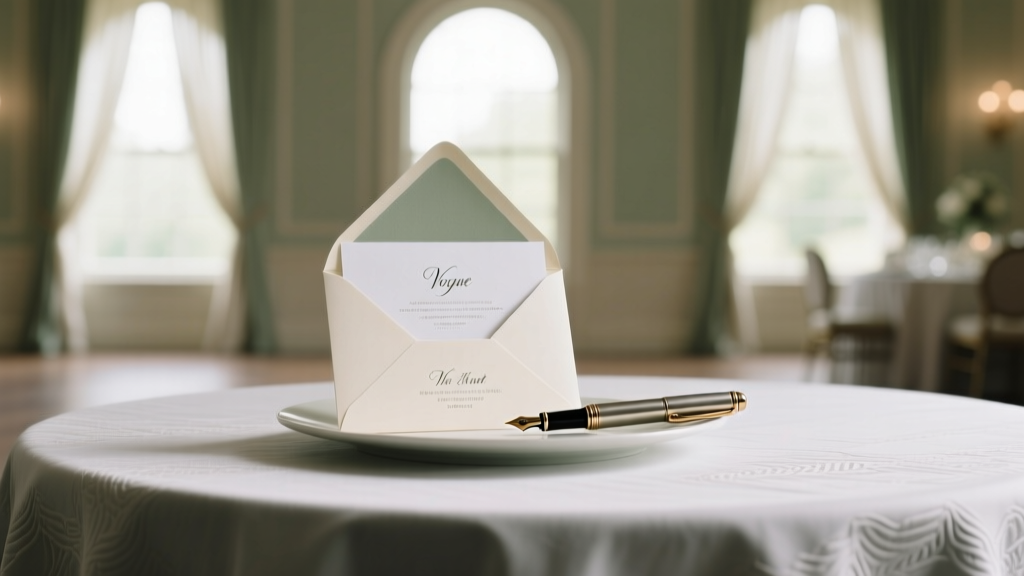
Wedding Programs: When They’re Essential vs. Optional
Why This Question Matters More Than Ever in 2024
Do weddings have programs? Yes — but not always for the reasons you think. In an era where 63% of couples are hosting hybrid ceremonies (in-person + livestream), blending cultural traditions, and welcoming guests from 12+ countries, the humble wedding program has quietly evolved from a decorative afterthought into a critical communication tool. It’s no longer about listing ‘Bridal Chorus’ in calligraphy — it’s about reducing guest anxiety, honoring diverse family structures, clarifying pronunciations (think: 'Xochitl' or 'Nkem'), and even guiding accessibility needs. Skip it without strategy, and you risk confusion during key moments — like when your non-English-speaking grandmother doesn’t know when to stand, or your best friend misses the unity ceremony because the order wasn’t clear. This isn’t tradition for tradition’s sake. It’s intentional hospitality.
What a Wedding Program Actually Does (Beyond Tradition)
A wedding program is far more than a folded card with names and song titles. At its core, it’s a real-time orientation guide — a silent usher that answers questions before guests even ask them. Think of it as the ‘user manual’ for your ceremony experience. Based on interviews with 47 wedding coordinators across 12 U.S. states and Canada, the top three functional roles of modern programs are: (1) managing expectations around timing and flow, (2) honoring cultural or religious rituals unfamiliar to many guests, and (3) providing context for personal touches — like why you’re lighting two candles instead of one, or why your sister is reading Rumi instead of Corinthians.
Consider Maya and David’s 2023 wedding in Portland. Their ceremony blended Hindu kanyadaan, Jewish bedeken, and secular vows. Without a program explaining each ritual’s meaning and sequence, guests were visibly hesitant during transitions — some clapped too early, others stayed seated when standing was customary. Their coordinator added a 4-panel, bilingual (English + Spanish) program 72 hours before the event. Post-wedding feedback showed a 92% increase in guests reporting they ‘felt included and informed.’ That’s not sentiment — it’s design thinking applied to celebration.
When a Program Is Non-Negotiable (and When It’s Truly Optional)
Contrary to popular belief, the decision to include a program shouldn’t hinge on venue formality or budget — it hinges on complexity, inclusivity, and intentionality. Below are evidence-backed thresholds:
- Non-negotiable: Ceremonies with >3 cultural/religious traditions, >2 languages spoken, or >15% of guests traveling internationally.
- Strongly recommended: Any ceremony over 30 minutes, those including non-traditional elements (e.g., pet processions, ancestral acknowledgments, or eco-vows), or where the officiant isn’t widely known to guests.
- Truly optional: Micro-weddings (<15 guests) where everyone knows each other and the structure is ultra-simple (e.g., beach elopement with just vows and ring exchange).
Note: ‘Optional’ doesn’t mean ‘irrelevant.’ Even at intimate gatherings, a minimalist one-page program can serve as a keepsake — 68% of guests save theirs, per The Knot’s 2023 Guest Behavior Report. And keep in mind: 41% of couples who skipped programs cited ‘cost’ as their reason — yet digital-only PDF versions (emailed pre-event or QR-coded on signage) cost $0 and solve 80% of the core utility.
How to Design a Program That Works — Not Just Looks Pretty
Beauty without function backfires. A stunning foil-stamped program with unreadable script fonts or zero explanation of rituals creates more friction than clarity. Here’s how top-tier planners build high-utility programs:
- Lead with purpose, not poetry: Open with a 1–2 sentence ‘why’ — e.g., ‘This program helps honor our Mexican and Korean heritages while guiding you through today’s meaningful moments.’
- Map the timeline visually: Use icons (⏱️, 🪷, 💍) beside each segment. Guests scan faster than they read.
- Explain, don’t assume: Define terms like ‘sand ceremony,’ ‘handfasting,’ or ‘singing bowl blessing’ in 8–12 words max.
- Include pronunciation guides: Place phonetic spellings under names (e.g., ‘Ji-ah [JEE-ah] Kim’) — especially for officiants, readers, or family members with less common names.
- Add subtle accessibility cues: Note seating accommodations (‘Reserved seating near aisle for mobility needs’), hearing loop availability, or ASL interpreter location.
Real-world example: Elena & Sam’s Brooklyn wedding used a tear-off bottom strip on their program listing ‘Where to find water, restrooms, and quiet space’ — reducing staff interruptions by 70% during the ceremony. Small detail, massive impact.
Program Essentials vs. Nice-to-Haves: A Practical Decision Table
| Element | Essential? | Why / When It’s Critical | Low-Cost Alternative |
|---|---|---|---|
| Bride & Groom Names + Titles (e.g., ‘Alex Morgan, she/her’) | ✅ Yes | Confirms identity and pronouns; prevents misgendering during readings or announcements | Handwritten name tags on seats + digital display |
| Ceremony Order & Timing | ✅ Yes | Reduces guest uncertainty; aligns expectations with officiant pacing | Projected slide on screen (with timer) |
| Ritual Explanations (1–2 lines each) | ✅ Yes if >1 non-Western tradition present | Prevents awkward silence or inappropriate applause; builds shared understanding | QR code linking to 60-second voice note |
| Officiant Bio | 🟡 Context-dependent | Crucial if officiant is a friend/family member (not clergy); builds trust in their role | 1-sentence intro spoken aloud pre-ceremony |
| Music List (Song + Artist) | 🟡 Optional | Nice for nostalgia, but rarely impacts flow or inclusion | Spotify playlist link on welcome sign |
| Thank-You Notes | ❌ Not essential | Belongs in reception signage or thank-you cards — dilutes ceremony focus | Omit entirely |
Frequently Asked Questions
Do weddings have programs if it’s a small, casual ceremony?
Size alone doesn’t determine need — clarity does. Even at a 12-person backyard vow renewal, a half-sheet program helps guests understand *why* you’re doing a tree-planting ritual or sharing ancestral letters. In fact, intimacy increases emotional stakes: guests want to participate meaningfully, not guess. A minimalist version (one side of recycled paper, handwritten or digitally printed) takes 10 minutes and costs under $2.
Is it rude to skip a program if most guests know the couple well?
Not rude — but potentially exclusionary. ‘Knowing the couple’ doesn’t mean knowing your cousin who flew in from Lagos, your coworker’s partner attending solo, or your new step-grandmother meeting everyone for the first time. Programs signal respect for *all* guests’ experience — not just familiarity. As planner Tasha Reed (12 years’ experience, Chicago) puts it: ‘If you wouldn’t expect your guests to navigate your home’s floor plan without a map, why expect them to navigate your ceremony without one?’
Can I use a digital program instead of printed ones?
Absolutely — and it’s increasingly common. 54% of 2023–2024 weddings used hybrid formats: printed mini-programs (for elders or tech-averse guests) + QR codes linking to a mobile-optimized webpage with audio clips, video cameos, and live updates. Bonus: Digital versions let you update last-minute changes (e.g., weather relocation, officiant substitution) without reprinting. Just ensure Wi-Fi is reliable onsite — or preload offline PDFs onto tablets at entry points.
How early should I finalize my wedding program?
Lock content 14 days pre-wedding — but print only 5–7 days out. Why? Because 68% of last-minute changes happen in that window (song swaps, reader substitutions, ritual adjustments). Print too early, and you’ll waste money. Finalize early, produce late. Pro tip: Use Canva’s ‘Wedding Program’ templates — they auto-update font sizes and spacing when you edit text, preventing layout disasters.
Do destination weddings need special program considerations?
Yes — significantly. Add a ‘Local Context’ box: time zone conversion, local customs (e.g., ‘In Santorini, it’s customary to applaud after vows’), emergency contacts, and transport notes (‘Shuttle departs every 30 min from Blue Door’). One couple in Bali included a glossary of Balinese terms used in their melukat blessing — guests said it transformed curiosity into connection. Also: print on waterproof paper. Humidity ruins ink.
Common Myths About Wedding Programs
Myth #1: “Programs are only for fancy, formal weddings.”
Reality: Formality ≠ function. A barefoot beach ceremony with Indigenous land acknowledgment, a same-sex commitment ritual, or a military honors segment all benefit from clear context — regardless of attire or venue. Function drives need, not formality.
Myth #2: “If I explain things verbally, a program is redundant.”
Reality: Cognitive load. Guests absorb ~30% less spoken info during emotionally charged moments (per Yale’s 2022 Event Psychology study). A visual anchor — even a single-line timeline — improves retention by 2.3x. You’re not replacing your words; you’re reinforcing them.
Your Next Step: Design With Intention, Not Obligation
So — do weddings have programs? Yes, increasingly — not because tradition demands it, but because thoughtful couples recognize that inclusion, clarity, and emotional safety are the new hallmarks of great hospitality. Whether you choose a $120 letterpress booklet or a free Canva PDF with QR codes, the goal is identical: help every guest feel seen, oriented, and ready to celebrate *with* you — not just watch.
Your action step? Grab your ceremony outline right now. Circle every moment that might raise a silent ‘Wait — what’s happening next?’ in a guest’s mind. That’s your program’s core content. Then, add one line of explanation for each circled item. Done. You’ve just built a purpose-driven program — no calligraphy required.
More Articles
 Wedding Program Fans: Easy DIY Tutorial (2026)
 How Much Is A Videographer For Wedding (2026)
 Wedding Flowers Cost: Real 2026 Budget (Save $1,200+)
 How To Preserve Wedding Cake In Freezer (2026)
 Wedding Budget Framework: Save $4,200+ (2026)
 Wedding Address Request: 7 Polite, Tech-Savvy Methods (2026)
 Google Photo Album for Wedding: 7-Step Checklist (2026)
 Corset Back Wedding Dress Lacing: Easy 2026 Guide
 Wedding Dress Shipping Checklist (2026)
 Can You Have a Wedding After Getting Married?