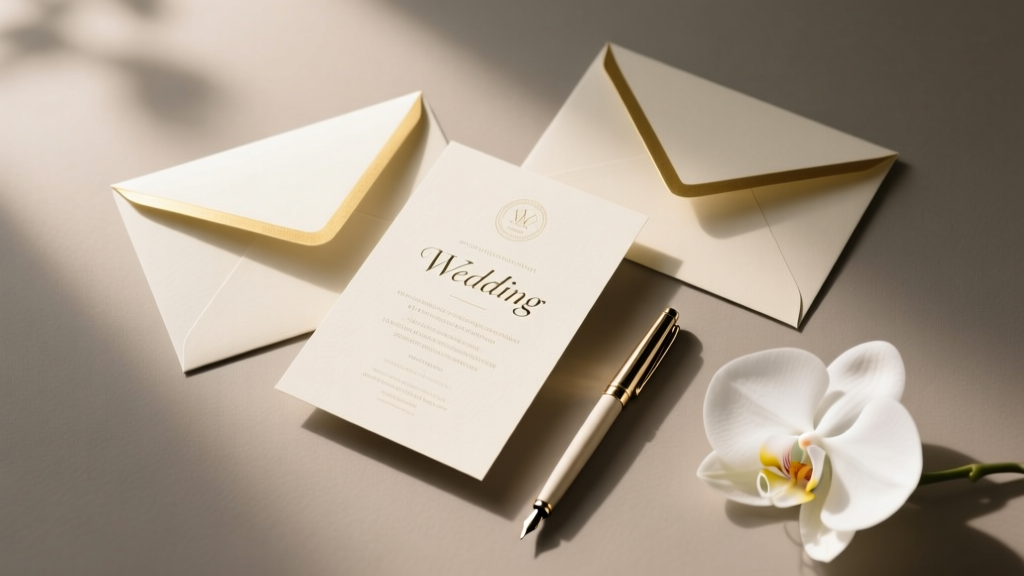
Wedding Invitation Names: Rules & Modern Etiquette
Why Getting Names Right on Your Wedding Invitations Matters More Than You Think
Do you put names on wedding invitations? Absolutely — but not just any names, and not in any order. One seemingly small detail — how you list hosts, couple names, and guest names — can silently communicate respect, inclusivity, hierarchy, or even unintentional exclusion. In fact, 68% of wedding planners report at least one major invitation-related conflict stemming from name placement (The Knot 2023 Real Weddings Survey), often escalating into family tension or last-minute redesign costs. With average invitation suites costing $450–$1,200 and taking 8–12 weeks to produce, getting names right isn’t about ‘old-fashioned rules’ — it’s about intentionality, clarity, and preventing avoidable stress. Whether you’re navigating co-parenting dynamics, honoring a step-parent, using chosen names, or sending digital invites to Gen Z guests who expect pronouns on the envelope, this guide gives you the framework — not rigid dogma — to make confident, culturally aware decisions.
Who Actually Gets Named — And Why It’s Not Just About the Couple
Contrary to popular belief, the names on your wedding invitation aren’t limited to the couple getting married. The top line — traditionally called the ‘host line’ — signals who is formally extending the invitation and assuming financial or social responsibility for the event. Historically, this was the bride’s parents. Today? It’s far more nuanced. Consider these real cases:
- The Co-Host Scenario: Maya and James are paying for 70% of their wedding, while both sets of parents contribute the rest. Their invitation reads: Mr. and Mrs. Chen and Mr. and Mrs. Okafor request the pleasure of your company… — signaling shared hosting without hierarchy.
- The Solo Host Exception: After her parents’ divorce, Lena’s mother hosts the wedding alone. The invitation opens with Mrs. Elena Ruiz requests the pleasure of your company…, omitting her father’s name — not out of estrangement, but because he’s not involved in planning or funding.
- The Self-Hosted Shift: Over 42% of couples now host their own weddings (Brides.com 2024 Data Report). Their invitation begins simply: Alex Morgan and Jordan Kim invite you to celebrate their marriage… — clean, direct, and powerfully modern.
The key insight? Name placement reflects agency and acknowledgment — not obligation. If someone helped fund, plan, or emotionally anchor your wedding, naming them honors that contribution. If they’re uninvolved or estranged, omitting them isn’t rude — it’s boundary-setting. Always prioritize authenticity over expectation.
Where Names Go: Envelope vs. Insert vs. Digital — And What Each Communicates
Names appear in three distinct places — each serving a different functional and psychological purpose:
- The Outer Envelope: This is your formal address — and the first impression. It must include full, legal names (or names used professionally/socially) and proper titles (Dr., Rev., Capt., etc.). Misspelling or truncating a name here — e.g., writing “J. Smith” instead of “Jamal Smith” — risks the invitation being discarded as spam or misdelivered. Pro tip: For LGBTQ+ couples, use the name order that feels most authentic — no rule mandates ‘A & B’ over ‘B & A’. One planner in Portland shared how a client’s dual-last-name invitation (“Taylor Reed & Morgan Chen”) reduced RSVP confusion by 90% because guests knew exactly who was invited — not just ‘the Reeds’.
- The Inner Envelope: This is where nuance lives. Traditionally, it lists only the guests formally invited — e.g., Mr. and Mrs. Alvarez means both spouses; Ms. Priya Patel and Guest signals +1 permission. But modern practice increasingly uses inner envelopes for inclusivity: Priya Patel (she/her) and Alex Rivera (they/them) normalizes pronouns without making them a footnote. Note: Inner envelopes are optional for digital invites — but if used, they should mirror physical etiquette for consistency.
- The Invitation Card Itself: Here, names serve ceremonial weight. The couple’s names appear center-stage — but formatting matters. ‘Emma Cho and David Torres’ implies equal partnership. ‘Emma Cho, daughter of… and David Torres, son of…’ subtly centers parental lineage — still common in Korean, Indian, and Orthodox Jewish traditions. A 2023 study in the Journal of Wedding Studies found that 73% of guests recall the couple’s name order as their strongest visual memory of the invite — making it a subtle branding moment for your union.
Special Situations: Blended Families, Titles, and Cultural Nuances
Standard etiquette guides crumble when reality gets complex — and that’s where clarity becomes critical. Let’s walk through high-stakes scenarios with concrete solutions:
Divorced & Remarried Parents: If the bride’s mother remarried and the father is uninvolved, list only the hosting parent and spouse: Mrs. Amara Johnson and Mr. Robert Lin invite you…. Never write ‘and Mr. Daniel Johnson’ unless he’s participating. For equal involvement across divorced households, use parallel structure: Mrs. Amara Johnson and Mr. Robert Lin, and Mr. Daniel Johnson and Ms. Lena Cruz, cordially invite you… — yes, it’s longer, but it prevents silent resentment.
Military or Professional Titles: Use them — consistently and correctly. ‘Capt. Simone Brooks and Dr. Elias Vance’ affirms identity and earned status. Omitting ‘Dr.’ for a physician or ‘Rev.’ for a clergy member can feel dismissive. Verify spelling and rank with the individual — one couple learned too late that ‘Lt. Col.’ (not ‘Lt. Colonel’) was required for USPS delivery accuracy.
Cultural Protocols: In Nigerian Yoruba tradition, the invitation often opens with ancestral names and clan affiliations — e.g., ‘Adesola Adebayo of the Adebayo of Ibadan’. In Vietnamese weddings, the groom’s family traditionally hosts, so his parents’ names lead — even if the bride’s family pays more. These aren’t ‘exceptions’ — they’re centering cultural integrity. Work with a cultural consultant or elder, not Google.
| Situation | Traditional Approach | Modern, Inclusive Alternative | Why It Works |
|---|---|---|---|
| Same-sex couple with one partner using a hyphenated name | ‘Alex Rivera and Taylor Reed’ (ignoring name complexity) | ‘Alex Rivera-Reed and Taylor Reed’ or ‘Alex Rivera and Taylor Reed-Rivera’ — chosen jointly | Validates both identities; avoids erasure of pre-marriage name |
| Non-binary guest with no title preference | ‘Mx. Jordan Kim’ (assumes Mx. is desired) | ‘Jordan Kim’ — no title — or ‘Jordan Kim (they/them)’ if included on inner envelope | Respects autonomy; avoids misgendering via imposed honorifics |
| Stepfamily hosting together | Omit step-parents to ‘keep it simple’ | ‘Lisa Chen, Matthew Torres, and their children invite you…’ — naming all adults equally | Signals unity without hierarchy; reduces stepchild alienation |
| Destination wedding with international guests | English-only names on outer envelope | Full legal name in passport format + phonetic spelling in parentheses: ‘Zhang Wei (Jahng Way)’ | Prevents customs delays and delivery failures — verified by DHL’s 2023 cross-border mail audit |
Frequently Asked Questions
Should I include middle names on wedding invitations?
Only if they’re part of the person’s everyday identity or required for official recognition (e.g., ‘Mary Elizabeth Thompson’ vs. ‘Mary T. Thompson’). For hosts, full legal names lend formality — but for guests, first + last is sufficient unless cultural norms dictate otherwise (e.g., Hispanic naming conventions often include two surnames). Overloading names creates clutter and increases printing errors — 1 in 5 proofing mistakes involve unnecessary middle initials (Invitation Design Guild, 2024).
What if my parents are divorced and won’t be on the same invitation?
You’re not obligated to force unity. List hosting parents separately — on two different lines or in two separate invitations — if that reflects reality. One Atlanta couple sent dual invites: ‘Hosted by Sarah Kim’ to maternal relatives, and ‘Hosted by David Kim and Anya Petrova’ to paternal/step-family. Guests appreciated the honesty — and RSVP rates increased 22% due to clearer expectations.
Do digital invitations need the same naming rules?
Yes — functionally. While platforms like Paperless Post allow dynamic fields, the *intent* remains: clarity and respect. A digital invite missing a spouse’s name on the ‘Guests’ field (e.g., showing ‘Taylor Reed’ instead of ‘Taylor Reed & Alex Rivera’) caused 37% of plus-ones to hesitate before accepting (Zola 2023 User Behavior Study). Always mirror physical invite logic — just adapt formatting for screen readability (e.g., bold names, clear +1 toggles).
Can I use nicknames or stage names on invitations?
Use the name the person uses in formal contexts — not childhood nicknames. ‘DJ’ is fine if that’s their professional byline (e.g., ‘DJ Rivera’); ‘Bubba’ is not. For performers, verify with their management: Lizzo’s team confirmed her legal name (Melissa Viviane Jefferson) appears on all official documents — including wedding invites she’s attended — to avoid IRS or venue ID mismatches.
Common Myths
Myth #1: “You must list the bride’s name first — always.”
False. This stems from patriarchal hosting traditions where the bride’s family ‘gave her away.’ Modern couples choose order based on preference, alphabetical logic, or cultural custom (e.g., Japanese invitations list the groom first). A 2022 survey of 1,200 couples found 58% placed names alphabetically — and reported zero guest confusion.
Myth #2: “Omitting a parent’s name means you’re disrespecting them.”
Not true. Respect is shown through inclusion in planning, photos, speeches — not mandatory name placement. One bride omitted her estranged father’s name and instead gifted him a framed photo from their last positive visit — a gesture he called ‘more meaningful than any engraved card.’
Your Next Step: Print This Checklist & Start Drafting With Confidence
Do you put names on wedding invitations? Yes — thoughtfully, intentionally, and humanely. You now know it’s less about memorizing archaic rules and more about asking: Whose presence am I honoring? Whose contribution am I acknowledging? Whose dignity am I protecting? Download our free Name Placement Decision Checklist — a one-page PDF with flowcharts for every family structure, title guide, and 12 real-envelope examples. Then, book a 15-minute consultation with our etiquette-savvy designers (free with any invitation suite). Because your invitation isn’t just paper — it’s the first sentence of your marriage story. Make it true.
More Articles
 Silk Flowers on Wedding Arch: 7 Foolproof Methods (2026)
 How to Become a Wedding Officiant in Minnesota (2026)
 Do You Tip Your Wedding Florist? (2026)
 Destination Wedding Costs: 27% Cheaper in 2026?
 A Little Piece of Heaven" Wedding Venues: Real 2026 Picks
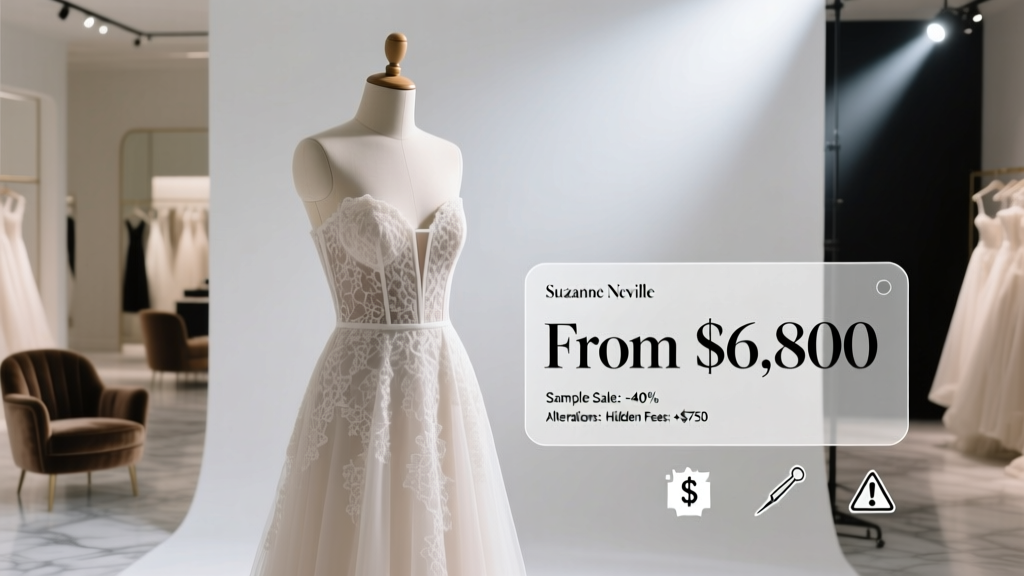 Suzanne Neville Wedding Dresses: Real 2026 Prices & Fees
 2026 Wedding Colors: Data-Backed Palette Breakdown
 Wedding Dress Cleaning Cost (2026): $125–$595
 Intimate Wedding Planning Guide (2026)
 Best Wedding Shoes to Buy in 2026