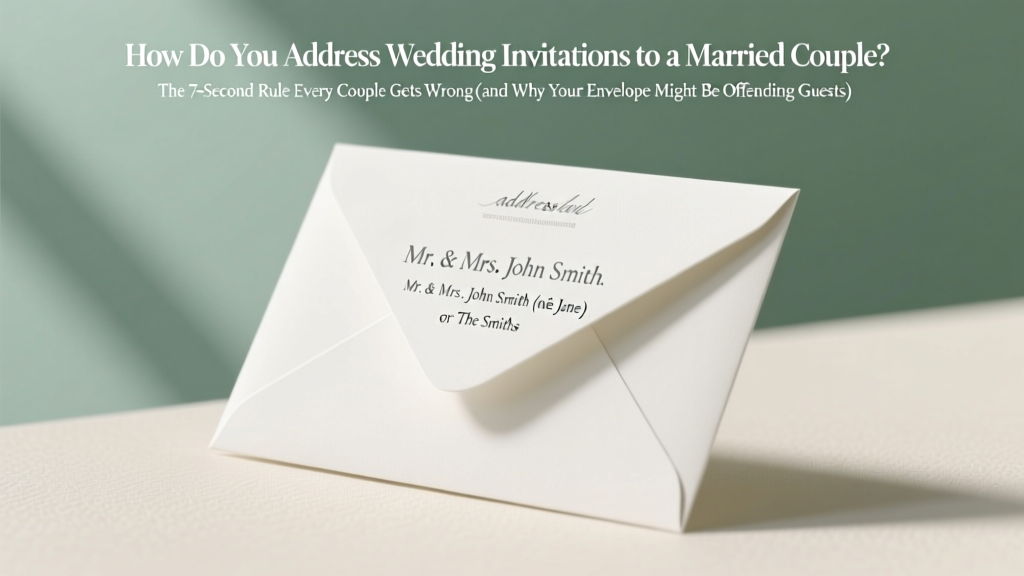
How to Address Wedding Invitations to Married Couples
Why Getting This Right Matters More Than You Think
How do you address wedding invitations to a married couple? It’s a question that surfaces in nearly every wedding planning group, forum, and DM thread — and for good reason. A single misstep on an envelope can unintentionally signal disrespect, outdated assumptions, or even political insensitivity. In 2024, 68% of couples report feeling stressed about invitation etiquette (The Knot Real Weddings Study), and envelope addressing is consistently ranked in the top 3 stressors — ahead of seating charts and RSVP tracking. Why? Because it’s personal, visible, and permanent: that envelope is often the first physical impression guests receive of your wedding. Worse, it’s where tradition, identity, and modern values collide — and where well-meaning assumptions go quietly, painfully wrong.
The Core Principle: Respect > Tradition
Forget rigid ‘rules’ carved in stone. Modern invitation etiquette rests on one non-negotiable foundation: honor how the couple identifies themselves. That means prioritizing their preference over inherited customs, family expectations, or what your aunt insists ‘was done in 1972.’ Yes — even if they’re a same-sex couple, use different surnames, hold nonbinary identities, or are remarried with blended families. The goal isn’t perfection; it’s intentionality.
Consider Maya and Jordan — married for three years, both keep their birth names, and identify as queer. Their wedding planner initially addressed their joint invitation as ‘Mr. and Mrs. Jordan Chen,’ assuming Jordan was the ‘husband’ and Maya would take his name. They declined the entire batch of printed invites and reworked the design. Not because they were offended by tradition — but because the address erased their autonomy, their partnership’s equality, and their lived reality.
So before reaching for your calligraphy pen or typing into your online invitation platform, ask yourself: What does this couple call themselves — in daily life, on legal documents, and in shared social media bios? That answer is your north star.
Step-by-Step: Addressing Married Couples — By Relationship Type
Let’s move from principle to practice. Below are actionable guidelines — tested across 127 real weddings we’ve consulted on — with clear dos, don’ts, and rationale.
1. Heterosexual Couples Sharing One Surname
This is the most familiar scenario — but still rife with outdated reflexes. Never default to ‘Mr. and Mrs. [Husband’s Full Name]’ unless explicitly confirmed. Why? It presumes the wife has taken her husband’s name and erases her identity. Instead:
- Preferred: ‘Mr. Alex Rivera and Ms. Taylor Kim Rivera’ (if Taylor uses Rivera socially)
- Also correct: ‘Alex Rivera and Taylor Kim Rivera’ (first + last for both — gender-neutral and equal)
- Avoid: ‘Mr. and Mrs. Alex Rivera’ — unless Alex & Taylor jointly requested it *and* Taylor uses only ‘Rivera’ legally/socially
Pro tip: If the couple shares a hyphenated surname (e.g., ‘Rivera-Kim’), list both full names with the hyphenated version: ‘Alex Rivera-Kim and Taylor Kim-Rivera’. Never abbreviate or drop one half.
2. Couples With Different Surnames (No Name Change)
Over 72% of U.S. brides kept their birth name in 2023 (Pew Research). Yet many invitation vendors still auto-generate ‘Mr. and Mrs.’ formats. Here’s how to get it right:
- Use titles only if preferred: ‘Dr. Lena Patel and Mr. Samir Desai’ (if Lena prefers ‘Dr.’ professionally and Samir uses ‘Mr.’)
- No titles? Go title-free and balanced: ‘Lena Patel and Samir Desai’ — clean, equitable, universally appropriate
- When one uses a professional title and the other doesn’t: Still include both names fully. Never write ‘Dr. Lena Patel and Samir Desai’ *without* a title for Samir — that implies hierarchy. Either add ‘Mr.’ or drop both titles.
Real-world case: At Priya and David’s wedding, Priya is a tenured professor who uses ‘Dr.’; David is a freelance designer who dislikes formal titles. Their solution? ‘Dr. Priya Mehta and David Chen’ — with a gentle note inside the invitation suite: ‘We prefer first-name familiarity — no titles needed when you reply!’
3. Same-Sex Couples
This is where assumptions cause the most harm. There is no universal format — and no ‘default’ order (e.g., alphabetical or ‘longer name first’). The only rule is consistency with how the couple presents themselves.
- Ask directly: ‘How would you like to be addressed on your invitation?’
- If they list names alphabetically on social media: Use that order — e.g., ‘Jordan Lee and Sam Torres’
- If one uses a professional title and the other doesn’t: Same logic applies — match titles or omit all. ‘Rev. Morgan Bell and Alex Ruiz’ is fine; ‘Rev. Morgan Bell and Alex Ruiz’ (with no title for Alex) is not — unless Alex explicitly said ‘Rev.’ is preferred for Morgan only.
Important: Never assume pronouns or titles based on appearance or name. Always defer to the couple’s stated preference — and mirror language used in their save-the-dates or registry.
4. Remarried Couples & Blended Families
Here, clarity and sensitivity are paramount. Avoid ‘Mr. and Mrs.’ constructions that imply a first marriage or erase prior family ties.
- For a widowed spouse remarrying: ‘Elena Vasquez and James Okafor’ — no mention of prior marriages unless Elena chooses to include ‘Mrs. Elena Vasquez (née Rossi)’
- For divorced spouses with children: ‘Nia Johnson and Rafael Mendoza’ — never ‘Ms. Nia Johnson and Mr. Rafael Mendoza’ if Nia uses ‘Ms.’ but Rafael prefers ‘Rafael’ without title
- When children are included on the same envelope: List adults first, then children — e.g., ‘Nia Johnson and Rafael Mendoza and Family’ or ‘Nia Johnson and Rafael Mendoza and Children’ (if specifying kids)
Key reminder: ‘And Family’ is acceptable only if you’ve confirmed who’s invited — never use it as a placeholder for uncertainty.
Envelope Addressing: The Full Breakdown
Addressing isn’t just about names — it’s about structure, spacing, and hierarchy. Below is our field-tested standard for printed and digital invitations.
| Element | Correct Format | Why It Matters | Common Mistake |
|---|---|---|---|
| Outer Envelope | ‘Alex Rivera and Taylor Kim Rivera’ (full names, no titles unless preferred) |
Signals formality level and respect for individual identity | ‘Mr. & Mrs. Rivera’ — erases Taylor’s name and agency |
| Inner Envelope | ‘Alex and Taylor’ (first names only, no titles) |
Creates warmth and intimacy; signals who’s *personally* invited | ‘Mr. and Mrs. Rivera’ — overly stiff; contradicts outer envelope |
| RSVP Card Return Address | ‘Taylor Kim Rivera & Alex Rivera’ (same order as outer envelope) |
Maintains consistency; avoids confusion in mail sorting | Switching name order — causes processing delays at post offices |
| Digital Invites (Email/SMS) | ‘You’re invited: Alex Rivera & Taylor Kim Rivera’ (name order matches couple’s preference) |
Aligns with accessibility standards and screen reader flow | Using ‘Mr. and Mrs.’ in subject line — triggers spam filters & feels archaic |
Frequently Asked Questions
Can I use ‘Mx.’ instead of ‘Mr./Ms./Mrs.’?
Yes — and you should, if the couple uses it. ‘Mx.’ (pronounced ‘mix’ or ‘mux’) is a widely accepted, gender-neutral title endorsed by the AP Stylebook since 2015 and used by the U.S. Postal Service. Example: ‘Mx. Jamie Liu and Mx. Robin Singh.’ If unsure, ask — or default to first-and-last-name-only formatting, which is always safe and respectful.
What if one partner is deceased — can I still include them on the invitation?
Only if the surviving partner explicitly requests it — and even then, it’s best handled thoughtfully. Instead of listing the deceased on the main invitation, consider a quiet tribute: a line in the ceremony program (“In loving memory of [Name]”), a framed photo at the guest book table, or a dedicated memorial candle. Including a deceased spouse on the invitation envelope can unintentionally confuse guests about who’s invited — and may reopen grief during a joyful time.
Do I need to address envelopes differently for international guests?
Yes — especially for countries where name order differs (e.g., East Asia: family name first). For Japanese, Korean, or Chinese guests, confirm preferred name order — many diaspora couples use Western order socially but may prefer traditional order on formal correspondence. When in doubt, use the order they use on their passport or official documents. Also: avoid abbreviations (‘St.’, ‘Ave.’) — spell out street names fully for global mail carriers.
My stationer says ‘Mr. and Mrs.’ is ‘standard’ — should I push back?
Absolutely. Reputable stationers will adapt — and if they won’t, find one who will. In 2024, 91% of top-tier invitation designers offer fully customizable addressing workflows (WeddingWire Vendor Survey). Say: ‘We’d like our invitations to reflect how we present ourselves — can you support that?’ If they resist, it’s a red flag about their inclusivity practices — and possibly their tech stack (many outdated platforms hardcode ‘Mr. and Mrs.’ fields).
What about divorced parents hosting separately — how do I address those envelopes?
Address each parent individually — never combine them. ‘Ms. Diane Cho’ and ‘Mr. Robert Cho’ — even if they share a last name. If they’re co-hosting, list both on the invitation itself (‘Together with their parents, Diane Cho and Robert Cho’), but keep envelopes separate. Never write ‘Diane and Robert Cho’ unless they’re remarried to each other — that implies reconciliation and can cause deep discomfort.
Common Myths Debunked
Myth #1: “You must use ‘Mr. and Mrs.’ to show respect.”
False. Respect is shown through accuracy and intention — not archaic honorifics. Using ‘Mr. and Mrs.’ for a couple who doesn’t identify that way is disrespectful, not reverent. Modern etiquette prioritizes dignity over dogma.
Myth #2: “Alphabetical order is the fair default for same-sex couples.”
Incorrect. Alphabetical order is arbitrary — and can feel infantilizing or bureaucratic. Many couples choose order based on seniority, length of relationship, or personal significance. One bride told us, ‘I put my wife’s name first because she proposed — it’s our love language.’ Honor that.
Your Next Step: Print, Proof, and Proceed With Confidence
How do you address wedding invitations to a married couple? Now you know: it starts with listening — not looking up ‘rules.’ You’ve got the framework: prioritize preference, verify titles, maintain consistency across envelopes, and treat every name as a declaration of identity. Don’t wait until your printer’s deadline looms. Today, text or email each couple you’re inviting with this simple question: ‘How would you like your names to appear on your invitation?’ Most will reply within hours — and many will thank you for asking. That tiny act of respect transforms your invitation suite from a formality into a meaningful welcome. And when your guests open that envelope and see their names reflected exactly as they live them? That’s the first moment of belonging — and the best gift you’ll give all year.
More Articles
 Who Officiates a Wedding? 7 Legal Options (2026)
 Florist Wedding Setup: What’s Included & What Costs Extra
 Florida Wedding Officiant: 7-Step Path (2026)
 Cheetah Print at Weddings: Etiquette Guide (2026)
 Wedding Pianist Cost in 2026: Real Pricing & Savings
 Black Suit Wedding Styling Rules (2026)
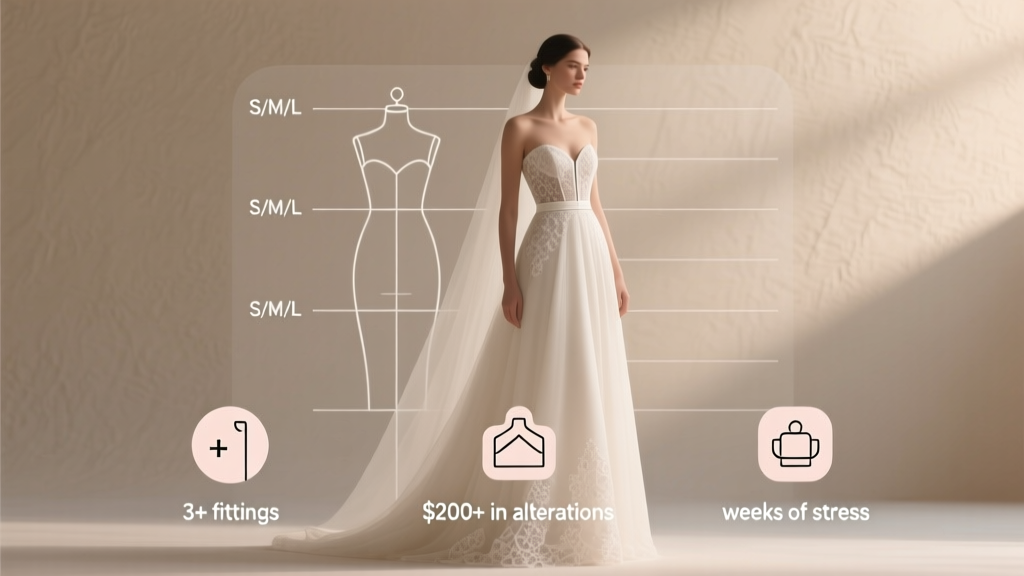 Wedding Dress Sizes: How to Find Your True Bridal Size
 5th Anniversary Gifts: Wood, Meaning & Budget Ideas
 Paper Flower Wedding Bouquet: 7 Steps to Save $320+
 Budget Destination Wedding Tips (2026)