## Your Wedding Deserves More Than a Hard Drive
Most couples spend months planning their wedding day, then watch those memories slowly fade into an unsorted folder on a laptop. A wedding photo book changes that. It transforms thousands of raw images into a curated, tangible story — one you can hold, share, and pass down. Whether your wedding was last month or five years ago, creating a photo book is one of the most meaningful things you can do with those images.
---
## Step 1: Curate Your Photos Before You Design
The biggest mistake couples make is trying to include everything. A strong wedding photo book tells a story — and every good story has editing.
**How to curate effectively:**
- Start with a target count: 80–150 photos for a standard 40–60 page book.
- Sort by timeline: getting ready, ceremony, portraits, reception, details.
- For each moment, pick the single best shot. Duplicates dilute impact.
- Include at least 10–15 detail shots (rings, florals, table settings) — these add texture and pacing.
If your photographer delivered 800+ images, use a tool like Lightroom, Google Photos, or even a simple starred folder to flag your favorites before opening any design software.
---
## Step 2: Choose the Right Platform for Your Wedding Photo Book
Not all photo book services are equal. The right choice depends on your budget, design comfort level, and quality expectations.
| Platform | Best For | Price Range |
|---|---|---|
| Artifact Uprising | Premium heirloom quality | $150–$400+ |
| Chatbooks | Simple, fast, affordable | $30–$80 |
| Shutterfly | Budget-friendly, frequent sales | $20–$120 |
| Mpix | Professional print quality | $60–$200 |
| Canva + print service | Full design control | Varies |
**Key specs to look for:**
- **Paper weight:** 100lb+ matte or lustre for best photo reproduction.
- **Cover options:** Hardcover linen or leather for longevity.
- **Binding:** Lay-flat binding lets photos span two pages without a gutter crease — worth the upgrade for panoramic shots.
- **Size:** 10×10 or 12×12 inches is the most popular for weddings; larger feels more like a coffee table book.
---
## Step 3: Design Your Layout With Intention
Layout is where most DIY wedding photo books fall apart. Cramming 12 photos onto one page feels chaotic; one photo per page can feel sparse and expensive.
**Layout principles that work:**
- **Open with impact:** Your cover and first spread should feature your single best image — usually a ceremony or portrait shot.
- **Vary your grid:** Alternate between full-bleed spreads, multi-photo grids, and text pages to create visual rhythm.
- **Use white space:** Don't fill every pixel. Breathing room makes individual photos feel more intentional.
- **Add minimal text:** Dates, venue names, and one or two short captions are enough. Let the photos speak.
- **End with emotion:** Close with a reception or send-off shot that feels like a natural ending.
Most platforms offer pre-built templates — use them as a starting point, not a constraint.
---
## Step 4: Review, Order, and Preserve
Before you submit your order, do a final pass:
- **Proof on a large screen**, not your phone. Small screens hide alignment issues and color problems.
- **Check bleed zones** — images that extend to the page edge need to extend slightly beyond it, or you'll get white borders.
- **Order a single copy first** if you're printing multiples for family. Verify quality before committing to a bulk order.
- **Store properly:** Keep your finished book away from direct sunlight and humidity. Archival-quality books can last 50–100 years with basic care.
---
## Common Myths About Wedding Photo Books
**Myth 1: "You need to wait until you have all your photos organized perfectly."**
You don't. Start with your photographer's top 100 selects or your own quick favorites. Perfectionism is the reason most couples never make a book at all. A good-enough book you actually finish beats a perfect book that never gets ordered.
**Myth 2: "Professional photo books are too expensive."**
A quality wedding photo book from a mid-tier service like Mpix or Shutterfly runs $60–$150 — less than most wedding vendors charge per hour. Premium options like Artifact Uprising cost more, but even those are a one-time purchase for something you'll keep for decades. Compared to the cost of the wedding itself, it's a negligible investment.
---
## Start Your Wedding Photo Book This Week
Creating a wedding photo book comes down to four steps: curate ruthlessly, choose a platform that matches your quality expectations, design with rhythm and white space, and order before the motivation fades.
Your one next action: open your wedding photo folder today and star your 100 favorite images. That's it. Once you have your selects, the rest takes an afternoon.
The photos already exist. The story just needs to be told.
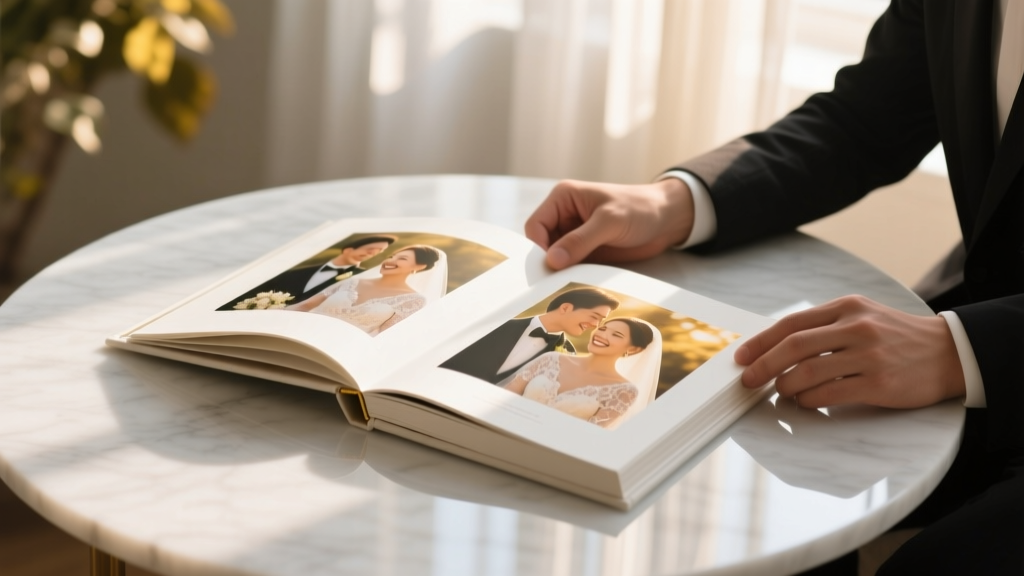
 Wedding Anniversary Gifts: 7-Step Connection Framework
 Wedding Toast Order: Who Speaks & Why It Matters (2026)
 How to Travel with Wedding Dress on Plane (2026)
 Wedding Drink Calculator: 2026 Wedding
 How Many Songs Do I Need for a Wedding? (2026)
 Save the Date vs Wedding Invitation: Key Differences
 Wedding Ceremony Script: Authentic & Stress-Free (2026)
 Wedding Hair Up or Down: 7 Science-Backed Factors
 Real and Mountain Compared
 Randy Fenoli Wedding Dress Prices (2026)