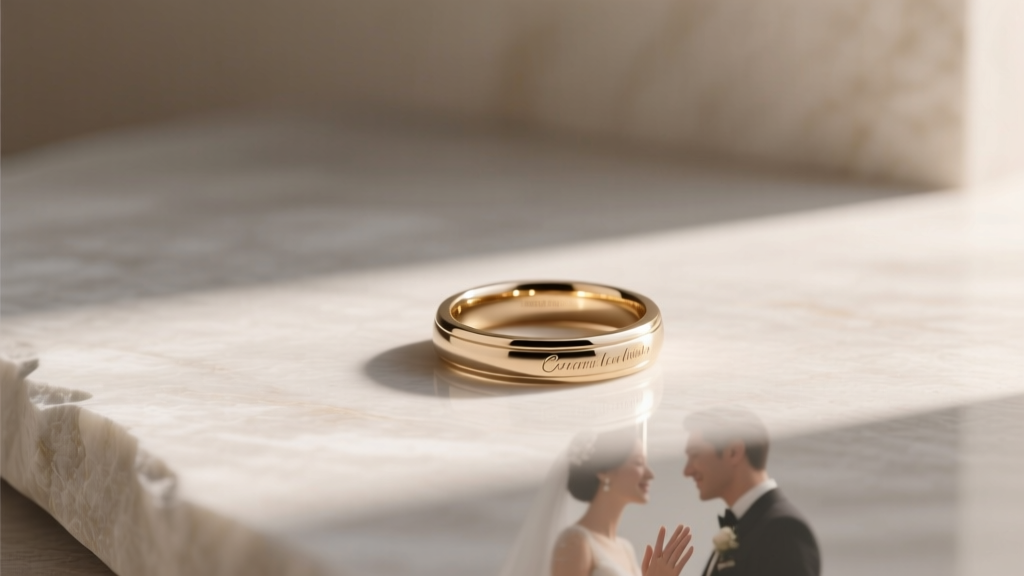
How Much Do You Spend On A Wedding Ring (2026)
Why 'How Much Do You Spend on a Wedding Ring' Is the Right Question—At the Right Time
If you’ve just gotten engaged—or are quietly scrolling late at night wondering where to even begin—how much do you spend on a wedding ring isn’t just a number question. It’s your first real test of shared financial values, emotional priorities, and long-term partnership alignment. In 2024, nearly 68% of couples report feeling significant stress over ring costs—yet only 22% discuss budgets *before* shopping. That disconnect fuels regret: 1 in 3 buyers later admit they overspent relative to their actual lifestyle, while 41% say they’d choose a different style or metal if they could redo it. This isn’t about ‘cheap’ vs. ‘expensive.’ It’s about intentionality. And the good news? There’s no universal answer—but there *is* a proven, personalized method to land on yours.
What the Data Actually Says (Not What Ads Want You to Believe)
Let’s start with hard numbers—not folklore. According to The Knot’s 2023 Real Weddings Study (n=15,247 U.S. couples), the national median spend on an engagement ring is $6,500, while the median for wedding bands is $1,200 per person. But medians mask massive variation: 28% of couples spent under $3,000; 19% spent over $10,000. Crucially, income correlates—but weakly. Couples earning $50K–$75K/year averaged $4,100; those earning $150K+ averaged $9,800. Yet 34% of high-earners intentionally capped spending at $5,000 to avoid ‘financial whiplash’ post-wedding. Why does this matter? Because ‘average’ is irrelevant if it doesn’t reflect *your* debt load, savings goals, or definition of meaningful symbolism.
Consider Maya and David (names changed), a teacher and graphic designer in Portland. They made $92,000 combined, carried $38,000 in student loans, and were saving for a home. Their ‘how much do you spend on a wedding ring’ calculation started not with price tags—but with a non-negotiable: zero new debt. They allocated $2,800—enough for a GIA-certified 0.75ct lab-grown diamond in platinum—and redirected the $4,000 they’d ‘saved’ from skipping traditional retail markups into their down payment fund. Six months later, they toasted with champagne in their first home—not a credit card statement.
Your Personalized 5-Step Budget Framework (No Guesswork)
Forget ‘3 months’ salary.’ Here’s what actually works:
- Anchor to Your Financial Reality: Pull last year’s net income *and* list all current debts (student loans, car payments, credit cards). Calculate your debt-to-income ratio (DTI). If it’s >36%, cap ring spending at 1x monthly debt payment—or less.
- Define ‘Value Drivers’ (Not Just Carats): Rank these in order of personal importance: durability (for daily wear), ethical sourcing, heirloom potential, metal allergy safety, resale value, or sentimental customization (e.g., engraving, family stone reuse). A $2,200 recycled gold band with a vintage sapphire may deliver more meaning than a $7,000 generic solitaire.
- Separate Engagement Ring vs. Wedding Band Costs: Most couples underestimate bands. Factor in both—plus resizing, insurance, and maintenance (e.g., prong tightening every 12–18 months costs $40–$120).
- Apply the ‘90-Day Rule’: Would you still feel excited about this purchase 90 days after saying yes? If hesitation creeps in, pause. True confidence comes from alignment—not sales pressure.
- Build in Flexibility: Allocate your target budget, then add a 15% buffer for taxes, shipping, or unexpected upgrades (e.g., upgrading from 14k to 18k gold adds ~20% cost).
This isn’t theoretical. When Sarah (a nurse in Nashville) applied Step 1, she realized her DTI was 41%. She shifted focus from ‘how much do you spend on a wedding ring’ to ‘what can I spend without compromising my emergency fund?’ Result: a $1,950 Moissanite in rose gold—ethically sourced, insured for $2,200, and covered by her existing renters’ policy. She used the $5,000 she’d planned to spend on a mined diamond to pay off her oldest student loan.
The Hidden Cost Drivers (And How to Sidestep Them)
Price isn’t just about the stone. Here’s where budgets silently implode—and how to protect yours:
- Markup Layers: Brick-and-mortar jewelers average 250–400% markup. Online retailers like Blue Nile or Ritani cut that to 80–120%. Custom designers (e.g., Catbird, Vrai) often sit at 150–200%—but include lifetime cleaning and ethical guarantees.
- Metal Matters More Than You Think: Platinum costs 2–3x more than 14k white gold—and weighs 60% more (affecting stone setting labor). Recycled 14k gold? Up to 30% cheaper than newly mined, with identical quality.
- The ‘Certification Trap’: GIA reports add $150–$300. For stones under 0.5ct, EGL or IGI certs are widely accepted and 40% cheaper—with near-identical grading accuracy for color/clarity in this range.
- Insurance Isn’t Optional—But It’s Affordable: Jewelers Mutual quotes $1.25–$2.50/month for a $5,000 ring. Skip it, and a lost stone could cost $1,800+ to replace.
Pro tip: Ask for ‘lab-grown + recycled metal’ bundles. Brands like Clean Origin offer certified lab diamonds with recycled platinum starting at $2,490—$3,200 less than comparable mined options. And yes, lab-grown diamonds hold 95% of their value at resale (per 2023 WP Diamonds data), unlike cubic zirconia or moissanite (which hold ~30%).
Smart Alternatives That Deliver Meaning (Without the Markup)
When ‘how much do you spend on a wedding ring’ feels overwhelming, consider these high-impact, lower-cost paths:
- Heirloom Reimagining: 32% of couples now reset family stones. A jeweler can re-mount Great-Aunt Clara’s 1940s emerald into a modern bezel setting for $800–$1,500—versus $4,500+ for a new emerald of similar quality.
- Stackable Bands: Start with one simple band ($350–$650), then add meaningful layers over time (e.g., birthstone band for first child, engraved band for 5th anniversary). Total cost stays modular and emotionally paced.
- Non-Traditional Metals: Titanium, tungsten, or black ceramic bands run $200–$450—ideal for nurses, firefighters, or woodworkers. Add a subtle gold inlay ($120 extra) for warmth.
- ‘Ringless’ Commitment Symbols: For couples prioritizing experience over objects, $3,000–$5,000 funds a transformative travel experience (e.g., 10-day Japan tour with ryokan stays) or a joint investment account seeded with $5,000.
Take Alex and Jordan, who declined rings entirely. Instead, they funded a ‘Future Fund’—$4,200 split between a Roth IRA and a travel trust. Their ‘symbol’? Matching minimalist tattoos of a mountain range they hiked on their first date. When asked at their backyard ceremony, guests consistently said it felt ‘more them’ than any diamond ever could.
| Budget Tier | Typical Spend Range | What You Get (Realistic Examples) | Smart Trade-Offs & Tips |
|---|---|---|---|
| Essential ($500–$1,500) | $500–$1,500 | • Lab-grown Moissanite (0.75–1.0ct) in recycled 14k gold • Tungsten band with gold inlay • Vintage band (1920s–1950s) cleaned & resized | ✓ Prioritize durability over carat size ✓ Skip certification for stones under 0.5ct ✓ Use local pawn shops for vetted vintage (ask for GIA/AGS verification) |
| Thoughtful ($1,500–$4,500) | $1,500–$4,500 | • GIA-certified lab diamond (0.9–1.25ct) in platinum • Heirloom stone reset in custom design • Two matching bands: one gold, one titanium | ✓ Bundle engagement ring + bands for 10% discount ✓ Choose ‘near-colorless’ (G–H) vs. ‘colorless’ (D–F) — saves 25% with no visible difference ✓ Opt for ‘eye-clean’ SI1 clarity (no visible flaws at 10x) |
| Investment ($4,500–$12,000+) | $4,500–$12,000+ | • Mined diamond (1.5–2.0ct) with full GIA report • Bespoke design with conflict-free Canadian or Botswanan stone • Lifetime warranty + free resizing, polishing, prong tightening | ✓ Insist on ‘laser inscription’ for authenticity tracking ✓ Negotiate service packages (e.g., ‘cleaning for life’ included) ✓ Verify retailer’s return policy covers size changes *and* stone swaps |
Frequently Asked Questions
Is $2,000 too little for an engagement ring?
No—it’s thoughtful and increasingly common. In fact, 28% of couples spend $2,000 or less, and 71% of partners report equal or greater satisfaction with rings under $3,000 versus over $8,000 (per 2023 Brides.com survey). What matters isn’t the number—it’s whether it aligns with your shared values, financial health, and aesthetic preferences. A well-crafted $1,800 lab-diamond ring in recycled platinum often outperforms a $6,000 mined diamond in durability and ethics.
Should we spend the same amount on both wedding bands?
Not necessarily—and rarely advisable. Prioritize function over symmetry. If one partner works with machinery or chemicals, a scratch-resistant tungsten band ($299) makes more sense than matching $1,200 platinum bands. Or allocate more to the engagement ring (the ‘centerpiece’) and keep bands simple but meaningful—like engraved coordinates of your first date. Equality is in intention, not price tags.
Do wedding rings hold value? Should I buy ‘investment-grade’?
Most don’t—and shouldn’t be purchased as investments. Even high-end mined diamonds typically depreciate 25–50% immediately after purchase. Lab-grown diamonds retain ~95% resale value but lack liquidity. The exception? Rare colored diamonds (pink, blue) or historically significant pieces (e.g., signed Cartier from the 1930s). For 99% of couples, treat your ring as a meaningful, wearable heirloom—not an asset. Focus on craftsmanship, materials, and emotional resonance instead.
Can we negotiate ring prices?
Absolutely—and you should. At independent jewelers, 10–20% off is standard for cash payment or bundling. Online, use price-match guarantees (Blue Nile, James Allen). For custom work, ask for line-item breakdowns—then request removal of ‘design fee’ if using a stock setting, or waive ‘rush fee’ by ordering 8+ weeks out. One couple saved $1,100 by asking for ‘wholesale pricing’ on a GIA-certified 1.02ct diamond—revealing the jeweler’s true cost was $3,800 (they paid $4,200).
Is it okay to buy online without trying it on?
Yes—with safeguards. Use retailers offering free 30-day returns *and* virtual try-on tools (e.g., Ritani’s AR ring scanner). Order a free metal sample kit first (most offer them). For sizing, get professionally measured twice—fingers swell in heat, so measure in the afternoon. And always confirm the return window covers resizing (some online sellers charge $75+ for this post-purchase).
Debunking 2 Common Myths
Myth #1: “You need to spend 3 months’ salary.”
Originating from a 1938 De Beers ad campaign, this ‘rule’ was designed to inflate demand—not guide real-life decisions. Zero financial advisors endorse it. In fact, 87% of certified financial planners recommend allocating ring spending within your broader 12-month financial plan—not as a standalone benchmark.
Myth #2: “Larger stones = more love.”
Research from the University of Denver’s Relationship Institute shows no correlation between ring size/cost and marital satisfaction, longevity, or reported intimacy levels. What *does* predict success? Shared decision-making during the purchase process—and mutual commitment to financial transparency afterward.
Your Next Step Starts With One Honest Conversation
So—how much do you spend on a wedding ring? The answer lives at the intersection of your bank statement, your values, and your vision for the life you’re building together. It’s not a number you discover in a Google search. It’s one you co-create. Your next step isn’t visiting a store or clicking ‘add to cart.’ It’s sitting down with your partner—phone on silent, coffee in hand—and asking three questions: What does ‘forever’ look like financially for us? What symbols truly resonate—not just today, but at 65? And where do we want our money to have impact right now? Then, open a shared doc. List your debts, incomes, and non-negotiables. Use the 5-Step Framework above. And remember: the most beautiful rings aren’t defined by carats or karats—they’re defined by the quiet certainty in your voice when you say, ‘This feels right.’ Ready to build your personalized plan? Download our free Wedding Ring Budget Calculator—with built-in DTI checks, ethical brand filters, and real-time price comparisons across 12 trusted retailers.
More Articles
 Can't Help Falling in Love Wedding Dance Guide
 How Much Should You Give Someone For A Wedding Gift
 Do Fathers Wear Boutonnieres at Weddings? (2026)
 No Wedding Gifts: 7 Tactful Ways (2026)
 Save the Date vs Wedding Invitations (2026)
 Can You Wear a Suit to a Black Tie Wedding? (2026)
 Wear White to Wedding Reception? Context Matters (2026)
 Wedding Flower Arch Cost in 2026: Real Pricing Breakdown
 Are Parents in the Wedding Party? (2026)
 Who Pays for Weddings in 2026? Breakdown by Generation