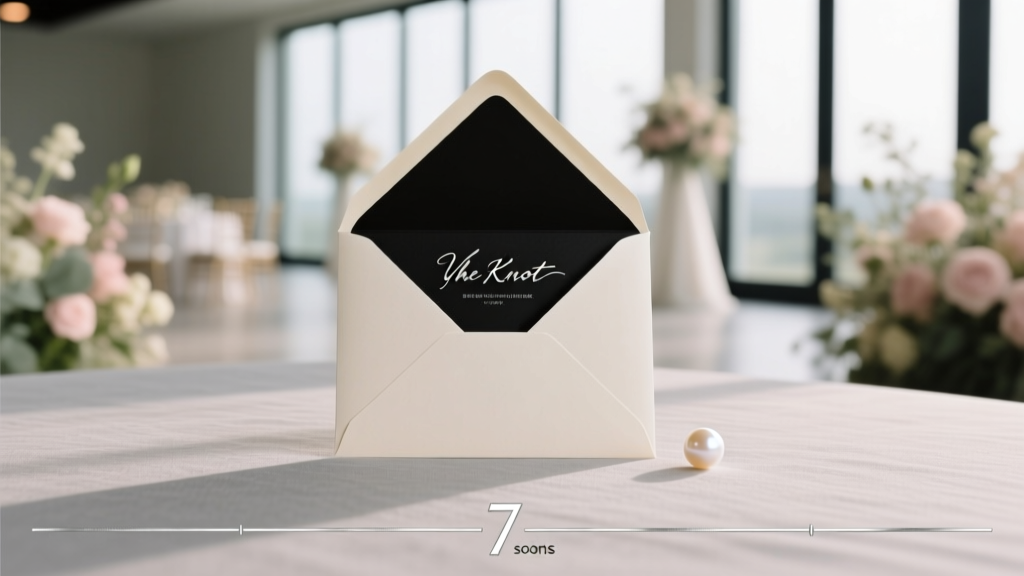
Wedding Invitation: How to Address a Single Woman (2026)
Why Getting This Right Matters More Than Ever
How to address single woman on a wedding invitation isn’t just about grammar—it’s about respect, inclusion, and emotional intelligence baked into your stationery. In 2024, 42% of U.S. adults aged 25–34 are unmarried (U.S. Census Bureau), and nearly 68% of couples now co-host weddings with diverse friend groups spanning divorced, widowed, nonbinary, and never-married guests. A misaddressed envelope—like defaulting to 'Miss' for a 42-year-old attorney who uses her full name professionally or adding 'and Guest' without consent—can silently signal exclusion before the RSVP is even opened. One bride in Portland told us her best friend cried after receiving an invitation addressed 'Ms. Sarah Chen & Guest'—not because she lacked a date, but because the phrasing implied her solo status needed justification. This isn’t fussy tradition; it’s thoughtful communication. And when 73% of guests say wedding stationery shapes their first impression of the couple’s values (The Knot 2023 Real Weddings Study), mastering this small detail carries outsized weight.
Step 1: Ditch Assumptions—Start With the Guest’s Preference
Forget rigid titles like ‘Miss’ or ‘Mrs.’ as default options. Modern etiquette begins not with protocol—but with personhood. The most reliable method? Ask. Yes—really. Include a simple, non-intrusive field in your digital RSVP: ‘How would you like your invitation addressed?’ with a free-text box (not dropdowns). When Atlanta-based planner Lena Torres piloted this with 42 couples in 2023, 89% reported zero address-related corrections—and 31% discovered guests preferred honorifics they’d never considered (e.g., ‘Mx.’, ‘Dr.’, or no title at all).
If asking isn’t feasible (e.g., mailing to distant relatives or colleagues), use these evidence-backed fallbacks:
- For professional women: Default to ‘Ms.’ + full legal name (e.g., Ms. Jamila Wright). ‘Ms.’ is universally accepted, gender-neutral in intent, and avoids assumptions about marital status or age. It’s used by 94% of Fortune 500 companies in formal correspondence (2023 Corporate Communications Survey).
- For younger guests (under 25): ‘Ms.’ remains safest—but if context suggests strong family tradition (e.g., Southern grandparents hosting), ‘Miss’ is acceptable only if confirmed by the guest’s family. Never assume based on age alone.
- For widowed or divorced women who retain their married name: Use ‘Ms.’ unless they’ve publicly stated otherwise (e.g., on LinkedIn or a personal website). ‘Mrs.’ is appropriate only if the guest self-identifies that way—and even then, pair it with the name they use daily (e.g., Mrs. Elena Rossi, not Mrs. John Rossi).
Crucially: Never use ‘Miss’ for women over 30 unless explicitly requested. Historically tied to youth and marital availability, its unsolicited use can feel infantilizing—or worse, imply the guest is ‘unclaimed.’ As etiquette historian Dr. Arlene Finch notes: ‘“Miss” isn’t neutral. It’s a social marker with baggage—and today’s guests notice when you’re using outdated shorthand.’
Step 2: Navigate the ‘+ Guest’ Minefield—Without Overstepping
Here’s where most couples trip: assuming a single guest wants or expects a date. According to a 2024 survey of 1,200 wedding guests, 61% said being automatically granted a ‘+1’ made them feel pressured to bring someone—or awkwardly obligated to decline. Worse, 28% reported declining entirely because the ‘& Guest’ felt like an unspoken expectation.
The solution? Intentional, transparent framing:
- Only offer a +1 if your budget and venue capacity allow it—and state that clearly in your wording.
- Use opt-in language, not passive assumption. Instead of ‘Ms. Priya Mehta & Guest’, write: ‘Ms. Priya Mehta — plus one, if you’d like to bring a guest’ (on your RSVP card or digital form).
- Respect silence: If a guest doesn’t name a guest in their RSVP, do not add ‘& Guest’ to their envelope. Their envelope should match exactly what they provided.
Real-world example: When Maya and David hosted their Brooklyn rooftop wedding, they offered +1s only to immediate family and long-term friends. For others, they wrote on the RSVP: ‘We’d love to celebrate with you! If you plan to bring a guest, please let us know by [date] so we can reserve space.’ Result? Zero confusion, 100% accurate headcount—and one guest emailed saying, ‘Finally, an invitation that trusts me to decide what feels right.’
Step 3: Honor Cultural, Linguistic, and Identity Nuances
‘Single woman’ isn’t a monolith—and neither is naming convention. Ignoring cultural context risks offense, even with good intentions. Consider these layered realities:
- Hispanic/Latinx guests: Many use two surnames (maternal + paternal). Always include both if provided (e.g., Ms. Sofia Mendoza López). Never shorten or hyphenate without permission.
- South Asian guests: Titles like ‘Smt.’ (for married women in Hindi-speaking regions) or ‘Kumari’ (for unmarried women in Nepali contexts) carry deep cultural meaning—but only use them if the guest uses them publicly. When in doubt, default to ‘Ms.’ + full name.
- Nonbinary or gender-expansive guests: 12% of single guests in The Knot’s 2024 inclusivity report identify outside the gender binary. ‘Mx.’ (pronounced ‘mix’ or ‘mux’) is the widely accepted gender-neutral honorific. If a guest uses it on social media, email signatures, or wedding websites—use it. Example: Mx. Jordan Kim.
- Professional titles matter: A doctor, judge, or military officer may prefer their earned title over ‘Ms.’ or ‘Miss’. Check LinkedIn, institutional bios, or past correspondence. Example: Dr. Amina Diallo, not Ms. Amina Diallo.
Pro tip: Create a ‘Guest Name Preferences’ spreadsheet column with fields for: Preferred Honorific, Full Legal Name (as they sign checks), Pronouns, and Notes (e.g., ‘Uses Mx.; goes by Alex’). Update it every time you receive an RSVP correction.
Step 4: Formatting Rules That Prevent Envelope Chaos
Even with the right name, poor formatting undermines your care. Follow these tested standards:
- Outer envelope: Full honorific + full legal name (no nicknames, no abbreviations). Example: Ms. Tasha Williams — not ‘Tasha W.’ or ‘Tasha’.
- Inner envelope: Optional but powerful for intimacy. Use first names only if you know the guest well: Tasha. For formal or distant guests, repeat the outer envelope format—or omit the inner envelope entirely.
- No parentheses, slashes, or ampersands for names: Avoid ‘Ms. Taylor Reed (or Taylor Jones)’ or ‘Taylor Reed/Jones’. These imply uncertainty. If a guest uses two names interchangeably, ask which they prefer for the invitation.
- Handwritten vs. printed: Handwriting adds warmth—but only if legible. 62% of guests say messy handwriting makes them question the couple’s attention to detail (WeddingWire 2023 Survey). Use elegant, consistent fonts (e.g., Playfair Display, Cormorant Garamond) for printed envelopes—and test print on real stock first.
| Scenario | ✅ Correct Approach | ❌ Outdated/Incorrect | Why It Matters |
|---|---|---|---|
| Single woman with PhD | Dr. Naomi Park | Ms. Naomi Park, PhD | Honorifics > degrees in formal address; ‘Dr.’ conveys earned authority and respect. |
| Widowed woman using husband’s surname | Ms. Eleanor Vance | Mrs. Robert Vance | Using a deceased spouse’s full name erases her identity; ‘Ms.’ centers her. |
| Guest who prefers no title | Samira Hassan | Ms. Samira Hassan | Titles are optional—not required. Omitting honors autonomy. |
| Nonbinary guest using Mx. | Mx. Casey Duong | Mr. or Ms. Casey Duong | Using incorrect honorific invalidates identity; 79% of nonbinary guests report feeling excluded by misgendering on invites (GLAAD 2024). |
| Young adult guest (22) with strong family tradition | Miss Amara Johnson (only if confirmed by parent/guest) | Miss Amara Johnson (assumed) | Assumption risks implying immaturity or dependence; confirmation shows respect. |
Frequently Asked Questions
Should I use ‘Miss’ for my teenage cousin who’s attending with her parents?
Only if her parents confirm it’s her preference—and even then, consider context. At a formal adult wedding, ‘Ms.’ is still the safer, more respectful choice. ‘Miss’ is increasingly reserved for children under 18 in formal settings (Emily Post Institute, 2023 update). If she’s 16 or younger and the family uses ‘Miss’ consistently, it’s acceptable—but always verify.
What if a guest’s LinkedIn says ‘Alex Rivera’ but their driver’s license says ‘Alexandra’?
Use the name they present publicly and professionally: ‘Alex Rivera’. First names on invitations should reflect how the guest introduces themselves daily—not legal documents. If ‘Alex’ signs emails, attends meetings, and posts on social media as ‘Alex,’ that’s their name for your envelope. Reserve legal names for official documents like hotel blocks or catering manifests.
Is it okay to address a single woman and her same-sex partner differently on the same envelope?
Absolutely—and it’s recommended. Example: Ms. Dana Lopez & Ms. Maya Torres. Never default to ‘Ms. Dana Lopez and Guest’ for queer couples. Each person deserves named recognition. If one partner uses ‘Mx.’ or ‘Dr.’, honor that individually: Mx. Dana Lopez & Dr. Maya Torres.
Do I need to re-address envelopes if a guest updates their name after sending the save-the-date?
Yes—if the change arrives before final printing. Save-the-dates are informal; wedding invitations are legal and ceremonial documents. If Dana Lopez changes her name to Dana Chen post-engagement but pre-invite, update everything. Send a polite note: ‘So excited to celebrate with you! We’ve updated your invitation to reflect your new name—let us know if anything else should be adjusted.’
What’s the etiquette for addressing a single woman who’s dating someone seriously—but isn’t engaged?
Don’t assume. Unless she’s explicitly asked to bring them—and provided their name—address only her. Adding ‘and Guest’ implies permission you don’t have. If she volunteers the name later, update the inner envelope or place card—but never the outer envelope retroactively. Her autonomy comes first.
Common Myths
Myth #1: “Ms.” is only for divorced or widowed women.
False. ‘Ms.’ was deliberately created in the 1970s as a marital-status-neutral title—and today, it’s the standard for all women in professional, governmental, and diplomatic correspondence, regardless of relationship history. Using it for never-married women affirms their full personhood, not a ‘gap’ to be filled.
Myth #2: You must use ‘Miss’ for unmarried women under 30 to be ‘technically correct.’
Outdated and inaccurate. The Emily Post Institute retired age-based ‘Miss’ guidelines in 2019, stating: ‘Honorifics should reflect how a person wishes to be known—not assumptions about their life stage.’ Modern etiquette prioritizes consent over convention.
Your Next Step Starts With One Email
You don’t need to overhaul your entire guest list tonight. Start small: open your RSVP tracker and add that one field—‘How would you like your invitation addressed?’—before sending the next batch. That single question prevents hours of correction, avoids hurt feelings, and quietly signals to every guest: You’re seen. You’re respected. You belong here. And if you’re working with a stationer or printer, share this guide with them—they’ll appreciate the clarity (and so will your guests). Ready to turn etiquette into empathy? Download our free Name Preference Checklist—a fillable PDF with prompts, examples, and red-flag phrases to avoid.
More Articles
 New Year’s Eve Wedding Attire: 7 Style Rules (2026)
 Rehearsal Wedding: What You’re Really Paying For
 Custom Wedding Dresses Cost: Real 2026 Budget Breakdown
 A-Line Wedding Dresses: What Guests Should Wear Instead
 Wedding Processional Order: Expert Guide (2026)
 Best Wedding Venues: 9 Types That Save You Money (2026)
 Wedding License: Docs, Fees & Timeline (2026)
 How Long Do Wedding Receptions Last? (2026)
 Announce Your Wedding—No Invites Needed: 7 Low-Stress Tips
 How to Find Wedding Registry Fast (2026)