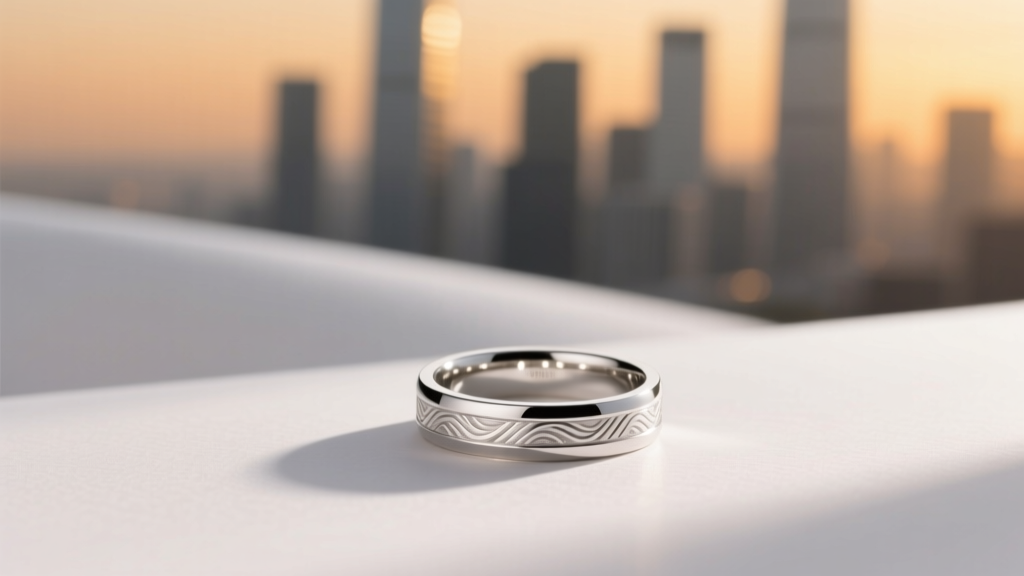
Wedding Band Purchase: Who Pays in 2026?
Why This Question Is Asking for More Than Just a Yes or No
‘Do you buy your own wedding band?’ sounds like a simple etiquette question—but in 2024, it’s really a proxy for deeper concerns: financial fairness, gendered expectations, relationship autonomy, and even identity expression. Over 68% of couples now co-fund at least one wedding ring (The Knot 2023 Real Weddings Study), yet nearly half still feel anxious about broaching the topic—fearing it might seem ‘unromantic,’ ‘selfish,’ or ‘cheap.’ That tension is why this isn’t just about metal and sizing; it’s about rewriting unspoken rules. Whether you’re planning a $5,000 platinum set or a $120 titanium stack, how you acquire your band says something about your values—and your marriage’s foundation.
The Real-World Shift: From Tradition to Intentional Choice
Gone are the days when ‘he buys hers, she wears his’ was the only script. In fact, 41% of couples now purchase both bands together—often during a joint appointment with a jeweler or via custom design platforms like James Allen or Local Metalsmith Co. But what’s driving this change? Three converging forces: rising average wedding costs ($30,900 nationally, per The Knot), evolving gender roles (72% of women now contribute ≥40% to household income, U.S. Census 2023), and Gen Z/Millennial prioritization of shared decision-making over inherited ritual. Consider Maya and Dev, a Brooklyn-based couple who each designed and paid for their own bands after realizing their aesthetic preferences diverged sharply—she wanted matte black ceramic with a hidden fingerprint engraving; he chose brushed palladium with a subtle wave texture. Their ‘split purchase’ wasn’t cost-driven—it was value-driven. They called it ‘ring sovereignty’: the right to wear something that feels authentically theirs, from day one.
This isn’t rebellion—it’s recalibration. And it starts with naming what’s actually at stake: budget transparency, personal symbolism, and mutual respect—not just who swipes the card.
Your 5-Step Decision Framework (No Guilt, No Guesswork)
Forget vague advice like ‘just talk about it.’ Here’s a concrete, emotionally intelligent framework used by certified wedding financial coaches and relationship counselors:
- Clarify Your Non-Negotiables First: Before discussing money, identify what each person needs the band to represent. Is it durability (for nurses, chefs, or teachers)? Heritage (a family stone repurposed)? Ethical sourcing (Fairmined gold, lab-grown diamonds)? Write these down separately—then compare. Disagreements here reveal core values, not just taste.
- Map Your Financial Reality—Together: Pull up actual numbers. Use a shared spreadsheet (Google Sheets works) to list: current savings, debt obligations (student loans, credit cards), upcoming large expenses (car repairs, grad school), and discretionary income. Then assign a ‘ring budget ceiling’—not a target. Example: If combined monthly surplus is $1,200 and you have $8,000 in student loans, a $3,500 band set may strain long-term goals. A $1,200–$1,800 range becomes the ethical upper limit.
- Decide on Ownership Model—Not Just Payment: Payment ≠ sole ownership. You can co-pay but designate one band as ‘yours’ (e.g., ‘I funded 70%, so I choose the metal and engraving’). Or go fully collaborative: split cost 50/50 but jointly approve design, vendor, and timeline. Or adopt the ‘gift model’: one person funds it as a surprise, but only after confirming the other’s style preferences and size—no assumptions.
- Factor in Practical Lifespan & Maintenance: A $2,800 white gold band requires rhodium replating every 12–18 months ($75–$120/session). A $1,100 cobalt-chrome band never needs replating and resists scratches. If one partner works with chemicals or machinery, durability isn’t vanity—it’s occupational safety. Run a 5-year cost-of-ownership projection: purchase + maintenance + potential resizing + insurance.
- Write Your ‘Ring Agreement’ (Yes, Really): A one-paragraph, signed note (digital or paper) stating: ‘We agree [Name] will purchase their own wedding band within [timeline], budgeting up to $[X], with final design approved by both. This reflects our shared commitment to autonomy and intentionality.’ Keep it. Revisit it pre-wedding. It’s not cold—it’s clarifying.
What Data Says About Who Pays—and What It Reveals
Let’s move beyond anecdotes. The 2023 Jewelers of America Consumer Survey (n=2,147 newlyweds) and The Knot’s annual report converge on striking patterns:
| Payment Model | % of Couples (2023) | Avg. Spend Per Band | Top Reason Cited |
|---|---|---|---|
| Partner buys their own band | 39% | $1,420 | “Wanted control over design, fit, and ethics” (63%) |
| One partner pays for both | 28% | $2,180 (combined) | “Tradition felt meaningful to us” (41%) OR “One had significantly higher income” (37%) |
| Jointly funded (shared account or split) | 22% | $1,890 (combined) | “Fairness mattered more than ritual” (79%) |
| Family contribution (parent-funded) | 11% | $2,650 (combined) | “Cultural expectation in our community” (68%) |
Note the nuance: ‘Partner buys their own’ isn’t just about economics—it’s the fastest-growing model among couples aged 25–34 (up 22% since 2020). And crucially, satisfaction rates with ring choice were highest in the ‘own purchase’ group (91% vs. 74% in ‘one partner pays both’). Why? Psychological ownership theory confirms: when people invest effort and agency into acquiring an object, they form stronger emotional bonds with it. Your wedding band isn’t jewelry—it’s wearable identity.
Frequently Asked Questions
Is it weird or selfish if I want to buy my own wedding band?
Not at all—and it’s becoming the norm. ‘Weird’ implies deviation from universal truth; but there is no universal truth here. In fact, wanting agency over something you’ll wear daily for decades signals self-awareness and intentionality. One therapist we interviewed put it plainly: ‘Asking “Is it selfish?” reveals internalized pressure—not flawed values. Self-respect isn’t selfish; it’s foundational to healthy partnership.’
What if my partner expects to buy mine—and I’m uncomfortable with that?
That discomfort is data—not a problem to suppress. Name it gently: ‘I love that you want to honor me this way, but I’d feel more connected to my band if I helped choose and fund it. Can we explore options together?’ Frame it as inclusion, not rejection. Most partners respond positively when the ask centers shared meaning—not just money.
Does buying my own band affect legal ownership if we divorce?
In most U.S. states, wedding bands are considered separate property—even if purchased during marriage—because they’re classified as ‘personal gifts’ under marital property law. However, if funds came from a joint account *and* the band was explicitly gifted *to* the other person (e.g., presented with ‘This is for you’ language), it could be contested. For absolute clarity: keep purchase receipts, note the payment source (individual bank account = strongest case), and avoid commingling funds. When in doubt, consult a family law attorney—but know this: rings rarely become litigation flashpoints. Clarity upfront prevents ambiguity later.
Can I use my engagement ring budget toward my wedding band instead?
Absolutely—and many do. The average couple spends 2.3x more on engagement rings than wedding bands (JA Survey). If your engagement ring was $6,000 and your band budget feels tight, reallocating $1,500–$2,000 from that surplus is financially sound—especially if you prioritize long-term wearability over short-term ‘wow factor.’ Just ensure both pieces harmonize aesthetically. Pro tip: Bring your engagement ring to the band fitting. A skilled jeweler can match metals, widths, and profiles—even if styles differ.
What if we’re on a super tight budget—can we skip wedding bands entirely?
Yes—and it’s more common than you think. 12% of couples in The Knot’s 2023 study wore no traditional bands, opting for alternatives: engraved leather cuffs, silicone bands for active lifestyles, tattooed rings (permanent ink or temporary henna), or symbolic objects (a shared heirloom pocket watch, matching compass pendants). The ritual matters—not the object. If bands feel financially or philosophically misaligned, define your own symbol. One couple exchanged handwritten vows sealed in wax with each other’s fingerprints—no metal required.
Debunking Two Persistent Myths
Myth #1: ‘Buying your own band means you don’t trust your partner to choose for you.’
Reality: Trust isn’t demonstrated by surrendering choice—it’s proven through collaborative dialogue. Choosing your own band often requires *more* trust: trusting your partner to respect your autonomy, your values, and your voice in defining your shared future. It replaces passive acceptance with active co-creation.
Myth #2: ‘It’s only for couples who can’t afford to share the cost.’
Reality: Financial capacity and relational philosophy are separate dimensions. High-earning couples frequently choose individual purchase to honor personal aesthetics, ethical standards (e.g., conflict-free sourcing), or career-specific needs (a surgeon needing non-porous metal). Cost is one variable—not the defining one.
Your Next Step Isn’t Buying—It’s Aligning
So—do you buy your own wedding band? The answer isn’t hidden in etiquette manuals or Pinterest boards. It’s waiting in your shared values, your financial reality, and your vision for partnership. Don’t rush to ‘decide.’ Instead, schedule a 45-minute ‘ring conversation’ using the 5-step framework above. Bring coffee, your notes on non-negotiables, and zero assumptions. Ask: ‘What does wearing this band need to mean for *me*—and for *us*?’ Then listen—deeply. Your wedding band shouldn’t be a compromise. It should be your first intentional act of marriage: chosen, not inherited; claimed, not assigned. Ready to start designing? Download our free Ring Alignment Worksheet (includes budget calculator, style preference quiz, and vendor vetting checklist)—or book a 15-minute consultation with our certified wedding finance coach to stress-test your plan.
More Articles
 Wedding Planner Cost for Small Wedding (2026)
 What to Wear to a Barn Wedding (2026)
 How to Dye Wedding Shoes at Home (2026)
 Do You Need a DJ for Your Wedding? (2026)
 How to Write a Wedding Photographer Review (2026)
 Wedding Planner Career Truths (2026)
 Wedding Invitation Time Format Rules (2026)
 Wedding Dessert Stats: 78% Skip It (2026)
 Wedding Makeup Artist Cost Breakdown (2026)
 Wedding Hair and Makeup Cost Guide (2026)