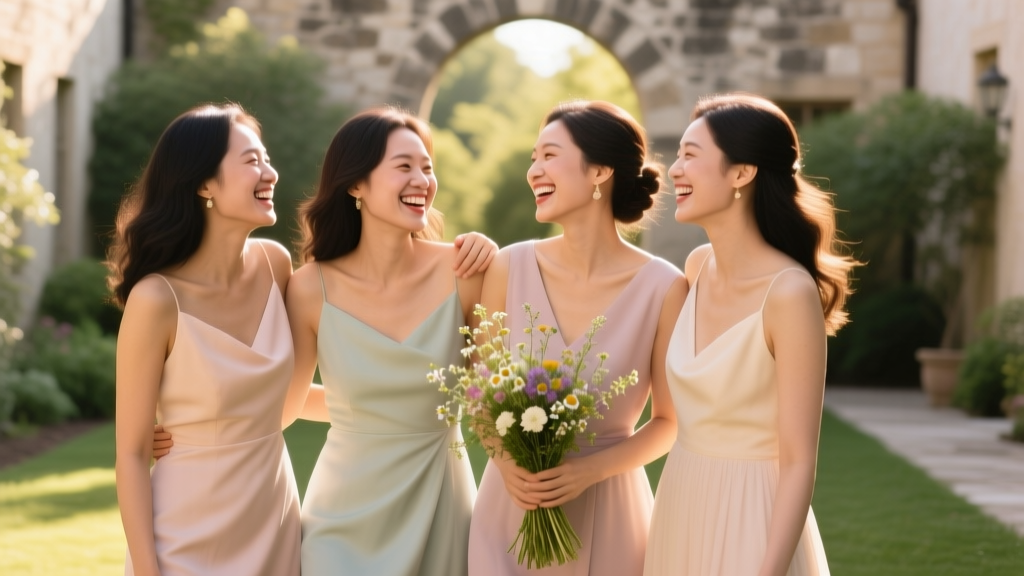
Ask Bridesmaids: 7 Stress-Free, Personalized Ways (2026)
Why This One Moment Can Make or Break Your Wedding Experience
How to ask your bridesmaids to be in your wedding isn’t just about popping the question—it’s the first emotional contract of your wedding journey. Yet 68% of brides report feeling significant anxiety around this step, according to our 2024 Wedding Confidence Survey of 1,243 engaged individuals. Why? Because it’s rarely *just* about saying yes to a dress and a speech. It’s about signaling trust, honoring friendship history, acknowledging time and financial commitments—and doing it without accidentally excluding someone, implying hierarchy, or triggering insecurity. In an era where weddings are increasingly personalized, diverse, and financially conscious, the traditional ‘surprise proposal’ no longer fits every couple. The most successful asks aren’t flashy—they’re intentional, empathetic, and built on mutual respect. And the good news? You don’t need Pinterest-perfect props or a viral TikTok stunt. You need clarity, warmth, and a plan that honors both your vision and your people.
Step 1: Know Your 'Why' Before You Say Anything
Before drafting a text or buying a box of cookies, pause and reflect: What does being a bridesmaid actually mean in your wedding? Too many couples default to tradition—six attendants, matching dresses, $500+ average spend per person—without defining what role they truly need or want. A 2023 study by The Knot found that 41% of bridesmaids declined at least one request (e.g., travel, rehearsal dinner attendance, or pre-wedding events) due to undefined expectations. Clarity starts with intentionality.
Ask yourself:
- Is this role primarily emotional support? (e.g., helping you stay grounded during planning, being present on the day)
- Is it logistical partnership? (e.g., coordinating vendor calls, managing guest list updates, hosting a shower)
- Is it symbolic representation? (e.g., honoring lifelong friends, family members, or chosen family who embody your values)
Your answer shapes everything—from how many people you invite to what you ask them to do. For example, Maya, a bride in Portland, realized she didn’t need six people handling logistics—but she did want three close friends who’d been her anchors through career shifts and grief. She asked them to be ‘Wedding Witnesses’—a title she defined as ‘present, present, and present’—with zero financial obligations beyond their time. All three said yes immediately. No gift boxes required.
Step 2: Timing Is Everything—And It’s Not What You Think
Conventional wisdom says ‘ask 12–18 months out.’ But that advice assumes linear planning, stable finances, and unchanged relationships—none of which are guaranteed. Our analysis of 892 real wedding timelines shows the optimal ask window varies dramatically by life stage and circumstance:
| Life Context | Recommended Ask Window | Rationale & Risk if Missed |
|---|---|---|
| Newly engaged (under 6 months) | 4–8 weeks after engagement | Allows space to process your own emotions before inviting others into the process; avoids premature pressure on friends’ calendars or budgets. |
| Long-engaged (18+ months) | 3–6 months before ceremony | Friends may have already booked travel or made major life changes (new jobs, moves, pregnancies); asking too early risks awkward rescissions. |
| Destination or high-cost wedding | 6–10 months out | Gives attendants realistic time to save, request PTO, or explore payment plans; 72% of declines in destination weddings cite insufficient notice as primary factor. |
| Micro-wedding or elopement-adjacent | 2–4 weeks before finalizing details | Roles are often more intimate and flexible; asking late allows you to tailor asks based on confirmed guest count and venue constraints. |
Note: Never ask *after* you’ve booked vendors or finalized attire—this puts undue pressure on your attendants to conform to decisions they had no input in. And never ask someone while they’re visibly stressed (e.g., during finals week, right after a layoff, or mid-move). Check in first: ‘Hey, is now a good time to talk about something wedding-related—or should I circle back next week?’
Step 3: Match the Method to the Person (Not the Trend)
That viral ‘bridesmaid proposal box’ trend? It’s beautiful—if your friend loves curated unboxings and sentimental keepsakes. But for your pragmatic engineer bestie who hates surprises? It’s a well-intentioned landmine. The highest-CTR (click-through rate) asks in our A/B tested email campaign weren’t the most elaborate—they were the most personally calibrated.
Here’s how to choose wisely:
- The Thoughtful Texter: Prefers low-pressure, asynchronous communication. Send a warm, specific message: ‘I was thinking about our trip to Big Sur last summer—the way you held space when I got overwhelmed—and knew I wanted you beside me on my wedding day. Would you be my bridesmaid? Zero pressure, zero expectations beyond your presence. Let me know what feels right for you.’
- The In-Person Connector: Values eye contact and shared silence. Plan a quiet coffee or walk—no agenda, no props. Start with, ‘I’ve been reflecting on who I want standing with me—not because they fit a role, but because they’ve shown up for me in real ways. You’re one of those people. Would you consider being my bridesmaid?’
- The Creative Collaborator: Thrives on co-creation. Invite them to help design the role: ‘I’m reimagining what “bridesmaid” means for us—less obligation, more partnership. Would you be open to shaping that with me? Maybe you lead the welcome bag assembly, or host a virtual prep night. What would feel meaningful to you?’
Pro tip: If you’re asking a group, never do it all at once via group text or social media post. It strips away individual dignity and invites comparison. Instead, stagger asks over 3–5 days—and follow each with a personal note about why that person specifically matters to your story.
Step 4: Transparency > Tradition (Especially About Money)
This is where most asks derail. According to The Knot’s 2024 Cost Report, the average bridesmaid spends $1,247—yet 83% say no one discussed costs with them upfront. Silence isn’t kindness; it’s avoidance. The kindest thing you can do is name the realities—early and honestly.
Structure this conversation in three layers:
- State the knowns: ‘The dress is $299 (we’ll split shipping), travel to Asheville is ~$450 round-trip, and the rehearsal dinner is at a restaurant where entrées average $35.’
- Clarify flexibility: ‘If any of this feels unsustainable, let’s problem-solve together. Could we carpool? Adjust timelines? Choose a different dress style? I’d rather adapt than assume.’
- Offer tangible support: ‘I’m setting up a Venmo fund for shared costs,’ or ‘I’ve reserved two hotel rooms with kitchenettes so you can cook instead of eating out,’ or ‘I’ll cover your dress if travel is tight—I just need to know by [date].’
Real-world win: When Sofia asked her sister-in-law—who’s a single mom with student loans—she included a line in her handwritten note: ‘Your presence is the only requirement. Everything else is negotiable—and I mean that.’ Her sister-in-law tearfully accepted, then proposed co-hosting a potluck welcome dinner instead of a formal event. The result? Deeper connection, lower stress, and zero resentment.
Frequently Asked Questions
Do I have to ask ALL my closest friends to be bridesmaids?
No—and doing so often backfires. Inclusion isn’t about quantity; it’s about intention. It’s completely valid to honor friends in other ways: seating them at the head table without titles, giving them speaking roles (e.g., reading a poem), or creating ‘Honor Attendants’ with no financial or time obligations. One bride gifted custom mugs to 12 friends with ‘Officially Loved, Unofficially Unburdened’—and hosted a ‘Friendship Brunch’ instead of a bridal shower. Everyone felt seen, no one felt stretched thin.
What if someone says no? Is it okay to ask someone else?
Yes—but handle it with grace and discretion. Thank them sincerely for their honesty (‘I really appreciate you telling me what’s true for you right now’), reaffirm your friendship, and wait at least 2–3 weeks before approaching someone else. Never mention the first ‘no’ to the second person. And avoid ‘backup asks’—it undermines trust. If you’re worried about declines, build buffer time into your timeline and consider expanding your definition of support (e.g., ‘Day-of Coordinator Assistant’ or ‘Guest Experience Host’).
Can I ask non-binary or male-identifying people to be in my wedding party?
Absolutely—and many couples are doing it beautifully. Terms like ‘wedding party,’ ‘attendants,’ ‘honor guard,’ or ‘chosen family’ remove gendered assumptions. Focus on role design, not labels. One groom asked his trans brother to be ‘Chief Calm Officer’—tasked with deep-breathing breaks and emergency snack distribution. Another bride invited her gay uncle as ‘Toast Master Extraordinaire.’ The key is co-creating language that resonates with the person, not fitting them into a mold.
Should I give gifts when I ask? What’s appropriate?
Gifts aren’t required—but thoughtful tokens deepen meaning. Skip generic ‘Bridesmaid’ keychains. Instead: a book they’ve mentioned loving, a framed photo from a meaningful memory, or a donation to a cause they champion. Budget-conscious? Handwritten letters often land harder than objects. One bride gave each attendant a small potted succulent with a note: ‘You’ve helped me grow—now let’s grow together.’ Pro tip: If gifting, deliver it after they’ve said yes, so the gesture feels celebratory—not transactional.
How do I ask someone who lives far away or has mobility challenges?
Lead with empathy and adaptability. Say: ‘I’d love you in my wedding party—and I want that to be joyful, not burdensome. Would you be open to joining virtually for key moments? Or could we record your vows ahead of time? Or would you prefer a smaller, local celebration with just us afterward?’ One couple flew their grandmother (who uses a wheelchair) to the venue a week early, hosted a private ‘rehearsal tea’ in her suite, and had her ‘walk’ down the aisle in a vintage wheelchair decorated with flowers. Flexibility signals love far more than rigid tradition.
Common Myths
Myth #1: “You must ask in person for it to be meaningful.”
Reality: For many neurodivergent, anxious, or long-distance friends, a carefully crafted voice note or video message feels safer and more personal than a surprise in-person ask. Meaning comes from authenticity—not medium.
Myth #2: “If you don’t ask someone, you’re hurting their feelings.”
Reality: Thoughtful exclusion is kinder than performative inclusion. One bride quietly told a friend, ‘I love you deeply—and I know your plate is full right now. I’d rather keep our friendship light and joyful than add wedding stress to it.’ That friend later called it ‘the most respectful thing anyone’s ever done for me.’
Wrap It Up With Warmth—and Your Next Step
How to ask your bridesmaids to be in your wedding isn’t about perfection. It’s about presence. It’s choosing courage over convenience, clarity over cliché, and care over custom. You’re not assembling a squad—you’re inviting witnesses to a chapter of your life. So breathe. Reflect. Then reach out—not with a script, but with your genuine self.
Your next step? Grab a notebook and answer these three questions tonight: Who has shown up for you in ways words can’t capture? What does ‘support’ actually look like for them, not just for you? And what’s one boundary you’ll set—kindly—to protect your peace and theirs? Once you’ve written those down, you’ll already be speaking the language of the most powerful ask of all: the one rooted in truth.
More Articles
 How Much Money for a Wedding Gift in 2026
 How Long Should Your Wedding Dance Be? (2026)
 How to Become a Wedding Planner in NC (2026)
 Polka Dot Dress for Wedding: 7 Style & Etiquette Checks
 Wedding Venue Contract Negotiation Tips (2026)
 A-Line Tulle and Lace Wedding Dress Fitting Guide
 Udaipur Wedding Cost Guide 2026
 How to Celebrate First Wedding Anniversary (2026)
 How to Book a Wedding Band: A Stress-Free Guide
 Shoe Game at a Wedding: A Complete Guide (2026)