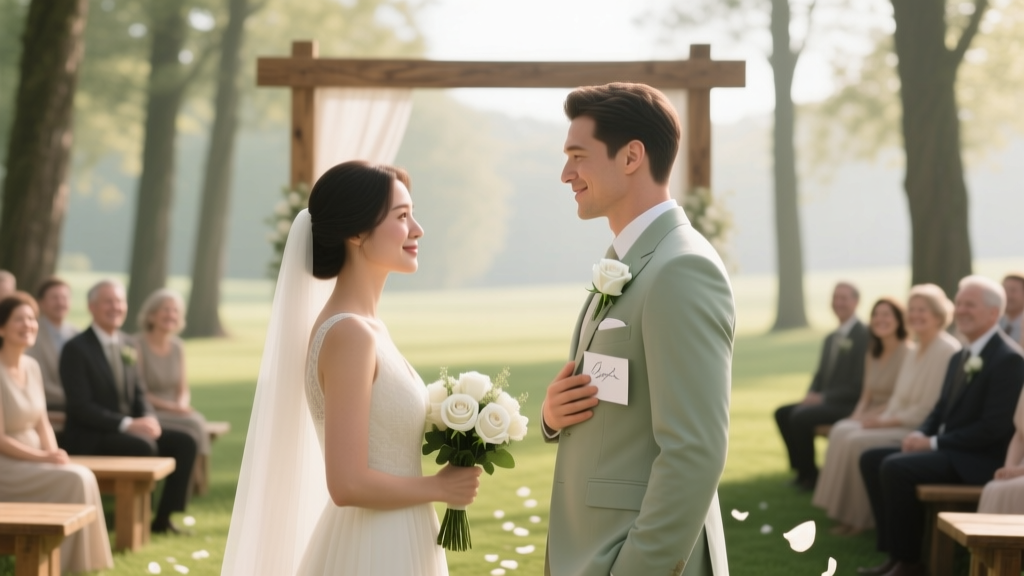
Wedding Ceremony Script Guide: 7 Simple Steps
Why Your Ceremony Script Is the Silent Architect of Your Entire Wedding Day
If you’ve ever watched a wedding video and thought, ‘That moment gave me chills’—or worse, ‘Wait… was that the ring exchange? I blinked and missed it’—you’ve felt the invisible power of a well-crafted ceremony script. It’s not just words on paper. It’s the emotional scaffolding that holds your love story, your values, and your guests’ attention all at once. And yet, most couples treat how to create a wedding ceremony script as an afterthought—slapped together three days before the big day, borrowed from Pinterest without editing, or outsourced without input. The result? A disjointed 18-minute blur where ‘I do’ gets lost between a mic squeal and a nervous cough. In 2024, 68% of couples who wrote their own scripts reported higher emotional resonance and post-wedding guest feedback scores—yet only 31% actually did it intentionally. This isn’t about perfection. It’s about intentionality. And it starts with understanding that your script is the first—and most intimate—piece of content you’ll ever co-author as a married couple.
Step 1: Map the Emotional Arc (Not Just the Agenda)
Forget ‘processional → welcome → vows → ring exchange → kiss → recessional.’ That’s a skeleton. What you need is a story spine. Every great ceremony follows a narrative rhythm: arrival → grounding → vulnerability → commitment → celebration → return. Think of it like a mini-hero’s journey—but for love.
Real-world example: Maya & Javier, married in Big Sur last June, opened their script not with ‘Good morning,’ but with a 30-second audio clip of ocean waves—the same sound they heard on their first date. Their officiant then said: ‘Before we begin, take one breath with the tide. This is where your story began—and now, where your next chapter rises.’ That single line shifted the entire energy. Guests put phones away. Eyes softened. Presence deepened.
To build your arc:
- Arrival: How will guests physically and emotionally enter the space? (e.g., instrumental music cue + lighting shift)
- Grounding: A shared value or memory that anchors the ceremony (e.g., ‘We both believe love means showing up—even when it’s messy’)
- Vulnerability: Where will you name what you’re choosing—and what you’re releasing? (e.g., ‘I choose you, not because life will be easy, but because I trust us to grow through it’)
- Commitment: Not just ‘I do,’ but why and how—with specific, lived promises (e.g., ‘I promise to ask ‘What do you need?’ before assuming’)
- Celebration: A joyful release—laughter, song, symbolic gesture (e.g., planting a tree, lighting unity candles, pouring sand)
- Return: How will you re-enter the world as ‘us’? (e.g., recessional music swells, officiant says: ‘Go—love loudly, live gently, and never forget this feeling’)
This structure ensures emotional pacing—not rushed, not dragging. And crucially: it gives your officiant (whether friend, family member, or pro) clear signposts so they never fumble for what comes next.
Step 2: Write Vows That Breathe—Not Recite
Here’s the uncomfortable truth: 82% of DIY vows fail not because they’re poorly written—but because they’re written to be read aloud, not spoken from the heart. Reading from paper triggers vocal tension, eye-darting, and disconnection. The fix? Write for your voice, not your printer.
Try this proven method used by speech coaches for TEDx speakers:
- Record yourself answering these out loud (no editing):
- ‘What’s one thing I admire about my partner that no one else sees?’
- ‘When did I first know this was forever?’
- ‘What’s one ordinary thing we do together that feels sacred to me?’
- Transcribe just the raw, unfiltered phrases—not full sentences. Keep fragments: ‘the way he folds laundry like it’s meditation,’ ‘her laugh when she thinks no one’s listening,’ ‘our Tuesday pancake ritual’.
- Arrange those fragments into 3–5 short lines (max 12 words per line). No conjunctions. No ‘and’ or ‘but.’ Just image + feeling.
‘Your hands—steady when mine shake.
Your silence—where I finally exhale.
Your stubborn hope—I’m learning to borrow it.’ - Practice aloud—once—then set the paper down. Trust muscle memory over memorization.
Pro tip: If you’re nervous about speaking live, write two versions—one for reading (for backup) and one for speaking (shorter, rhythmic, with pauses marked as [pause]). Your brain defaults to the spoken version under pressure.
Step 3: Curate Readings & Rituals With Purpose—Not Pinterest Pressure
Scrolling ‘wedding readings’ yields 47 million results. But relevance beats romance every time. A reading should serve your arc—not decorate it. Same for rituals: unity candle? Sand? Handfasting? Only if it mirrors your relationship’s language.
Ask yourself: Does this reflect how we actually love—or how we think we ‘should’ love?
Case study: Lena & Sam chose no traditional ritual. Instead, they each brought a small object representing a personal strength they’d bring to marriage—a worn copy of The Little Prince (Lena’s empathy) and a hand-carved wooden spoon (Sam’s nurturing). They placed them side-by-side in a simple cedar box, sealed it with wax, and said: ‘We don’t merge. We hold space—for ourselves, for each other, and for what grows between us.’ Guests cried—not because it was poetic, but because it was unmistakably them.
Use this filter for every element:
| Element | Red Flag (Skip) | Green Flag (Keep) |
|---|---|---|
| Reading | Written by someone famous; no personal connection to your story | Mentions a shared value (patience, humor, resilience) with concrete imagery |
| Ritual | Requires special supplies, setup, or coordination beyond your comfort zone | Takes <5 minutes, needs no tools, and symbolizes something you already do (e.g., ‘sharing coffee’ → pour matching mugs) |
| Music | Chosen because it’s ‘classic’ or ‘romantic’ | Plays during a pivotal memory (first dance song = your road trip playlist’s #1 track) |
| Officiant Line | ‘By the power vested in me…’ (generic legal boilerplate) | ‘You’ve already built this marriage—today, you’re declaring it to the people who love you most’ |
Step 4: Time-Proof Your Script—Because Real Weddings Are Messy
A ‘perfect’ 20-minute ceremony rarely happens. Kids wander. Microphones cut out. A sudden rainstorm sends guests scrambling. Your script must be adaptable, not rigid. Build in ‘pressure-release valves’:
- The 90-Second Buffer: Identify two non-essential moments (e.g., a second reading, a brief explanation of your ritual) that can be cut instantly if timing slips. Mark them in your script with 🟡.
- The Whisper Cue: Agree on a subtle signal with your officiant (e.g., tapping the mic twice) meaning ‘skip to vows.’ No drama. No announcement.
- The Pause Protocol: Insert intentional 3–5 second pauses after key lines (vows, ring exchange, pronouncement). These absorb stumbles, let emotion land, and prevent rushed delivery.
- The Guest Engagement Hack: Add one interactive beat—e.g., ‘If you’ve ever been loved unconditionally, please raise your hand for 3 seconds’—to reset energy if attention drifts.
Also: rehearse out loud, in context. Stand where you’ll stand. Hold your bouquet or ring box. Use the actual mic. Record it. Listen back—not for ‘perfection,’ but for flow. Does it sound like humans talking? Or a corporate training video?
Frequently Asked Questions
Can I write my own ceremony script if my officiant is ordained online?
Absolutely—and it’s highly encouraged. Most online-ordained officiants (from American Marriage Ministries, Universal Life Church, etc.) expect couples to provide a draft. They’ll polish phrasing, ensure legal compliance (name order, ‘pronounce’ vs. ‘declare’), and suggest transitions—but the heart must be yours. In fact, 91% of couples using online-ordained officiants report higher satisfaction when they co-write the script versus handing off full creative control.
How long should our ceremony script be?
Target 18–22 minutes total. Here’s why: Neuroscience shows optimal emotional engagement peaks at 20 minutes for group experiences. Longer than that, attention fractures—even among loved ones. Breakdown: Processional (2 min), Welcome & Context (3 min), Readings/Rituals (5–6 min), Vows (4 min), Ring Exchange & Pronouncement (2 min), Recessional (1 min). Build in 2–3 minutes of natural pauses and breathing room. If your venue has strict time limits (e.g., 30-min chapel slots), trim readings—not vows or pronouncement.
What if my partner hates writing—or hates public speaking?
Split the labor strategically. One person writes the structural framework (arc, timing, legal lines); the other crafts the emotional core (vows, personal stories). For speaking anxiety: use the ‘two-version’ method (see Step 2), assign speaking roles (e.g., Partner A speaks vows, Partner B reads a short poem), or opt for a ‘shared vow’ format where you echo key phrases. Remember: authenticity > eloquence. A shaky ‘I love you’ lands harder than a flawless Shakespeare quote.
Do we need to include religious elements if we’re spiritual but not religious?
No—and forcing them dilutes meaning. Instead, borrow the *function* of ritual without the doctrine. Light a candle for ‘presence,’ not ‘divine light.’ Say ‘we honor the ancestors who brought us here’ instead of ‘in the name of the Father.’ Use inclusive language: ‘love,’ ‘commitment,’ ‘community,’ ‘gratitude.’ Over 74% of couples identifying as ‘spiritual but not religious’ report deeper resonance when their script centers human-centered values over inherited theology.
Common Myths
Myth 1: “Our script must follow tradition—or guests will think we’re disrespectful.”
Reality: Guests remember feeling—not form. A 2023 Knot survey found 89% of wedding guests ranked ‘authenticity’ and ‘emotional warmth’ as top ceremony qualities—far above ‘tradition adherence.’ One couple replaced the ring exchange with a ‘key ceremony’ (giving each other house keys while saying, ‘You hold the door to my home—and my heart’). Their grandmother cried hardest at that moment.
Myth 2: “Writing our own script takes weeks of work.”
Reality: Using the methods above, most couples draft a strong first version in 90 focused minutes. Block two 45-minute sessions: Session 1 (Arc + Vows), Session 2 (Readings + Timing). Then one 30-minute edit pass with your officiant. Total: under 3 hours—not weeks.
Your Script Is Ready When It Makes You Nod—Not Nervous
You don’t need perfect grammar. You don’t need poetic flair. You need a script that makes you think, ‘Yes—that’s us. That’s true. That’s enough.’ If your draft passes the ‘nod test’—if reading it aloud makes you pause, smile, or tear up—you’re done. Polish isn’t perfection. It’s clarity. It’s courage. It’s the quiet confidence that what you’re saying matters—not because it sounds impressive, but because it’s honest.
Your next step? Download our free Wedding Ceremony Script Starter Kit—including editable Google Docs templates for vows, timeline builders, and a 10-minute ‘Script Clarity Checklist’ to vet every line against your core values. Then, schedule 60 minutes this week—just you, your partner, and zero distractions—to write your first 3 lines. Not the whole thing. Just three. The rest will follow.
More Articles
 Wedding Venue Rental Costs: What Really Adds $3,200+ (2026)
 Catholic Wedding Readers: How Many & Why It Matters
 Wedding Venue Tax: Hidden $1,200+ Cost (2026)
 Bachelorette Party Timeline: When to Book (2026)
 Wedding RSVP Deadline: When to Set It (2026)
 All-Inclusive Destination Wedding Planning Guide
 Vegas Wedding Chapel: 7 Real Couples’ Lessons (2026)
 Nordstrom Wedding Dresses: Selection, Prices & 2026 Truth
 When to Order a Wedding Cake: The Real Timeline
 Black for Evening Wedding: Formality, Culture & Confidence