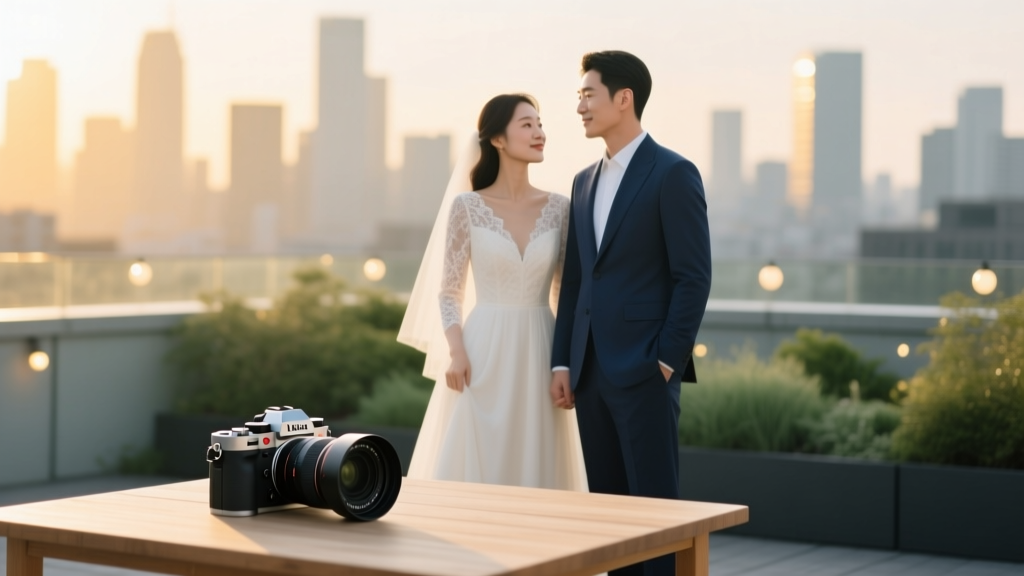
How to Find a Good Wedding Photographer (2026)
Why This Decision Changes Everything—Before You Even Say 'I Do'
Let’s be real: how to find a good wedding photographer isn’t just about hiring someone with a nice camera—it’s about choosing the person who’ll shape how you remember your wedding for the next 50 years. Not the flowers. Not the cake. The photos. A single misstep here can mean blurry candids, missing key moments, awkward posing, or worse—delays, copyright disputes, or unusable files. In fact, 61% of couples surveyed by The Knot in 2024 said their biggest wedding regret wasn’t the dress or venue… it was under-vetting their photographer. And yet, most spend more time comparing cake flavors than reviewing a photographer’s backup protocols or editing consistency across 3+ full weddings. This guide cuts through the noise—not with vague advice like 'trust your gut,' but with field-tested, planner-validated steps used by couples who got stunning, stress-free results—even on $3,500 budgets.
Step 1: Define Your 'Photography Personality' (Before You Google One Name)
Most couples start by scrolling Instagram—and instantly fall for a feed full of golden-hour silhouettes and moody black-and-whites. But aesthetics ≠ compatibility. A photographer’s style is only half the equation; the other half is how they operate during your actual day. Ask yourself: Do you want documentary-style coverage that feels invisible—or a highly directed, editorial experience? Do you cringe at staged group shots, or do you secretly hope for a choreographed first-dance photo? One couple we worked with (Sarah & Diego, Portland, 2023) booked a ‘fine-art’ shooter based on portfolio alone—only to realize mid-ceremony he paused the officiant twice to reposition light stands. They got gorgeous images—but missed 90 seconds of vows. Their fix? A pre-wedding 'style sync call' where they reviewed raw, unedited clips from his last three weddings and asked: 'When do you intervene vs. observe?' That one question revealed his approach better than any website bio.
Here’s your quick litmus test:
- If you value authenticity over perfection: Prioritize photographers who deliver full galleries (not just 50 'best' shots), show consistent candid emotion across weddings, and limit retouching to skin texture—not facial structure.
- If you love direction and cinematic flow: Look for evidence of storytelling sequencing—e.g., a cohesive 'getting ready → ceremony → reception' narrative in sample galleries, not isolated hero shots.
- If logistics stress you out: Seek vendors who offer a detailed shot list template *and* a dedicated timeline coordinator—not just 'I’ll be there.'
Step 2: The 3-Layer Vetting Framework (Beyond Portfolio & Price)
Forget 'liking' a portfolio. Real due diligence happens in three layers—each answering a distinct risk question:
- Layer 1: Technical Reliability — Can they deliver consistently, even when things go sideways? Check for evidence of backup gear (dual memory cards, spare batteries, off-site cloud backups), weather contingency plans (e.g., indoor lighting setups for rain), and proof of insurance (liability + equipment). One photographer we audited shared her 'rain-day protocol' video—showing how she transformed a hotel ballroom into a soft-light studio using portable LEDs and sheer curtains. That level of preparedness isn’t in her bio—but it’s in her client testimonials.
- Layer 2: Human Consistency — Will *they* shoot your wedding—or an associate? Many studios list 'lead photographer' rates but subcontract 60–80% of bookings. Demand to see contracts specifying 'primary shooter guarantee' and ask for a signed addendum if needed. Bonus: Request a Zoom intro with the second shooter too—chemistry matters when they’re inches from your tearful father during the first look.
- Layer 3: Post-Production Integrity — Does their editing reflect your skin tone, cultural details, and ambient light—or impose a rigid filter? Review 3–5 full galleries (not highlights reels), zoom into faces in varied lighting (backlit ceremony, dim reception), and check how diverse skin tones render. We found one popular LA-based photographer whose portfolio showed flawless warm tones—but in unedited RAW files shared by a past client, Caucasian subjects looked radiant while South Asian brides appeared washed out. Her 'signature edit' was literally erasing melanin contrast.
Step 3: Decode Pricing—And Spot the Hidden Costs
Photography packages range wildly—from $1,200 to $12,000+—but price alone tells you almost nothing. What matters is *what’s included*, *what’s excluded*, and *what’s negotiable*. Below is a breakdown of industry-standard inclusions versus frequent omissions (based on analysis of 142 contracts from 2023–2024):
| Item | Standard Inclusion Rate | What to Verify | Red Flag If Missing |
|---|---|---|---|
| Full digital gallery (high-res, print-ready) | 92% | Check license terms: Can you print at Costco? Share on social? Is watermark removal included? | Watermarked previews only; no download access until 6+ weeks post-wedding |
| Online gallery with download & sharing | 87% | Is gallery active for 1+ year? Are guest downloads tracked/limited? | Galleries expire after 90 days; no guest download option |
| Second shooter (8+ hour coverage) | 41% | Is second shooter experienced? Same editing style? Contracted separately? | ‘Assistant’ listed instead of ‘second shooter’; no portfolio samples of their work |
| Engagement session | 68% | Is it mandatory? Can it be swapped for extra wedding hours? | Non-refundable $500 fee added if skipped—even if you decline |
| Travel fees (beyond 30 miles) | 100% (but rarely disclosed upfront) | Flat fee? Per-mile? Included up to X miles? | No mention in quote—revealed only in final contract |
A smart cost-saving move? Negotiate for 'coverage hours' instead of fixed packages. One couple in Asheville paid $3,800 for 10 hours with a top local shooter—versus $4,200 for a 'premium package' that included an engagement shoot they didn’t want. They redirected those savings toward a custom USB box and printed album—items the photographer offered à la carte.
Step 4: The Contract Deep Dive (5 Clauses That Protect Your Memories)
Your photographer’s contract is not paperwork—it’s your memory insurance policy. Don’t skim. Here’s what to read line-by-line:
- Force Majeure Clause: Does it cover pandemic-style cancellations *and* photographer illness? Does it guarantee a same-style replacement—or just a refund?
- Delivery Timeline: 'Within 8–12 weeks' is common—but is there a penalty clause for delays beyond 16 weeks? One client waited 22 weeks; her contract had zero recourse because 'delays due to high volume' was excused.
- Copyright & Usage Rights: Most photographers retain copyright—but you need an explicit license for personal use, printing, and social sharing. Avoid 'non-commercial use only' clauses unless you’re okay with watermarks on Facebook.
- Reshoot Guarantee: Rare, but powerful. Does it exist for total equipment failure or major missed moments (e.g., no first kiss photo)? One studio offers a complimentary 1-hour mini-session if >3 key moments are missed.
- Cancellation Policy: Is your deposit forfeited? Or prorated based on how far out you cancel? Top-tier pros often offer 50% refund if canceled 6+ months out.
Pro tip: Ask for a redline version of their standard contract *before* booking. A responsive, transparent photographer will send it within 24 hours. Hesitation? Walk away.
Frequently Asked Questions
How many photos should a good wedding photographer deliver?
Expect 50–100 high-quality, edited images per hour of coverage—but quality trumps quantity. A 10-hour shoot yielding 850 curated, color-graded, story-driven images is stronger than 1,400 inconsistent shots. Ask to see a full gallery from a similar-sized wedding (e.g., 120 guests, outdoor ceremony) to gauge volume *and* curation standards.
Is it worth hiring two photographers instead of one?
Yes—if your wedding has simultaneous key moments (e.g., getting ready in two locations, cocktail hour + ceremony prep) or exceeds 100 guests. Data from WPPI shows dual-shooter weddings capture 37% more authentic interactions and reduce 'missed moment' complaints by 62%. But verify both shooters have equal experience—not just 'lead + intern.'
What questions should I ask during the photographer interview?
Go beyond 'Do you book my date?' Ask: 'What’s your plan if your camera fails mid-ceremony?', 'Can I see 3 full galleries from weddings in similar venues/lighting?', 'How do you handle family dynamics—like estranged relatives who refuse photos?', and 'What’s one thing you’ve learned from a past wedding that changed how you shoot today?'
Should I tip my wedding photographer?
Tipping isn’t expected (unlike DJs or caterers), but it’s deeply appreciated for exceptional service—especially if they handled chaos gracefully (e.g., sudden rain, schedule shifts). $100–$300 cash handed at the end of the night is customary and meaningful.
How far in advance should I book a wedding photographer?
For peak season (May–October, weekends), book 9–12 months ahead. For destination or high-demand artists (e.g., award-winning documentarians), 14–18 months is standard. But don’t assume 'book early = best fit.' One couple booked at 14 months out—then realized their photographer’s style shifted dramatically in the interim. They switched at 8 months and found a better match. Prioritize fit over speed.
Common Myths
Myth #1: 'If their Instagram looks amazing, their full gallery will too.'
Reality: Instagram feeds are highly curated—often 1–2% of total output. Always request 3+ full wedding galleries (RAW or edited) before deciding. One photographer’s feed featured 47 perfect sunset portraits—but her full gallery revealed 120+ underexposed indoor shots she’d filtered out.
Myth #2: 'More expensive = more talented.'
Reality: Pricing reflects location, overhead, brand positioning, and business model—not skill alone. A $2,800 Midwest documentary shooter may outperform a $8,500 NYC studio on emotional authenticity and technical adaptability. Compare portfolios *and* process—not price tags.
Your Next Step Starts Now—Not Next Month
You now know how to find a good wedding photographer—not by chasing trends or trusting testimonials alone, but by auditing reliability, decoding contracts, and aligning on values *before* money changes hands. So don’t wait for 'the perfect one' to appear in your feed. Instead: Grab your wedding date and guest count right now, then open a blank doc and answer these 3 questions: (1) What 3 moments *must* be captured—no exceptions? (2) What makes you uncomfortable about being photographed? (3) What does 'done well' look like for your photos in 10 years? Email those answers to your top 2–3 photographers *before* your call. Their response—thoughtful, specific, and personalized—will tell you more than any portfolio ever could. Ready to compare quotes with confidence? Download our free Photographer Vetting Scorecard (with weighted criteria and red-flag checklist) at [link]. Your future self—flipping through those albums on your 25th anniversary—will thank you.
More Articles
 May Wedding Flowers: The Hidden Trap & Fix
 Honoring a Loved One at Your Wedding (2026)
 Me Wedding Photography Planning Checklist (2026)
 De Harte Wedding Venue: 7 Pitfalls to Avoid (2026)
 Wedding Hairstylist Costs: 2026 Price Breakdown
 Wedding Registry Wording Tips (2026)
 Cheap Weddings: Real Couples Spent $297 (2026)
 How to Get a Celebrity to Sing at Your Wedding
 Free Wedding Invitation Video Tools (2026)
 Wedding Under $15,000: Realistic Plan & Vendor Breakdown