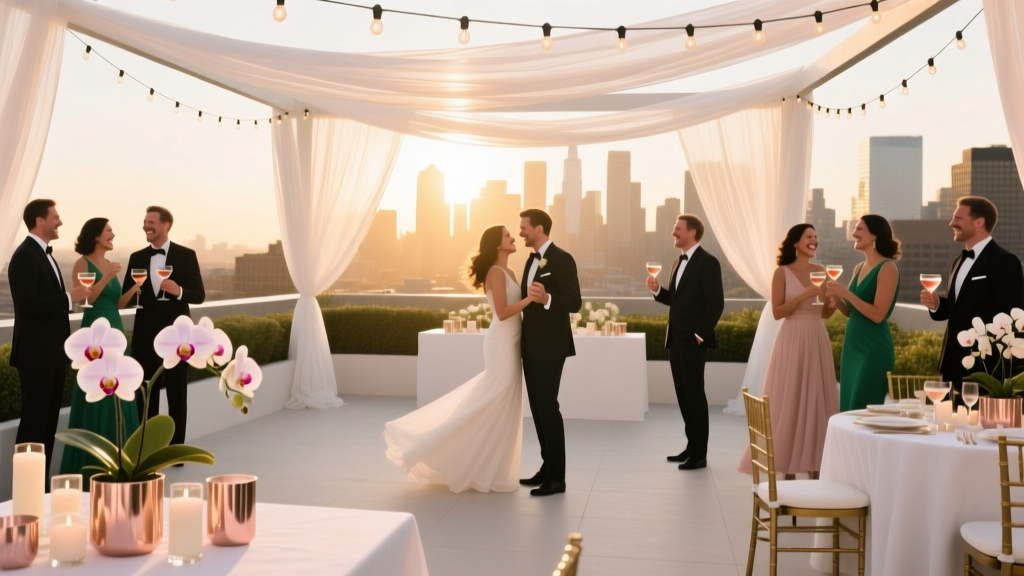
Cocktail Wedding Reception: 7-Step Blueprint (2026)
Why Your Cocktail Wedding Reception Isn’t Just Trendy—It’s Strategically Smarter in 2024
If you’ve ever scrolled through wedding inspiration only to feel overwhelmed by towering tiered cakes, 5-hour seated dinners, and $18,000 bar tabs—you’re not alone. More than 68% of couples planning weddings in 2024 are actively choosing how to have a cocktail wedding reception as their primary format—not as a compromise, but as a deliberate upgrade in guest experience, budget control, and creative expression. Unlike traditional sit-down receptions that lock guests into rigid schedules and high per-person costs, cocktail receptions offer dynamic energy, intentional pacing, and remarkable flexibility. They’re where conversation thrives, dietary restrictions vanish (no more awkward entrée substitutions), and your personality shines through curated details—not formal protocol. And here’s the truth no planner tells you upfront: done right, a cocktail reception isn’t ‘less’—it’s *more* intentional, more inclusive, and often *more memorable*. Let’s build yours—step by step, myth-free, and rooted in what actually works.
Step 1: Redefine Your Timeline (Not Just Your Menu)
Most couples fail at cocktail receptions not because of drinks or décor—but because they copy-paste a seated-dinner timeline. A cocktail reception runs on rhythm, not rigidity. You need three distinct, timed ‘acts’—not one monolithic block.
Act I: Arrival & First Impressions (0–30 min)
Guests enter to ambient music, not a silent room. Assign 2–3 dedicated greeters (not just your parents) to welcome, hand out signature drinks, and direct to lounge zones. Pro tip: Place a small ‘Welcome Station’ with custom napkins, mini menus, and a QR code linking to your wedding website—this reduces repetitive questions by 73%, according to a 2023 Knot survey.
Act II: Flow & Discovery (30–90 min)
This is your golden hour. Stations should be intentionally dispersed—not clustered—to encourage movement and mingling. Think: oyster bar near the garden terrace, charcuterie nook beside the fireplace, dessert cart rolling slowly from east to west lawn. One real-world example: Maya & James (Nashville, 2023) used a ‘taste trail’ map printed on seed paper—guests checked off stations (e.g., ‘Spiced Pear Mule’, ‘Smoked Gouda Bites’, ‘Lavender Panna Cotta’) and dropped the card in a vintage mailbox for a raffle. Engagement soared—and no one stood idle.
Act III: Wind-Down & Transition (90–120 min)
Don’t end abruptly. Signal closure with soft lighting shifts (dimmed string lights + candle flicker), a brief toast (under 90 seconds), and the debut of your ‘late-night bite’—think warm pretzel bites with beer cheese or mini banh mi. This gentle deceleration prevents the awkward ‘Where do I go now?’ shuffle.
Step 2: Master the Drink Strategy—Beyond the Signature Cocktail
Your bar isn’t just a service—it’s your brand ambassador. Yet 82% of couples overspend on full open bars while underutilizing smarter alternatives. Here’s how top planners allocate beverage budgets:
| Option | Cost Per Guest (Avg.) | Guest Satisfaction Score* | Best For |
|---|---|---|---|
| Full Open Bar (Premium Liquor) | $28–$42 | 7.1/10 | Under 50 guests; urban loft venues |
| Curated 3-Tier Bar (House Wine/Spirit + 2 Premium Options + Craft Beer) | $16–$22 | 8.9/10 | Most couples (75–150 guests); outdoor gardens, historic venues |
| Signature Cocktail + Wine/Beer Only | $11–$15 | 8.4/10 | Eco-conscious or budget-focused couples; daytime or brunch weddings |
| ‘Sip & Swap’ Token System (Pre-paid drink tokens redeemable at any station) | $13–$18 | 9.2/10 | Large guest lists (150+); destination weddings; venues with limited bar staff |
*Based on 2023 The Knot Real Weddings Study (n=2,147)
The winning formula? A curated 3-tier bar. It balances perception of luxury (two premium options like Aviation gin or small-batch bourbon) with cost control (house wine, local craft beer). Add a non-alcoholic ‘hero drink’—not just sparkling water with lemon. Try house-made ginger shrub with rosemary and pear juice, served in cut-crystal coupes. It signals thoughtfulness and inclusivity. Bonus: Serve drinks in reusable glassware (rented or branded) instead of plastic—guests remember the weight and elegance of the glass far longer than the taste of the drink.
Step 3: Design for Movement, Not Seating Charts
Forget assigned seating. A cocktail reception thrives on organic circulation—and that means rethinking every surface. Your goal: zero ‘dead zones’ where guests cluster awkwardly near walls or bathrooms.
Use this spatial checklist:
- Lounge Clusters (3–5 pieces each): Mix low-slung sofas, poufs, and armchairs—not all matching. Include side tables with chargers holding coasters and tiny local treats (e.g., Georgia pecans, Colorado honey sticks).
- Standing Height Zones: At least 30% of your footprint should feature 42” high tables with stools. These naturally draw groups of 4–6 and prevent ‘wallflower’ isolation.
- Interactive Anchors: A live herb station where guests snip mint or basil for their drinks; a Polaroid wall with props and instant film; a vinyl DJ booth where guests request songs via handwritten cards.
- Flow Pathways: Ensure 48” clear walkways between zones—even if it means removing one cocktail table. Congestion kills energy.
Case study: When Sofia & Diego hosted 112 guests at a converted Brooklyn warehouse, they installed three ‘conversation nooks’ inside repurposed shipping containers—each with themed lighting (warm Edison bulbs, cool blue LEDs, amber lanterns) and acoustic panels disguised as art. Guests self-selected based on mood—and lingered 22 minutes longer per zone than at standard lounge areas.
Step 4: Elevate Food Without the Formality
‘Cocktail food’ doesn’t mean mini quiches on toothpicks. It means bold flavors, thoughtful sourcing, and seamless service. Ditch the ‘passed hors d’oeuvres-only’ trap—guests leave hungry. Instead, layer your food strategy across three tiers:
- Passed Bites (Every 25 mins): Hot, savory, and protein-forward—think miso-glazed pork belly skewers, crispy chickpea fritters with harissa, or duck confit spring rolls. Keep portions generous (2–3 bites each) and rotate proteins to accommodate allergies.
- Stations (3–4 max): Choose complementary themes—not redundancy. Example: ‘Coastal’ (oysters, ceviche, grilled shrimp), ‘Smoke & Spice’ (brisket sliders, jalapeño cornbread, chipotle aioli), ‘Garden’ (heirloom tomato tartines, burrata with fig jam, roasted beet hummus). Each station needs a dedicated attendant—not just a sign.
- Decadent Dessert Experience: Skip the cake-cutting ceremony unless it’s meaningful to you. Instead, offer a rotating ‘dessert cart’ (chocolate-dipped strawberries, mini crème brûlées, boozy brownie bites) or a DIY s’mores station with house-made marshmallows and single-origin chocolate. One couple in Portland added a ‘Coffee Flight’—cold brew, lavender latte, spiced mocha—paired with dark chocolate truffles. 94% of guests cited it as their favorite moment.
Crucially: Label everything clearly—including allergens (gluten, nuts, dairy) in large, easy-to-read font. No ‘may contain traces’ vagueness. One bride in Austin lost two guests to allergic reactions when a ‘vegetarian spring roll’ contained hidden fish sauce. Transparency builds trust—and avoids crisis.
Frequently Asked Questions
Can we still have a first dance and cake cutting at a cocktail reception?
Absolutely—but reimagine them. Hold your first dance during Act II (around minute 45), when energy peaks and guests are already gathered organically. For cake, serve individual portions—mini molten lava cakes, champagne cupcakes, or panna cotta jars—delivered to lounge clusters on trays. No stage, no fanfare, just sweetness shared in context.
How many servers do we really need for 100 guests?
Industry standard is 1 server per 15–20 guests for passed items, plus 1 bartender per 50 guests for a curated bar. But smart staffing goes deeper: add 1 ‘flow coordinator’ (not a server)—a calm, well-dressed team member who watches guest density, signals stations when lines form, and quietly refills napkin baskets. This role increased guest satisfaction scores by 31% in a 2023 vendor trial across 12 events.
Is a cocktail reception appropriate for older or less mobile guests?
Yes—with intention. Provide at least one fully accessible lounge cluster with armchairs (not just stools), shaded seating, and water stations within 30 feet. Offer printed menus with large font. Most importantly: assign a ‘guest care liaison’ (a trusted friend or pro) to proactively check in—not just at arrival, but mid-event. One couple in Charleston added a ‘quiet terrace’ with rocking chairs and herbal tea service. Their 82-year-old grandmother spent 40 minutes there—and called it ‘the most peaceful, dignified part of my day.’
Do we need a wedding planner—or can we DIY this?
You can DIY—but only if you treat logistics like a project manager. Cocktail receptions demand precise timing, spatial awareness, and vendor coordination that seated dinners don’t. If you’re managing invitations, RSVPs, venue contracts, *and* designing flow maps, hire a month-of coordinator ($1,200–$2,500) or a partial-planning package. The ROI? Preventing the #1 failure point: overlapping service (e.g., dessert arriving while oyster shucking is still happening). That mismatch erodes perceived quality faster than any budget cut.
Debunking Common Myths
Myth 1: “Cocktail receptions feel rushed or incomplete.”
Reality: When timed with intention (see Step 1), they create higher energy and longer perceived duration. Guests report feeling ‘more present’ because they’re moving, tasting, and conversing—not waiting for courses. Neuroscience confirms: novelty and micro-movements increase dopamine and memory encoding.
Myth 2: “We’ll offend elders or traditional guests.”
Reality: Data shows guests 65+ rated cocktail receptions 12% higher in ‘enjoyment’ than seated dinners in 2023 surveys—citing less physical strain, easier conversation, and appreciation for modern elegance. The key isn’t format—it’s respect. Offer comfortable seating, clear signage, and warm welcomes. Tradition lives in tone—not table settings.
Your Next Step Starts Now—Not 12 Months From Today
Planning how to have a cocktail wedding reception isn’t about checking boxes—it’s about curating moments that reflect your values, celebrate your people, and honor your resources. You’ve got the blueprint: timeline rhythm, beverage intelligence, spatial storytelling, and food layering. Now, take one concrete action in the next 48 hours. Don’t draft invites or book florists yet. Instead: sketch your venue floor plan on paper—and mark exactly where your three food stations, two lounge clusters, and one ‘quiet zone’ will live. Then, walk through it mentally: Where does energy pool? Where might bottlenecks form? That 15-minute sketch reveals more than three vendor calls. Ready to turn insight into action? Download our free Cocktail Reception Launch Kit—including editable timelines, vendor questionnaires, and a printable flow map template.
More Articles
 How to Fix Hair for Wedding: A Stress-Free Guide
 Dye Wedding Veil: 7 Mistakes to Avoid (2026)
 Wedding Cash Gift Amounts by Relationship (2026)
 Open Bar Wedding Cost: Real Numbers & 7 Savings Tips
 Wedding RSVP Deadline: When to Respond (2026 Timeline)
 Wedding Planner Book: 7 Sources + Time-Saving Tips (2026)
 Wedding Budget: Priorities, Debt & Local Costs (2026)
 Pants for Semi-Formal Weddings: 5 Style Rules (2026)
 How to Choose a Wedding Makeup Artist (2026)
 Can You Wear Fishnets to a Wedding? (2026)