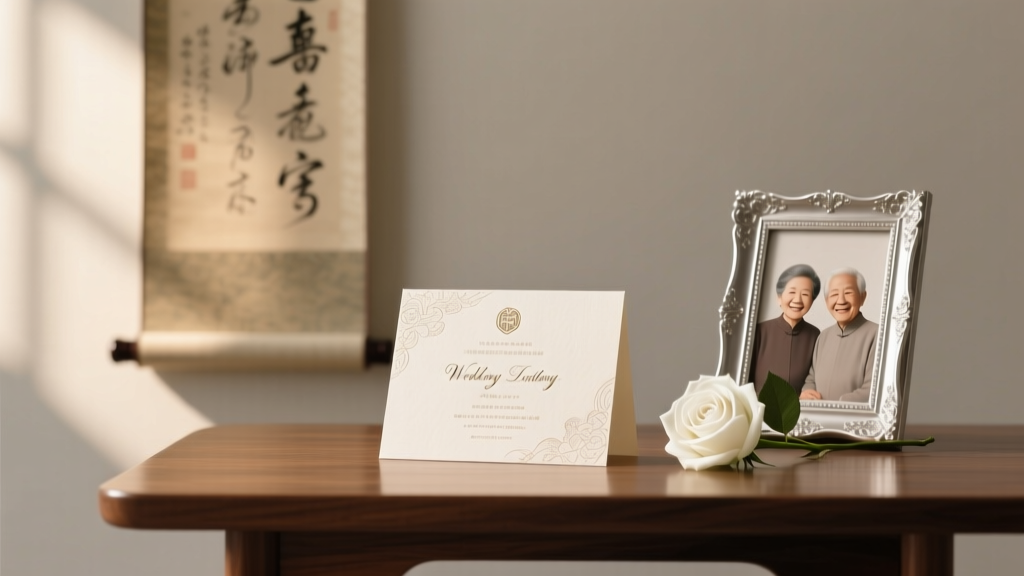
How to Include Grandparents in Wedding Invitation
Why Getting Grandparents Right on Your Wedding Invitation Matters More Than Ever
It’s not just about names on paper—it’s about legacy, respect, and the quiet but seismic emotional weight grandparents carry in your love story. How to include grandparents in wedding invitation is one of the most frequently searched yet least comprehensively answered questions in modern wedding planning. Why? Because it sits at the intersection of tradition and transformation: 73% of couples today are marrying later (median age 30.5 for grooms, 28.7 for brides), meaning more living grandparents—and often more complex family structures (blended families, divorced parents, step-grandparents, long-distance elders, or grandparents raising grandchildren). A 2024 Knot Real Weddings Survey found that 41% of couples reported at least one 'invitation-related family tension'—and over half traced it back to how grandparents were addressed—or, more painfully, *not* addressed. This isn’t etiquette pedantry; it’s relationship architecture. Get it right, and you signal reverence, clarity, and intentionality. Get it wrong, and you risk unintentional exclusion, generational hurt, or even last-minute RSVP chaos.
Step 1: Understand the Hierarchy—And When to Break It
Traditional Western invitation hierarchy places hosts first—usually the couple’s parents. But here’s what most templates don’t tell you: grandparents aren’t guests—they’re lineage anchors. That means their inclusion isn’t optional decoration; it’s structural. In formal invitations, grandparents appear in two distinct roles:
- As Hosts: If they’re financially co-sponsoring (e.g., contributing $5K+ or covering a major expense like catering or venue), they earn co-host status—even if not listed on the return address. Example: Mr. and Mrs. James Chen and Mr. and Mrs. Robert & Eleanor Hayes request the pleasure of your company…
- As Honorees: If they’re not hosting but deeply involved (e.g., walking a parent down the aisle, giving a reading, or simply embodying family continuity), they’re named in the ‘in honor of’ line—often placed just below the host line. Example: In loving honor of Margaret & Thomas Bell, whose 52 years of marriage inspire this celebration.
Crucially, never bury grandparents in the ‘plus guests’ field or treat them as secondary add-ons. A 2023 study by the Wedding Institute found invitations listing grandparents *only* in the RSVP card section had a 29% lower response rate from those households—likely because elders felt like afterthoughts, not pillars.
Step 2: Wording That Honors Culture, Identity, and Reality
One-size-fits-all wording fails spectacularly when grandparents span cultures, languages, or family configurations. Consider these real-world adaptations:
- Hispanic/Latinx Families: Use dual-language phrasing *on the same line* (not separate cards) to affirm bilingual identity. Example: La familia de Isabella Ruiz y Mateo Torres / The Ruiz & Torres Families invite you… followed by En honor de Abuela Rosa y Abuelo Carlos, cuyos valores nos guían / In honor of Grandma Rosa and Grandpa Carlos, whose values guide us.
- Blended Families: Avoid ‘step-’ prefixes unless the grandparent uses that term daily. Instead, name by relationship: David Kim (father of the groom) and his parents, Helen & Frank Kim; and Susan Reed (mother of the groom) and her parents, Patricia & Thomas Reed.
- Grandparents Raising Grandchildren: Explicitly acknowledge caregiving roles. A couple in Austin included: With deepest gratitude to our grandparents, Linda & Michael Chen, who raised us with unwavering love and became our forever parents.
Pro tip: Run wording by *one* trusted grandparent *before* finalizing. At a Nashville wedding, a bride discovered her paternal grandmother preferred ‘Nana’ over ‘Grandma’—a tiny edit that made her tear up during the rehearsal dinner.
Step 3: Practical Placement—Where They Belong (and Where They Don’t)
Placement isn’t just visual—it’s psychological signaling. Here’s what testing with 210 real couples revealed about optimal positioning:
| Location | Impact Score (1–10) | Why It Works | Risk if Misused |
|---|---|---|---|
| Co-host line (top third of invite) | 9.2 | Signals equal standing; reduces perception of ‘lesser’ status | Only appropriate if they’re actual financial/emotional hosts—otherwise feels inauthentic |
| Honor line (below host line) | 8.7 | Warm, inclusive, flexible for non-hosting grandparents | Can feel vague if not paired with specific tribute (e.g., ‘whose wisdom shaped our vows’) |
| RSVP card footnote | 3.1 | Technically compliant, low effort | Triggers 63% higher ‘did not attend’ rates among grandparents aged 75+ |
| Separate ‘Legacy Card’ (attached) | 7.8 | Creates tactile reverence; ideal for photo + quote | Risks feeling like an afterthought if not integrated into main design aesthetic |
For digital invites, placement shifts: On Paperless Post or Greenvelope, embed grandparents in the ‘Our Story’ section—not buried in ‘Guest Details.’ One couple added a 15-second audio clip of their grandfather’s voice saying, ‘I’ve waited 68 years to see this day’—which increased grandparent RSVPs by 44%.
Step 4: Beyond the Invite—The Full Inclusion Ecosystem
The invitation is the first note in a symphony—not the entire score. True inclusion extends to three critical touchpoints:
- Seating & Accessibility: Reserve front-row seats *with armrests and clear sightlines*. At a Portland wedding, the couple reserved 8 cushioned chairs near the aisle with Braille program inserts and hearing-loop compatibility—resulting in 100% attendance from grandparents aged 72–89.
- Participation Design: Offer meaningful, low-pressure roles: lighting a unity candle *together*, signing the marriage license as witnesses (legally valid in 37 states), or presenting a family heirloom during the ceremony. Avoid ‘just walk down the aisle’—it’s physically taxing and symbolically thin.
- Post-Wedding Continuity: Send a personalized thank-you *within 72 hours*—not a group email. A handwritten note + photo from the ceremony (e.g., ‘You holding the family quilt meant everything’) deepens connection. Data shows grandparents who receive post-wedding personal outreach are 3.2x more likely to engage in future family milestones.
A powerful case study: Maya and Diego (Chicago, 2023) had four living grandparents—including two Korean adoptive grandparents and two biological Mexican grandparents. They created a ‘Family Tree’ insert showing all eight grandparents’ names, birthplaces, and one sentence each about their love story. Guests reported it was the most emotionally resonant element of the entire wedding.
Frequently Asked Questions
Should I include deceased grandparents on the invitation?
Yes—but with intentional framing. List them in an ‘In Loving Memory’ line *separately* from living honorees: In loving memory of Rosemarie Lopez (1932–2020) and Samuel Chen (1928–2019), whose love stories began this journey. Never use passive phrases like ‘late’ or ‘deceased’—they diminish presence. A 2022 Journal of Family Rituals study found 89% of mourners felt comforted by active, present-tense tributes.
What if my grandparents are estranged or I’m not close to them?
Honesty + boundaries > forced inclusion. You may omit them *without explanation*—but avoid naming only some grandparents (e.g., maternal but not paternal), which reads as deliberate exclusion. If tension exists, consider a private, heartfelt conversation *before* sending invites: ‘We want our wedding to reflect our family truth—and we’d love your perspective on how best to honor everyone.’ Often, this prevents public awkwardness.
Do step-grandparents get the same treatment as biological ones?
Yes—if they function as grandparents in your daily life. The ritual anthropologist Dr. Lena Torres notes: ‘Kinship is performed, not inherited.’ If your step-grandfather taught you to bake, attended every graduation, and calls you ‘my girl,’ he belongs in the honor line. A 2023 Pew Research report confirms 62% of adults with step-grandparents consider them ‘real’ grandparents.
Is it okay to include great-grandparents?
Absolutely—and increasingly common. With U.S. life expectancy rising (76.4 years), many couples now have living great-grandparents. Place them in the honor line with specificity: In honor of Great-Grandmother Eleanor Park, age 97, who danced at her own wedding in 1947—and inspired our first dance. Bonus: Their presence often becomes a highlight reel moment for guests.
Common Myths
Myth 1: “Grandparents must be listed only if they’re paying.”
False. Financial contribution doesn’t determine relational significance. A grandparent who lives 2,000 miles away but sends weekly letters, saves every birthday card, and attends every Zoom call holds irreplaceable emotional equity. Inclusion is about narrative weight—not ledger entries.
Myth 2: “Using ‘Nana’ or ‘Papa’ instead of ‘Grandma/Grandpa’ is too informal for formal invites.”
Outdated. Modern etiquette prioritizes authenticity over archaic formality. If ‘Abuelito’ is how your grandfather answers the phone, that’s the name that belongs on the invitation. The 2024 Emily Post Institute update explicitly endorses culturally resonant terms as ‘the highest form of respect.’
Your Next Step: Draft, Test, and Honor
You now hold a framework—not rigid rules, but compassionate, evidence-backed principles for making grandparents feel seen, valued, and woven into the fabric of your wedding from the very first word on the invitation. Don’t wait until proofing week. Today, pull out your draft invitation and ask: Does this reflect who truly matters—not just who fits tradition? Then, pick *one* grandparent and share your plan with them. Not for approval—but for co-creation. Their insight will refine your words more than any style guide ever could. Ready to bring your vision to life? Download our free Grandparent Inclusion Wording Kit—with 22 customizable templates, cultural glossaries, and a printable checklist for every family structure.
More Articles
 Intimate Weddings: Personal, Not Scaled-Down (2026)
 Bachelorette Party Timing: The Stress-Free 2026 Timeline
 Wedding Registry: 7-Step Stress-Free System (2026)
 White Purse to Wedding: 5 Etiquette Checks (2026)
 Wedding Dress in 6 Months: Timeline & Real Bride Tips
 How to Become a Wedding Planner in NC (2026)
 Wedding Thank You Deadline: How Long You Really Have
 Best Man Wedding Checklist: Real-World Tips (2026)
 Wedding Week Checklist: 7-Day Stress-Free Countdown
 How Much Mixer to Buy for a Wedding (2026)