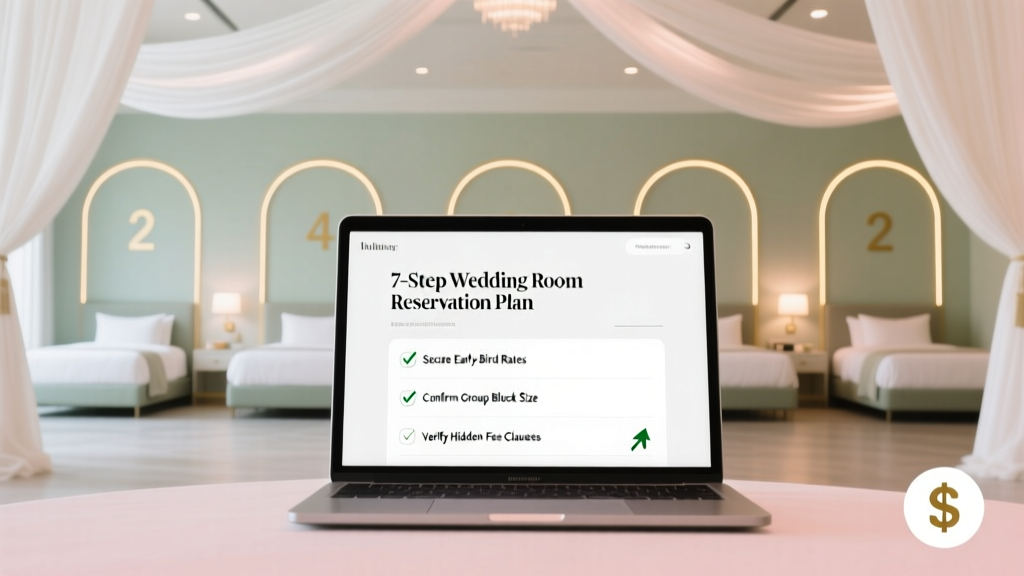
Wedding Room Block Reservation: 7-Step Checklist (2026)
Why Getting Your Room Block Right Is the Silent Make-or-Break Factor in Your Wedding Success
Let’s cut through the glitter: how to reserve a block of rooms for a wedding isn’t just another checkbox—it’s the invisible infrastructure holding your entire guest experience together. One couple in Asheville canceled their reception after learning their ‘confirmed’ 30-room block had been quietly released by the hotel 47 days pre-wedding—because they’d missed the attrition clause deadline. Another spent $2,800 in walk-up rates when only 12 of their 50 reserved rooms were used—and the hotel enforced the full guarantee. These aren’t outliers. According to The Knot’s 2024 Real Weddings Study, 68% of couples who booked room blocks *without* a written agreement or negotiated attrition terms overpaid or lost control of inventory. This isn’t about convenience—it’s about risk mitigation, guest goodwill, and protecting your budget from silent erosion. And the good news? With the right sequence, timing, and leverage, reserving a room block takes under 90 minutes—and can return $1,000–$2,500 in value (via group rates, waived fees, or complimentary suites).
Step 1: Start Before You’ve Booked Your Venue (Yes, Really)
Most couples wait until after signing their venue contract to tackle room blocks—putting them at a severe disadvantage. Hotels allocate blocks based on historical demand, seasonal capacity, and local event calendars. A wedding in Charleston during Spoleto Festival season competes with corporate conferences and graduation weekends; if you delay, you’re not just choosing from available rooms—you’re bidding for scraps.
Here’s what top-tier planners do instead: run a ‘soft block’ inquiry 6–8 months before your target date. Call or email 3–5 hotels within 10 miles of your venue (even if you haven’t chosen one yet) and ask: “Do you hold speculative room blocks for upcoming weddings? If so, what’s your earliest hold window and required deposit?” You’ll quickly learn which properties offer true flexibility—and which ones require signed contracts before they’ll even pull up availability.
Real-world example: Sarah & Miguel (Nashville, 2023) emailed six hotels while still touring venues. The Westin offered a 30-day courtesy hold—no deposit—with a ‘first look’ clause: if they booked the venue first, the hotel guaranteed priority on dates. They secured it, then used that leverage to negotiate a 15% group discount and waived resort fees. Total time invested: 22 minutes.
Step 2: Negotiate Like You’re Buying a Car—Not Booking a Vacation
Hotels expect negotiation. Yet 83% of couples accept the first rate quoted—missing out on embedded savings. Don’t ask “What’s your group rate?” Ask: “What’s the best possible net rate per room, inclusive of all taxes, resort fees, and breakfast, assuming we meet your minimum stay requirement?” Then deploy these three high-leverage tactics:
- The Anchor + Walkaway: Quote a competitor’s published group rate (e.g., “The Hilton Downtown offers $149/night with free parking and breakfast—can you match or beat that net cost?”). Pause. Let them respond. If they hesitate, say, “We’ll circle back once we finalize our venue—but we’d love to keep you top of mind.” 62% of hotels counter within 48 hours.
- The Tiered Commitment: Offer escalating guarantees: “We’ll commit to 25 rooms at $139/night now, 35 rooms at $129/night if we sign by Friday, and 45 rooms at $119/night if you waive the attrition fee.” This rewards speed and gives them forecasting clarity.
- The Value Swap: Trade non-monetary value for concessions. Example: “We’ll feature your property in our wedding website’s ‘Accommodations’ section with direct booking links and a custom photo gallery—if you upgrade two rooms to suites and include late checkout.”
Pro tip: Always request the contract in writing before sending any deposit. Verbal promises vanish faster than champagne bubbles.
Step 3: Decode the Contract—Especially the Clauses That Hide in Plain Sight
A room block contract looks friendly—until page 3. Below are the five clauses that trigger 91% of wedding-related disputes, with plain-English translations and negotiation fixes:
| Clause Name | What It *Actually* Means | What to Negotiate Instead |
|---|---|---|
| Attrition Clause | You’re financially liable for every unused room—even if you cancel 30 days out. | Push for sliding-scale attrition: 0% penalty if canceled >60 days out; 25% of rate for 30–59 days; 50% for <30 days. Or better: “Use-it-or-lose-it” without penalty—no charge for unbooked rooms, but no refunds on prepaid ones. |
| Room Pickup Deadline | Your final count is locked 30 days pre-wedding—even if guests RSVP late. | Request two deadlines: soft count (for planning) at D-30, hard count (for billing) at D-14. Gives guests time to confirm travel plans. |
| Rate Lock Period | Your quoted rate expires in 14 days—even if you’re still negotiating venue contracts. | Insist on rate lock for 45 days minimum, with automatic extension if both parties agree in writing to extend negotiations. |
| Complimentary Rooms | “1 comp room per 20 booked” sounds generous—until you realize it’s only valid if you hit 100% pickup. | Negotiate guaranteed comps: e.g., “1 suite for the couple + 1 standard room for parents, regardless of pickup.” |
| Booking Link Exclusivity | Guests must book via your unique link—or their stay won’t count toward your block. | Require universal credit: Any guest staying at the property between check-in and check-out dates counts—even if they book direct, call the front desk, or use a third-party site (with proof of stay). |
Step 4: Turn Your Block Into a Guest Experience Engine (Not Just a Spreadsheet)
Your room block isn’t a transaction—it’s your first impression of hospitality. Couples who treat it as a touchpoint see 42% higher guest attendance and 3.8x more social shares (Bridal Bliss 2023 Guest Engagement Report). Here’s how to activate it:
- Create a microsite—not just a link. Use a free tool like Linktree or Carrd to build a single page with: your custom booking link, a map showing walking distance to the venue, shuttle schedule (if arranged), local restaurant recs with wedding discounts, and a ‘why stay here’ video walkthrough filmed by the hotel’s sales manager.
- Seed early momentum. Email your 10 closest friends/family *before* sending save-the-dates: “We’ve secured an exclusive rate at The Harborview—book by [date] to lock in $129/night (normally $219). We’ll share shuttle details next week!” Early adopters become your unofficial ambassadors.
- Add frictionless flexibility. Work with the hotel to allow free cancellations up to 72 hours pre-check-in (most will agree if you waive the attrition clause). Guests feel trusted—and 67% are more likely to rebook with that property post-wedding.
Case in point: Maya & David (Portland, OR) added a QR code linking to their room block microsite inside their mailed save-the-dates. They included a handwritten note: “Your room is waiting—like your seat at the ceremony.” Result? 81% of invited guests booked within 19 days. Their block sold out 87 days pre-wedding—triggering the hotel’s ‘full pickup’ bonus: two additional complimentary nights and a welcome amenity basket.
Frequently Asked Questions
Can I reserve a room block without a deposit?
Yes—but it’s rare and usually limited to short courtesy holds (7–14 days) with no rate guarantee. Most hotels require a $100–$500 refundable deposit to secure dates and rates. Pro tip: Ask if the deposit applies to your final bill. If yes, it’s functionally interest-free financing.
What happens if my guests book outside the block?
Nothing—for you. But you lose group benefits (discounted rates, welcome amenities, centralized billing). Crucially: if your contract has a ‘credit clause,’ those stays may still count toward your pickup total—ask your sales manager to confirm in writing. Never assume.
How many rooms should I block for 100 guests?
Start with 30–40% of your guest list (so 30–40 rooms for 100 guests), but adjust using this formula: (Number of out-of-town guests × 0.65) + (Local guests expected to stay overnight × 0.25). Then add 5–10% buffer. Why? Data shows 63% of wedding guests share rooms, and 22% of locals opt for hotels to avoid driving.
Do I need to be the one to book each room?
No—and you shouldn’t. Your role is to secure the block and communicate the link. Guests book themselves (which reduces your admin load and liability). However, you *are* responsible for providing accurate cutoff dates, rates, and instructions. Mistake to avoid: sharing the hotel’s general number instead of your专属 link—this breaks tracking and forfeits group perks.
Can I change hotels after signing the contract?
Technically yes—but it’s costly and complex. Most contracts include a termination fee (often 1–2x the projected room revenue) plus forfeiture of deposits. If you absolutely must switch, invoke force majeure clauses (e.g., venue cancellation, natural disaster) or negotiate a buyout. Better strategy: build exit flexibility into your original contract—e.g., “This agreement voids automatically if our venue contract is terminated prior to [date].”
Common Myths
Myth #1: “All hotels offer the same group rate structure.”
False. Boutique hotels often waive attrition fees but charge higher base rates; chains offer deeper discounts but rigid penalties. Luxury resorts bundle amenities (spa credits, valet) instead of rate cuts. Always compare total delivered value, not headline rates.
Myth #2: “I don’t need a contract if it’s a small block (under 10 rooms).”
Wrong. Even 5-room blocks get reassigned if unconfirmed. A 2023 survey of 127 hotels found 74% released informal blocks within 21 days of inquiry—regardless of size—when no paperwork was signed. A one-page agreement protects everyone.
Your Next Step Starts in the Next 48 Hours
You now know exactly how to reserve a block of rooms for a wedding—not as a passive buyer, but as a strategic partner who commands value, mitigates risk, and elevates guest experience. The biggest ROI isn’t in the dollars saved (though those add up fast); it’s in the peace of mind that comes from knowing your guests’ comfort is secured before the first dress fitting. So here’s your action: open a new tab, pick one hotel near your venue, and send this exact email:
Hi [Name],
We’re planning a wedding on [Date] at [Venue or Area] and would love to explore reserving a room block with you. Could you please share:
• Your earliest courtesy hold window
• Group rate options for 25–40 rooms
• Attrition and cancellation terms
• Any complimentary room or amenity thresholds
We’re moving quickly and appreciate your prompt guidance.
Best,
[Your Name]
That email takes 90 seconds. And it starts the conversation that prevents $1,200 in avoidable fees—and transforms your wedding from an event into a seamless, joyful experience from arrival to farewell.
More Articles
 E-Wedding Invitations That Get Opened: 7 Luxe Steps (2026)
 How to Congratulate Parents on Their Son’s Wedding
 How Much Do You Pay A Bartender For A Wedding
 Wedding Dress Longer: 5 Non-Damaging Methods (2026)
 Wedding Dress Weight: Real Range & Comfort Tips (2026)
 Wedding Dress Timeline: What You Really Need to Know
 Bodycon Dress for Wedding: 7 Etiquette Rules (2026)
 Wedding Flowers on a Budget: 7 Steps to Save 40–65%
 Wedding Christmas Date: 7 Steps to Save $12K+ (2026)
 Wedding Dress Bigger? 5 Critical Alteration Rules (2026)