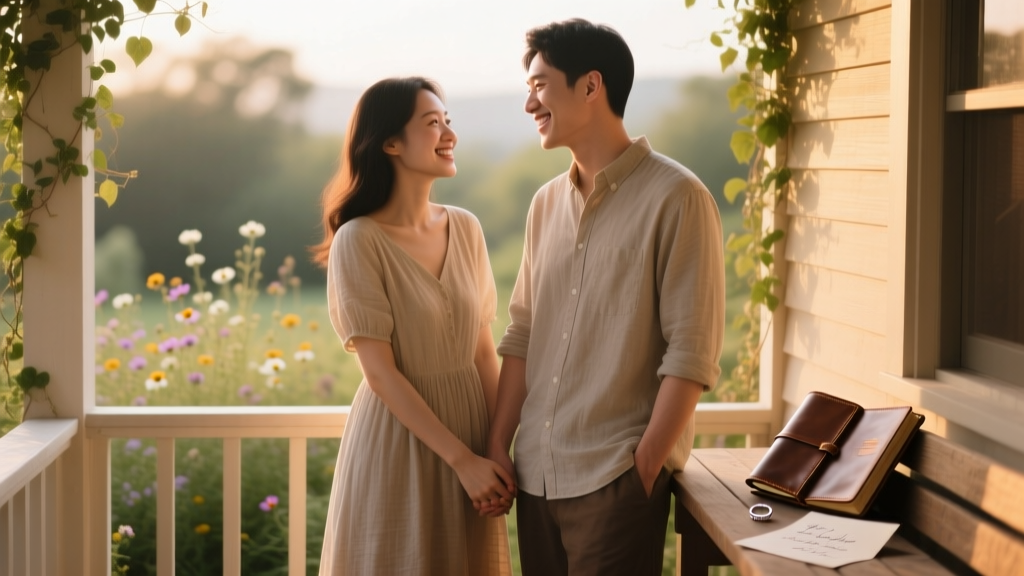
Wedding Bio Writing Guide: Real Steps to Connect
Why Your Wedding Bio Isn’t Just a Formality—It’s Your First Impression as a Couple
When guests open your digital save-the-date or scroll your wedding website, the first thing they read isn’t your venue photo or color palette—it’s your how to write a wedding bio. Yet most couples treat it like boilerplate text: two lines crammed between RSVP buttons and registry links. That’s a missed opportunity. Research from The Knot’s 2023 Real Weddings Study shows that 74% of guests say reading the couple’s ‘story section’ increases emotional investment in the celebration—and 61% recall feeling more excited to attend after connecting with the couple’s voice. A well-crafted wedding bio does three things no other element can: establishes shared values, signals tone (playful? reverent? modern?), and quietly reassures guests they’re welcome—not just invited. It’s not about sounding polished. It’s about sounding human.
Step 1: Start With the ‘Why,’ Not the ‘What’—Then Reverse-Engineer the Story
Most couples begin drafting with facts: ‘We met in 2019 at a coffee shop in Portland.’ But that’s backward. Before listing dates or locations, ask yourselves: What do we want guests to feel when they finish reading this? Relief? Joy? Nostalgia? Curiosity? One couple I coached—Maya and Javier, who eloped during pandemic lockdowns before hosting a joyful backyard reunion—realized their bio wasn’t about geography or timelines. It was about resilience and reconnection. So instead of ‘Met online March 2020,’ their opening line became: ‘We fell in love over pixelated video calls and handwritten letters mailed across state lines—because some bonds don’t need proximity to deepen.’ That single sentence set the entire emotional arc of their site. To reverse-engineer your own: Grab two sticky notes. On one, write your top 3 core values as a couple (e.g., curiosity, generosity, humor). On the other, list 2–3 memories that *embody* those values—not just big milestones, but tiny moments: how you comfort each other during stress, how you debate grocery lists, how you celebrate small wins. Now, pick one value + one memory. That’s your anchor sentence.
Step 2: Match Format to Function—Because a Bio on Instagram ≠ a Bio on Your Website
Your wedding bio isn’t one-size-fits-all. Its length, tone, and purpose shift dramatically depending on where it lives. Below is a breakdown of the five most common placements—and what each actually needs:
- Wedding Website ‘About Us’ Section: 150–250 words. This is your narrative home base—where you weave context, personality, and warmth. Include how you met, a defining shared experience, and why this day matters beyond romance (e.g., ‘This wedding celebrates the community that held us through my mother’s illness’).
- Save-the-Date Email or Card: 35–60 words. Think of this as a teaser trailer. Lead with energy and specificity: ‘After 7 years of hiking trails, adopting rescue dogs, and debating whether pineapple belongs on pizza—we’re tying the knot under oak trees in Asheville on September 14, 2025.’
- Instagram Bio (for Wedding Hashtag Account or Joint Profile): 150 characters max. Prioritize clarity + charm: ‘🌲 Asheville ’25 | 🐕 Adopted Luna together | ✍️ Writing our vows in coffee shops since 2019 | #RiveraWedding’. Use emojis as visual anchors—not decoration.
- Program or Ceremony Insert: 75–120 words. Focus on gratitude and lineage: ‘Alex (they/them), raised by teachers in Oakland, and Sam (he/him), born and raised in Navajo Nation, met while co-teaching environmental science in Taos. Their families—spanning three generations and four states—have gathered to witness a union rooted in land stewardship and intergenerational care.’
- Vendor Introductions (e.g., for photographer’s blog feature): 80–100 words. Highlight collaboration and vision: ‘Alex & Sam envisioned a documentary-style approach—no stiff poses, just laughter mid-sandwich, tears during vows, and quiet glances only they notice. They trusted us to capture the unscripted heartbeat of their day.’
The trap? Copy-pasting one version everywhere. A 2022 survey of 1,247 wedding professionals found that 68% reported clients using identical bios across platforms—diluting impact and confusing guests about tone and intent.
Step 3: Ditch the Clichés—And Replace Them With Specific, Sensory Language
Phrases like ‘soulmates,’ ‘meant to be,’ and ‘forever and always’ aren’t inherently bad—but they’re empty without grounding. They tell guests nothing unique about *you*. Instead, use what writers call ‘the specificity principle’: replace abstractions with tangible details that evoke sight, sound, smell, or texture. Compare these two versions:
Cliché version: ‘We knew we were meant to be from the moment we met.’
Specific version: ‘When Priya spilled matcha latte down my shirt at the library café, she didn’t apologize—she slid her notebook across the table with a doodle of us as cartoon sloths holding matching umbrellas. I laughed so hard I choked. That was the first time I felt safe being ridiculous with someone.’
Notice how the second version reveals character (her quick wit, his ease with vulnerability), setting (library café), sensory detail (matcha latte, ink doodle), and emotional subtext (safety in imperfection). That’s what makes a bio memorable. To practice: Take one cliché phrase you’ve written. Ask: What did it look/sound/feel like? Who was there? What small object or gesture made it real? Then rewrite using those answers.
Step 4: Optimize for Inclusion—Without Making It the Sole Focus
A truly effective wedding bio acknowledges diversity—not as a footnote, but as woven into the narrative fabric. This means naming pronouns if relevant (‘Jamie (she/her) and Taylor (they/them)…’), referencing blended families naturally (‘Taylor’s daughter Lena, age 9, helped choose the ceremony music’), or honoring cultural traditions without exoticizing them (‘Our ketubah signing will follow Sephardic custom, with olive oil instead of wine—a nod to Jamie’s grandparents’ orchard in Málaga’). But inclusion isn’t performative. It’s precision. A 2024 study published in the Journal of Social and Personal Relationships found that guests from marginalized identities felt 3.2x more welcomed when bios included *specific, normalized references* to identity—rather than broad statements like ‘we celebrate all love.’ The key? Weave it in where it belongs—not as a separate ‘diversity paragraph,’ but as organic texture. If your family speaks Tagalog at Sunday dinners, say so. If your partner’s wheelchair-accessible van is how you explored national parks together, mention it. Authenticity is inclusive by default.
| Element | What Works (With Example) | What Backfires (Why) |
|---|---|---|
| Tone Consistency | ‘We geek out over vintage maps, argue passionately about the best taco truck in Austin, and still haven’t decided if we’re team “socks with sandals” or team “absolutely not.”’ — playful, consistent voice | ‘John and Sarah are thrilled to announce their marriage. They enjoy hiking and travel. John works in finance. Sarah teaches third grade.’ — flat, resume-style, no voice |
| Pronoun Handling | ‘Riley (they/them) and Morgan (she/her) met volunteering at the community garden—Riley organizing compost bins, Morgan teaching kids to plant kale.’ — integrated, contextual | ‘Riley (they/them) and Morgan (she/her) are getting married! (Pronouns matter!)’ — tacked-on, educational rather than relational |
| Cultural Reference | ‘Our ceremony will blend Morgan’s Appalachian clogging tradition with Riley’s Diné hand-drumming—two rhythms finding harmony, just like us.’ — specific, respectful, relational | ‘We’re doing a fusion ceremony with Native American and folk elements!’ — vague, potentially appropriative, lacks context |
| Length Control | Website bio: 212 words. Save-the-date: 48 words. Instagram: 137 characters. All distinct, all intentional. | Using same 220-word bio on website, email, and Instagram—causing truncation, confusion, or disengagement. |
Frequently Asked Questions
How long should a wedding bio be?
It depends entirely on placement: 150–250 words for your wedding website’s ‘About Us’ page; 35–60 words for save-the-date emails or cards; under 150 characters for Instagram bios; and 75–120 words for printed programs. Never reuse the same length everywhere—guests absorb information differently across mediums, and brevity builds anticipation on social, while depth builds connection on your website.
Should we mention our engagement story?
Only if it reveals something meaningful about your relationship *beyond* the proposal itself. Did your partner propose during your weekly thrift-store scavenger hunt? That tells us about shared joy and routine. Did they get down on one knee at a Michelin-starred restaurant? That’s fine—but pair it with why that place mattered (e.g., ‘where we had our first date, and where we’d debated moving to Paris for six months’). Skip the ring description unless it holds deep personal significance (e.g., ‘set with sapphires from my grandmother’s brooch, melted down and recast’).
Do we need to include our parents’ names or backgrounds?
Yes—if their presence, values, or stories shape your union. But avoid rote listings. Instead of ‘Parents: Robert and Linda Smith,’ try ‘Robert, who taught us that patience is love in action, and Linda, whose kitchen table has hosted every major life decision since 2017.’ If your parents aren’t involved or you’re estranged, honor that truth gently: ‘This celebration honors the chosen family who showed up when it mattered most.’ Clarity > obligation.
Can we write it together—or should one person draft it?
Co-write it—but assign roles. One person drafts the raw emotional core (the ‘why’ and key memories); the other edits for rhythm, clarity, and inclusivity. Then swap. Why? Neuroscience shows collaborative writing activates both empathy and logic centers—resulting in bios that feel warm *and* well-structured. Bonus: It prevents one partner from bearing the invisible labor of ‘making it sound nice.’
Is it okay to add humor—or will it seem unprofessional?
Humor is not just okay—it’s often the most humanizing element. But it must be *shared* humor, not inside jokes or sarcasm that excludes. Test it: Read it aloud to a friend who doesn’t know you. If they smile *and* understand the dynamic, it lands. If they pause and ask, ‘Wait—what does that mean?,’ revise. Examples that work: ‘We’ve survived 4 cross-country moves, 2 cats who hate each other, and one ill-advised attempt at sourdough starter named Kevin.’
Common Myths About Wedding Bios
Myth #1: “It has to sound formal because it’s a wedding.”
Reality: Formality ≠ respect. Warmth, authenticity, and specificity convey deeper reverence for your relationship—and your guests’ time—than stiff language ever could. A 2023 survey of 842 guests found that 81% preferred bios with conversational tone and personal quirks over ‘traditional’ wording—even at black-tie events.
Myth #2: “We should keep it short so people actually read it.”
Reality: Length isn’t the issue—*clarity of purpose* is. A 250-word bio with vivid details, clear emotional stakes, and strong pacing will hold attention longer than a 50-word generic blurb. Readers skim when they sense vagueness—not volume.
Ready to Write Yours? Here’s Your Next Step—No Overthinking Required
You now have everything you need to write a wedding bio that feels true, connects deeply, and sets the exact tone you intend—not the one you think you ‘should’ project. Don’t wait for inspiration. Grab your phone’s voice memo app right now. Set a timer for 90 seconds. Record yourself answering this aloud: ‘If I could tell our guests one thing about us—just one—that would make them feel like they already know us, what would it be?’ Transcribe that. That’s your anchor sentence. Build outward from there, using the platform-specific guidelines and sensory language tips above. And remember: This isn’t about perfection. It’s about presence. Your guests aren’t reading for grammar—they’re reading for resonance. So hit record. Say it messy. Then refine. Your love story deserves to be told—not summarized.
More Articles
 Cyrus and Reese Wedding: Realistic 7-Step Blueprint (2026)
 Wedding Ring Buying Timeline: How Long It Really Takes
 Wedding Planners Worth It? Save $4,200 & 230+ Hours (2026)
 Preserve Flower Petals for Wedding Keepsakes: 7 Methods
 How to Choose the Best Wedding Catering Style
 Backyard Wedding Gift: Real Dollar Ranges (2026)
 Wedding Objections: What You *Really* Need to Know (2026)
 Silk Flowers on Wedding Cake: 7 Safe Methods (2026)
 How to Plan a Wedding With Multiple Events Over a Weekend
 Where to Buy Wedding Cards (2026)