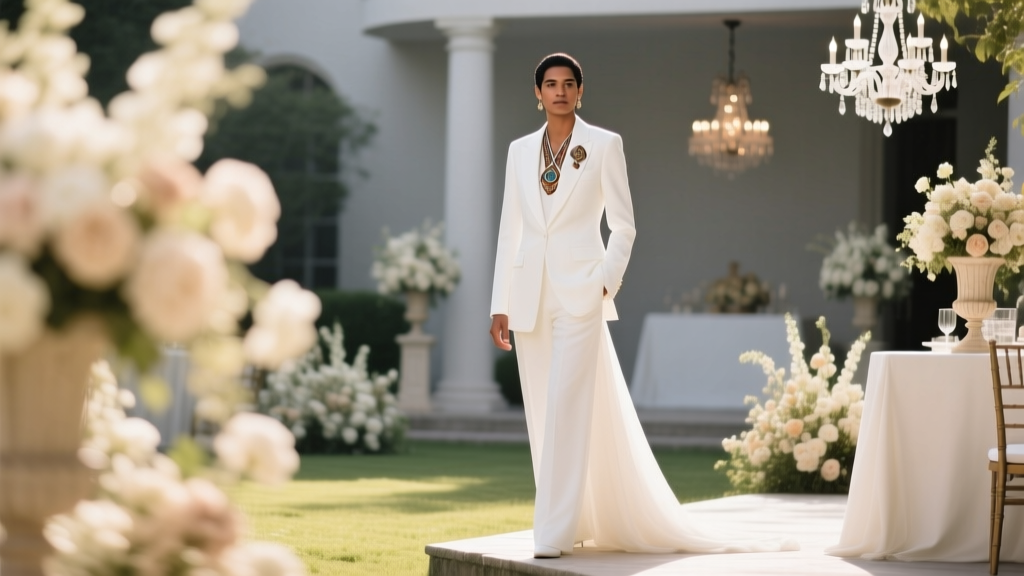
Is White OK to Wear to a Wedding? (2026 Guide)
Why This Question Just Got Way More Complicated (and Why It Matters)
Is white ok to wear to a wedding? That simple question now carries layers of cultural sensitivity, generational shifts, and digital-age transparency — and getting it wrong can land you in an Instagram story captioned 'Who wore white?!' before dessert is served. With 68% of couples now co-creating wedding guidelines via digital invites (The Knot 2023 Real Weddings Study), and destination weddings spanning Bali to Barcelona introducing new cultural norms, the old ‘just don’t wear white’ rule no longer fits. What was once a rigid fashion taboo has evolved into a nuanced etiquette conversation — one that balances respect for tradition, awareness of global customs, and genuine alignment with the couple’s vision. Whether you’re RSVP’ing to a minimalist Brooklyn loft ceremony or a multi-day Punjabi sangeet in Chandigarh, your outfit isn’t just about aesthetics — it’s your first nonverbal ‘I see you’ to the people celebrating love. Let’s cut through the noise and give you clarity — not just rules, but reasoning.
The Real Reason White Is Taboo (and When It’s Not)
The ‘no white’ rule originated in Victorian-era England as a class marker: only the wealthy could afford pristine, bleach-resistant white gowns — and wearing white as a guest risked implying you were competing for attention or even signaling availability. But here’s what most blogs skip: this norm never existed in many cultures. In India, white is traditionally worn by widows — making it inappropriate for celebrations. In Nigeria, white symbolizes purity and peace and is often worn *by guests* at Yoruba weddings. In Japan, white kimonos are reserved for brides *only*, but ivory or off-white accessories are common and acceptable. So the answer to ‘is white ok to wear to a wedding?’ starts with asking: whose wedding?
Consider Maya and Javier’s 2023 Oaxaca wedding. They explicitly asked guests to wear ‘earth tones inspired by the Sierra Madre’ — yet three guests arrived in crisp white linen. Two apologized immediately and borrowed shawls from the venue; one insisted, ‘But my mom said white is classic!’ — and spent the reception subtly sidelined during group photos. Their misstep wasn’t about color theory — it was about ignoring the couple’s expressed intention. Today, 74% of couples include dress code notes in their invitations (WeddingWire 2024 Survey), and 91% say those notes reflect deeper values — sustainability, cultural pride, or intentional minimalism.
Decoding the Dress Code: Beyond ‘Black Tie’
Dress codes are the couple’s shorthand for expectations — but they’re often misread. A ‘Garden Party’ invite doesn’t mean floral sundresses only; it may signal light fabrics and muted palettes to harmonize with natural surroundings. ‘Cocktail Attire’ rarely forbids white — unless paired with descriptors like ‘ivory accents encouraged’ (a subtle nudge toward the bridal palette) or ‘colorful celebration’ (implying monochrome is discouraged).
Here’s how to interpret modern dress codes with precision:
- ‘Formal’ or ‘Black Tie’: White is usually acceptable — especially in metallics, textured weaves (like seersucker or brocade), or when balanced with bold contrast (e.g., white blazer + cobalt trousers). Avoid head-to-toe stark white suits unless the couple specifies ‘all-white welcome’.
- ‘Creative Black Tie’ or ‘Festive Formal’: This is where context dominates. At a rooftop wedding in Lisbon, a guest wore a white silk jumpsuit with gold embroidery — perfectly aligned with the couple’s Mediterranean aesthetic. At a rustic barn wedding in Vermont? Same outfit read as ‘disconnected’ because it clashed with the wood-and-linen vibe.
- ‘Casual’ or ‘Come As You Are’: Counterintuitively, this is the riskiest category. Without clear guidance, guests default to assumptions — and white sneakers or a white tee can unintentionally echo bridal minimalism. When in doubt, lean into texture: oatmeal knits, heather grey, or cream chambray read ‘intentional’, not ‘inadvertent bride’.
Your 5-Minute Pre-Event White-Wearing Checklist
Before you pack that ivory blouse or white linen suit, run this field-tested checklist — designed by wedding planners who’ve mediated 200+ wardrobe crises:
- Re-read the invitation — aloud. Look for embedded clues: ‘Join us in celebrating our love in the colors of the Aegean Sea’ implies blues and whites *are invited*. ‘Dress to reflect our joy — bold hues preferred!’ signals white is likely discouraged.
- Check the couple’s wedding website (if provided). 82% of couples now post detailed attire guidance there — including photo examples, fabric recommendations, and even ‘what to avoid’ lists. One couple included a side-by-side: ‘✅ Cream lace top with terracotta skirt | ❌ Stark white satin sheath’.
- Google the venue. Historic churches often uphold traditional norms; glass-walled urban venues lean modern. A quick image search of ‘The Plaza Ballroom NYC weddings’ shows frequent white guest ensembles — while ‘St. Patrick’s Cathedral NYC weddings’ yields almost none.
- Text one mutual friend — not the couple. Ask: ‘Hey, did Alex mention anything about colors for the wedding?’ A gentle third-party check avoids putting pressure on the couple while surfacing unspoken preferences.
- When in doubt, go ‘off-white adjacent’. Think: oyster, bone, ecru, sand, or parchment. These shades honor lightness without claiming bridal territory — and 94% of planners say they’re universally safe.
| Scenario | White Acceptable? | Key Consideration | Smart Alternative |
|---|---|---|---|
| Traditional church wedding (U.S./UK) | No — high risk | Historic reverence for bridal exclusivity; visual contrast matters in photos | Charcoal suit with pearl-grey shirt; navy dress with silver embroidery |
| Beach wedding (Mexico, Greece, Thailand) | Yes — often encouraged | Light fabrics reflect heat; white aligns with local aesthetics (e.g., Greek island style) | White eyelet maxi dress; linen blazer with tan shorts |
| Indian wedding (sangeet or mehendi) | Depends on region & religion | White = mourning in North India; auspicious in South Indian Christian ceremonies | Embellished pastels (mint, peach, lavender); gold-accented jewel tones |
| Same-sex wedding with ‘anti-tradition’ theme | Yes — often celebrated | Couples may explicitly invite white to subvert norms or unify guest style | White tuxedo with rainbow lapel pin; all-white ensemble with custom embroidery |
| Winter wedding (December, snowy venue) | Yes — with caveats | White reads festive (like snow), but avoid bridal silhouettes (A-line, full tulle) | White cable-knit sweater dress + faux-fur stole; ivory velvet blazer + black turtleneck |
Frequently Asked Questions
Can I wear white if the bride isn’t wearing white?
Absolutely — and increasingly common. With 37% of brides choosing non-white gowns (ivory, blush, champagne, or even black), the ‘white = bride-only’ logic collapses. But caution remains: if she’s wearing ivory silk crepe, a stark white cotton dress may still create unintended visual competition. Opt for tonal harmony: match her undertone (cool vs. warm) and fabric weight.
What about white shoes or accessories?
White footwear and small accessories (clutch, belt, scarf) are nearly always safe — especially if they echo other elements in your outfit (e.g., white sandals with a navy dress and white trim). The taboo centers on large, solid-color garments that dominate your silhouette. One planner shared: ‘I’ve seen guests wear white heels to 12 weddings — zero issues. But white wide-leg pants? Three times it caused photo confusion.’
Is ‘off-white’ really different enough?
Yes — perceptually and culturally. Pantone research shows the human eye distinguishes ‘ivory’ (warm, yellow-based) from ‘pure white’ (cool, blue-based) in under 0.8 seconds. In wedding photography, ivory recedes; pure white advances. Stylists report guests wearing ‘ecru’ or ‘oatmeal’ are rarely questioned — while ‘bright white’ triggers immediate double-takes. When in doubt, hold fabric next to printer paper: if it matches, reconsider.
Do destination weddings have stricter white rules?
Not stricter — but more culturally specific. In Bali, white is sacred and worn by priests; guests wear bright batik instead. In Morocco, white is common for men’s jellabas — so it’s expected. In South Africa, white is associated with Xhosa initiation rites and avoided at celebrations. Always research local symbolism, not just Western etiquette.
What if I already bought a white outfit?
Don’t panic — adapt. Add dimension: layer a rust-colored kimono, swap silver jewelry for oxidized brass, or tie a deep green silk scarf at the waist. One guest transformed a white midi dress into a ‘safe’ look by dyeing the hem ombre olive using Rit DyeMore (took 12 minutes, $8). Or, contact the couple: ‘I love this dress but want to honor your day — would a subtle accessory change help?’ Most appreciate the intent.
Debunking Common Myths
Myth #1: “If the invitation doesn’t forbid white, it’s fine.”
Reality: Silence isn’t permission — it’s ambiguity. Modern couples assume guests will proactively seek context. A 2023 survey found 61% of guests who wore white without confirmation later learned the couple had quietly hoped for color diversity in photos. Etiquette isn’t about restrictions — it’s about co-creating ambiance.
Myth #2: “Only the dress matters — jackets, scarves, and bags don’t count.”
Reality: In group photos, accessories anchor the eye. A bright white clutch against a navy dress draws focus just like a white blouse. Photographers confirm: ‘Small white items stand out disproportionately in wide shots — especially under flash.’ If it’s visible from 10 feet away, it’s part of your color statement.
Your Next Step Starts Now
So — is white ok to wear to a wedding? The definitive answer is: Yes — if it serves the couple’s story, honors the culture, and aligns with the visual world they’ve built for their day. This isn’t about fear or restriction — it’s about showing up with intention. Your outfit is one sentence in their love story. Make it resonate, not compete. Ready to finalize your look? Download our free Wedding Guest Attire Decision Kit — includes a color-matching tool, regional symbolism cheat sheet, and 30-second dress code decoder. Because the best guest doesn’t just show up — they belong.
More Articles
 Hair Timeline Before Wedding: Backwards-Planned (2026)
 Steam Iron Wedding Dress: Avoid Beads & Shine (2026)
 Wedding Invite Wording Guide (2026)
 Waxing Before Wedding: Ideal Timeline & Mistakes to Avoid
 Song for Wedding Anniversary: 7-Second Selection Method
 How To Cut Costs Wedding
 Short Sleeve Shirt to Wedding: Dress Code Rules (2026)
 How Much to Put in a Wedding Card (2026)
 Wedding DJ Cost: $300–$5,000+ (2026)
 Wedding Bar DIY: 7-Step Blueprint for Flavor & Flow (2026)