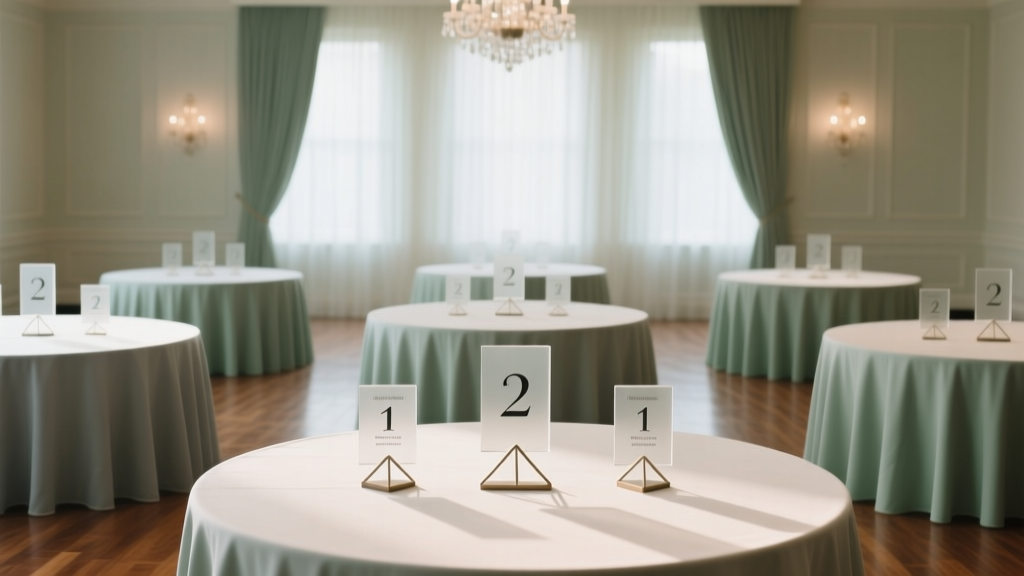
Wedding Planning How to Choose the Perfect Table Numbers
You’ve picked the venue, you’re narrowing down the menu, and you’re finally picturing how your reception will feel—warm lighting, happy chatter, and that moment when everyone finds their seat and settles in. Then, out of nowhere, a tiny detail starts taking up a surprising amount of space in your brain: table numbers.
If you’re thinking, “Do table numbers really matter?”—you’re not alone. They’re small, yes, but they sit at the intersection of wedding decor and guest experience. Great table numbers make your reception feel polished and cohesive, help guests navigate the room easily, and can even become part of your wedding story (hello, meaningful travel destinations or favorite songs).
This guide will help you choose table numbers that look beautiful, work smoothly, and fit your budget—without turning into yet another wedding decision that drags on for weeks.
Why Table Numbers Matter More Than You Think
Table numbers are part decor, part logistics tool. The best ones quietly do their job while elevating your wedding aesthetic.
They improve your guest experience
- Faster seating: Guests find their tables quickly (especially helpful for larger weddings).
- Less confusion: Clear, readable numbers reduce crowding around escort cards or seating charts.
- Better flow: Servers and coordinators use table numbers to deliver meals, manage dietary requests, and handle toasts smoothly.
They tie into your reception design
- They sit right at eye level on your tables—guests will notice them.
- They’re often photographed, especially during room shots and detail photos.
- They can reinforce your theme (modern, romantic, garden, coastal, rustic, black-tie, etc.).
Start Here: A Quick Table Number Decision Checklist
If you want a simple roadmap, work through this checklist in order. It prevents the most common “we bought something cute and then realized it didn’t work” problems.
- Confirm your table count and layout (rounds vs. farm tables, number of guests per table).
- Choose your style direction (match invitations? floral? minimalist? themed?).
- Decide format: printed cards, acrylic, wood, frames, stands, or 3D numbers.
- Check visibility: test readable font size and contrast from 6–10 feet away.
- Pick placement: on the table, in a centerpiece, or on a stand above florals.
- Set a budget (and decide what you’ll DIY vs. outsource).
- Order early and plan a setup strategy for your coordinator or helpers.
Step 1: Match Your Table Numbers to Your Wedding Style (Without Overthinking It)
A simple rule wedding planners love: your table numbers should feel like they belong in the same “family” as your invitations and reception decor. They don’t need to match perfectly, but they should make sense together.
Style pairings that work beautifully
- Modern/Minimal: Clear acrylic with white ink, black-and-white printed cards, simple metal stands, sans-serif fonts.
- Romantic/Garden: Soft scripts, watercolor florals, deckled-edge paper, gold frames, candlelight-friendly designs.
- Rustic/Farmhouse: Wood blocks, kraft paper, chalkboard-style prints, natural textures, pressed greenery.
- Classic/Black-Tie: Tall elegant frames, black cards with white lettering, gold foil numbers, formal serif fonts.
- Beach/Coastal: Light wood, linen textures, soft blues, subtle sea-glass tones (avoid overly themed shells unless that’s truly you).
Real-world scenario: the “we have two styles” couple
If one of you loves minimalist modern and the other wants soft romantic, meet in the middle: acrylic table numbers with a delicate script, or white cards with a serif font and a small floral motif. The key is choosing one main element (material or font style) to keep consistent across the room.
Step 2: Choose a Format That Works for Your Tables and Centerpieces
The prettiest table numbers don’t help if guests can’t see them over tall florals—or if they keep falling over during dinner. Choose a format based on your actual tabletop plan.
Popular table number formats (and when to use them)
- Printed table number cards: Budget-friendly, easy to match your stationery, great for most weddings.
- Framed table numbers: Classic and sturdy; ideal for formal receptions. (Just make sure frames aren’t too bulky.)
- Acrylic table numbers: Modern and photo-ready; look amazing with candles and soft lighting.
- Wood table numbers: Warm, textured, best for rustic venues or outdoor receptions.
- 3D standalone numbers: Super visible; great when centerpieces are low and there’s space.
- Table name alternatives: Instead of numbers, use “Table: Paris,” “Table: Song Titles,” etc. These are adorable, but take extra planning (more on that below).
Placement tips based on centerpiece height
- Low florals/candles: Cards in stands or small frames work perfectly.
- Medium height centerpieces: Use taller stands so the number sits above the arrangement.
- Very tall centerpieces: Put table numbers on a separate stand near the table edge so guests don’t crane their necks.
Step 3: Make Sure They’re Actually Readable (Your Guests Will Thank You)
Design is wonderful, but legibility is what makes table numbers “perfect.” Wedding planners often see couples choose gorgeous designs that become hard to spot in a dim reception space.
Legibility checklist
- Contrast: Dark text on light background (or vice versa). Avoid light gray on white.
- Font choice: Use a clean serif or sans-serif for the number itself. Script is best saved for small accents.
- Font size: As a starting point, aim for numbers at least 2–3 inches tall on cards (larger for big rooms).
- Lighting: Candlelit or string-light receptions need higher contrast and larger text.
- Glare: Acrylic and glass frames can reflect uplighting. Angle them slightly or choose matte finishes.
Pro tip from wedding planners
Print one sample and test it—set it on a table, step back 10 feet, and see if you can immediately read it. If you hesitate, guests will too.
Step 4: Decide Between Traditional Numbers or Creative Table “Names”
Both options can be beautiful. The best choice depends on your guest count, crowd type, and how much time you want to spend on details.
Traditional table numbers: simplest and most efficient
Table numbers are universally understood, easy to announce, and straightforward for your catering team.
Table names/themes: meaningful but slightly more complex
Creative table names can add personality—especially if your wedding has a strong theme or shared story.
Popular table name ideas couples love:
- Travel: Cities you’ve visited (with a small photo from the trip).
- Food & drink: Wines, cocktails, coffee drinks (cute for food-loving couples).
- Music: Favorite albums or songs (great for dance-floor energy).
- Family heritage: Meaningful places, languages, or traditions (done thoughtfully and respectfully).
How to keep table names guest-friendly
- Still include a number somewhere on the sign (small is fine). Example: “Table 6: Paris.”
- Use a seating chart that clearly shows both so guests aren’t scanning the room for “Amalfi Coast” while holding a drink.
- Avoid inside jokes only 10 people understand unless the number is prominent.
Budget Tips: Beautiful Table Numbers at Every Price Point
Table numbers can be a quick win for your wedding decor budget. Here’s what typically affects cost: materials (acrylic/wood vs. paper), printing style (foil/letterpress), frames/stands, and whether you’re renting or buying.
Budget-friendly ideas (under control, still stylish)
- Print table number cards on quality cardstock and place them in simple stands.
- Use a template that matches your wedding stationery suite for a cohesive look.
- Skip heavy frames—acrylic or metal stands often look cleaner and cost less.
- Consider renting frames or specialty holders from your florist, planner, or a decor rental company.
Where to splurge (if you want to)
- Custom acrylic: Feels luxe and photographs beautifully.
- Foil details: A little gold or silver foil can elevate the entire table.
- Coordinated signage: Matching table numbers with bar signs and menus can create a high-end look.
Smart compromise
Choose a more premium look for the numbers (like acrylic), but keep the rest simple—neutral linens and candles. It’s often cheaper than going big on every centerpiece.
Timeline Advice: When to Choose, Order, and Set Up Table Numbers
Table numbers are best handled before the last-minute wedding week rush. Here’s a planner-friendly timeline.
Recommended timeline
- 3–5 months before: Decide style and format; confirm whether you’re renting or buying.
- 2–3 months before: Order table numbers (especially for custom printing or acrylic).
- 4–6 weeks before: Confirm table count based on RSVPs trending; order extras if needed.
- 1–2 weeks before: Do a full mock-up of one table (even at home) and confirm visibility.
- Wedding week: Pack table numbers with labels; share setup instructions with your coordinator/venue team.
Pro tip: order a couple extras
If you expect 12 tables, consider ordering 13–14 numbers. Last-minute layout changes happen, and having an extra saves stress.
Common Mistakes to Avoid (And How to Fix Them)
- Mistake: Numbers that are too small.
Fix: Increase number size and simplify the design around it. - Mistake: Table numbers get lost in the centerpiece.
Fix: Use taller stands or place numbers near the table edge. - Mistake: Too much glare from frames/acrylic.
Fix: Switch to matte finishes or angle the holder away from uplighting. - Mistake: Mixing too many styles (rustic wood + modern acrylic + ornate gold frames).
Fix: Choose one consistent material or one consistent color palette. - Mistake: Forgetting about vendor use (catering, coordinator).
Fix: Keep numbering simple and consistent; avoid skipping numbers or using confusing labels.
Wedding Planner Pro Tips for Polished Table Numbers
- Keep numbering consistent across everything: seating chart, escort cards, and table numbers should match exactly (Table 10 vs. “Ten”).
- Use a consistent “home” for the number: same corner or same center placement on every card for a clean visual rhythm.
- Think about photography: avoid ultra-reflective surfaces if you’re using lots of candles or flash photography.
- Anchor them so they don’t tip: sturdier stands, a heavier frame, or a small base helps outdoors or near dance-floor vibrations.
- Coordinate with your linen color: white numbers on a blush linen can disappear—test your palette together.
FAQ: Table Numbers for Weddings
How many table numbers do I need?
You need one per guest table, plus one for any additional numbered areas you’re including (like a dessert table if it’s part of seating logistics). Ordering 1–2 extras is a smart backup.
Should the head table be numbered?
Usually, no. The head table is visually obvious and doesn’t need a number. If you’re using a sweetheart table, it also typically doesn’t need numbering unless your venue’s service team requests it for meal delivery.
Is it better to use table numbers or table names?
For ease and clarity, table numbers win—especially for larger weddings (80+ guests). Table names can be meaningful and fun, but keep a small number on the card to prevent confusion and help servers.
What size should wedding table numbers be?
It depends on your room size and centerpiece height, but aim for numbers that are easy to read from 6–10 feet away. Many couples find numbers around 2–3 inches tall (or larger) work well, especially in dim lighting.
Can I DIY my table numbers and still make them look high-end?
Absolutely. Use thicker cardstock, choose a clean font pairing, and invest in simple, sturdy stands. Keeping the design minimal often looks more expensive than overly decorative DIY.
Do I need table numbers if I’m doing open seating?
If guests are choosing their own seats, table numbers aren’t required—but they can still help guests coordinate meeting up with friends and help servers identify tables. Many couples with open seating still use table numbers for smoother service.
Next Steps: Choose Confidently and Make Setup Easy
If you want this decision to feel calm and complete, here’s your simple action plan:
- Confirm your estimated number of tables and your centerpiece style.
- Pick one design direction (modern, romantic, rustic, classic) and stick to it.
- Choose a readable format and test one sample from across the room.
- Order early, add 1–2 extras, and label your packing for an easy wedding-day setup.
Your table numbers don’t have to be the most elaborate detail of your wedding—but when they’re thoughtfully chosen, they make the whole reception feel more welcoming, more organized, and more “you.”
Signoff: For more practical, friendly wedding planning tips—from reception layouts to decor details—browse the latest guides on weddingsift.com.
More Articles
 Wedding Email Invites: Warm, Effective & 2026-Proof
 Rehearsal Dinner Planning: Complete Guide
 How Much Wedding Cake for 125 Guests? (2026)
 Do You Need Wedding Favors? (2026)
 Wedding Cards That Boost RSVPs (2026)
 Wedding Food Cost Per Head (2026 Data + Savings Tips)
 Spray Tan Before Wedding: Ideal Timing (2026)
 Why Vacuum Sealing Harms Wedding Dresses
 How to Plan a Summer Wedding That Stays Cool
 Thank You Cards After Wedding: Real Deadline (2026)