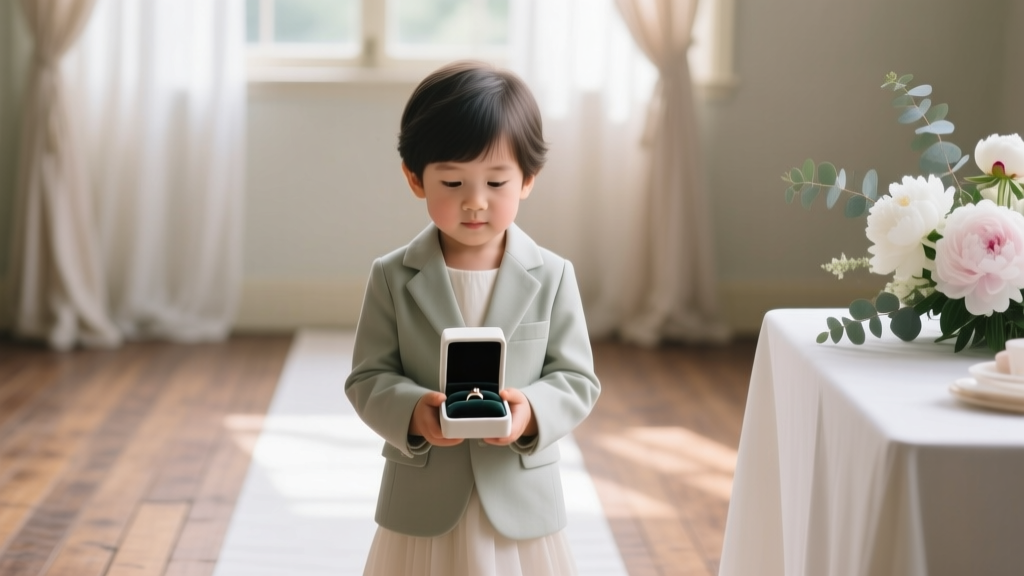
Wedding Planning How to Handle the Ring Bearer
Choosing a ring bearer sounds simple—until you picture a small child walking down an aisle full of strangers, bright lights, loud music, and dozens of eyes watching. For many couples, the ring bearer is one of the sweetest parts of the ceremony… and also one of the biggest wild cards.
If you’re feeling excited and slightly nervous (or you’ve already heard a few “he’s adorable but unpredictable” warnings), you’re not alone. The good news: you can plan for a smooth ring-bearer moment without turning it into a stressful production. A little preparation, the right expectations, and a few wedding planner tricks will carry you a long way.
This guide walks you through everything—how to choose the right child, what they should carry, how to rehearse, what to do if things go off-script, and how to keep the moment joyful no matter what happens.
What a Ring Bearer Actually Does (and What They Don’t Need to Do)
Traditionally, the ring bearer walks down the aisle carrying the rings. In modern weddings, the role is more symbolic than functional—because tiny hands + expensive rings + nerves is a risky combo.
Typical ring bearer duties
- Walk down the aisle (alone or with a partner such as a flower girl).
- Carry a ring box, pillow, sign, or “ring security” prop.
- Hand off the rings (or the ring box/pillow) to the officiant or best man.
- Stand or sit with family during the ceremony.
What you can skip without guilt
- Carrying the real wedding bands.
- Walking solo if they’re anxious.
- Standing at the altar the whole time (many kids do better seated with a parent).
- Perfect timing or “performance-level” behavior.
Planner perspective: Your ring bearer’s job is to add charm, not pressure. Set expectations accordingly and you’ll enjoy the moment much more.
How to Choose the Right Ring Bearer
Most couples pick a child they love—niece, nephew, cousin, or a close friend’s child. Beyond relationship, consider temperament and age.
Best ages for a ring bearer
- 3–6 years old: Sweet spot for following simple instructions with a bit of coaching.
- 7–10 years old: Often very reliable, can handle a slightly more “official” role.
- Under 3: Adorable, but expect unpredictable results—plan extra support.
Questions to ask before you decide
- Will they be comfortable around crowds?
- Do they freeze when they feel shy?
- Are they easily overstimulated by noise or attention?
- Do they have a nap schedule that conflicts with ceremony time?
- Is there a parent/guardian who can help with logistics on the day?
Real-world scenario
Scenario: Your 2-year-old nephew is the obvious choice, but he’s in a “no” phase and hates being held by anyone but mom.
Plan: Make him an “honorary ring bearer,” have him walk with mom or dad, and give him something simple to carry (like a sign). Then choose an older child—or an adult—to hold the real rings.
What Should the Ring Bearer Carry? (Safe, Cute, and Practical Options)
One of the most common wedding planning questions is whether the ring bearer should carry the actual rings. Many couples choose a safer option—and nobody will know unless you announce it.
Option A: Decoy rings (recommended)
- Use faux rings, inexpensive bands, or even ribbon-tied placeholders.
- Keep the real rings with the best man, maid of honor, or officiant.
Option B: Ring box instead of a pillow
- Ring boxes are easier for little hands than slippery pillows.
- Choose a box that closes securely (magnetic closures work well).
Option C: A sign or “ring security” prop
- Popular signs: “Here comes the bride” (though that’s more common for flower girls), “Ring Security,” or “Don’t worry ladies, I’m still single.”
- Great for toddlers who want to hold something but shouldn’t be trusted with jewelry.
Option D: Nothing at all
Sometimes the simplest plan is the best: they walk down, wave, and join family. The audience will still melt.
Timeline: When to Plan Ring Bearer Details
Ring bearer logistics are small, but they touch a lot of moving parts: outfits, rehearsal, ceremony lineup, photos, and childcare. Use this timeline to avoid last-minute scrambling.
3–6 months before the wedding
- Ask the child’s parent/guardian for a firm “yes.”
- Confirm ceremony start time and nap/meal considerations.
- Decide what they’ll carry (real rings vs decoy).
2–3 months before
- Order outfit (or confirm what you’re providing vs what parents will purchase).
- Plan aisle partner (alone, with flower girl, with parent, with junior attendant).
- Consider childcare coverage for pre-ceremony photos and cocktail hour.
2–4 weeks before
- Do a low-pressure “practice walk” at home or in a hallway.
- Share simple instructions with the parent/guardian: where to stand, when to walk, who to hand off to.
- Confirm comfort items (snacks, quiet toys, water).
Wedding week
- Confirm who holds the real rings.
- Pack an emergency kit: wipes, stain remover pen, safety pins, small lint roller.
- Reconfirm arrival time and where the child will be before the ceremony.
Step-by-Step: How to Prepare Your Ring Bearer (Without Overwhelming Them)
Kids do best when instructions are simple, repeated calmly, and practiced in tiny pieces. Think “quick and friendly,” not “formal rehearsal dinner speech.”
1) Explain the job in one sentence
- “You’re going to walk down the aisle and bring this box to Uncle Alex.”
- “Your job is to walk to the front and sit with Grandma.”
2) Practice the walk (2 minutes max)
- Pick a “starting line” and an “end point.”
- Practice walking at a slow pace.
- Practice stopping, handing off the item, and turning to sit/stand.
3) Assign a “safe adult” at both ends
- Start: Parent/guardian or wedding party member who can help them line up.
- Finish: Best man, officiant, grandparent, or another trusted adult who can smile and gently guide them.
4) Choose a reward that isn’t disruptive
- A small treat after the ceremony.
- A “special job” during photos (holding a bouquet for one picture).
- A small toy for quiet time after they walk.
5) Build in a backup plan
If they freeze, cry, or run the wrong direction, your backup plan should already be decided. More on that below.
Day-Of Logistics: Keeping the Ring Bearer Calm, Fed, and Happy
The biggest ring bearer meltdowns aren’t about the aisle—they’re about being tired, hungry, overstimulated, or pulled away from a parent too long.
Practical day-of checklist
- Snack plan: Non-messy snacks (cracker packs, fruit snacks, granola bar) and water.
- Outfit timing: Put the outfit on as late as reasonably possible to avoid stains.
- Bathroom break: Right before lineup.
- Comfort item: If age-appropriate, have a small item nearby (not in the ceremony photos unless needed).
- Noise plan: If the child is sensitive, consider child-friendly ear protection during loud music.
Where should the ring bearer be before the ceremony?
- With a parent/guardian in a quiet room, away from crowded getting-ready spaces.
- With a designated helper (babysitter or trusted family member) if the parent is in the wedding party and unavailable.
Budget considerations for ring bearer support
- Outfit costs: $40–$150+ depending on whether you’re buying new or using something they already own.
- Childcare: Hiring a sitter for 4–6 hours can be a game-changer, especially if parents are in the ceremony. Cost varies widely by location, but plan for sitter rates plus travel/time.
- Props: Ring box or sign can be $10–$50+; you can also DIY with items you already have.
Handling Common Ring Bearer Scenarios (With Calm, Real Solutions)
Scenario: They refuse to walk
Plan A: Have a parent walk with them, holding their hand.
Plan B: Have them ride in a decorated wagon pulled by a trusted adult (best for younger toddlers).
Plan C: Skip the aisle moment and have them already seated. No one will be upset.
Scenario: They sprint down the aisle
This is more common than couples expect. If it happens, let it be funny and sweet. Ask the photographer in advance to anticipate movement and shoot in burst mode. If you want to reduce the odds, practice a slow walk and put a calm adult at the finish line.
Scenario: They cry or get overwhelmed
Have a parent ready to scoop them up. If you’re concerned about upsetting ceremony audio, ask your DJ or musician to keep the processional music going (steady sound helps mask small noises). Also, avoid pulling them away from a parent too early.
Scenario: They drop the ring box/pillow
Another reason decoy rings are popular. If something drops, a groomsman can pick it up quickly. Most guests won’t even register it as a “problem”—it reads as a cute kid moment.
Scenario: Divorced parents or sensitive family dynamics
Give one clear point person on the day-of (usually the parent/guardian the child is with most of the time). If there are tensions, keep instructions short, written, and neutral—arrival time, where to go, who to hand off to—so nobody feels sidelined.
Common Mistakes to Avoid (And What to Do Instead)
- Mistake: Letting the ring bearer hold the real rings with no backup.
Do instead: Put real rings with the best man/maid of honor/officiant and give the child a decoy or empty box. - Mistake: Scheduling too many photos before the ceremony for a small child.
Do instead: Get 5–10 minutes of key photos early, then let them rest and rejoin for the aisle moment. - Mistake: Expecting a toddler to stand still at the altar.
Do instead: Have them sit with family immediately after walking down. - Mistake: Choosing an outfit that’s uncomfortable or itchy.
Do instead: Prioritize comfort and fit; do a trial wear at home. - Mistake: Waiting until the rehearsal to explain everything.
Do instead: Share a one-sentence job description and do one or two quick practice walks beforehand.
Wedding Planner Pro Tips for a Smooth Ring Bearer Moment
- Shorter aisle = easier success. If your venue has a long aisle, consider starting kids halfway down (especially for very young ring bearers).
- Pair them wisely. A confident flower girl or older child can “lead” the moment and keep things on track.
- Use a “finish line” cue. Tell them who they’re walking to: “Walk to Grandpa,” not “Walk to the altar.”
- Ask your photographer for a kid plan. Mention ages and likely behavior so they can set up the right lens and shooting position.
- Keep props simple. One item, easy grip, secure closure, nothing fragile.
- Build in kindness for parents. If a parent is in the wedding party, consider providing childcare so they can actually enjoy your day.
FAQ: Ring Bearer Questions Couples Ask All the Time
Should the ring bearer carry the real rings?
Most couples choose no—and it’s a smart move. Give the ring bearer a decoy ring, empty box, or pillow, and have the best man, maid of honor, or officiant keep the real wedding bands secured until the exchange.
What if we don’t have a child in the family?
You can skip the ring bearer entirely, or assign the role to an older child, a “junior groomsman,” or even a fun adult “ring security.” Your ceremony will still feel complete.
Do we need to include the ring bearer in the rehearsal?
If they’re local and it won’t disrupt bedtime, it can help—but it’s not required. A quick practice walk earlier in the day (or even at home) is often more effective than a late-night rehearsal with lots of distractions.
Who pays for the ring bearer outfit?
This varies by region and family expectations. Some couples cover it as a gift; other times parents purchase it. The smoothest approach is to be clear early: share a budget range, color palette, and whether you’re providing shoes/accessories.
What’s the best way to keep kids happy during the reception?
Plan a kid-friendly corner: coloring books, quiet toys, and simple snacks. If your budget allows, hiring a sitter or childcare provider can help parents relax and keeps children from getting overtired.
Can the ring bearer walk with someone?
Absolutely. Walking with a parent, sibling, flower girl, or wedding party member is one of the best ways to prevent last-minute nerves—especially for toddlers and shy kids.
Your Next Steps: A Simple Ring Bearer Game Plan
If you want an easy path forward, here’s a quick checklist you can use today:
- Choose your ring bearer (and confirm with the parent/guardian).
- Decide what they’ll carry (decoy rings or empty box is usually best).
- Pick who holds the real rings.
- Assign two “helpers” (one at the start of the aisle, one at the end).
- Plan a calm pre-ceremony setup: snacks, bathroom, outfit timing.
- Decide your backup plan if they won’t walk (parent walk, wagon, or seated option).
The ring bearer moment doesn’t need perfection to be memorable. When you plan for comfort and flexibility, you get the best kind of ceremony memory: one that feels warm, real, and completely yours.
Looking for more wedding planning help? Explore more practical guides and timelines on weddingsift.com to keep every detail feeling organized—and still genuinely joyful.
More Articles
 How To Match Outdoor Wedding Venues With Thoughtful, Cohesive Favors
 50th Wedding Anniversary Gifts: Meaningful & Budget-Savvy
 Wedding Planner Career Path: Real 2026 Launch Plan
 How Much to Charge to Sing at a Wedding (2026)
 Sell Unused Wedding Dress: 7 Steps to $800–$3,200 (2026)
 Father of the Bride Wedding Costs: Truth & Tension (2026)
 Wedding Coordinator Cost: Real 2026 Rates
 Can You Wear Black Jeans to a Wedding? (2026)
 Wedding Bathroom Ratio: Evidence-Based Guide (2026)
 Elopement Wedding Cost Breakdown (2026)