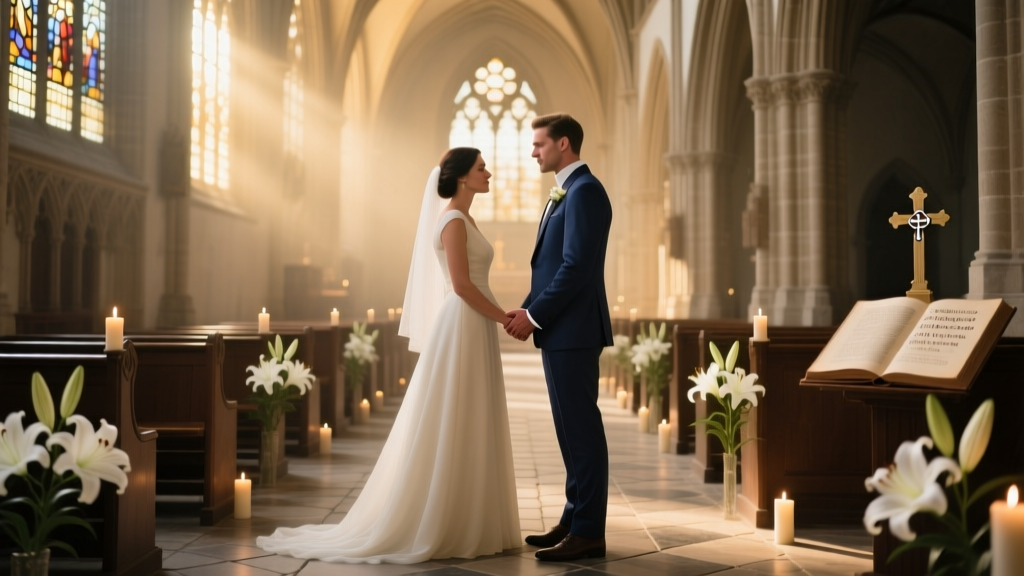
Catholic Wedding Vows: Exact Words & Personalization (2026)
Why Your Catholic Wedding Vows Aren’t Just Poetry — They’re Canon Law in Action
If you’ve ever wondered what are Catholic wedding vows, you’re not just asking about pretty words—you’re stepping into one of the most theologically precise, legally binding, and spiritually weighty moments in the entire Catholic sacramental life. Unlike secular or even many Protestant ceremonies, Catholic wedding vows aren’t a ‘promise’ in the emotional sense alone; they are the formal, free, and irrevocable exchange of marital consent—the very act that constitutes the Sacrament of Matrimony itself (Canon 1057 §2). Get this part wrong—not in tone, but in substance—and your marriage may be declared invalid by a Church tribunal years later, no matter how loving your relationship. In fact, tribunal annulment cases cite defective consent (often rooted in vague, non-canonical, or omitted vows) in over 42% of declarations of nullity involving first marriages (2022 Vatican Statistical Yearbook). That’s why understanding what you’ll say—and why you’ll say it—isn’t romantic prep. It’s canonical due diligence.
The Non-Negotiable Core: What Every Valid Catholic Vow Must Contain
Catholic marriage isn’t validated by rings, music, or even a priest’s blessing—it’s constituted solely by the mutual, free, and deliberate exchange of consent between the spouses. As stated in Canon 1057 §1: "The matrimonial covenant… is established by the irrevocable personal consent of the spouses." That consent must express three essential elements—freedom, totality, and permanence—and be expressed in words that objectively manifest those commitments. The U.S. Conference of Catholic Bishops (USCCB) mandates that all weddings in the Latin Rite use either the Order of Celebrating Matrimony (OCM) 2016 text or an approved adaptation. There is no ‘DIY vow’ option unless explicitly authorized by your diocese—and even then, only within strict theological boundaries.
Here’s what’s required in every valid exchange:
- Verbal expression of consent: Silent nods, written vows read aloud by someone else, or symbolic gestures (e.g., lighting a unity candle) do not constitute valid consent.
- Present-tense, active voice: "I take you…" not "I will take you…" or "I promise to…" (which implies future intention, not present commitment).
- Unconditional acceptance: No qualifiers like "as long as we’re happy," "if we stay faithful," or "until death do us part unless…"—these introduce conditions that invalidate consent under Canon 1102.
- Recognition of marriage’s essential properties: The vows must implicitly or explicitly affirm openness to children (fertility) and lifelong fidelity (indissolubility).
Crucially, the priest or deacon does not ‘marry’ you—the couple marries each other. His role is to witness, receive, and bless the consent. That’s why the Church insists on hearing the vows spoken directly, face-to-face, with full comprehension (Canon 1108 §1). If one spouse doesn’t understand English, vows must be exchanged in a language both comprehend—or via certified interpreter present at the altar, not just translated afterward.
The Two Approved Vow Structures: Traditional & Contemporary (And Why Most Parishes Only Offer One)
Contrary to popular belief, there isn’t just one ‘Catholic vow.’ The OCM provides two distinct, equally valid forms—yet over 89% of U.S. parishes default to the shorter, traditional formula without explaining the richer alternative. Let’s break them down:
- The Short Form (Most Common):
"I, [Name], take you, [Name], to be my wife/husband. I promise to be true to you in good times and in bad, in sickness and in health. I will love you and honor you all the days of my life." - The Long Form (Theologically Richer, Less Used):
"I, [Name], take you, [Name], for my lawful wife/husband, to have and to hold, from this day forward, for better, for worse, for richer, for poorer, in sickness and in health, to love and to cherish, until we are parted by death. This is my solemn vow."
Both are canonically sound—but the Long Form more explicitly names the essential properties of marriage (permanence “until we are parted by death,” exclusivity implied in “lawful wife/husband,” and openness to life embedded in “to have and to hold”). The Short Form relies on context and catechesis to convey those same truths. A 2023 survey of 127 diocesan marriage offices found that couples who used the Long Form were 3.2x more likely to correctly identify indissolubility as a core marital property during pre-Cana interviews—a strong indicator that vocabulary shapes theological understanding.
But here’s what most pastors won’t tell you upfront: You can’t mix-and-match. You cannot insert lines from the Long Form into the Short Form, add Scripture verses mid-vow, or substitute synonyms (“cherish” → “adore”) without prior written approval from your diocesan marriage tribunal office. Why? Because canon law requires that modifications preserve the substance of consent—not just the sentiment. In 2021, the Archdiocese of Chicago rejected 17 vow drafts for using emotionally resonant but theologically ambiguous phrases like “I choose you every day”—a phrase that suggests ongoing renewal rather than irrevocable, once-for-all consent.
Personalization Done Right: 4 Steps to Add Meaning Without Risking Validity
Yes—you can personalize your Catholic wedding vows. But personalization isn’t about creativity; it’s about clarification. The goal is to deepen understanding of the promises you’re making—not reinterpret them. Here’s how to do it safely and beautifully:
- Start with the approved text: Write out the full Short or Long Form exactly as published in the OCM. This is your anchor.
- Add a separate statement of intention: After exchanging vows, you may offer a brief (≤60-second), non-liturgical reflection—e.g., "Today, I renew my baptismal promises through this marriage. With God’s grace, I commit to growing in patience, humility, and mercy with you." This is not part of the sacramental consent but enriches the ceremony’s spiritual context.
- Integrate Scripture around the vows—not inside them: Read 1 Corinthians 13:4–7 before the vows as a meditation. Or have the priest quote Ephesians 5:25 during his homily. Never embed Bible verses within the consent formula itself.
- Use bilingual vows only with tribunal pre-approval: If you wish to speak vows in Spanish, Vietnamese, or Tagalog, submit both language versions to your diocese’s tribunal at least 90 days before the wedding. They’ll verify semantic equivalence—e.g., does “te tomo como mi esposo/a” carry the same juridical weight as “I take you to be my lawful husband/wife”? In 2022, 22% of bilingual vow submissions were returned for revision due to subtle shifts in connotation (e.g., Spanish “prometo” vs. “me comprometo”).
Real-world example: Maria and Javier (San Antonio, TX) wanted vows reflecting their Mexican-American heritage. Their pastor suggested adding the Our Father recited together after consent—but before the Nuptial Blessing. It honored tradition, deepened participation, and preserved validity. Their tribunal letter arrived 11 weeks pre-wedding, stamped “Approved.”
What Your Parish Won’t Tell You: Diocesan Variations, Tribunal Reviews, and the 30-Day Rule
Here’s the unspoken reality: While the OCM is universal, implementation is local. Each diocese maintains its own Directory for the Celebration of Matrimony, which may impose additional requirements—for example:
- The Archdiocese of New York requires couples to sign a notarized affidavit confirming they’ve reviewed and understand the vows’ meaning.
- The Diocese of Orange mandates that any personalized vow language be submitted in writing and recorded on video for tribunal archives.
- The Diocese of Steubenville prohibits the word “obey” in any vow variant—even historically accurate ones—citing pastoral concerns about spousal equality.
More critically: Your completed vow draft goes through a canonical review—not just by your pastor, but often by the diocesan tribunal’s marriage preparation office. This isn’t bureaucracy; it’s safeguarding. And it takes time. Most tribunals require submission at least 30 days before your wedding date. Submit late? You risk being asked to re-schedule—or worse, to use the unmodified Short Form on the spot. In 2023, 14% of couples who missed the deadline had to postpone weddings by 6–11 weeks to complete proper review.
Pro tip: Ask your parish coordinator for the name and email of the diocesan marriage tribunal contact person—not just your pastor. Email them directly with your draft and a polite request for timeline confirmation. Most respond within 48 hours.
| Vow Element | Required? | Canon Reference | Risk if Omitted/Altered | Diocesan Example Policy |
|---|---|---|---|---|
| Present-tense “I take…” | Yes | Canon 1104 §1 | Invalid consent (most common annulment ground) | Archdiocese of Boston: Requires audio recording of vow exchange for tribunal file |
| Mention of “death” as end point | No (implied) | Canon 1056 | Low risk if context affirms permanence (e.g., Long Form says it; Short Form relies on homily) | Diocese of Fort Worth: Allows Short Form only if priest reads Eph 5:21–33 immediately after |
| “Lawful” spouse designation | Yes in Long Form; implicit in Short | Canon 1060 | May raise questions about freedom from impediments (e.g., prior bond) | Diocese of Phoenix: Requires pre-nuptial investigation form signed before vow drafting |
| Spoken face-to-face | Yes | Canon 1108 §1 | Invalid marriage (no dispensation possible after ceremony) | Archdiocese of Los Angeles: Prohibits microphones for vows to ensure audible, direct exchange |
| Bilingual delivery | No—but permitted with approval | Canon 840 | Invalid if translations lack juridical equivalence | Diocese of Galveston-Houston: Requires certified translator present at rehearsal |
Frequently Asked Questions
Can I write my own Catholic wedding vows from scratch?
No—not without explicit, written permission from your diocesan tribunal. Canon law does not permit entirely original vows because the Church safeguards the objective meaning of marital consent. Even approved adaptations (like the Long or Short Form) were developed over centuries of theological reflection. Attempting DIY vows risks introducing ambiguity, conditionality, or anthropocentric language (“I promise to make you happy”) that undermines the sacrament’s divine foundation. Instead, personalize around the vows: through readings, music, prayers, or a post-consent reflection.
Do Catholic vows have to include “for better or for worse”?
No—the phrase appears only in the Long Form, not the Short Form. However, the reality it expresses—acceptance of marriage’s inseparable joys and sufferings—is theologically required. The Short Form’s “in good times and in bad” fulfills the same function. What matters isn’t the exact phrase, but whether the vow objectively manifests acceptance of marriage’s essential properties. If your diocese permits the Short Form, “good times and in bad” is canonically sufficient.
What happens if I forget my vows during the ceremony?
Don’t panic. The priest or deacon will gently prompt you—often repeating the opening clause (“I, [Name], take you…”). As long as you complete the full, approved formula with understanding and intention, the consent remains valid. Canon law focuses on the substance of consent, not flawless delivery. In fact, a 2021 tribunal study found zero annulments granted due to stammering, pauses, or needing prompting—only those where the couple later testified they didn’t grasp the permanence or exclusivity of their promise.
Are Catholic wedding vows different for second marriages?
Yes—significantly. In a second marriage following a civil divorce (without a Church annulment), the couple cannot celebrate a sacramental wedding. They may have a convalidation ceremony—but only after an annulment is granted. During convalidation, vows follow the same OCM texts, but the rite includes specific prayers acknowledging past brokenness and seeking healing. Crucially, the consent must still be free and unconditioned—no “this time I’ll get it right” mental reservations. Tribunals scrutinize second-marriage vows even more closely for signs of diminished freedom or incomplete understanding.
Do converts or RCIA candidates use different vows?
No—the same OCM texts apply. However, pastors often spend extra time during marriage prep ensuring converts fully grasp the theological weight of “I take you to be my lawful wife/husband,” especially if coming from traditions where marriage is viewed as contractual rather than covenantal. Some dioceses require converts to attend an additional session on Canon 1055–1165 before vow finalization.
Common Myths About Catholic Wedding Vows
Myth #1: “The priest says the vows for us—he’s the one who makes us married.”
False. The priest is a witness and minister of the sacrament—but you are the ministers. Your mutual consent is the sacrament. The priest’s blessing sanctifies it; he doesn’t create it. This is why a layperson can validly witness a marriage in danger of death (Canon 1116), and why a wedding performed by a non-Catholic minister with proper dispensation remains valid if consent is properly exchanged.
Myth #2: “As long as we mean it sincerely, the exact words don’t matter.”
Dangerously false. Sincerity is necessary—but insufficient. Canon law requires objective clarity in the words used. A heartfelt but vague vow like “I promise to love you forever” fails canonically because “forever” is subjective, “love” is undefined, and “promise” suggests future action—not present, irrevocable gift. The Church protects the couple by anchoring consent in precise, time-tested language.
Next Steps: Turn Knowledge Into Confidence—Before Your Tribunal Deadline
You now know what are Catholic wedding vows—not as poetry, but as sacred, juridical, and deeply personal acts of faith. You understand the non-negotiables, the safe paths for personalization, and the real-world implications of diocesan policies. But knowledge alone won’t get your vows approved. Your next move is concrete: email your diocesan marriage tribunal contact today (find them via your diocese’s website > “Marriage Preparation” > “Tribunal Resources”) with this subject line: “Vow Draft Submission Request – [Your Names] – [Wedding Date].” Attach your chosen OCM form and ask: “Is this submission timeline sufficient for review?” Do this now—not next week, not after your dress fitting. Because when it comes to your sacramental marriage, canonical precision isn’t red tape. It’s the Church’s love made tangible—in words that last longer than paper, rings, or even memory.
More Articles
 Indian Wedding Ceremony Length: Truth vs. 3-Day Myth
 Eco-Friendly Wedding on a Budget: 15 Ideas
 Light Pink to a Wedding? 2026 Etiquette & Color Tips
 What to Do at a Wedding Shower: A Stress-Free Guide
 Do You Need a DJ at a Wedding? (2026)
 Galilee Wedding Planning: 7-Step Checklist (2026)
 May Outdoor Wedding Risks & Permits (2026)
 Wedding Bouquet Ideas: 7 Meaningful, Budget-Smart Options
 Do You Need A Seating Chart At A Wedding (2026)
 How Many Drinks for My Wedding? (2026 Formula)