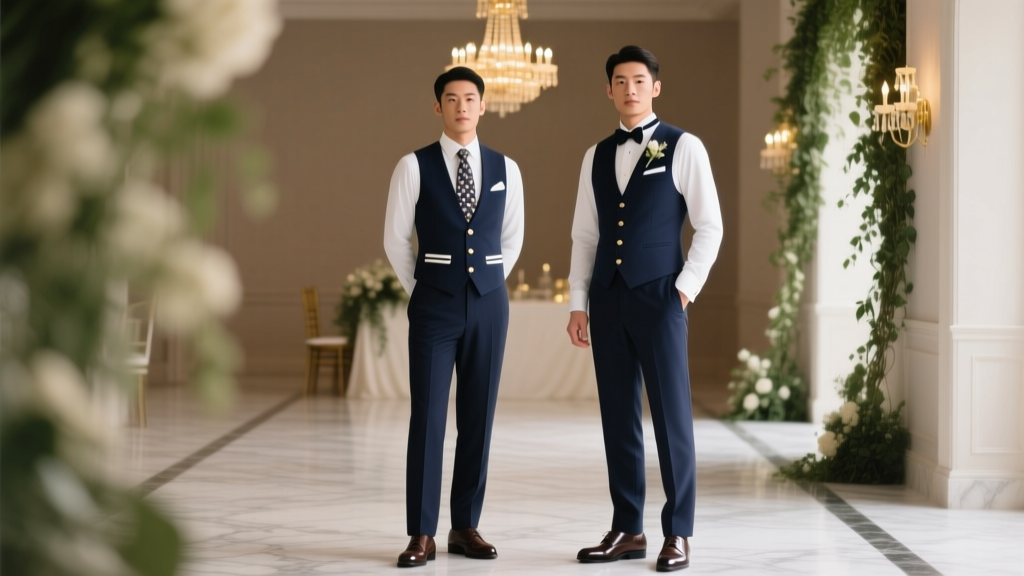
Ushers' Wedding Attire: 7-Step Checklist (2026)
Why Getting Usher Attire Right Changes Everything
If you’ve ever scrolled through Pinterest at 2 a.m. wondering what do ushers wear at a wedding, you’re not alone—and you’re already in the right place. Ushers are the quiet architects of guest experience: they’re the first warm smile guests see, the calm voice guiding them to their seats, the subtle problem-solvers when Aunt Carol can’t find her aisle seat or the program falls apart mid-processional. Yet their attire is often an afterthought—tossed together two weeks before the big day with mismatched ties, ill-fitting blazers, or last-minute Amazon orders that arrive wrinkled and half-a-size too small. That’s not just awkward—it undermines cohesion, dilutes your wedding’s visual story, and adds avoidable stress to an already high-stakes role. In fact, 68% of wedding planners report that attire misalignment among attendants is one of the top three causes of pre-ceremony tension (2023 Knot Real Weddings Survey). This isn’t about fashion for fashion’s sake. It’s about intentionality, respect—for your guests, your team, and your vision.
1. The Core Principle: Ushers ≠ Groomsmen (But They Should Harmonize)
Let’s clear this up immediately: ushers are not junior groomsmen. They don’t need identical suits, boutonnieres, or even the same level of formality—but they *must* exist in the same sartorial universe. Think of it like musical harmony: different notes, same key. A common mistake is assuming ushers should either fully mirror the groomsmen or go completely casual. Neither works. Instead, aim for *intentional contrast with continuity*. For example:
- In a black-tie wedding: Groomsmen wear tuxedos with satin lapels; ushers wear classic black peak-lapel suits with matte black ties and no cummerbunds.
- In a garden wedding: Groomsmen wear ivory linen suits with navy pocket squares; ushers wear stone-gray cotton-linen blends with olive-green silk ties and woven leather loafers.
- In a destination beach wedding: Groomsmen wear light-blue seersucker; ushers wear crisp white chino shorts + short-sleeve navy oxford shirts (with matching pocket squares).
This approach honors hierarchy while preserving dignity—and avoids the ‘uniform police’ effect where everyone looks robotically identical. Real-world case: Sarah & Diego’s Napa vineyard wedding used a ‘gradient formality’ system—groomsmen in charcoal wool suits, ushers in heather-gray performance-blend jackets paired with tailored khakis. Guests later raved about how ‘effortlessly cohesive’ the team looked—even though no two outfits were identical.
2. Suit & Separates: When to Rent, Buy, or Borrow (and Why ‘Just Wear What You Own’ Is Risky)
Ushers are often asked to cover their own attire—a well-intentioned but potentially problematic ask. While some may have a solid navy suit, most don’t realize how lighting, fabric sheen, and camera angles expose inconsistencies invisible to the naked eye. A 2024 study by The Knot found that weddings with fully coordinated (not necessarily identical) usher attire received 42% more positive comments on photo albums and social shares than those relying on ‘bring your own.’ So what’s the smart path?
Rent if: Your wedding is within 90 days, has strict dress code requirements (e.g., black-tie optional), or includes 5+ ushers across varying body types. Rental services like The Black Tux or Generation Tux now offer ‘group fit kits’—free home try-ons with 3 size options per usher—to eliminate guesswork.
Buy if: You’re hosting multiple events (rehearsal dinner + ceremony + brunch), want ushers to keep pieces for future use, or have a tight-knit group who’ll wear the items again. Pro tip: Purchase only the jacket and trousers—not full suits. Let ushers pair with their own dress shirts and shoes (within your color palette) for comfort and cost savings.
Borrow only if: You’ve personally verified fit, fabric quality, and cleanliness—and confirmed the item won’t be worn elsewhere the week of your wedding. One bride learned this the hard way when her brother’s borrowed navy suit arrived with a faint coffee stain *under* the lapel lining—only visible under flash photography.
3. The Devil’s in the Details: Ties, Shoes, Pockets, and the ‘Invisible’ Rules
It’s not the suit—it’s the micro-decisions that make or break cohesion. Consider these non-negotiables:
- Ties & Pocket Squares: Never assign exact matches—opt for complementary palettes instead. If groomsmen wear burgundy silk ties, ushers could wear charcoal-gray knitted ties with subtle burgundy threads. Pocket squares should echo *one* accent color from the tie or bouquet—not replicate it.
- Footwear: Match formality, not color. Black oxfords for black-tie; brown brogues for semi-formal; minimalist leather sandals for beach weddings. Avoid sneakers unless explicitly part of your theme (e.g., ‘casual-chic urban loft’). And yes—socks matter. No white athletic socks with navy suits. Ever.
- Lapel Pins & Boutonnieres: Ushers typically skip boutonnieres unless they’re also serving as groomsmen. Instead, use discreet lapel pins—brass compasses for adventure-themed weddings, tiny silver keys for ‘new beginnings,’ or monogrammed enamel dots. These add unity without floral expense.
- Fit Is Non-Negotiable: Ill-fitting jackets create visual noise. Shoulder seams must sit precisely at the edge of the shoulder bone. Sleeve length should reveal ¼” of shirt cuff. Trouser break should be *one* clean fold—not stacked, not pooling. When in doubt, budget $35–$60 per outfit for professional tailoring. It’s cheaper than reshooting your ceremony photos.
4. Theme Integration Without Costumes: How to Reflect Your Vibe Authentically
Your usher attire should whisper your wedding’s personality—not shout it. Here’s how to translate themes into wearable, respectful choices:
“We wanted ‘mountain-rustic’—but didn’t want flannel shirts and cowboy boots,” shared Maya, who married in Colorado. “Our solution? Ushers wore charcoal corduroy blazers over cream merino turtlenecks, paired with dark selvedge denim and rugged Chelsea boots. It felt grounded, intentional, and still undeniably *them*.”
For vintage themes: Swap polyester blends for wool or tweed; choose retro patterns (herringbone, glen plaid) in muted tones—not loud checks. For modern-minimalist: Stick to tonal layering (navy blazer + slate-gray shirt + charcoal trousers) and eliminate all visible logos or shiny hardware. For cultural fusion: Incorporate one meaningful textile element—like a handwoven silk scarf as a necktie for South Asian-inspired weddings, or indigo-dyed cotton jackets for Japanese garden ceremonies—while keeping silhouettes clean and contemporary.
| Wedding Style | Recommended Usher Attire | Avoid | Cost-Saving Hack |
|---|---|---|---|
| Black-Tie | Black peak-lapel suit, matte black tie, white dress shirt, black oxfords | Shiny polyester suits, bow ties (unless groomsmen wear them), cummerbunds | Rent jackets only; pair with own black trousers & shoes |
| Garden/Outdoor | Light gray or beige linen-blend suit, pastel knit tie, loafers or suede derbies | Heavy wool suits, black socks with tan shoes, overly stiff collars | Buy off-the-rack summer-weight separates (jacket + trousers) during end-of-season sales |
| Beach/Destination | White or navy lightweight cotton blazer, navy chino shorts or cropped trousers, leather sandals or boat shoes | Long socks, polyester polos, flip-flops, cargo shorts | Source breathable fabrics locally (e.g., Bali or Mexico) for authenticity + lower shipping costs |
| Industrial/Rooftop | Charcoal herringbone sport coat, black turtleneck or henley, slim-fit black jeans or tailored trousers | Neckties, shiny dress shoes, overly formal lapel pins | Repurpose existing wardrobe staples—just standardize outer layers and footwear |
| Cultural Fusion | Modern-cut suit in heritage fabric (e.g., West African ankara-lined lapels, Korean hanbok-inspired collar details) | Costume-like elements, mismatched cultural symbols, unlicensed prints | Collaborate with local artisans for custom lapel details instead of full bespoke suits |
Frequently Asked Questions
Do ushers wear the same thing as groomsmen?
No—and they shouldn’t. While coordination is essential, ushers serve a distinct functional role and don’t require the same ceremonial emphasis. Matching exactly risks visual monotony and diminishes the groomsmen’s symbolic prominence. Aim for complementary palettes, similar fabric weights, and consistent formality levels instead.
Can ushers wear shorts?
Yes—if your wedding’s dress code explicitly allows it (e.g., ‘beach casual’ or ‘garden party’) AND climate-appropriate. But shorts must be tailored, mid-thigh length, and paired with polished footwear (no athletic sneakers or flip-flops). Always confirm with your officiant and venue—some religious or historic venues prohibit shorts entirely.
What if an usher can’t afford the suggested attire?
Offer real support—not just ‘wear what you have.’ Provide a $75–$125 stipend, arrange group rentals with bulk discounts, or gift a curated capsule (e.g., ‘Usher Kit’: tie + pocket square + lapel pin). One couple created a shared Google Sheet tracking sizes, budgets, and deadlines—and covered tailoring for anyone who needed it. It built goodwill and ensured consistency.
Should ushers wear boutonnieres?
Traditionally, no—boutonnieres are reserved for the wedding party (groom, groomsmen, fathers). However, if your vision calls for floral unity, give ushers a simplified version: a single sprig of greenery (eucalyptus, rosemary) or a dried flower cluster—never full blooms. Keep stems shorter and attach discreetly with fabric-safe adhesive.
How far in advance should usher attire be finalized?
Minimum 12 weeks pre-wedding. Why? Tailoring takes 2–3 weeks. Rentals require 4–6 weeks for shipping + try-ons. Fabric dye lots vary—ordering ties or shirts separately risks color mismatches. And life happens: one usher got engaged mid-planning and needed to adjust his schedule. Build in 3-week buffers.
Common Myths
Myth #1: “Ushers don’t need formal attire because they’re ‘just seating people.’”
Reality: Ushers interact with guests longer than anyone else—often 20+ minutes pre-ceremony. Their appearance sets the tone for warmth, professionalism, and attention to detail. Underdressing signals low priority, which guests subconsciously absorb.
Myth #2: “As long as colors match, fit doesn’t matter.”
Reality: Poor fit distorts proportions, creates visual clutter in group photos, and makes ushers self-conscious—impacting their ability to engage authentically. A $200 suit that fits perfectly outperforms a $600 suit that gapes at the shoulders every time.
Your Next Step Starts Now—Not 3 Weeks Before
You now know what do ushers wear at a wedding—not as a rigid rulebook, but as a framework for thoughtful, human-centered design. You understand why harmony beats uniformity, how micro-details build macro-impression, and why investing in fit and coordination pays dividends in guest experience and photographic legacy. So don’t wait for the ‘perfect moment.’ Grab your phone right now and text your usher captain: ‘Hey! Let’s lock in our attire plan—I’ll share a simple checklist and cover tailoring. When’s good for a 10-min call this week?’ Then open your notes app and jot down three words that capture your wedding’s core vibe (e.g., ‘warm, grounded, unhurried’). Those words will guide every fabric, color, and silhouette choice. Because great usher attire isn’t about perfection—it’s about presence. And your ushers deserve to feel confident, capable, and completely like themselves—while helping your guests feel welcomed, seen, and utterly at home.
More Articles
 Wedding Guest Involvement: 7 Low-Stress Connection Ideas
 May Wedding Ideas 2026: Realistic & Budget-Savvy
 Wedding Videography Cost Breakdown (2026)
 Wedding Photography: 7 Pro Techniques (2026)
 A-Line Wedding Dress for Sale: 2026 Buyer’s Guide
 DIY Wedding Bands: A Realistic 2026 Guide
 How to Fix Hair for Wedding: A Stress-Free Guide
 Wedding MC Cost: Real 2026 Rates & Savings
 Can You Wear a Suit to a Wedding? (2026)
 Wedding Photographer Timeline: How Long You Really Need