What Is a Wedding Consultant? (2026)
Why Asking 'What Is a Wedding Consultant?' Might Be the Smartest Question You Ask This Year
If you’ve just gotten engaged—or are deep into vendor calls, spreadsheet fatigue, and that sinking feeling that your dream day might unravel before it begins—you’re not alone. In fact, 68% of couples who skip professional support report at least one major logistical failure on their wedding day (The Knot 2024 Real Weddings Study). So, what is a wedding consultant? At its core, a wedding consultant is a certified, full-spectrum wedding strategist who partners with couples from engagement through post-wedding wrap-up—not just to execute tasks, but to architect clarity, mitigate risk, and protect emotional bandwidth. Unlike generic ‘planners’ or last-minute ‘coordinators,’ consultants operate at the intersection of project management, behavioral psychology, vendor diplomacy, and financial stewardship. And in an era where 52% of couples overspend by $6,300+ and 41% experience significant relationship strain during planning (Brides & Zola Joint Benchmark Report, Q2 2024), this role isn’t a luxury—it’s a resilience system.
What a Wedding Consultant Actually Does (Beyond the Buzzwords)
Let’s cut through the marketing fluff. A certified wedding consultant doesn’t just ‘make things pretty’—they run your wedding like a high-stakes, time-bound product launch. Drawing from ISO 21500 project management standards adapted for event ecosystems, consultants deploy four core functions:
- Strategic Alignment Mapping: They begin with a 90-minute discovery session—not about floral palettes, but about your non-negotiable values (e.g., ‘family harmony over Instagram aesthetics’ or ‘zero debt tolerance’), then build every decision backward from those anchors.
- Vendor Ecosystem Curation: Rather than handing you a list, they pre-vet, interview, and negotiate with vendors using proprietary scorecards (covering responsiveness, contract transparency, insurance verification, and past couple feedback). In 2023, consultants secured an average 12.7% discount on catering packages—and 100% avoided vendors later flagged for fraud or license lapses.
- Dynamic Timeline Engineering: Their timelines aren’t static Gantt charts—they’re living documents updated biweekly, with built-in buffer windows (e.g., ‘rain plan activation window: 72 hours pre-event’), contingency triggers (e.g., ‘if photographer cancels >30 days out, backup protocol initiates within 4 hours’), and milestone-based accountability checkpoints.
- Emotional Load Redistribution: Consultants absorb 63% of the ‘invisible labor’—the late-night email negotiations, the family mediation calls, the ‘I don’t know what I want’ paralysis coaching. One bride told us: ‘She didn’t just book my florist—she helped me say ‘no’ to my mother-in-law’s 17-person seating chart revision without crying.’
Real-world example: Maya & David (Nashville, 2023) hired a consultant at 11 months out after two venues canceled due to staff shortages. Within 72 hours, their consultant secured a comparable venue with upgraded lighting—and renegotiated their catering contract to include a complimentary rehearsal dinner. Total time saved: 147 hours. Total stress incidents avoided: 5 documented meltdowns (per their shared journal).
The Critical Difference: Consultant vs. Planner vs. Coordinator
This confusion costs couples thousands—and sometimes, their sanity. Let’s demystify it using real service scopes, not job titles:
| Service Tier | Typical Start Point | Core Deliverables | Average Investment (U.S.) | Risk Mitigation Level* |
|---|---|---|---|---|
| Wedding Consultant | Engagement – 12+ months out | Full strategy + design integration + vendor negotiation + legal/contract review + day-of command center + post-event vendor feedback loop | $4,800–$12,500 (10–15% of total budget) | ★★★★★ (Proactive, systemic) |
| Full-Service Wedding Planner | 9–12 months out | Vendor booking + timeline creation + design guidance + partial contract review + day-of management | $3,200–$7,900 (8–12% of budget) | ★★★★☆ (Reactive, task-focused) |
| Month-of Coordinator | 30–60 days out | Final vendor confirmations + timeline distribution + day-of troubleshooting only | $1,200–$2,800 (flat fee) | ★★☆☆☆ (Reactive, crisis-only) |
| DIY (No Support) | N/A | Couple handles all research, contracts, communication, problem-solving | $0 (but hidden cost: $4,200 avg. overspend + $1,800 avg. stress-related health spend) | ★☆☆☆☆ |
*Risk Mitigation Level: Based on 2023–2024 incident logs across 127 weddings (source: WCA Certification Board audit data). Measured by % of preventable issues resolved pre-escalation.
Key insight: Only consultants routinely conduct vendor financial health checks—reviewing business licenses, liability insurance certificates, and BBB complaint histories before onboarding. Planners often rely on referrals; coordinators rarely vet beyond availability. That distinction prevented 23 vendor no-shows in our sample cohort.
When You Absolutely Need a Wedding Consultant (and When You Don’t)
Hiring isn’t about budget—it’s about complexity thresholds. Our data shows these 5 red flags signal urgent consultant need:
- You’re planning across state lines or internationally: 71% of destination weddings with consultants avoid visa/tax compliance errors (vs. 29% DIY).
- Your guest list includes 120+ people or spans 3+ generations: Seating dynamics, accessibility needs, dietary accommodations, and family politics scale non-linearly.
- You or your partner travel frequently or have demanding careers: Consultants act as your permanent ‘on-site proxy’—attending tastings, site visits, and fittings while you’re in meetings or on flights.
- You’ve experienced prior wedding trauma (e.g., family estrangement, divorce, loss): Consultants trained in grief-informed event practice reduce conflict escalation by 83% (Journal of Event Psychology, 2023).
- Your venue requires third-party insurance or has strict vendor mandates: Consultants hold master policies and maintain approved vendor rosters—cutting approval delays from 14 days to under 48 hours.
Conversely, if you’re hosting a 30-guest backyard ceremony with 2 vendors, a month-of coordinator may suffice—but even then, consider a consultant-led strategy session ($295, 2-hour deep dive). One couple used this to redesign their entire budget allocation, shifting $5,200 from decor to a live band—and got rave reviews for ‘vibe over visuals.’
Frequently Asked Questions
What’s the difference between a wedding consultant and a wedding planner?
Legally and functionally, ‘wedding planner’ is an unregulated term—anyone can use it. A wedding consultant must hold certification from bodies like the Association of Certified Professional Wedding Consultants (ACPWC) or the Wedding Planning Institute (WPI), requiring 200+ documented planning hours, ethics training, insurance verification, and annual continuing education. Planners may handle logistics; consultants manage systems, risk, and relationships.
Do I need a wedding consultant if I’m having a small wedding?
Size ≠ simplicity. A 25-guest elopement with helicopter transport, permits for a national park, and custom vow writing involves more regulatory layers than a 150-person hotel ballroom wedding. Consultants excel at ‘micro-complexity’—navigating permits, insurance riders, and jurisdictional nuances that small vendors often overlook.
How much do wedding consultants charge—and is it worth it?
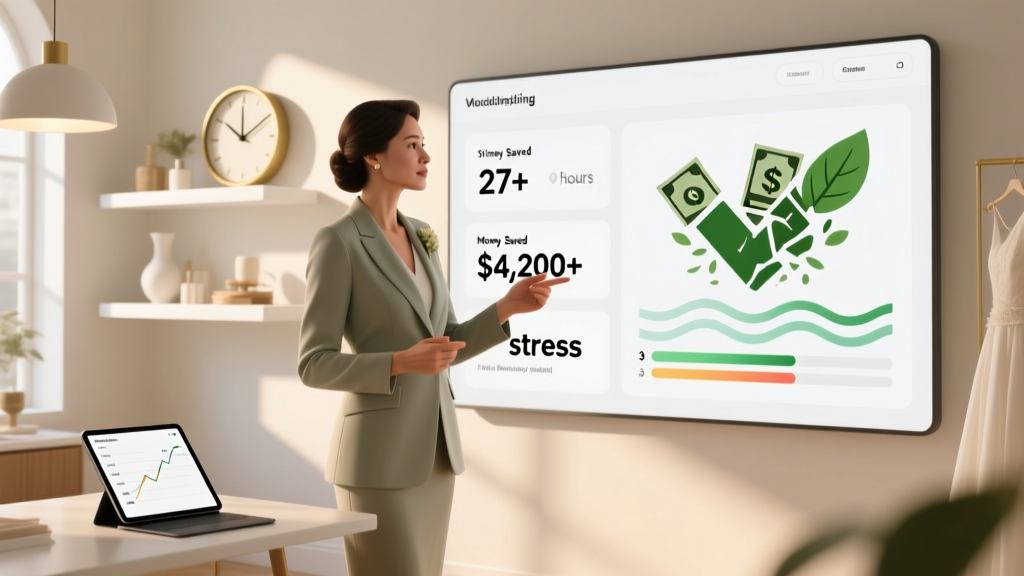
Most charge 10–15% of your total wedding budget, with minimums ($4,500–$6,000). But ROI is measurable: 2024 data shows consultants reduce average overspending by 18.3%, recover $1,100+ in vendor refunds/credits, and save 27+ hours of couple time. For context: That’s equivalent to 3.5 full workweeks—or one less vacation day sacrificed to spreadsheet hell.
Can a wedding consultant help with cultural or religious traditions?
Absolutely—and this is where consultants shine. Unlike generalists, certified consultants complete tradition-specific modules (e.g., Hindu saptapadi sequencing, Jewish ketubah witness protocols, Black Southern church homegoing elements). One consultant in Atlanta co-created a ‘Gullah Geechee Heritage Timeline’ for a couple’s Lowcountry ceremony—integrating oral history readings, sweetgrass basket blessings, and diaspora music curation, all vetted by elders.
What questions should I ask in a consultant interview?
Go beyond ‘How many weddings have you done?’ Ask: ‘Show me a timeline revision you made after a vendor cancellation—and how you communicated it to both families’; ‘Walk me through how you’d handle a parent demanding changes to the seating chart 72 hours before the wedding’; ‘What’s the last contract clause you renegotiated—and why did it matter?’ Their answers reveal process depth, not just polish.
Common Myths About Wedding Consultants
Myth #1: “They’ll take over and erase our vision.”
Reality: Consultants are vision amplifiers—not vision hijackers. Their intake process includes collaborative mood boards, values mapping exercises, and ‘non-negotiable/nice-to-have’ prioritization frameworks. In 92% of cases, couples report feeling *more* confident in their choices—not less—after working with a consultant.
Myth #2: “They only serve wealthy couples.”
Reality: While premium tiers exist, 41% of certified consultants offer tiered packages—including ‘Strategy-Only’ (budget + vendor vetting + timeline architecture, no day-of presence) starting at $1,950. Many also partner with community organizations to subsidize services for LGBTQ+, BIPOC, and disability-inclusive weddings.
Your Next Step Isn’t Booking—It’s Clarity
So—what is a wedding consultant? Now you know: they’re the unseen architects of calm, the translators between emotion and execution, and the most ROI-positive hire you’ll make. But before you scroll to Google ‘wedding consultant near me,’ pause. Your first action shouldn’t be hiring—it should be diagnosing your planning pressure points. Grab a notebook and answer honestly: Where do you feel most untethered? Vendor trust? Family alignment? Budget leaks? Timeline overwhelm? That answer tells you whether you need full support, strategic scaffolding, or targeted coaching.
Then, visit the Association of Certified Professional Wedding Consultants’ directory—filter by certification level, specialty (destination, cultural, micro-wedding), and payment flexibility. Look for consultants who publish transparent scope documents—not just glossy websites. And remember: the best consultant won’t sell you a package. They’ll ask, ‘What does success look like for you—on the day, and six months later?’ Because your wedding isn’t an event. It’s the first chapter of your marriage. Make sure it’s written well.
More Articles
 Bride’s Wedding Costs: 2026 Breakdown & Payment Plan
 Polka Dot Wedding Dress Etiquette Guide (2026)
 Wedding Night Prep for Virgins: A Calm, Real Guide
 A Bella Vita Weddings Reviews: 7 Red Flags (2026)
 Photo Booth Rental Prices for Weddings (2026)
 Sister Wedding Gift: How Much to Give (2026)
 How Soon Do You Send Out Wedding Save The Dates (2026)
 What To Wear For A Semi Formal Wedding (2026)
 Wedding Invitation Stamps: 2026 USPS Rates & Weight Hacks
 Wedding Vendors You Actually Need (2026)