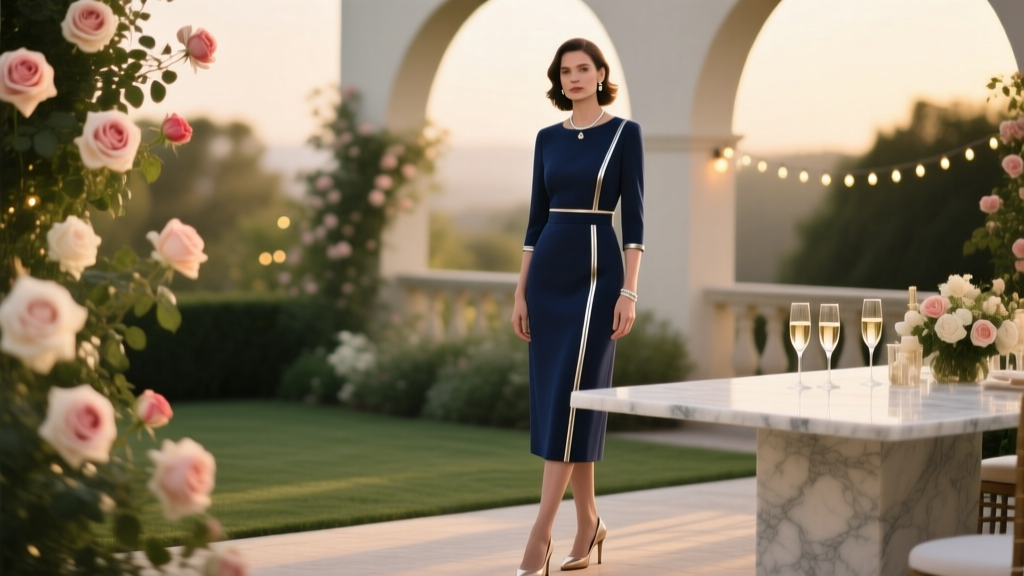
Semi Formal Wedding Attire: Your 7-Second Checklist
Why Getting Semi-Formal Right Changes Everything
If you've ever stood in front of your closet at 6:45 a.m. on a Saturday, clutching a blazer you haven’t worn since your cousin’s 2018 graduation and Googling what is semi formal attire at a wedding, you’re not alone—and you’re not overthinking it. You’re responding to a very real social pressure point: the fear of standing out for the wrong reasons. At weddings, clothing isn’t just fashion—it’s nonverbal RSVP etiquette. Wear black tie when the invitation says 'semi-formal,' and you’ll feel like a misplaced guest speaker. Show up in chinos and a polo shirt? You’ll get that polite-but-pained smile from the couple’s aunt who’s been curating place cards for three months. The stakes aren’t high in dollars—but they’re sky-high in dignity, belonging, and emotional bandwidth. And here’s the truth no one tells you: semi-formal isn’t a vague suggestion—it’s a precise, culturally coded language. Once you learn its grammar, you stop decoding invitations and start dressing with intention.
Decoding the Dress Code: Beyond the Buzzword
'Semi-formal' sits squarely between 'casual' and 'formal' on the sartorial spectrum—but that middle ground is where confusion thrives. Unlike black-tie or white-tie events—which come with centuries of codified rules—semi-formal emerged in the mid-20th century as workplaces and social events relaxed. Its ambiguity isn’t accidental; it’s adaptive. It asks guests to read context, not just follow rigid formulas. That means the same 'semi-formal' label can mean different things depending on venue (a rooftop garden vs. a historic ballroom), time of day (4 p.m. ceremony vs. 8 p.m. reception), season (July beachside vs. December loft), and even regional norms (Nashville vs. Napa vs. Newark).
Here’s what’s universally true: semi-formal signals intentional polish without ceremonial rigidity. Think 'elevated everyday'—not 'costume.' It’s the difference between wearing your favorite tailored trousers with a crisp oxford and wearing sweatpants with a novelty T-shirt. It’s also deeply relational: your outfit should honor the couple’s effort while respecting your own comfort, identity, and budget. A 2023 Knot Real Weddings survey found that 68% of couples reported noticing guest attire more than any other detail—and 41% said mismatched dress codes caused genuine stress during their wedding weekend. So yes—this matters. Not because fashion police are lurking, but because clothing communicates care.
Men’s Semi-Formal Attire: Structure, Texture, and Strategic Simplicity
For men, semi-formal isn’t about tuxedos—it’s about refined cohesion. Forget 'suit or no suit.' Instead, ask: 'Does every piece speak the same language?' A navy blazer with charcoal flannel trousers and a silk pocket square reads cohesive. A navy blazer with distressed jeans and sneakers reads confused—even if each item is expensive.
The Core Formula:
• Top Layer: A structured blazer (wool, wool-blend, or high-quality cotton) in navy, charcoal, deep olive, or burgundy. Avoid black blazers unless paired with matching trousers (then it becomes a suit, which leans formal). Matte finishes preferred—glossy synthetics scream 'rental.'
• Bottom Layer: Matching or tonally coordinated trousers—never jeans, chinos (unless luxe, flat-front, and impeccably pressed), or cargo styles. Wool or wool-viscose blends in charcoal, navy, or stone offer drape and sophistication. Fit is non-negotiable: break should graze the top of the shoe; no pooling or cuffs dragging.
• Shirt: A dress shirt—always long-sleeve, always tucked. Cotton poplin or twill in white, light blue, pale lavender, or subtle micro-check. Skip bold prints or loud stripes. French cuffs are optional but elevate; button cuffs are perfectly acceptable if clean and sharp.
• Footwear: Oxfords, derbies, or loafers in polished leather (oxblood, burgundy, or dark brown). Suede is acceptable in fall/winter but avoid brogues with heavy perforation—they blur into casual territory. No sneakers, sandals, or boat shoes unless explicitly invited (e.g., 'beach semi-formal').
Real-World Case Study: James, 32, received a 'semi-formal' invite for his best friend’s October wedding in Asheville. He initially planned khakis and a polo—until he noticed the venue: a restored 1920s theater. He pivoted: charcoal wool trousers, navy unstructured blazer, ivory spread-collar shirt, and cognac penny loafers. Result? He was mistaken for the groom’s brother—not because he looked 'rich,' but because his outfit signaled respect for the space and occasion. His confidence soared; his photos landed in the couple’s highlight reel.
Women’s Semi-Formal Attire: Silhouette, Fabric, and the Power of Restraint
For women, semi-formal is where elegance meets autonomy. It’s not about length (knee-length dresses dominate, but midi and tea-length are equally valid) or neckline (strapless, halter, and sleeveless all work)—it’s about intentional refinement. The biggest mistake? Over-accessorizing or choosing fabrics that read 'cocktail party' (shiny satin, sequins) or 'office meeting' (stiff polyester sheaths).
Key Fabric Principles:
• Weight & Drape: Medium-weight fabrics only—think crepe, double-knit, ponte, silk-blend jersey, or textured cotton. Avoid anything too stiff (like cheap polyester) or too fluid (like chiffon without lining). A dress should hold shape without constriction.
• Texture > Shine: Subtle texture—slubbed linen, bouclé, embroidered lace overlays—adds depth without flash. Shimmer should be minimal: a thread of metallic embroidery, not full lamé.
• Color Intelligence: Deep jewel tones (emerald, sapphire, plum), earthy neutrals (taupe, olive, camel), or muted pastels (dusty rose, sage) read sophisticated. Avoid neon, pure white (unless you’re the bride), and overly bright primaries—these lean casual or thematic.
Styling Non-Negotibles:
• Shoes: Closed-toe pumps, elegant sandals with delicate straps, or refined block-heel mules. Heel height is personal—but stability matters. No flip-flops, wedges with platform soles, or strappy stilettos that sink into grass.
• Outerwear: A structured coat (trench, wool peacoat) or chic shawl/cape for cooler venues. Skip denim jackets, puffer vests, or hoodies—even if 'fashionable.'
• Jewelry: One statement piece max—e.g., chandelier earrings OR a bold cuff bracelet—not both. Pearls, hammered gold, or geometric silver convey polish without ostentation.
Mini-Case: Maya’s Pivot
Maya, 28, bought a glittering silver mini-dress for her coworker’s 'semi-formal' wedding—only to realize, upon seeing the invitation’s vintage botanical motif and vineyard location, it screamed 'New Year’s Eve.' She returned it and chose a rust-colored, pleated midi dress in Italian crepe with elbow-length sleeves and minimalist gold hardware. Paired with low-block heels and a woven clutch, it felt grounded, warm, and utterly appropriate. Her Instagram story caption? 'Turns out semi-formal means “dress like you belong in the moment—not the club.”'
The Semi-Formal Decision Matrix: Your Context-Based Checklist
Semi-formal isn’t static—it’s contextual. Below is the Semi-Formal Context Matrix, a table designed to help you calibrate based on four critical variables. Use it *before* shopping or packing.
| Context Factor | Low-Formality Signal (Lean Casual) | Moderate-Formality Signal (True Semi-Formal) | High-Formality Signal (Lean Formal) |
|---|---|---|---|
| Venue | Backyard, barn, rooftop bar | Historic hotel ballroom, garden estate, art gallery | Opera house, cathedral, grand ballroom |
| Time of Day | Afternoon (2–4 p.m.) | Early evening (5–7 p.m.) | Nighttime (8 p.m. onward) |
| Season | Summer (light linens, breathable knits) | Spring/Fall (wool blends, structured knits) | Winter (velvet, brocade, heavier wools) |
| Couple’s Vibe | “Keep it fun!” / “Come as you are” / Emoji-heavy invites | Classic typography, curated mood board, floral motifs | Monogrammed stationery, calligraphy, formal wording (“request the pleasure of your company”) |
How to use it: Identify your wedding’s quadrant. If it’s 'Backyard + Afternoon + Summer + Fun vibe'? Lean toward polished casual—e.g., a silk jumpsuit or tailored culottes + blouse. If it’s 'Ballroom + Early Evening + Fall + Classic vibe'? That’s textbook semi-formal—structured dress or suit required. Two 'high' signals? Consider upgrading to formal. Two 'low'? You’ve got room to breathe—but never drop below 'elevated.' There is no 'jeans and band tee' zone in semi-formal, ever.
Frequently Asked Questions
Can I wear black to a semi-formal wedding?
Yes—but with nuance. Black is perfectly acceptable for semi-formal attire at a wedding, especially in structured, elegant silhouettes (e.g., a black crepe column dress or a black wool-blend suit). However, avoid matte-black fabrics that read 'funeral' (like heavy polyester) or overly severe cuts. Pair black with warm accessories—gold jewelry, a burgundy clutch, or nude heels—to soften the formality and add personality. Pro tip: If the couple has shared a color palette, prioritize those hues over black unless black is included.
Is a suit necessary for men, or is a blazer + trousers enough?
A full matching suit leans formal—especially in black, navy, or charcoal. For true semi-formal, a blazer with non-matching trousers is not just acceptable—it’s often preferred. It signals intentional styling, not default formality. That said, a well-fitted, unstructured navy or grey suit (in a lighter wool or linen blend) works beautifully—just skip the tie unless the invitation specifies 'coat and tie.' The key is avoiding the 'corporate uniform' look: ditch the briefcase, swap the tie for a pocket square, and roll your sleeves to the forearms for warmth.
What if I’m a nonbinary guest? How do I navigate semi-formal respectfully?
Semi-formal is one of the most inclusive dress codes precisely because it prioritizes personal expression within a framework of polish. Focus on pieces that affirm your identity while honoring the occasion: tailored separates (e.g., wide-leg trousers + sculptural top), gender-neutral suiting (oversized blazers, cropped vests, fluid jumpsuits), or dresses with architectural lines. Fabric, fit, and finish matter more than binary categories. When in doubt, ask the couple directly: 'I want to honor your vision—could you share one word that captures the vibe you imagine for guests?' Their answer ('romantic,' 'modern,' 'earthy') will guide you more than any rulebook.
Can I wear open-toe shoes in winter?
Yes—if the venue is climate-controlled and your outfit balances the exposure. A sleek open-toe pump with sheer black tights and a wool midi skirt reads sophisticated, not chilly. But avoid open toes with bare legs in sub-50°F weather—even indoors, drafts happen. Better yet: choose elegant closed-toe shoes with interesting details (cutouts, metallic accents, textured leather) that feel seasonally appropriate without sacrificing style.
Common Myths About Semi-Formal Attire
Myth #1: “Semi-formal means ‘dressy casual’—so jeans are fine if they’re dark and fitted.”
False. Dark jeans—even premium, non-distressed ones—carry cultural baggage of informality. They lack the structure, drape, and intentionality semi-formal requires. A better alternative: tailored trousers in stretch-wool or a sophisticated knit pant with a defined waistband and clean line.
Myth #2: “If the invitation doesn’t specify ‘men must wear ties,’ it’s okay to skip one entirely—even with a suit.”
Not quite. While ties aren’t mandatory for semi-formal, neckline intentionality is. An open collar with a suit jacket reads sloppy unless balanced by strong alternatives: a silk scarf knotted at the neck, a layered necklace, or a high-neck top underneath. The goal isn’t 'no tie'—it’s 'thoughtful absence of tie.'
Your Next Step Starts Now—No Wardrobe Overhaul Required
You now know exactly what is semi formal attire at a wedding: it’s the sweet spot between authenticity and respect—where your personal style meets the couple’s celebration with quiet confidence. You don’t need a new closet. You need clarity, context, and courage to trust your judgment. So before you scroll another 47 'outfit inspo' posts, do this: open your closet, pull out one item you already own that makes you feel polished and put-together—a blazer, a midi dress, a pair of sharp loafers—and build around it using the Context Matrix. Then, text the couple: 'Love your vision—can you share one detail about the venue or vibe that would help me get it just right?' Most will reply with joy—and that tiny act transforms anxiety into connection. Ready to refine further? Explore our Ultimate Wedding Dress Code Decoder for black-tie, cocktail, and creative themes—or dive into Seasonal Styling Playbooks for fabric science and color psychology made practical.
More Articles
 How to Skip Your Period for Your Wedding (2026)
 Wedding Gift Money: How Much to Give (2026)
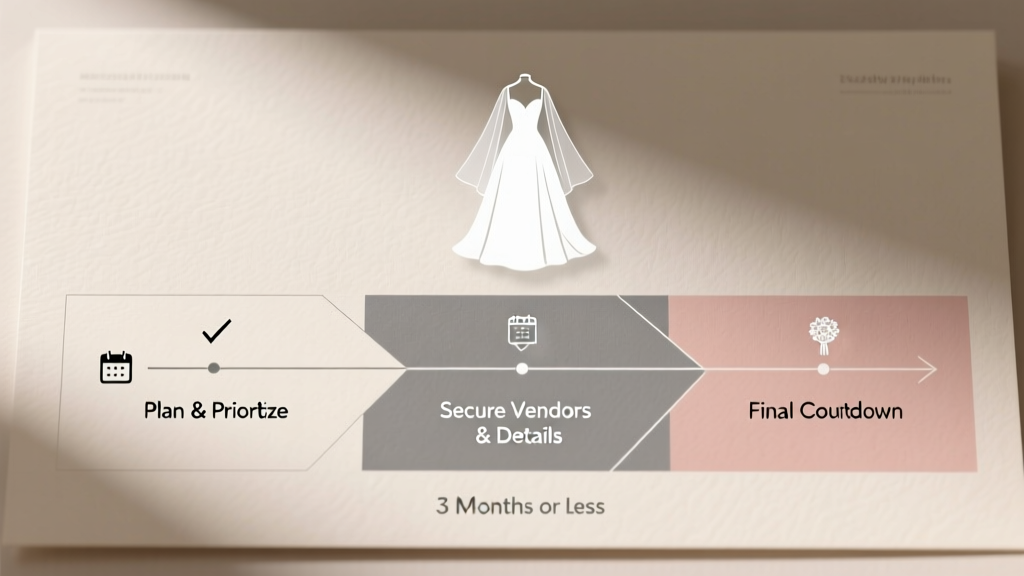 Wedding Planning on a Timeline of 3 Months or Less
 How to Make a Wedding Mood Board (2026)
 Hummingbird Nest Ranch Wedding Cost Breakdown (2026)
 Wedding Gift Amount: Budget, Role & Local Norms (2026)
 Average Wedding Venue Cost in 2026 (Real Data)
 Wedding Night Tips: 7 Stress-Free Steps (2026)
 Wedding Gigs Booking System (2026): Fill Your Calendar
 Wedding Dress Timeline: 18 Months to 2 Weeks Before (2026)