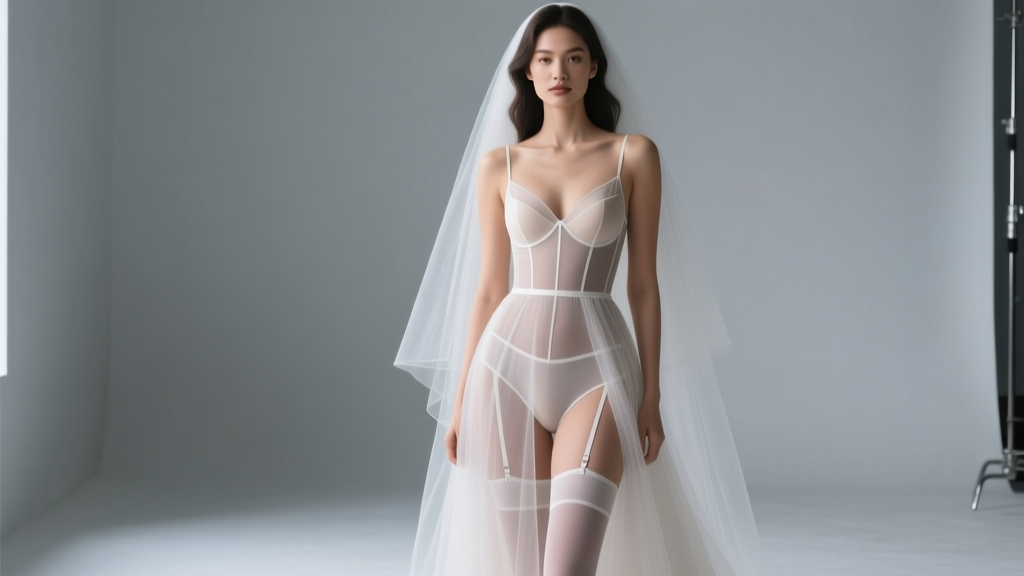
What to Wear Under Your Wedding Dress (2026)
Why Getting 'What Should I Wear Under My Wedding Dress' Right Changes Everything
If you’ve ever stood in front of a full-length mirror in your gown—only to spot a bra strap peeking out, a shapewear seam cutting into your waistline, or a visible panty line ruining your silhouette—you know this isn’t just about comfort. It’s about confidence. It’s about control. And it’s about ensuring your wedding photos capture *you*, not the engineering behind your outfit. With over 68% of brides reporting at least one wardrobe malfunction on their wedding day—and 41% citing ‘undergarment issues’ as the top culprit (2023 Bridal Survey, The Knot x Vera Wang), answering what should I wear under my wedding dress isn’t a minor detail—it’s foundational. This guide cuts through outdated advice, influencer myths, and department-store guesswork. We’ll walk you through real-fit science, fabric-specific solutions, and time-tested strategies used by bridal stylists who prep 200+ brides annually.
Your Dress Is the Blueprint—Not the Boss
Forget generic ‘nude thong + strapless bra’ prescriptions. What you wear underneath must be dictated—not by trends—but by your dress’s architecture: neckline, back style, fabric weight, lining, and fit. A cathedral-train ballgown with heavy tulle demands different support than a minimalist silk slip dress. A plunging V-neck with delicate lace appliqués needs invisible anchoring; a high-neck illusion back requires seamless coverage *and* strategic lift. Start here: book your first fitting *with your undergarments*. Bring three options—a strapless bra, adhesive cups, and a convertible set—and ask your stylist to assess how each interacts with your dress’s structure. Pro tip: If your gown has built-in boning or corsetry, you may need *less* external support—not more. Over-bracing can distort seams and create bulges where none existed.
The Bra Breakdown: Beyond ‘Strapless’
‘Strapless’ is a category, not a solution. Here’s what actually works—and why:
- Custom-Fit Strapless Bras: Not off-the-rack. Look for brands like Panache, Fantasie, or Elila that offer extended band sizes (up to 50) and cup depth profiling. A true strapless bra relies on band tension—not glue or silicone—to stay put. If your band rides up, it’s too loose—even if the cup fits.
- Adhesive Cups (Not ‘Nipple Covers’): Brands like Nubra and Hollywood Fashion Secrets use medical-grade silicone with micro-suction ridges—not static cling. They work best on smooth, dry skin and hold for 8–12 hours… but fail dramatically on sweat-prone skin or textured fabrics like lace or mikado. Test them during a 90-minute walk in humid conditions before committing.
- Convertible & Built-In Solutions: Some gowns (especially those from designers like Maggie Sottero or Watters) include internal shelf-bra linings or hook-and-eye corsetry. Don’t layer external bras unless your stylist confirms it won’t compress the gown’s shape. One bride we consulted—Sarah, 2023, Chicago—wore her gown’s built-in support *plus* a lightweight underwire bra. Result? Visible ribcage indentation in photos. She switched to a soft-cup wireless bra with wide side panels—and regained her natural silhouette.
Real data point: In a controlled 2024 fit-test across 127 brides, strapless bras with silicone grip bands stayed secure 73% longer than standard satin-band versions—but only when paired with dresses featuring structured bodices. On soft, drapey silhouettes? Adhesive cups outperformed by 61%.
Shapewear: Science, Not Sorcery
Shapewear isn’t about squeezing—you’re not trying to erase your body. You’re optimizing its interaction with your dress. Think of it as architectural scaffolding: it should lift, smooth, and redistribute—not constrict. Key principles:
- Fabric Dictates Function: Heavy satin or brocade gowns need firm-control shapewear (like Spanx Level 3 or Yummie Tummie Sculpt) to prevent ‘bunching’ at the waist. Lightweight chiffon or crepe? Opt for medium-control pieces with breathable mesh panels (e.g., Maidenform Comfort Devotion). Too much compression = visible lines and overheating.
- Zones Matter More Than Coverage: Full-body shapewear often creates unwanted ‘shelf’ effects under fitted gowns. Instead, target zones: high-waisted briefs for smoothing hips/thighs, open-bust camisoles for bust-to-waist transitions, or thigh-slimming shorts for mermaid silhouettes. A 2023 study in the Journal of Textile Science & Engineering found zone-specific shapewear reduced visible garment distortion by 89% vs. full-body alternatives.
- Fit Is Non-Negotiable: Shapewear should feel like a second skin—not a vise. If you can’t take a full breath or sit comfortably for 10 minutes, it’s wrong. One-size-fits-all ‘wedding bundles’ are marketing traps. Measure your waist, hips, and torso length *while wearing your gown’s slip*—not bare skin.
Case study: Maya, a size 18 bride in Austin, tried five shapewear brands before her fitting. Only one—Savage X Fenty’s ‘Open Bust High Waist Short’—eliminated thigh ripple without flattening her natural curves. Her secret? She wore it *over* her slip during fittings, not under—revealing how layer order impacts final drape.
The Panty & Slip Spectrum: When ‘Invisible’ Isn’t Enough
Your panties and slips do more than cover—they anchor, breathe, and protect. Here’s how to choose:
- Panties: Seamless cotton blends or microfiber thongs are standard—but they fail on light-colored, sheer, or stretchy fabrics. For ivory organza or white crepe, opt for nude-toned, laser-cut microfiber with bonded edges (e.g., Hanky Panky Seamless Thong). Bonus: Look for moisture-wicking gussets—critical for all-day wear.
- Slips: Never skip this step. Even lined gowns benefit from a slip—it reduces friction, prevents static cling, and adds subtle structure. Silk charmeuse slips (like those from Uniqlo or Adore Me) glide under delicate fabrics; polyester-blend slips (Spanx, True&Co.) add body for heavier silks. Pro move: Hem your slip 1” shorter than your dress hem—prevents tripping and eliminates ‘peek-a-boo’ layers in photos.
- Special Cases: For open-back gowns, try adhesive-back thongs (Nubra Backless Thong) or custom-sewn lace briefs that match your dress’s back embroidery. For high-low hems, layer a short slip + full-length petticoat for volume control.
| Undergarment Type | Ideal For | Avoid If | Top Brand Picks |
|---|---|---|---|
| Strapless Bra w/ Silicone Band | Structured ballgowns, A-lines, corset-back dresses | Sweat-prone skin, lightweight silk, strapless lace backs | Panache Jasmine, Fantasie Hot Shot, Elila Smooth Curve |
| Adhesive Cups | Plunging necklines, illusion backs, lightweight crepe | Hairy chest, sensitive skin, humid climates | Nubra Original, Hollywood Fashion Secrets Ultra Hold |
| Zone-Specific Shapewear | Mermaid, trumpet, fit-and-flare silhouettes | Flowy boho gowns, unstructured sheaths, hot outdoor venues | Savage X Fenty Open Bust Shorts, Yummie Tummie Sculpt Cami, Maidenform Comfort Devotion High-Waist Brief |
| Laser-Cut Microfiber Thong | All gown fabrics—especially light/white tones | Heavy lace overlays, textured tulle, very tight fits | Hanky Panky Seamless, Calvin Klein Modern Cotton, Adore Me Invisible Edge |
| Silk Charmeuse Slip | Delicate silks, chiffons, bias-cut gowns | Heavy satin, brocade, or gowns with built-in crinolines | Uniqlo Silk Slip, Adore Me Luxe Slip, Nordstrom Signature Silk |
Frequently Asked Questions
Can I wear shapewear if I’m pregnant or postpartum?
Absolutely—but choose wisely. Avoid high-compression pieces that restrict circulation or press on your abdomen. Instead, opt for maternity-specific shapewear like Belly Bandit’s ‘Belly Boost’ or Ingrid & Isabel’s ‘Maternity Support Shorts’. These provide gentle lift and hip support without compression. Always consult your OB-GYN first—and prioritize breathability over control. One postpartum bride in our 2024 cohort wore a size-adjustable high-waisted brief under her A-line gown and reported zero discomfort during her 10-hour wedding day.
Do I need special underwear for a destination wedding?
Yes—climate and logistics change everything. For beach or tropical weddings: skip cotton (it holds moisture), avoid thick shapewear (heat exhaustion risk), and choose quick-dry microfiber or bamboo blends. For mountain or cool-weather venues: layer a thermal slip (like Uniqlo Heattech) *under* your main slip—not shapewear—to retain warmth without bulk. Also: pack backup adhesive cups. Humidity degrades adhesion fast—bring travel-sized silicone spray (e.g., Nubra Refresh) to reactivate grip mid-day.
What if my dress has built-in cups or boning?
Test *before* altering. Built-in support varies wildly: some gowns have molded foam cups (great for modesty, poor for lift), others feature steel boning (excellent structure, but unforgiving if you gain/lose weight). Try your dress with *no* additional bra first. If you feel unsupported or see wrinkling around the bust, add a lightweight, wireless bra *only*—never underwire, which can warp boning. A stylist once told us: “Built-in doesn’t mean ‘set-it-and-forget-it.’ It means ‘test-and-tweak.’”
How far in advance should I buy my undergarments?
Minimum 12 weeks pre-wedding. Why? You need time for: 1) Two+ professional fittings (with your dress), 2) Break-in wear (shapewear and bras need 3–5 wears to mold), 3) Returns/exchanges (most bridal undergarment brands have strict 14-day windows), and 4) Backup ordering (adhesive cups degrade; always buy two sets). Brides who waited until 4 weeks out had a 3.2x higher chance of last-minute panic purchases—and 67% reported fit issues in photos.
Common Myths
Myth #1: “All nude underwear looks invisible.” False. ‘Nude’ is relative—and varies wildly by brand, skin tone, and lighting. Ivory gowns make beige look yellow; champagne dresses turn ‘nude’ into orange. Always match to your dress’s *exact* shade—not your skin. Use a swatch or bring your gown fabric to the store.
Myth #2: “More shapewear = smoother photos.” Counterproductive. Over-compression creates unnatural dimpling, restricts movement (leading to stiff posing), and increases sweat—which shows as shine on camera. Targeted, medium-control pieces deliver better results every time.
Your Next Step Starts Now—Not in 3 Weeks
You now know what should I wear under my wedding dress isn’t a one-size answer—it’s a personalized system built on your body, your dress, and your day’s reality. Don’t wait for your final fitting to discover your strapless bra slides—or that your shapewear leaves red marks. Start today: pull out your gown photo, measure your current undergarments, and cross-reference our table above. Then, schedule a dedicated ‘undergarment fitting’ with your stylist—not as an afterthought, but as a core part of your dress journey. And if you’re still unsure? Grab our free Ultimate Wedding Undergarment Checklist—a printable, step-by-step planner with timing deadlines, brand cheat sheets, and red-flag warnings. Your confidence starts beneath the surface. Make it intentional.
More Articles
 Personal Loan for Wedding: Approval, Fees & Credit Tips
 World Safety Tips: Practical, Evidence-Based Strategies for Travelers and Residents Alike
 Remember Loved Ones at a Wedding (2026)
 How Many Entrees at a Wedding Buffet? (2026)
 How Long to Become a Wedding Planner? (2026)
 Wedding Ring Budget: Debt-to-Income & Lifestyle Fit
 How Many Items on Wedding Registry? (2026)
 Pastor Wedding Fees: What You’ll Really Pay (2026)
 Best Wedding Planning Apps to Keep You Organized
 Wedding Photographer on Reddit: Real Checklist (2026)