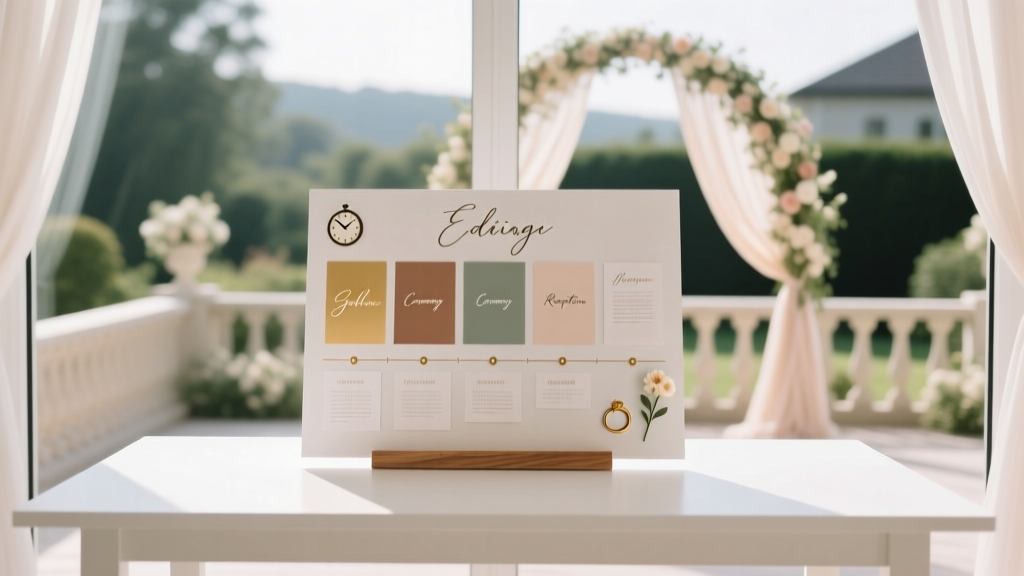
Wedding Planning How to Manage the Wedding Day Timeline
You’ve booked the venue, picked your people, and saved a thousand photos to your inspiration folder. Now comes the part that quietly determines whether your wedding day feels calm and joyful—or rushed and stressful: the wedding day timeline.
If you’re feeling overwhelmed, you’re not alone. Couples often tell me they’re worried about “running behind,” missing cocktail hour, or not getting enough time for photos. The good news is that a great timeline doesn’t have to be rigid. It’s a supportive plan that protects the moments you care about most, builds in breathing room, and keeps everyone moving in the same direction.
This guide will walk you through how to build and manage a realistic wedding timeline, with examples you can borrow, common mistakes to avoid, and pro-level tips that make the day feel effortless (even when real life happens).
What a Wedding Day Timeline Really Does (and Why You Need One)
A wedding timeline is more than a schedule. It’s the glue that connects your vendors, wedding party, and family to the same plan. A thoughtful timeline helps you:
- Reduce stress by setting clear expectations for the day
- Protect “must-have” moments like private vows, golden-hour photos, or a relaxed cocktail hour
- Coordinate vendors (photographer, hair and makeup, florist, transportation, DJ/band, catering)
- Prevent budget-wasting overtime fees (photography, venue, transportation, staffing)
- Create space for real joy—because you’re not constantly sprinting from one thing to the next
Before You Build Your Timeline: Gather the Key Details
Start with the non-negotiables. These fixed points will shape everything else.
Your timeline “inputs” checklist
- Ceremony start time (and any venue restrictions)
- Reception end time (including last call, music cutoff, exit rules)
- Venue access times (when you and vendors can arrive)
- Travel times between hotel, ceremony, photos, and reception (add buffer for traffic and parking)
- Hair & makeup start time and number of services
- Photo priorities (first look, family photos, wedding party portraits, sunset photos)
- Guest experience priorities (cocktail hour length, greeting line, special cultural traditions)
- Vendor contracted hours (photography, videography, DJ/band, planners, transportation)
Budget tip: Vendor overtime is one of the most common surprise costs. A timeline with buffers often costs less than a “tight” schedule that runs late and triggers extra hours.
The Timeline Building Method Wedding Planners Use
Instead of guessing, build your wedding day timeline backward from the ceremony and reception milestones.
Step-by-step: Create a realistic wedding day schedule
- Lock in ceremony start time (this is your anchor).
- Decide: first look or no first look (this changes photo timing dramatically).
- Place key photo blocks (couple portraits, wedding party, family formals).
- Schedule getting ready with extra cushion (hair/makeup always takes longer than expected).
- Map travel + arrival buffers (at least 10–20 minutes each transition).
- Build your reception flow (grand entrance, first dance, toasts, dinner, cake, open dance floor).
- Add 5–15 minute “breather buffers” around emotionally intense or logistically complex moments.
- Share a final version with vendors so everyone is planning from the same document.
Sample Wedding Day Timelines (Steal These)
Use these as a starting point and adjust based on your ceremony time, season, and how far locations are from each other.
Example 1: Wedding timeline with a first look (ceremony at 4:30 PM)
- 9:30 AM Hair & makeup begins (wedding party)
- 12:30 PM Photographer arrives (detail photos, getting ready candids)
- 1:15 PM Getting dressed (buffer included)
- 1:45 PM First look + couple portraits
- 2:30 PM Wedding party photos
- 3:00 PM Immediate family photos (pre-ceremony)
- 3:30 PM Hide away / refresh / private moment
- 4:00 PM Guests arrive, pre-ceremony music starts
- 4:30 PM Ceremony
- 5:00 PM Cocktail hour begins
- 5:10 PM Couple joins cocktail hour (because most photos are done)
- 6:00 PM Reception doors open / seating
- 6:15 PM Grand entrance + first dance
- 6:30 PM Dinner service begins
- 7:15 PM Toasts (keep to 2–3 speakers)
- 7:35 PM Open dancing
- 8:10 PM Sunset/golden hour photos (10–15 minutes)
- 9:30 PM Cake cutting or late-night moment
- 10:45 PM Last song
- 11:00 PM Exit
Example 2: Wedding timeline without a first look (ceremony at 5:00 PM)
- 10:00 AM Hair & makeup begins
- 1:00 PM Photographer arrives
- 3:15 PM Everyone dressed (aim early)
- 3:45 PM Individual portraits + wedding party (separate sides)
- 4:30 PM Downtime / touch-ups / pre-ceremony photos of venue
- 5:00 PM Ceremony
- 5:30 PM Cocktail hour begins (couple takes family photos)
- 5:35 PM Family formals (30–40 minutes)
- 6:15 PM Couple portraits (15–20 minutes)
- 6:30 PM Reception starts
- 6:45 PM Dinner begins
- 7:30 PM Toasts + parent dances
- 8:00 PM Open dancing
- 9:45 PM Optional sunset photos (quick)
- 10:30 PM Last song
Real-world scenario: If you’re skipping a first look because you want that ceremony reveal, plan for a slightly longer cocktail hour (75–90 minutes) or accept that you might miss part of it. Couples are often surprised by how long family photos take when relatives wander off.
Time Blocks to Plan Carefully (These Are the Usual Trouble Spots)
Hair and makeup: add more time than you think
- Plan 45–60 minutes per person for hair and 45–60 minutes for makeup (varies by style).
- Add a 30-minute buffer at the end for touch-ups and “where are my shoes?” moments.
- If you have a large wedding party, consider a second artist—it often costs less than the stress it saves.
Family photos: organize them like a mini production
Family formals are where timelines most commonly unravel. Create a short list and assign a helper.
- Keep it to 10–15 groupings if possible.
- Give your photographer the list at least 2 weeks ahead.
- Ask a confident relative or wedding party member to be your “family photo wrangler”.
Example groupings couples use:
- Couple + both sets of parents
- Couple + immediate family (siblings + partners + kids)
- Couple + each side’s extended family (grandparents, aunts/uncles, cousins)
- Couple + grandparents (separately too)
Transportation: plan for loading time
Even if the drive is 10 minutes, getting everyone into vehicles can take 15.
- Add 10–15 minutes for loading and parking at each location.
- Clarify who is riding where (especially after the reception).
- Build in a rain plan route if you’re taking photos offsite.
How to Run the Timeline on the Wedding Day (Without You Being the Manager)
Your job is to get married—not to watch the clock. The most peaceful weddings have one key ingredient: a point person who isn’t the couple.
Choose your “timeline owner”
- Best option: wedding planner or day-of coordinator
- Good option: venue coordinator (confirm what they do and don’t manage)
- Backup option: a trusted friend who’s organized and calm under pressure
Create a simple timeline packet
Share a one-page version with your vendors and VIPs. Include:
- Names + phone numbers for vendor leads
- Addresses and arrival times
- Ceremony start time and cue points (processional order, music cues)
- Photo schedule (including family formal list)
- Reception events timing (toasts, dances, cake, bouquet toss if you’re doing it)
Pro tip: Print 5–8 copies and hand them to your planner/coordinator, photographer, DJ/band lead, venue manager, and a reliable wedding party member.
Reception Timing: A Flow That Feels Fun (Not Forced)
A reception timeline should feel like a natural progression: welcome, connection, dinner, celebration. If you cram too many events back-to-back, guests get restless and dancing starts late.
A balanced reception structure (4–5 hour reception)
- 0:00–0:15 Grand entrance + quick welcome
- 0:15–0:25 First dance (optional) or straight into dinner
- 0:25–1:30 Dinner service
- 1:00–1:20 Toasts (during/after salads is often smooth)
- 1:30–1:45 Parent dances (if doing them)
- 1:45–end Open dancing + late-night moments (cake, dessert, outfit change, etc.)
Budget consideration: If your venue charges for extra staffing hours, place the high-attention moments (toasts, dances) earlier so dinner service and coordination can wrap efficiently.
Common Wedding Timeline Mistakes (and How to Avoid Them)
- Mistake: Not adding buffer time.
Fix: Add 5–10 minutes between each major block and 15–30 minutes before the ceremony. - Mistake: Trying to visit too many photo locations.
Fix: Choose one great spot near the venue. Fewer moves = more usable photo time. - Mistake: Scheduling family photos “whenever.”
Fix: Put family formals on the timeline with a firm start time and pre-communicate it to family. - Mistake: Overstuffing the reception with too many formal moments.
Fix: Pick the 2–3 moments you truly care about; let the rest be organic. - Mistake: Forgetting to feed yourselves.
Fix: Schedule 10 minutes after the ceremony to drink water, eat a bite, and breathe.
Wedding Planner Pro Tips for a Calm, On-Time Day
- Start hair and makeup earlier than feels necessary. Being “ahead” is the secret to a relaxed getting-ready experience.
- Plan a private moment after the ceremony. Even 5 minutes together can reset your nervous system.
- Use a “must-photograph” list, not a Pinterest shot list. Tell your photographer what matters emotionally (grandma’s locket, a sibling hug, a cultural tradition).
- Keep detail items in one box. Invitations, rings, vow books, heirlooms, perfume, loose florals—hand it to your photographer when they arrive.
- Communicate your priorities clearly. If you care most about guest experience, say that. If you care most about portraits, say that. Your vendors can help protect what matters.
Quick Checklist: Final Timeline Prep (Do This the Week Before)
- Confirm vendor arrival times and addresses
- Send the final timeline to all vendors and VIPs
- Finalize the family photo list and share it
- Confirm who is holding:
- Rings
- Marriage license
- Vows
- Vendor tips
- Emergency kit (safety pins, stain remover, blister pads, fashion tape)
- Confirm transportation pickup times and passenger lists
- Pack snacks and water for getting ready (and after the ceremony)
FAQ: Wedding Day Timeline Planning
How long should a wedding ceremony be?
Most ceremonies run 20–30 minutes. Religious or cultural ceremonies may be 45–60+ minutes. Ask your officiant for an estimated duration so you can plan cocktail hour and photo timing accurately.
Is a first look worth it for the timeline?
A first look often creates a smoother timeline because you can do many photos before the ceremony. Couples who want to attend cocktail hour (and feel less rushed) tend to love it. If you’re set on the aisle reveal, you can still have a calm day—you’ll just want a longer cocktail hour and a tight family photo plan.
How long do family photos take?
Plan 30–40 minutes for immediate family and up to 60 minutes if you have many groupings or complex dynamics. The biggest time-saver is having everyone notified in advance and ready to go.
What time should I start hair and makeup?
Work backward from when you need to be fully dressed. Many couples start hair and makeup 4–6 hours before departure time, depending on the number of people and artists. Your hair and makeup team can estimate timing—then add a buffer.
How much buffer time should we include?
At minimum, build in:
- 10–15 minutes for each transition (loading cars, walking to spaces, touch-ups)
- 15–30 minutes before the ceremony (guests arriving, last-minute needs)
- 5–10 minutes after major moments (ceremony, speeches) to breathe
Who should keep the timeline on track?
Your planner or day-of coordinator is ideal. If you don’t have one, ask the venue coordinator what they handle, and appoint a calm, assertive friend to help cue the wedding party and family. Your photographer and DJ also help a lot—when they have the final timeline.
Your Next Steps (So You Can Actually Enjoy the Day)
Start by choosing your ceremony time, then decide whether you want a first look. From there, build your timeline around photos, travel, and the guest experience you want. Add buffers, share the plan early, and hand the day-of management to someone you trust.
If you’d like extra support, keep a folder with your timeline drafts, vendor contacts, and photo list so everything lives in one place. You’ll feel the difference the moment wedding week arrives.
Wishing you a wedding day that feels unhurried, joyful, and fully yours. For more practical planning help, explore the rest of our wedding planning guides on weddingsift.com.
More Articles
 Wedding Savings: Real Cost by City & Guest Count (2026)
 Wedding Ring Budget: Smart Spending by Income & Values
 Wedding Costs 2026: Who Pays What & Save $3,800
 Wedding Congratulations Messages That Actually Work
 Wedding RSVP Dropout Rate by Guest Type (2026)
 How to Buy Wedding Rings: A Stress-Free Guide (2026)
 Wedding Photographer Timeline: How Long You Really Need
 DIY Wedding Garland: Easy 3-Hour Fake Flower Version (2026)
 What To Wear With Green Dress For A Wedding (2026)
 World Safety Tips: Practical, Evidence-Based Strategies for Travelers and Residents Alike