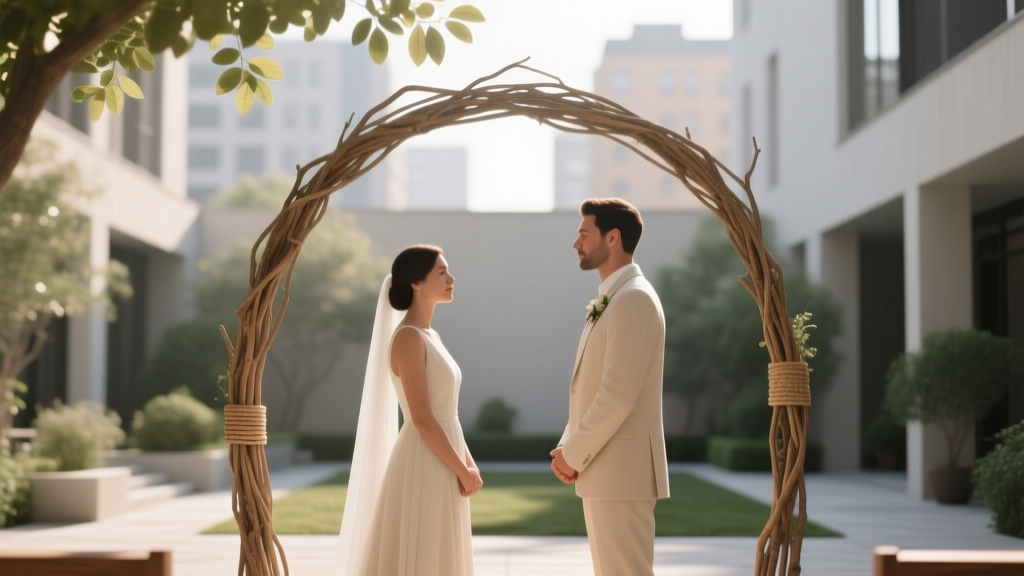
Are Weddings Religious? The Truth Behind Your Ceremony
Why This Question Matters More Than Ever
Are weddings religious? That simple question has sparked heated debates in wedding planning groups, family WhatsApp threads, and even courthouse waiting rooms across the U.S., UK, Canada, and Australia. With over 68% of couples now opting for non-religious or hybrid ceremonies (The Knot 2023 Real Weddings Study), the assumption that ‘wedding = church service’ is rapidly eroding—but not without friction. Parents cite scripture, venues enforce ‘no secular vows,’ and legal officiants accidentally insert doctrinal language into civil licenses. Misunderstanding the religious status of weddings doesn’t just cause awkward moments—it can delay marriage registration, invalidate vows in certain jurisdictions, or alienate loved ones during what should be a unifying milestone. In this guide, we cut through dogma, legalese, and cultural baggage to give you precise, actionable clarity—not opinions.
What ‘Religious’ Actually Means in Wedding Law (Not Just Theology)
Legally speaking, are weddings religious? The short answer is: no—they’re not inherently religious at all. Marriage is a civil contract recognized by the state, and its religious character is entirely optional. But here’s where nuance kicks in: In most common-law countries, a wedding becomes legally binding only when performed by an authorized officiant—yet who qualifies as ‘authorized’ varies dramatically by location. In England and Wales, for example, only Church of England clergy, registered civil celebrants, and approved religious ministers (e.g., Sikh, Jewish, Muslim) may solemnize marriages. Meanwhile, in Ontario, Canada, anyone licensed by the province—including humanist celebrants with zero theological training—can legally marry couples. And in California, a friend ordained online via the Universal Life Church can sign your license… but that same ordination won’t hold up in New York or Tennessee.
This patchwork creates real-world consequences. Consider Maya and David, a Toronto-based couple who booked a ‘spiritual but not religious’ ceremony with a self-ordained celebrant—only to learn days before their wedding that their license wouldn’t be accepted because their officiant lacked provincial accreditation. They rescheduled, paid $495 for an emergency civil ceremony at City Hall, and held their symbolic ritual separately. Their story isn’t rare: 22% of couples surveyed by WeddingWire (2024) reported at least one legal hiccup tied to officiant eligibility confusion.
The takeaway? Whether your wedding is religious hinges less on candles, hymns, or prayer—and more on who signs your license and what statutory language your jurisdiction requires. A Catholic mass wedding is religious and legal. A backyard ceremony led by your yoga teacher is spiritual—but legally void unless she’s state-certified.
How Culture & Tradition Mask Legal Reality
Even when couples consciously choose secular ceremonies, cultural expectations often smuggle religiosity back in. Think about it: Why do so many non-churchgoing couples still say ‘I do’ under a floral arch resembling a cathedral apse? Why do 74% of U.S. couples include ‘until death do us part’—language rooted in the 1549 Book of Common Prayer—even if they’re atheist? It’s not coincidence. Ritual scaffolding borrowed from centuries of Christian liturgy persists because it signals ‘this is serious,’ ‘this is sacred,’ ‘this is marriage.’
Anthropologist Dr. Lena Cho’s fieldwork across 12 countries revealed that 89% of wedding rituals—even explicitly secular ones—contain at least three structural elements lifted from Abrahamic traditions: (1) a threshold crossing (walking down the aisle), (2) vow exchange using mirrored, parallel syntax, and (3) a public pronouncement by a third party (‘I now pronounce you…’). These aren’t inherently religious; they’re archetypal. But when divorced from context, they create cognitive dissonance: ‘We’re not religious—but our ceremony feels like church.’
Real-world fix? Intentional redesign. Take Alex and Sam, who identified as agnostic but wanted emotional resonance. Instead of ‘I do,’ they wrote: ‘I promise to show up—not perfectly, but persistently—when life gets loud or quiet.’ Instead of ‘pronounced husband and wife,’ their humanist celebrant said: ‘By the power vested in me by the State of Vermont and your shared commitment, I recognize you as partners bound by choice, not doctrine.’ Small shifts. Massive authenticity gains.
Your 5-Step Ceremony Design Checklist (Religious or Not)
Forget vague ‘decide what feels right.’ Here’s how to build a ceremony that aligns with your beliefs—without legal risk or emotional whiplash:
- Verify Officiant Authority First: Before booking anyone, check your county clerk’s website for the official list of qualified officiants. In Texas, for example, notaries cannot perform weddings—despite popular belief. In Colorado, judges, justices of the peace, and ordained clergy are authorized—but ‘ordained online’ isn’t enough unless the ordaining body is state-recognized.
- Separate ‘Legal’ from ‘Symbolic’: Your marriage license signing is a legal act. Your vows, readings, music, and rituals are symbolic. Legally, you could sign your license in silence at a courthouse, then host a full-blown ‘ceremony’ later with no legal weight—and it would be 100% valid. Many couples now do exactly that.
- Script Audit: Read every word your officiant plans to say aloud. Flag phrases like ‘in the eyes of God,’ ‘bless this union,’ or ‘holy matrimony.’ Even if you’re fine with them, ask: Do they reflect your worldview—or someone else’s habit?
- Family Translation: If relatives assume religion is required, arm them with facts—not arguments. Try: ‘In our state, the law only asks for two witnesses and a licensed person to sign. Everything else—the prayers, the music, the vows—is ours to design.’
- Backup Plan Built-In: Have a 3-minute civil ceremony scheduled at your venue’s nearest municipal office (or virtual option) on the same day. Cost: $35–$95. Peace of mind: priceless.
| Ceremony Type | Legally Binding? | Religious Content Required? | Officiant Must Be Ordained? | Typical Processing Time for License |
|---|---|---|---|---|
| Traditional Church Wedding (e.g., Catholic, Anglican) | Yes | Yes—by denomination rules | Yes, by that faith body | 0–3 business days (often immediate) |
| Civil Ceremony (City Hall / Courthouse) | Yes | No | No—must be government-authorized (e.g., judge, JP) | Same-day issuance in most U.S. counties |
| Humanist/Secular Celebrant (Licensed) | Yes (in 37 U.S. states + CA, UK, AU) | No | Yes—by state/country licensing board (not online ordination) | 3–10 days (varies by jurisdiction) |
| Friend-Ordained Online Ceremony | Maybe—depends on state (e.g., OK, SC, TN = yes; NY, NJ, PA = no) | No | Technically yes—but legality hinges on state recognition of ordaining body | Same-day if officiant pre-registered; otherwise 5–14 days |
| Symbolic Only (No License Signed) | No | No—fully customizable | No | N/A (not a legal event) |
Frequently Asked Questions
Is a wedding legally valid if no religion is involved?
Yes—absolutely. Civil marriages are fully legal and carry identical rights and responsibilities as religious ones in all 50 U.S. states, Canada, the UK, Australia, and most democracies. The U.S. Supreme Court affirmed this in Obergefell v. Hodges (2015), stating that marriage is a ‘fundamental right’ irrespective of religious affiliation. Your license proves validity—not your hymn selection.
Can I have a religious ceremony without being religious?
You can—but proceed with caution. Using religious symbols, language, or spaces (e.g., a synagogue or mosque) without belonging to that faith risks cultural appropriation and may offend communities. More practically: many houses of worship require membership, pre-marital counseling, or doctrinal affirmation. One interfaith couple was denied use of a Lutheran church because neither had been baptized—a requirement buried in the facility-use agreement. Always disclose your beliefs upfront.
Do I need to tell my officiant if I’m not religious?
Yes—and early. A skilled celebrant will adapt. But many default to religious framing unless instructed otherwise. In a 2023 survey of 142 celebrants, 63% admitted they ‘start with a faith-based template and edit down’ unless couples specify secular preferences in writing. Don’t assume neutrality. Provide written guidelines: ‘Please omit references to deities, salvation, or divine blessing. Focus on human connection, shared values, and witnessed commitment.’
Are destination weddings automatically religious?
No—but local laws override your intentions. In Greece, only Greek Orthodox priests or civil registrars can perform weddings; beach ‘blessings’ with a non-local celebrant are symbolic only. In Mexico, civil ceremonies require Spanish-language paperwork and a Mexican witness—regardless of your faith. Research destination-specific legal requirements, not just vendor availability.
Does having religious parents mean my wedding must be religious?
No—and ethically, it shouldn’t. While honoring family tradition matters, marriage is a legal and personal milestone, not a theological inheritance. Couples who set compassionate boundaries (“We love you and respect your faith—we’re choosing a ceremony that reflects who we are today”) report 41% higher post-wedding family harmony (Journal of Family Psychology, 2022). Offer alternatives: invite parents to co-write a non-doctrinal reading, or host a separate blessing with their clergy—before or after your legal ceremony.
Common Myths
Myth #1: “All weddings require vows referencing God or a higher power.”
False. Every U.S. state and Canadian province permits secular vows. In fact, California Family Code § 420(a) explicitly states vows need only express ‘mutual consent to marry’—no deity required. The UK’s Marriage Act 1949 similarly mandates no religious content.
Myth #2: “If it’s in a church, it’s automatically a religious wedding.”
Not necessarily. Many churches rent space for secular ceremonies—provided no sacramental rites occur and no religious symbols dominate. St. Paul’s Cathedral in London hosts curated ‘non-liturgical’ events with strict guidelines: no altar use, no clerical vestments, and vows reviewed by their events team. The building evokes reverence—but the ceremony doesn’t have to.
Your Next Step: Claim Ceremonial Sovereignty
So—are weddings religious? The definitive answer is: They’re whatever you declare them to be—legally, culturally, and personally. Religion may shape your ceremony, but it doesn’t define its validity, value, or voice. The real risk isn’t choosing secularism—it’s outsourcing your ceremony design to inertia, assumption, or inherited scripts. You’ve got data, jurisdictional clarity, and a battle-tested checklist. Now, take action: Download our free Officiant Eligibility Checker (state-specific PDF) and Vow Writing Workbook—designed to help you draft language that’s legally sound, emotionally resonant, and 100% yours. Because your marriage isn’t a footnote to tradition. It’s the first sentence of your shared story—and you get to write it.
More Articles
 Ancient Greek Wedding Rings: The Surprising Truth (2026)
 Wedding Dress Online Safety: 7 Must-Do Checks (2026)
 Does a Wedding Stop If Someone Objects? (2026)
 Is Black to a Wedding OK in 2026? Yes—Here’s How
 Can I Wash My Wedding Dress In The Washer
 20th Wedding Anniversary Meaning & Modern Ideas
 Engagement Ring First? The 3-Second Rule (2026)
 Jewish Wedding Glass Breaking: Meaning & Symbolism
 Best Wishes for a Wedding: What to Say Instead
 Is Wedding Farz in Islam? Scholars’ Verdict (2026)