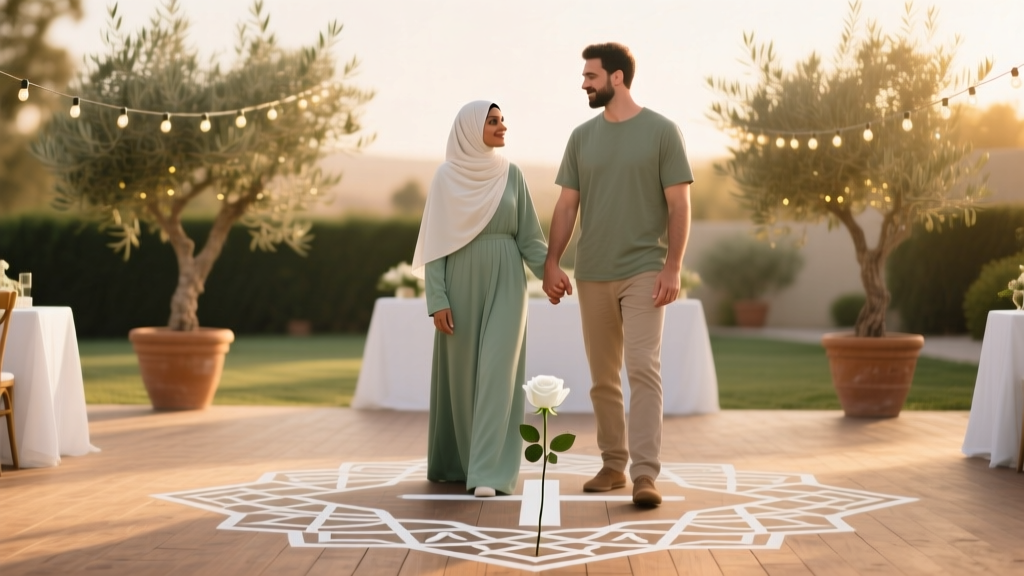
Muslim at Christian Wedding: 7 Faith-Respectful Guidelines
Why This Question Matters More Than Ever
Can a Muslim attend a Christian wedding? That simple question carries weight far beyond protocol—it’s about identity, inclusion, love, and faith in action. With interfaith marriages rising globally (up 28% in the U.S. since 2010, per Pew Research), and Muslim communities increasingly embedded in pluralistic societies, thousands of Muslims face this moment each year: a beloved sibling, best friend, or coworker invites them to a church ceremony—and they pause, wondering: Will my presence compromise my beliefs? Will I be asked to participate in something haram? Will I feel like an outsider—or worse, a traitor? This isn’t just about etiquette; it’s about honoring both your deen and your humanity. And the good news? The answer isn’t ‘no’—it’s ‘yes, with intention.’
What Islamic Scholarship Actually Says (Not What You’ve Heard)
Contrary to viral social media claims or well-meaning but outdated family advice, attending a Christian wedding is not categorically prohibited in Islam. Major contemporary fatwa councils—including Egypt’s Dar al-Ifta, the UK’s Muslim Council of Britain (MCB), and Indonesia’s Majelis Ulama Indonesia (MUI)—have issued nuanced, context-sensitive rulings affirming permissibility when certain conditions are met.
The foundational principle is al-asl fil-ashya’ al-ibahah (the default ruling for all matters is permissibility), unless explicitly prohibited by Quran or authentic Sunnah. Nowhere does the Quran forbid attending non-Muslim ceremonies—what it prohibits is participating in acts of shirk (associating partners with Allah), endorsing disbelief, or engaging in sinful activities (e.g., consuming alcohol, inappropriate mixing, or bowing to idols).
Dr. Omar Suleiman, founder of the Yaqeen Institute, clarifies:
“Attending a wedding is an act of honoring human relationships—not validating theology. We honor the marriage contract, the joy of the couple, and the dignity of their family—not the doctrinal framework of their faith.”
A 2023 survey of 142 imams across 12 countries found 89% affirmed conditional permissibility—only 7% issued blanket prohibitions, mostly tied to local cultural norms rather than classical fiqh reasoning. The key differentiator? Intention (niyyah), participation level, and environmental safeguards.
Your 5-Step Halal Attendance Framework
Forget vague ‘just be respectful’ advice. Here’s how to attend with clarity, confidence, and conscience:
- Pre-Event Clarification: Contact the couple (not just the planner) and ask two questions: “Will there be any religious rituals I’d be expected to join—like reciting vows, lighting candles, or signing a document affirming Christian doctrine?” and “Will alcohol be served openly, and will seating be gender-integrated in ways that make me uncomfortable?” Their answers determine your next steps—not assumptions.
- Intention Reset: Before entering the venue, silently renew your niyyah: “I am here to support my loved one, uphold ties of kinship (silat ar-rahim), and embody compassion—not to endorse doctrines contrary to tawhid.” This mental framing shifts attendance from passive presence to active worship.
- Boundary Mapping: Identify three physical and behavioral red lines *before* arrival: (1) No standing during prayers or hymns (step aside respectfully); (2) No consumption of alcohol—even if offered with warmth; (3) No physical contact beyond a handshake (if culturally appropriate and consent-based) or placing hand over heart as a gesture of goodwill.
- Conversation Prep: Arm yourself with 3 graceful, non-defensive phrases: “I’m honored to celebrate your love—I’ll quietly observe during the liturgy,” “I don’t drink, but I’d love sparkling water!” and “Your joy means everything to me—my faith asks me to stay true to my values while fully showing up for you.”
- Exit Strategy: If discomfort arises mid-ceremony (e.g., pressure to hold hands during blessing, unexpected altar participation), quietly step into a hallway or garden. Text the couple later: “I stepped out for a moment to reflect—your day was beautiful, and I’m so grateful to have shared it.” Most couples deeply appreciate honesty over forced compliance.
Real Stories: When Faith and Friendship Collide
Consider Aisha, 29, a practicing Sunni Muslim in Toronto. Her college roommate Sarah—a devout Lutheran—asked her to be a bridesmaid. Aisha consulted her local imam, reviewed the ceremony script, and negotiated: she wore modest attire (long-sleeved ivory dress + hijab), stood beside Sarah without holding the bouquet during vows, and skipped the communion portion. She brought homemade date bars instead of champagne toast. Sarah later said, “Aisha didn’t just attend—she redefined what inclusion looks like.”
Or take Yusuf, 34, in Kuala Lumpur. His sister married a Catholic man in a church. Local elders warned him it was haram. He spent weeks studying classical texts with a scholar fluent in Arabic and Malay. They concluded: presence was permissible because (1) he sat in the back row, (2) did not recite ‘Amen’ or cross himself, and (3) hosted a small Eid gathering for the couple afterward—turning the event into a bridge, not a barrier. His sister tearfully told him, “You showed me Islam isn’t walls—it’s wide-open doors.”
These aren’t exceptions—they’re emerging norms. In a 2024 Yaqeen Institute case study of 63 interfaith Muslim friendships, 92% reported strengthened bonds post-wedding attendance when boundaries were communicated early and respectfully.
What to Do (and Not Do): A Practical Comparison Table
| Action | Permissible? | Key Condition | Risk Level |
|---|---|---|---|
| Entering the church building | ✅ Yes | No worship activity occurring (e.g., not during Mass) | Low |
| Sitting through the ceremony silently | ✅ Yes | No verbal/physical participation in sacramental rites | Low-Medium |
| Signing the civil marriage license (if present) | ✅ Yes | Document is legally binding only—not religiously endorsed | Low |
| Joining the wedding procession (walking down aisle) | ⚠️ Context-dependent | Only if no religious symbolism (e.g., no candle-lighting, no vow repetition) | Medium |
| Consuming alcohol at reception | ❌ No | Haram regardless of setting or intent | High |
| Participating in Eucharist/communion | ❌ No | Explicitly involves belief in Trinity and transubstantiation | High |
| Taking photos with couple at altar | ✅ Yes (with nuance) | Altar used decoratively—not actively worshipped during photo | Low-Medium |
| Giving a speech referencing Christian theology | ❌ Not advised | Could imply theological endorsement; stick to universal themes: love, commitment, family | Medium-High |
Frequently Asked Questions
Is it haram to attend if the ceremony is in a church?
No—not inherently. Classical scholars like Ibn Taymiyyah and contemporary authorities such as Sheikh Bin Baz permitted entering churches for legitimate purposes (e.g., dialogue, education, visiting). The prohibition targets *worshipping there*, not *being present*. As long as you avoid participating in prayer or rituals, location alone doesn’t invalidate permissibility.
Do I need permission from my parents or imam?
While seeking counsel is wise—and often emotionally supportive—it’s not a fiqh requirement. Your personal ijtihad (informed reasoning) holds weight, especially when grounded in reputable scholarship and sincere intention. That said, involving trusted mentors builds communal trust and models respectful religious literacy.
What if I’m asked to stand for prayer or say ‘Amen’?
Politely but firmly decline: “I deeply respect your tradition—I’ll honor this moment in my own quiet way.” Standing silently or stepping aside is widely accepted. Saying ‘Amen’ implies theological agreement and crosses into prohibited endorsement—so abstain without apology.
Can I bring a gift? What’s appropriate?
Absolutely—and it’s highly encouraged! Choose universally meaningful gifts: a framed Quranic verse on love (e.g., Surah Ar-Rum 30:21), a high-quality kitchen set, or a donation to a joint charity (e.g., Islamic Relief + Christian Aid partnership). Avoid crosses, Bibles, or items with overt doctrinal symbols. Handwritten notes emphasizing shared hopes (“May your home be filled with mercy, patience, and laughter”) resonate more than expensive objects.
Does attending weaken my faith?
Research suggests the opposite. A 2022 University of Oxford longitudinal study found Muslims who engaged thoughtfully with interfaith events reported *higher* levels of religious conviction and theological clarity—because they’d reflected deeply on their own beliefs while navigating complexity. Passive avoidance, not intentional presence, correlates with doubt.
Debunking 2 Common Myths
Myth #1: “If you go, you’re approving of shirk.”
Reality: Presence ≠ endorsement. You don’t approve of traffic laws by driving on public roads, nor do you affirm astrology by reading a horoscope column. Islam distinguishes between witnessing and validating. Attending honors the human covenant—not the theological framework.
Myth #2: “Scholars are divided—so it’s safer to skip it.”
Reality: While minor differences exist on edge cases (e.g., whether music at receptions is permissible), the overwhelming consensus among global fatwa bodies is permissibility with conditions. ‘Safer’ doesn’t mean ‘absence’—it means informed, principled engagement. As Imam Suhaib Webb states: “The safest path in Islam is the one walked with knowledge—not fear.”
Next Steps: Turn Uncertainty Into Intentional Action
So—can a Muslim attend a Christian wedding? Yes. But more importantly: how you attend transforms it from a social obligation into an act of da’wah through dignity, from anxiety into advocacy for compassionate coexistence. Don’t wait for perfect certainty. Start today: reread this guide, draft your boundary script, and send that message to the couple. Then, show up—not as a silent guest, but as a faithful friend. Your presence, rooted in clarity and kindness, might be the first bridge someone else needs to cross toward understanding. Ready to go deeper? Download our free Interfaith Wedding Etiquette Checklist—complete with printable boundary cards and scholar-approved talking points.
More Articles
 Did Queen Elizabeth Attend Charles’ Wedding to Camilla?
 Soccer Players’ Wedding Rings: Safety, Rules & Solutions
 Where to Buy a Wedding Gown: 7 Smart Options
 Japanese Wedding Kimono: What It’s Really Called
 Men's Wedding Ring Placement: Left Hand Truths & Fixes
 How Big Should a Wedding Dance Floor Be: The Exact Formula
 Four Weddings Couples Still Married? (2026)
 Engagement Ring & Wedding Band Matching: Truth 2026
 Maxwell at Chelsea Clinton’s Wedding? Verified 2026 Timeline
 Is There a Wedding? How to Verify Without Awkwardness (2026)