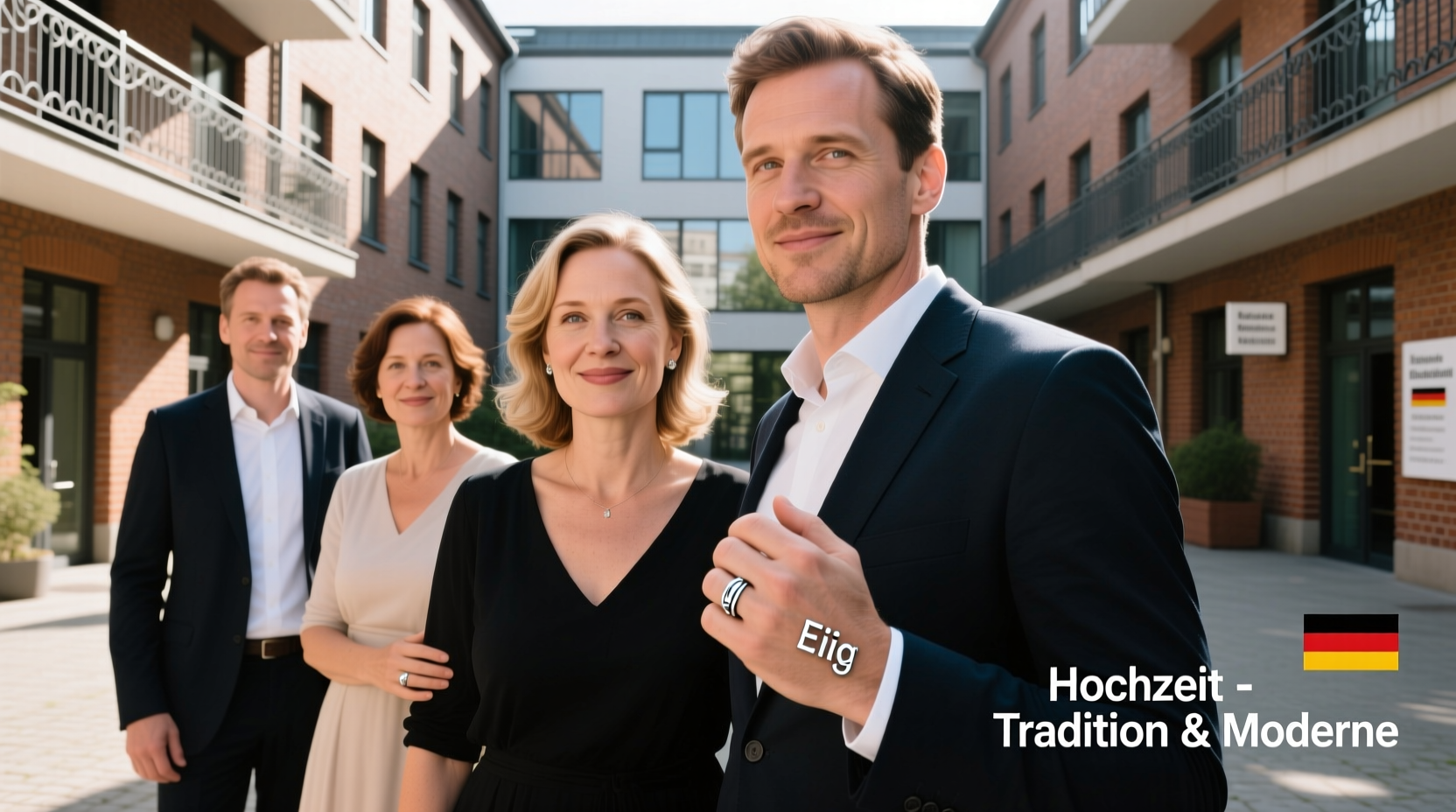
Germany’s right-hand ring tradition—plus why some Berlin couples flip the script entirely
Yes, Germans do wear wedding rings on the right handâa long-standing cultural tradition that distinguishes German wedding customs from those in countries like the United States or the United Kingdom. Understanding why Germans wear wedding rings on the right hand offers insight into regional symbolism, historical influences, and broader European practices surrounding marriage rituals. While many English-speaking nations place the wedding band on the fourth finger of the left hand, citing an ancient belief in the 'vena amoris' (vein of love) running directly to the heart, Germany follows a different path rooted in religious, historical, and societal norms. This article explores the reasons behind this practice, compares it with global traditions, and provides practical guidance for couples navigating cross-cultural weddings or expatriate life in Germany.
Historical Origins of the Right-Hand Wedding Ring Tradition
The placement of wedding rings on the right hand in Germany can be traced back centuries, influenced heavily by religious doctrine and regional customs. In both Protestant and Catholic traditions within Germany, the right hand has long been associated with honor, strength, and commitment. During medieval times, legal documents, oaths, and solemn promises were often sealed with the right hand, reinforcing its symbolic importance.
In Christian liturgy, particularly in Lutheran and Catholic ceremonies common in Germany, the right hand is seen as the 'hand of faith.' When exchanging vows, placing the ring on the right hand signifies a sacred pledge made before God. Unlike in some Western cultures where the left-hand ring finger is believed to have a direct vein to the heart, Germans emphasize spiritual and legal symbolism over anatomical myth.
This divergence became more pronounced after the Reformation, when Protestant regions solidified their own ceremonial practices separate from Roman Catholic traditions. Over time, wearing the wedding band on the right hand became standardized across much of Germany, regardless of denomination.
Regional Variations Within Germany
While the general rule holds trueâGermans wear wedding rings on the right handâthere are subtle regional differences worth noting. In southern Germany, especially in Bavaria and Baden-Württemberg, adherence to the right-hand tradition is nearly universal. These areas tend to maintain strong ties to traditional values and Catholic influence, which reinforces conservative customs.
In contrast, some urban centers in northern and eastern Germany, such as Berlin, Hamburg, or Leipzig, may see greater variation. Younger generations or intercultural couples sometimes adopt the left-hand style, particularly if one partner comes from a country where that is standard. However, even in these cases, the default assumption in formal settings, gift-giving, and jewelry selection remains the right hand.
Itâs also important to distinguish between engagement rings and wedding bands. In Germany, engagement rings are less commonly worn than in Anglo-American cultures. When they are used, they may appear on either hand but are typically removed or replaced upon marriage. The wedding ring itselfâthe symbol of legal unionâis consistently placed on the right ring finger.
Cultural Significance Behind the Right-Hand Placement
The choice of the right hand carries deeper meaning beyond mere custom. In German culture, the right side is traditionally linked to correctness, sincerity, and authority. Phrases like 'rechte Hand' (right hand) refer to someone trusted or essentialâsimilar to 'right-hand man' in English. By placing the wedding ring on this finger, the couple affirms mutual support, loyalty, and partnership.
Additionally, the act of wearing the ring on the right hand makes it more visible during daily activities, especially for right-handed individuals who make up the majority of the population. This visibility serves as a constant reminder of marital commitment, both to the wearer and to others.
From a social etiquette perspective, seeing a ring on the right ring finger immediately signals marital status in Germany. Observers understand this cue without confusion, just as people in the U.S. interpret a left-hand ring as indicating marriage. Misunderstandings can arise when foreigners assume the absence of a ring means someone is single, simply because it's not on the expected hand.
Comparison With Other Countriesâ Wedding Ring Traditions
Germany is not alone in favoring the right hand for wedding rings. Several other European and Latin American countries share similar customs:
- Austria: Like Germany, Austrians wear wedding rings on the right hand, reflecting shared cultural and linguistic heritage.
- Switzerland: German-speaking cantons follow the right-hand tradition; French- and Italian-speaking regions may vary. \li>Russia, Ukraine, Poland: In Eastern Orthodox traditions, the right hand is considered spiritually significant, so wedding bands go on the right ring finger.
- India: Women often wear toe rings or bangles as marital symbols, though modern urban couples may adopt Western or hybrid styles.
- Brazil, Colombia, Spain: Also place wedding rings on the right hand, aligning with Catholic symbolism.
Conversely, countries such as the United States, Canada, the United Kingdom, Australia, and New Zealand predominantly use the left hand. This difference underscores how deeply cultural context shapes personal expressions of love and commitment.
| Country | Wedding Ring Hand | Notes |
|---|---|---|
| Germany | Right | Standard across most regions |
| United States | Left | Based on 'vena amoris' belief |
| France | Left | Engagement and wedding rings often stacked |
| Russia | Right | Orthodox Christian tradition |
| Italy | Right | Common in Catholic ceremonies |
| Sweden | Left | Modern practice, though historically varied |
| Japan | Left | Influenced by Western customs post-WWII |
Practical Advice for Couples in Cross-Cultural Marriages
For international couples planning a wedding in Germanyâor Germans marrying abroadâring-hand placement can become a meaningful point of discussion. There is no strict requirement to conform to one tradition over another, but understanding expectations helps avoid awkward moments or miscommunication.
Tips for navigating this decision:
- Discuss preferences early: Talk about what each tradition means to you. Is it about honoring family heritage? Personal comfort? Religious alignment?
- Consider dual-ring options: Some couples choose to wear one ring on each handâone symbolizing engagement, the other marriageâor switch hands based on location (e.g., right hand in Germany, left when visiting the U.S.).
- Clarify during the ceremony: If your officiant isnât familiar with German customs, specify which hand the rings should be placed on to ensure accuracy.
- Educate guests gently: In mixed-culture settings, a brief note in the program or a verbal explanation can prevent confusion about marital status cues.
- Choose adaptable jewelry: Select rings that look natural on either hand, avoiding designs too specific to one cultural aesthetic.
Ultimately, the goal is to create a ritual that feels authentic and respectful to both partners.
Common Misconceptions About German Wedding Rings
Several myths persist about German wedding customs, particularly regarding ring-wearing habits:
- Misconception #1: All Europeans wear rings on the left hand. False. As shown, many Central and Eastern European countries use the right hand.
- Misconception #2: Wearing a ring on the right hand indicates divorce or separation. Not true in Germany. Itâs the norm for married individuals.
- Misconception #3: Engagement rings are widely worn in Germany. They are less common. Many German couples skip engagement rings entirely, focusing instead on the wedding band.
- Misconception #4: Changing hands after marriage is typical. No. Once the wedding ring is placed on the right hand, it stays there.
Understanding these nuances prevents incorrect assumptions and supports cultural sensitivity.
What to Know If You're Moving to or Visiting Germany
If youâre relocating to Germany or attending a German wedding, being aware of local customs enhances your experience and shows respect. Hereâs what to keep in mind:
- When shopping for a wedding ring in Germany, sales staff will likely assume you want it sized and designed for the right hand.
- Jewelers may ask, âFür welche Hand?â (âFor which hand?â), giving you a chance to confirm.
- If you're gifting a ring, avoid engraving directional instructions like 'left hand only' unless certain of the recipientâs preference.
- At a German wedding, watch for the ring exchange momentâitâs a quiet but pivotal part of the ceremony, often accompanied by solemn music.
- Donât be surprised if the bride doesnât wear an engagement ring. That doesnât mean she wasnât engaged; it just reflects a different tradition.
Frequently Asked Questions (FAQs)
Why do Germans wear wedding rings on the right hand?
Germans wear wedding rings on the right hand due to historical, religious, and cultural traditions. The right hand symbolizes honor and truth in German-speaking cultures, making it the preferred hand for sealing marital vows.
Is it wrong to wear a wedding ring on the left hand in Germany?
No, itâs not wrong, but it may signal that youâre not following local custom. Some Germans might assume youâre foreign or unmarried if they donât see a ring on the right hand.
Do German men wear wedding rings?
Yes, both men and women in Germany typically wear wedding rings on the right hand. Male ring-wearing is socially accepted and common across age groups.
Can I switch my wedding ring to the left hand when traveling?
You can, but consistency helps avoid confusion. If you alternate hands depending on location, inform close friends or family so misunderstandings about your relationship status donât occur.
Are engagement rings popular in Germany?
Less so than in the U.S. While some Germans do wear engagement rings, many couples proceed directly to exchanging wedding bands during the ceremony, skipping the engagement ring altogether.
More Articles
 From ring bearers to step-grandmothers—everyone who walks away with a stem or spray
 White cardigans at weddings: stylish layering or accidental dress code sabotage?
 Wedding cake stands you build yourself—no power tools required, just glue, grace, and slightly sore wrists
 The real U.S. wedding cost—minus the headlines, plus the actual numbers
 Diamond white, platinum shimmer, or icy silver? How couples are reimagining the 60th anniversary palette
 Wedding venues that turn a profit—and the ones quietly bleeding cash behind the champagne flutes
 Three jars, two thrifted vases, and your grandma’s lace—centerpieces that cost less than your coffee habit
 From fairy lights to floral arches: where your decoration dollars vanish (and where they shine)
 Six decades of love—and why diamond white feels more like a whisper than a shout
 That dress your mother wore in ’87? Here’s how three brides gave it new life—without altering its soul