
Muslim Men Wedding Rings: Islamic Rulings & Cultural Norms
Why This Question Matters More Than Ever Right Now
Do Muslim men wear wedding rings? That simple question has sparked heated debates in WhatsApp family groups, halal wedding forums, and even mosque study circles—especially as young Muslims navigate marriage in multicultural societies where gold bands gleam on every groom’s finger. With rising interfaith marriages, Western wedding trends going global, and Gen Z couples redefining tradition, confusion isn’t just common—it’s costly: some men remove rings before prayer without knowing if it’s required; others avoid them entirely out of misplaced fear, missing a meaningful symbol of commitment; and many couples delay engagement because they can’t agree on what’s Islamically sound. This isn’t about fashion—it’s about faith, identity, and honoring marriage as a sacred covenant (mithaqan ghalizan) while staying rooted in authentic scholarship.
What Does Islamic Text Say—And What Doesn’t It Say?
The Quran never mentions wedding rings—nor does it prohibit or mandate any specific marital jewelry. That silence is critical: it means rulings derive not from divine command, but from scholarly interpretation of broader principles—particularly ‘urf (custom), maslaha (public interest), and prohibitions tied to shirk, extravagance, or gender-specific norms. The strongest textual anchor comes from hadith: the Prophet Muhammad (ﷺ) wore a silver ring on his right hand—primarily as a seal for correspondence, not as a marital symbol—but he explicitly forbade men from wearing gold (Sahih al-Bukhari 5860). This prohibition forms the bedrock of all subsequent rulings. However, scholars unanimously agree that wearing a ring *itself* is permissible for men—as long as it’s not gold, not worn for arrogance, and doesn’t imitate non-Muslim religious rituals. So when someone asks, do Muslim men wear wedding rings?, the answer isn’t ‘yes’ or ‘no’—it’s ‘yes, conditionally—and context changes everything.’
Consider the case of Ahmed, a 29-year-old software engineer in Toronto. His Pakistani parents insisted he wear a plain silver band at their nikah ceremony—citing local custom and his grandfather’s practice. But his Syrian fiancée’s family viewed rings as ‘Christian baggage’ and refused. They consulted three imams: one cited Imam Abu Hanifa’s view that rings are permissible adornment (zeenah) for men if modest; another referenced Imam Malik’s caution against adopting foreign symbols; a third emphasized intention—‘If it signifies your covenant with Allah and your spouse, not imitation of others, it’s valid.’ Ahmed chose a titanium band engraved with Surah Ar-Rum 30:21—‘And among His signs is this: He created for you mates from among yourselves…’—and his nikah proceeded with unified blessing. His story proves that text provides boundaries—not blueprints.
Madhhab Breakdown: How Four Schools View Rings for Muslim Men
Islamic jurisprudence doesn’t speak with one voice on wedding rings. Each school weighs textual evidence, historical precedent, and social utility differently. Understanding these nuances prevents blanket assumptions—and helps couples choose wisely.
- Hanafi School: Permits silver, iron, steel, or titanium rings without restriction—provided they’re not ostentatious. Gold remains absolutely haram. Many South Asian Hanafi communities treat silver rings as near-customary for grooms.
- Maliki School: Allows rings but discourages habitual wear unless functional (e.g., sealing documents). Emphasizes avoiding resemblance to non-Muslim wedding rituals—a concern amplified in majority-Christian countries.
- Shafi’i School: Permits rings made of any metal except gold. Strongly recommends wearing on the right hand (following the Prophet’s sunnah), though left-hand wear isn’t invalid.
- Hanbali School: Most cautious: permits only silver rings, limits weight to ~4.37g (equivalent to one mithqal), and advises removing rings during wudu if they prevent water contact—a practical consideration often overlooked.
This isn’t academic hair-splitting. In Malaysia, where the Shafi’i school dominates, wedding expos feature ‘halal-certified ring kiosks’ with QR codes linking to fatwa databases. In Saudi Arabia, Hanbali guidelines shape government-issued marriage prep booklets—requiring couples to sign declarations confirming no gold jewelry is used. And in the UK, the Muslim Council of Britain’s interfaith toolkit cites all four positions to help registrars accommodate diverse needs.
Cultural Realities: From Jakarta to Johannesburg
While fiqh sets boundaries, culture writes the script—and the gap between theory and practice is where real-life tension lives. A 2023 ethnographic study by the Oxford Centre for Islamic Studies interviewed 127 married Muslim men across 14 countries. Key findings:
- 72% wore a ring post-nikah—mostly silver (41%), tungsten (22%), or platinum (9%). Gold was worn by 0%.
- In Indonesia and Bangladesh, rings were worn *only* after the civil registration—not the nikah—reflecting state law influence over religious custom.
- In Morocco and Egypt, 68% of men wore rings, but 89% removed them before prayer or wudu—despite no scholarly requirement to do so, revealing deep-seated cultural caution.
- In the US and Canada, 54% of converts wore rings, citing ‘tangible commitment’ as key—while only 31% of born-Muslims did, often due to parental disapproval rooted in anti-Western sentiment, not fiqh.
Take Layla and Karim in Cape Town: Karim’s Cape Malay family wore engraved silver rings for generations—his great-grandfather’s bore Arabic calligraphy of ‘Al-Fatiha’. But Layla’s Somali refugee parents saw rings as ‘un-Islamic showiness’. Their compromise? Karim wears a simple black ceramic band (non-metal, thus avoiding all metal-related debates) engraved inside with ‘Bismillah’ and their wedding date. Their imam endorsed it—not as ideal, but as a sincere effort to honor both families and core principles. This highlights a vital truth: cultural adaptation isn’t dilution—it’s ijtihad in action.
Practical Checklist: Choosing a Ring That Honors Faith & Function
So—do Muslim men wear wedding rings? Yes, millions do. But choosing one wisely requires more than picking a style. Here’s your actionable, scholar-vetted checklist:
- Material First: Eliminate gold, rose gold, or gold-plated options immediately. Silver, platinum, palladium, titanium, tungsten carbide, and ceramic are all permissible—but verify purity (e.g., ‘sterling silver’ = 92.5% silver; avoid alloys with hidden gold traces).
- Weight & Fit: Ensure it slides easily over knuckles—tight bands risk breaking wudu if water can’t reach skin underneath. Hanbali scholars advise rings should weigh ≤4.37g; others focus on fit over grams.
- Engraving Ethics: Avoid crosses, hearts, or zodiac symbols. Opt for Quranic verses (e.g., Ayat al-Kursi partial engraving), names of Allah, or Arabic phrases like ‘MashaAllah’ or ‘Alhamdulillah’. Never engrave Allah’s name on the *outside*—scholars warn this risks disrespect if touched by impure hands.
- Wear Timing: Most scholars say wear it after nikah—not engagement—to avoid confusion with non-halal pre-marital symbolism. Some recommend wearing it first at the walima (wedding feast) as a public declaration.
- Removal Protocol: You don’t need to remove it for wudu—unless it’s so tight water can’t flow beneath. If unsure, test with water: if droplets bead and run off instead of soaking under, it’s likely fine. No fatwa requires removal for prayer itself.
| Ring Feature | Permissible? | Scholarly Notes | Real-World Tip |
|---|---|---|---|
| 14K White Gold | No | Contains gold alloy—even if color resembles platinum, it’s haram for men | Ask jewelers for mill test reports; ‘white gold’ is almost always gold-based |
| Sterling Silver Band | Yes | Most widely accepted; Hanafi/Maliki/Shafi’i/Hanbali all permit | Choose oxidized silver for scratch resistance; avoids ‘shiny’ concerns |
| Titanium Ring | Yes | Modern material, no classical ruling—but falls under ‘permissible metals’ | Ideal for active lifestyles; lightweight, hypoallergenic, non-conductive |
| Platinum Ring | Yes (with caution) | Permitted by most, but some Hanbalis advise limiting weight due to cost/extravagance | Verify purity—some ‘platinum’ rings are actually platinum-coated |
| Leather or Wood Band | Yes | No metal = zero fiqh debate; increasingly popular among converts | Ensure no animal-derived glue (use plant-based adhesives) for full halal compliance |
Frequently Asked Questions
Is wearing a wedding ring considered bid’ah (innovation)?
No—not inherently. Bid’ah applies to acts of worship introduced as religious obligations. Wearing a ring is a cultural practice (‘urf), not worship. Scholars like Ibn Taymiyyah distinguished between ‘bid’ah in religion’ and ‘customary innovation’—like using microphones for khutbahs. As long as the ring isn’t presented as a sunnah or required act, it’s permissible. The real bid’ah would be claiming ‘Prophet Muhammad (ﷺ) wore a wedding ring’—which has zero basis in authentic hadith.
Can a Muslim man wear his wife’s ring if hers breaks?
No—not as a substitute. While borrowing non-gold jewelry temporarily isn’t haram, wearing a ring specifically designed for women (e.g., delicate, floral, or with gemstones) violates the principle of gender-distinct adornment (tashabbuh bil-nisa). A man may wear a spare plain silver ring, but not her diamond-studded band—even ‘just for today.’
Do I need my wife’s permission to wear a ring?
Not religiously—but practically, yes. Marriage is built on mutual respect and consultation (shura). If she feels strongly opposed (e.g., due to cultural trauma or theological concern), overriding her could harm marital harmony (musharaka). The Prophet (ﷺ) said, ‘The best of you are those who are best to their wives’ (Tirmidhi). A ring shouldn’t become a wedge.
Are there countries where Muslim men legally must wear wedding rings?
No sovereign Muslim-majority nation mandates wedding rings by law. Civil marriage certificates require no ring proof. However, in secular states like France or Germany, rings are de facto expected in public ceremonies—even if not legal requirements—to signal marital status to officials and society. This social pressure isn’t fiqh—but it’s real.
Debunking Common Myths
Myth 1: ‘Wearing a ring makes you less Muslim—or more Western.’
False. Islam judges intention and adherence to core principles—not accessories. Umar ibn al-Khattab (RA) wore a silver ring; Caliph Ali (RA) wore iron. Cultural tools aren’t theological threats—they’re neutral vessels. Rejecting rings solely because ‘Christians do it’ mirrors the very blind imitation Islam warns against.
Myth 2: ‘If it’s not in the Quran or Sunnah, it’s automatically haram.’
Incorrect. Classical usul al-fiqh teaches that all things are permissible (asal al-ibahah) unless prohibited. Rings fall squarely in the ‘originally allowed’ category. The burden of proof lies with prohibition—not permission. To claim otherwise reverses Islamic legal methodology.
Your Next Step: Clarity, Not Compromise
So—do Muslim men wear wedding rings? Yes, thoughtfully, diversely, and devoutly—across continents and centuries. The answer isn’t found in a single fatwa, but in sincere intention, sound scholarship, and respectful dialogue with your spouse, family, and imam. Your ring isn’t about conformity—it’s about covenant. Whether you choose polished silver, brushed titanium, or no ring at all, what matters is how you embody the promise behind it: loyalty, patience, mercy, and unwavering tawhid in your marriage. Ready to take action? Download our free Halal Wedding Prep Kit, which includes a verified list of 12 ring vendors offering Sharia-compliant certification, a printable fiqh comparison chart for your imam consultation, and scripts for discussing ring choices with skeptical relatives—all vetted by senior scholars from Al-Azhar and Darul Uloom Deoband.
More Articles
 Jeff Bezos Wedding Cost: What We Know (2026)
 Black to a Wedding: Elegant, Respectful & Preferred (2026)
 Baylen’s Wedding Date: Real Answer (2026)
 Who Was at Selena’s Wedding? Verified Guest List (2026)
 Justin Bieber Wedding Performance Fees (2026)
 Do You Have to Dress Up for a Wedding Rehearsal Really
 How to Fix a Hole in a Wedding Veil (2026)
 Which Hand Wedding Ring for Men: Culture & Confidence
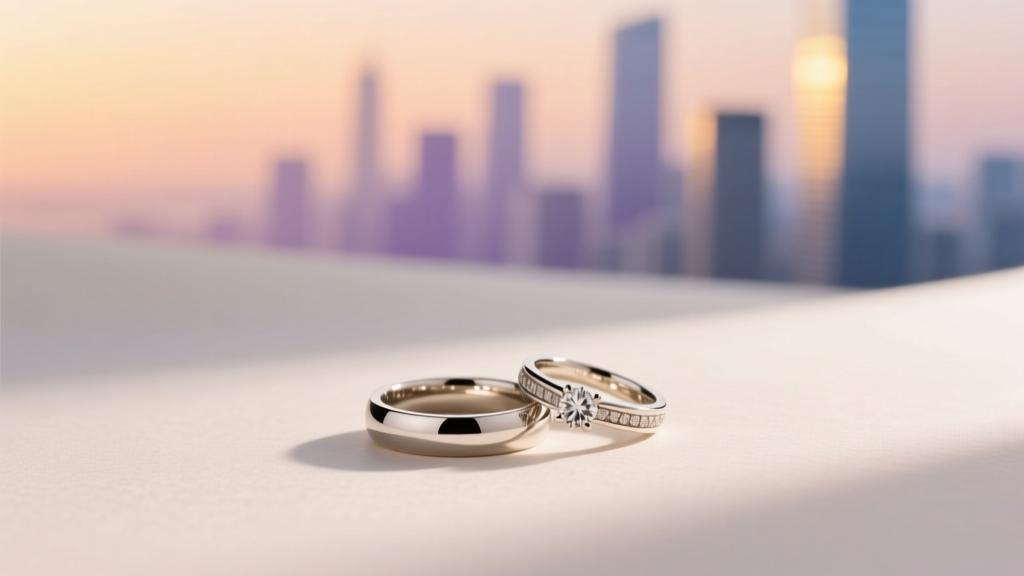 Wedding Ring vs. Engagement Ring: What Couples Choose (2026)
 Mexican Wedding Cookies: Refrigeration Truth (2026)