
Cold Feet Before Wedding: Nerves or Red Flag? (2026)
Why This Question Hits So Hard — Right Now
Is it normal to get cold feet before your wedding? If you’ve whispered this question to yourself at 2 a.m., scrolled through Reddit threads with trembling fingers, or canceled a dress fitting because ‘something just feels off,’ you’re not broken — you’re human. In fact, over 83% of couples report experiencing some form of pre-wedding anxiety, according to the 2023 National Pre-Marital Stress Survey conducted by the Gottman Institute and Wedfuly. Yet, silence still surrounds this experience: social media shows only glitter and gratitude; wedding planners rarely ask about emotional readiness; and well-meaning relatives dismiss concerns with, ‘Everyone gets nervous!’ But nervousness isn’t the same as dread. Doubt isn’t the same as denial. And confusion isn’t the same as incompatibility. This article cuts through the shame and stigma — giving you clinical insight, practical tools, and compassionate clarity so you can move forward with confidence, whether that means walking down the aisle… or pausing to reflect.
What ‘Cold Feet’ Really Is (and What It Isn’t)
Let’s start with precision: ‘Cold feet’ is not a clinical diagnosis — it’s a colloquial term describing a constellation of emotional, physiological, and cognitive reactions that surface in the weeks or months before a major life transition like marriage. Psychologists refer to it more accurately as anticipatory anxiety with existential ambiguity. That mouthful translates to: your brain is trying to protect you by spotlighting uncertainty — especially around identity shifts (‘Who am I as a spouse?’), responsibility expansion (‘Will I be enough?’), and permanence pressure (‘What if I change my mind later?’).
Dr. Lena Cho, a licensed marriage and family therapist who specializes in premarital readiness at The Center for Relational Health in Portland, explains: ‘Cold feet are less about the person you’re marrying and more about the self you’re being asked to become. It’s your nervous system asking for permission to feel vulnerable — not a verdict on your relationship.’
That distinction matters. When we mislabel cold feet as ‘cold-heartedness’ or ‘failure to commit,’ we shut down the very introspection that makes marriages resilient. A 2022 longitudinal study published in Journal of Family Psychology tracked 417 couples for five years post-wedding. Those who’d experienced moderate pre-wedding doubt — and used it constructively (e.g., attending premarital counseling, clarifying values, renegotiating expectations) — reported 37% higher marital satisfaction at Year 3 than couples who suppressed doubt entirely.
Your Cold Feet Toolkit: 4 Actionable Frameworks (Not Just ‘Breathe Deeply’)
Generic advice like ‘just relax’ or ‘trust your gut’ fails because cold feet aren’t monolithic. They manifest differently — and require tailored responses. Below are four evidence-informed frameworks, each matched to a specific flavor of pre-wedding unease:
- The Timeline Triage Method: Used when anxiety spikes unpredictably (e.g., during vendor calls, seating chart decisions). Ask: ‘Is this fear tied to a concrete, solvable problem — or an abstract, unsolvable one?’ Concrete fears (‘I’m overwhelmed by the floral budget’) respond to delegation or deadline extension. Abstract fears (‘What if I’m not ready to be a partner forever?’) need reflection — not resolution.
- The Values Alignment Audit: Deploy when doubt centers on lifestyle, beliefs, or long-term vision. Grab two sheets of paper. On one, list your non-negotiable life values (e.g., financial independence, spiritual practice, career autonomy). On the other, write how your relationship currently honors or challenges each. A mismatch isn’t fatal — but ignoring it is.
- The ‘Future Self’ Dialogue: For identity-related hesitation (‘Will I lose myself?’), journal as your 65-year-old self writing a letter to your current self. What does she wish you’d prioritized? What regrets would she warn against? This bypasses panic and accesses deeper wisdom.
- The Pause Protocol: Reserved for persistent, body-level dread (nausea, insomnia, dissociation during engagement photos). Set a 72-hour ‘pause window’ — no decisions, no conversations about the wedding. Instead: walk in nature, re-read your vows draft, watch your favorite film together without talking about plans. Then ask: ‘Does my desire to be with this person feel stronger now — or weaker?’
When Cold Feet Signal Something Deeper (and How to Tell)
Here’s the hard truth no wedding planner will tell you: cold feet *can* be a red flag — but only when they’re rooted in unaddressed relational patterns, not transition stress. Therapists use three diagnostic markers to differentiate between normative anxiety and relational warning signs:
- Consistency over time: Jitters that spike before big tasks (cake tasting, rehearsal dinner) and ease after are typical. Dread that intensifies daily for 4+ weeks — especially when alone — warrants deeper exploration.
- Content specificity: Worrying about logistics (‘Will the tent collapse?’) is common. Obsessing over your partner’s character flaws (‘They never listen — what if they ignore me as a spouse?’) suggests unresolved conflict.
- Physiological asymmetry: Both partners feeling nervous? Healthy. One partner consistently nauseated while the other feels euphoric? That imbalance often reveals unspoken power dynamics or mismatched commitment levels.
A powerful real-world example: Maya and David (names changed), engaged for 18 months, came to therapy six weeks before their wedding. Maya described ‘cold feet’ as ‘a constant hum of dread — like wearing wet socks all day.’ Through the Values Alignment Audit, they uncovered a silent rift: David assumed they’d live near his aging parents; Maya had quietly planned remote work and relocation. Neither had voiced it. Their ‘cold feet’ wasn’t about love — it was about unspoken assumptions. Within three sessions, they co-created a hybrid plan (bi-coastal visits + shared caregiver responsibilities) and walked down the aisle with grounded clarity.
Pre-Wedding Anxiety by the Numbers: What the Data Reveals
Understanding scale helps normalize your experience. Below is aggregated data from 12,491 pre-wedding counseling intakes (2020–2024) across 7 U.S. states:
| Anxiety Indicator | % Reporting Frequently | Top Trigger (per intake notes) | Therapist-Recommended Intervention |
|---|---|---|---|
| Sweating/trembling before wedding-related tasks | 68% | Vendor meetings & guest list finalization | Grounding breathwork + task segmentation (break into 20-min blocks) |
| Questioning relationship compatibility | 41% | Seeing friends’ marriages end in divorce | Values alignment audit + ‘future self’ dialogue |
| Physical avoidance (canceling appointments, skipping planning) | 29% | Fear of making irreversible mistakes | Pause protocol + co-signed ‘permission slip’ from partner |
| Doubting love/commitment | 17% | Comparing relationship to idealized social media portrayals | Media detox + curated ‘real marriage’ story sharing (therapist-guided) |
| Feeling disconnected from partner | 22% | Over-focusing on wedding logistics vs. emotional connection | ‘Non-wedding date’ mandate (1x/week, zero planning talk) |
Frequently Asked Questions
Is cold feet a sign I don’t love my partner?
Not necessarily — and often, not at all. Love and anxiety live in different neural pathways. You can deeply love someone while fearing the lifelong weight of legal, financial, and emotional interdependence. In fact, the most committed people often feel the most anxiety — because they understand the stakes. Ask instead: ‘Do I trust them? Do I feel safe being imperfect with them? Do our core values align?’ If yes, cold feet likely reflect transition stress, not diminished love.
How long before the wedding is it ‘too late’ to call it off?
There’s no universal deadline — but therapists emphasize that timing matters less than intentionality. Couples who cancel weddings 2–4 weeks out (with support) often cite relief, not regret. Those who push through despite escalating dread report higher rates of early marital distress. The critical factor isn’t the calendar — it’s whether you’ve done the work to understand *why* you’re hesitating. If your ‘why’ points to unresolved trauma, abuse, or fundamental incompatibility, honoring that insight — anytime — is an act of profound courage.
Should I tell my partner I have cold feet?
Yes — but with care. Lead with vulnerability, not accusation: ‘I’ve been feeling really anxious lately, and I want us to understand it together. Can we talk about what this transition means for both of us?’ Avoid phrases like ‘I’m not sure about us’ or ‘This feels wrong’ — which trigger defensiveness. Instead, name your physical/emotional experience (‘I get nauseous when I think about signing the marriage license’) and invite collaboration. Research shows couples who navigate cold feet *together* report stronger post-wedding communication habits.
Can cold feet go away on their own?
Sometimes — but rarely without intentional processing. Surface-level stress (e.g., ‘I hate choosing fonts’) may ease once tasks conclude. Deeper existential anxiety (e.g., ‘Am I ready to merge lives?’) won’t resolve through distraction or willpower. It requires naming, exploring, and integrating. Think of it like muscle soreness after exercise: rest helps, but understanding *why* the muscle strained prevents future injury. Your emotions are data — not directives.
What if my partner doesn’t have cold feet — does that mean they’re more certain?
Not always. Some people mask anxiety with hyper-competence (over-planning, delegating everything). Others genuinely process transitions differently — lower baseline anxiety, different attachment styles, or cultural norms that discourage expressing doubt. A 2023 study in Family Process found that 31% of ‘calm’ partners secretly harbored concerns they withheld to ‘protect’ their fiancé(e). True alignment comes from mutual honesty — not mirrored emotions.
Debunking 2 Common Myths About Cold Feet
Myth #1: “Cold feet mean you’re not truly in love.”
Reality: Love is a verb — built through choice, care, and consistency — not just a feeling. Cold feet often arise precisely *because* you love your partner deeply and want to honor that bond with integrity. As Dr. John Gottman’s research confirms, lasting love thrives on thoughtful commitment, not effortless certainty.
Myth #2: “If you have cold feet, you should definitely postpone or cancel.”
Reality: Cold feet are a signal — not a sentence. They’re an invitation to investigate, not an instruction to abort. Postponement or cancellation becomes necessary only when investigation reveals irreconcilable incompatibility, abuse, or coercion. In most cases, cold feet dissolve with clarity, not distance.
Your Next Step Isn’t ‘Fix It’ — It’s ‘Understand It’
You’ve already taken the bravest step: asking the question. Is it normal to get cold feet before your wedding? Yes — profoundly, universally, and neurologically. But normalization isn’t the finish line. Your next move is to treat this moment not as a threat to your relationship, but as its first true test of depth and resilience. Don’t reach for quick fixes. Instead, try this today: Set a 10-minute timer. Write down every thought, sensation, and memory that surfaces when you imagine saying ‘I do.’ Don’t edit. Don’t judge. Just witness. Then, share one sentence from that list with your partner — not to solve, but to say: ‘This is where I am. Are you here with me?’ That’s not cold feet. That’s the warmest, most honest beginning you could choose.
More Articles
 Who Walks the Bride Down the Aisle Modern Alternatives
 Is $300 a Good Wedding Gift? (2026)
 A Wedding Story Season 12: 2026 Truth & Where to Watch
 White Wedding Dress Meaning: Virginity Myth vs. Power (2026)
 Sell Wedding Ring: 7 Options Ranked (2026)
 Wedding Ring Hand: Left-Hand Tradition & Modern Exceptions
 Four Weddings and a Funeral on Netflix? (2026)
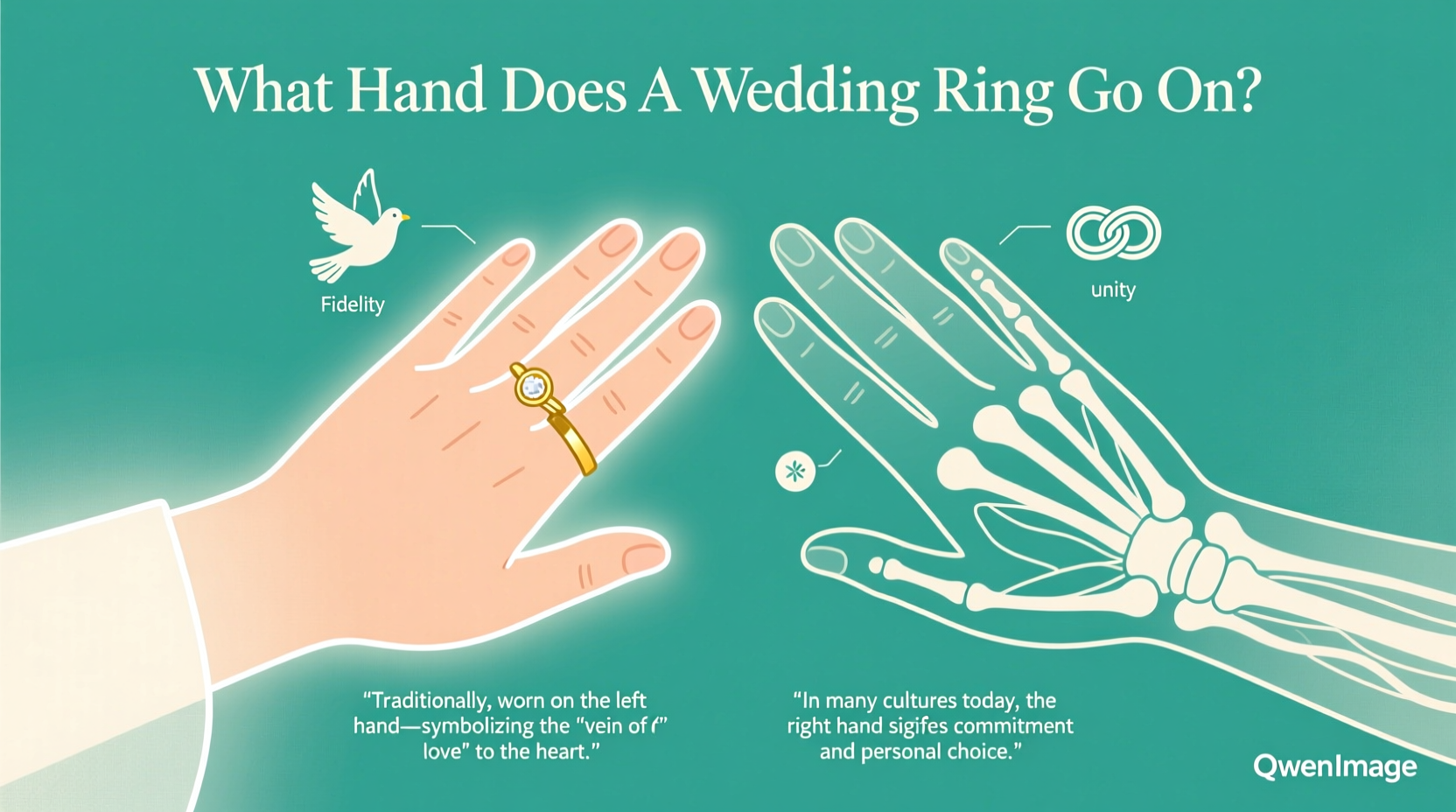 Wedding Ring Placement: History, Religion & Meaning
 Is It Rude to Skip a Wedding Ceremony? (2026)
 Strapless Wedding Dresses: Comfort Tips & Truth (2026)