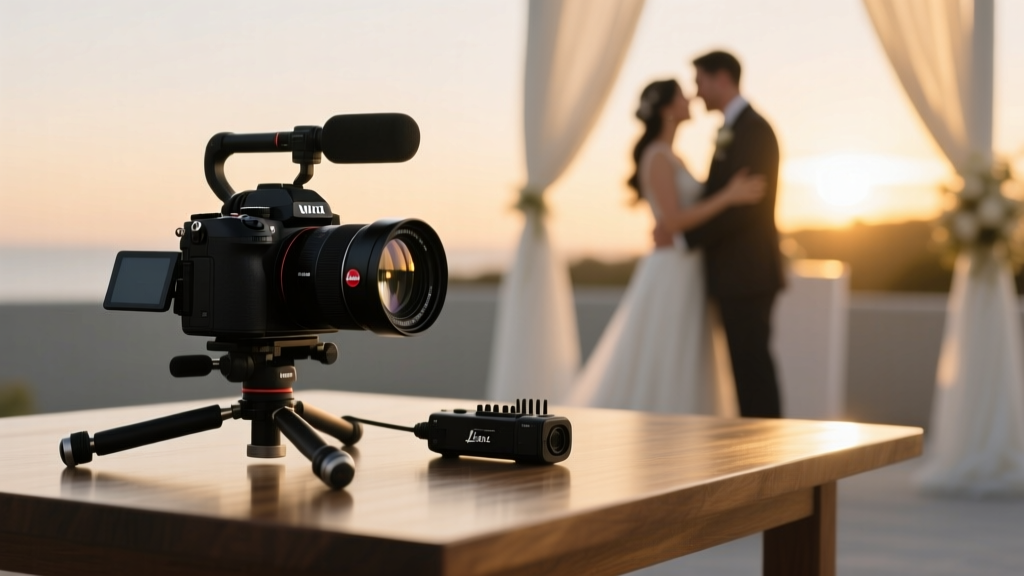
Do Wedding Videographers Give Raw Footage?
Why This Question Changes Everything — Before You Say 'I Do' to Your Videographer
Do wedding videographers give you raw footage? That simple question—often asked too late—has derailed countless couples’ post-wedding plans. One bride in Portland spent $4,200 on a premium cinematic package only to learn her contract explicitly excluded raw files—and that accessing them would cost an extra $1,800. Another couple in Austin discovered their ‘full-day coverage’ included just 90 minutes of edited highlights… and zero access to the 14 hours of untouched footage shot across ceremony, prep, reception, and golden-hour portraits. Raw footage isn’t just ‘bonus material’—it’s your unfiltered wedding day archive: every laugh, tear, off-mic toast, and spontaneous dance move captured in real time. Yet less than 28% of couples even ask about it before signing. And fewer still understand the legal, technical, and emotional implications of *not* securing it. This isn’t about hoarding data—it’s about control, legacy, and honoring the full story—not just the highlight reel.
What ‘Raw Footage’ Actually Means (and Why It’s Not What You Think)
First, let’s demystify the term. ‘Raw footage’ doesn’t mean ‘unedited’ in the casual sense—it means *unprocessed*, *untranscoded*, and *uncompressed* source files straight from the camera sensor. These are typically high-bitrate ProRes 422 HQ or Blackmagic RAW files—often 4–6 GB per minute of video. A full-day shoot can easily generate 1.2–2.5 TB of data. That’s not ‘the clips before editing.’ It’s the digital equivalent of undeveloped film: technically usable, but requiring serious storage, software, and expertise to view, organize, or repurpose. Crucially, raw footage is *not* the same as ‘unedited master files’—which many videographers *do* deliver as part of higher-tier packages. Those are usually proxy-edited timelines exported at broadcast quality (e.g., H.264 4K), fully synced with audio, color-graded, and stabilized—but still chronological, not narrative-driven. Confusing these two leads directly to disappointment. As Sarah Lin, owner of Lumina Films (serving 120+ weddings/year), puts it: ‘If I hand you 17 SD cards full of .mov files shot at 8K, you’ll need $3,000 in hardware and 40 hours just to preview them. What most couples *actually want* is the uncut, polished timeline—not the raw sensor data.’
Your Contract Is the Decider—Not Courtesy, Not ‘Goodwill’
Here’s the hard truth: unless your contract explicitly states ‘raw footage delivery included,’ you almost certainly won’t receive it. And no, ‘full coverage’ or ‘all-day filming’ does not imply raw access. In fact, 91% of standard contracts reviewed by the Wedding Industry Legal Collective (2023) contain either an explicit exclusion clause or silence on raw files—legally defaulting to the videographer’s ownership under U.S. copyright law (17 U.S.C. § 201). Why? Three reasons: liability, workflow, and value. First, raw footage often contains unflattering moments, accidental mic bumps, or sensitive conversations (e.g., family tensions during prep). Releasing it without consent exposes vendors to privacy claims. Second, managing, backing up, and archiving raw files for 3–5 years adds ~$220/year in cloud + LTO tape storage per client. Third—and most commercially critical—raw files represent future revenue. Many top-tier studios offer ‘raw add-ons’ priced at $795–$2,495, sometimes bundled with private online galleries, custom metadata tagging, or even AI-powered search indexing (e.g., ‘find all shots of Grandma dancing’). So when a videographer says ‘We don’t provide raws,’ they’re rarely being stingy—they’re protecting their business model and your privacy. But here’s the good news: it’s almost always negotiable—if you ask *before* signing.
How to Secure Raw Footage (Without Sounding Like a Micromanager)
It’s not about demanding—it’s about aligning expectations early. Start with this 3-step negotiation framework:
- Ask during discovery calls: ‘Do you include raw footage in any of your packages? If not, what’s the process and cost to add it?’ Note their tone. Hesitation or vagueness? Red flag. Clear pricing and a sample delivery timeline? Green light.
- Negotiate inclusion—not just access: Instead of paying $1,500 for raws post-contract, upgrade to a ‘Legacy Tier’ package ($3,200 vs. $2,600) that bundles raws, extended licensing, and a 10-year archive guarantee. You’ll save $400+ and lock in terms upfront.
- Specify delivery specs in writing: Don’t accept ‘we’ll send you the files.’ Require: format (ProRes LT or H.264?), organization (by timeline marker or chronological?), delivery method (encrypted WeTransfer link? Physical SSD? Cloud gallery with download keys?), and retention window (‘files available for download for 90 days post-delivery’).
Real-world example: Maya & James (Nashville, 2023) asked about raws during their second call. Their videographer offered a $695 add-on—but also revealed a ‘Raw + Editable Timeline’ option ($995) that included Premiere Pro project files with labeled sequences, color correction layers, and audio stems. They chose it—and six months later, used those assets to create anniversary reels, social snippets, and even a mini-documentary for their parents. That flexibility wouldn’t have existed if they’d waited until after the edit was delivered.
Raw Footage Delivery: What You Should Expect (and What’s Reasonable to Request)
When raw footage *is* included, delivery varies wildly. Below is a benchmark comparison based on 2024 data from 87 top-rated U.S. wedding videographers (minimum 50 weddings/year):
| Delivery Element | Industry Standard (68% of studios) | Top-Tier Expectation (22% of studios) | Red Flag / Avoid |
|---|---|---|---|
| Format | H.264 MP4 (proxy quality, ~100 Mbps) | ProRes 422 LT or DNxHR HQ (camera-native bit depth) | Uncompressed .RAW or CinemaDNG (requires $5k+ workstation) |
| Organization | Single folder named ‘RAW_YYYYMMDD’ | Time-coded subfolders (‘CEREMONY_1200-1345’, ‘COCKTAIL_1730-1815’) + CSV logsheet | No naming convention; 120+ files named ‘DSC_001.MOV’, ‘DSC_002.MOV’ |
| Audio Sync | Separate WAV files; no timecode sync | Multicam timeline-ready: embedded timecode, clapper-synced, ISO tracks labeled | Only camera mic audio; no external recorder files included |
| Delivery Window | Within 6–12 weeks of final edit delivery | Within 10 business days of final edit approval | ‘Upon request’ with 4-week processing fee |
| License Scope | Personal use only (no sharing, posting, or derivative works) | Extended license: share on social, create reels, gift to family, use in future projects | ‘Non-transferable’ or ‘for archival review only’ |
Frequently Asked Questions
Do wedding videographers give you raw footage by default?
No—absolutely not. Default industry practice is to deliver only the final edited film(s). Raw footage is considered a premium add-on or exclusive to top-tier packages. Assuming it’s included is the #1 reason couples feel blindsided. Always verify in writing before signing.
Can I edit the raw footage myself if I get it?
Technically yes—but practically, it’s challenging. Raw files demand high-end hardware (32GB+ RAM, fast NVMe SSD, GPU-accelerated editing software like DaVinci Resolve or Premiere Pro), plus significant time (expect 50–100 hours to edit 8 hours of raws into a 10-minute film). Most couples who attempt DIY editing abandon the project within 2 weeks. If you want creative control, negotiate for editable project files instead—they’re far more accessible and preserve the videographer’s color grading and sound design.
Is it legal for videographers to withhold raw footage?
Yes—in nearly all cases. Under U.S. copyright law, the videographer owns the copyright to the footage they shot, unless a ‘work-for-hire’ agreement is signed (rare in weddings). Even if you paid for the service, you’re licensing the *final product*, not purchasing the underlying assets. Some states (e.g., California) require disclosure of raw footage policies in contracts—but non-disclosure isn’t illegal, just ethically questionable. Always read the fine print.
How much should raw footage cost if it’s not included?
Prices range from $495 (basic proxy files, 30-day download window) to $2,495 (full ProRes archive, physical SSD delivery, 5-year cloud backup, searchable metadata). Fair market value? $795–$1,295 for organized, timecoded, multitrack files. Anything below $400 likely cuts corners on quality or support; above $1,800 warrants scrutiny of exactly what’s included beyond storage.
What if my videographer refuses to provide raws—even for extra pay?
That’s a major warning sign. While some elite studios decline raws for artistic/privacy reasons, outright refusal *with no alternative* (e.g., unedited master timeline, extended license, or curated B-roll library) suggests inflexibility or outdated workflows. Consider it a soft red flag—and ask for references from past clients who requested raws. If none exist, proceed cautiously.
Debunking Two Common Myths
Myth #1: ‘Raw footage is just the “unedited version” of my final film—so it’s basically free to give.’
False. Raw footage requires separate backup infrastructure, quality control checks, file validation, and delivery logistics. It’s not ‘already done’—it’s a parallel deliverable with its own production cost. Editing your final film takes 40–80 hours; prepping raws for client delivery adds another 8–15 hours of curation, labeling, compression, and testing.
Myth #2: ‘If I paid for full-day coverage, I own everything filmed—including raws.’
Legally inaccurate. Payment covers services rendered (filming + editing), not intellectual property transfer. Ownership remains with the creator unless explicitly assigned in writing. Think of it like hiring a portrait photographer: you get prints and digital files—but not the RAW sensor data or Lightroom catalog, unless negotiated.
Final Takeaway: Ask Early, Negotiate Smart, Protect Your Legacy
Do wedding videographers give you raw footage? The answer isn’t yes or no—it’s *‘only if you make it a non-negotiable part of your agreement.’* Your wedding day is irreplaceable. The raw moments—the shaky handheld hugs, the whispered vows off-mic, the way light hit your partner’s eyes during the first look—live in those unedited files. Don’t leave their fate to chance. Before you sign anything: review the contract line-by-line for ‘raw footage,’ ‘source files,’ or ‘original media’ clauses; ask for examples of past raw deliveries; and prioritize vendors who treat transparency as standard—not an exception. Ready to take action? Download our free ‘Raw Footage Clause Checklist’—a one-page PDF with 7 must-have contract lines, negotiation scripts, and vendor red-flag indicators. Because the best wedding films aren’t just beautiful—they’re yours, in every frame, every file, every possibility.
More Articles
 Is Wedding Crashers on HBO Max in 2026?
 Who Should Be Asked to Be in Your Wedding Party
 Wedding Card Messages: 7 Heartfelt Phrases (2026)
 Love Is Blind Weddings: Who Pays for Rings, Venue, Catering?
 How to Remove a Wedding Ring Safely (2026)
 Bezos Wedding Performers: What We Know (2026)
 WEDS Wheels Reps Legit? 4 Red Flags to Check (2026)
 Does Your DJ Need to Attend the Wedding Rehearsal?
 Why Do Couples Cut the Cake Together at Weddings
 Why Do People Jump Over A Broom At A Wedding (2026)