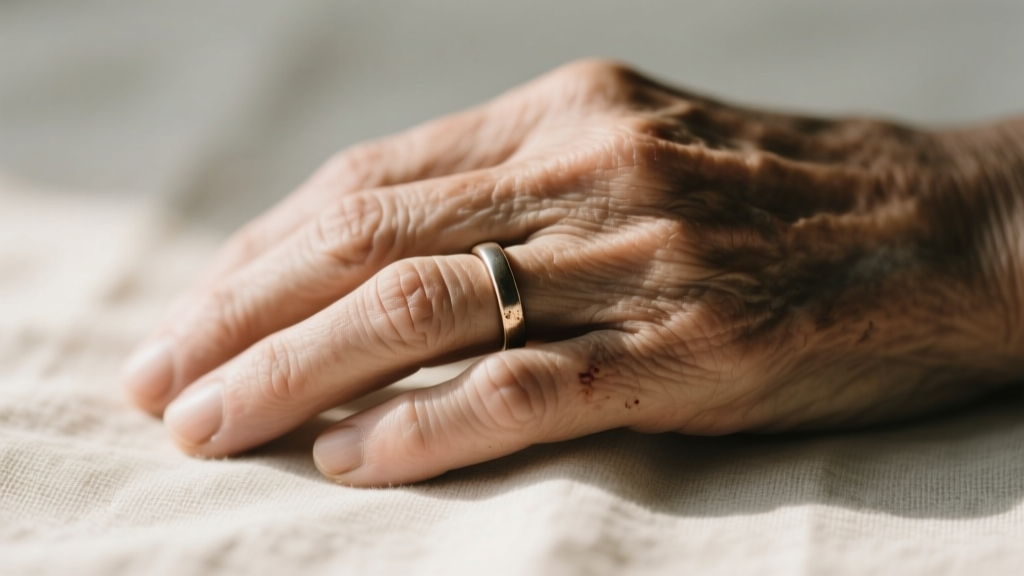
Wedding Ring After Widowhood: What Research Shows
Why This Question Hurts More Than You Realize
Do you still wear your wedding ring when widowed? If you’ve asked yourself this—even silently, even while staring at your hand in the shower or adjusting the band before walking into a room full of well-meaning friends—you’re not alone. In fact, over 68% of widowed adults report lingering uncertainty about ring-wearing within their first year of loss, according to a 2023 Bereavement & Identity Study conducted by the Center for Grief Innovation. This isn’t just about jewelry. It’s about visibility, belonging, memory, and the quiet, daily negotiation between honoring love and reclaiming self. Society offers no manual—and worse, it hands down unspoken rules disguised as ‘common sense.’ That silence? It deepens isolation. This article cuts through the noise with empathy, evidence, and actionable clarity—not prescriptions, but pathways.
Your Ring Is Not a Timeline—It’s a Living Symbol
Contrary to what many assume, wearing—or removing—your wedding ring after widowhood isn’t tied to ‘how long’ you’ve grieved. Dr. Lena Cho, clinical psychologist and author of Beyond the Band: Ritual, Memory, and Reintegration After Spousal Loss, explains: ‘The ring functions as what we call a “somatic anchor”—a physical object that holds layered meaning: devotion, trauma, continuity, rupture. Its significance shifts *with you*, not on a calendar.’
Consider Maria, 54, widowed after 29 years of marriage. She wore her ring for 11 months—then switched it to her right hand. ‘It wasn’t about moving on,’ she shared in a focus group. ‘It was about making space for new routines—like signing documents or holding my granddaughter’s hand—without feeling like I was erasing him every time I looked down.’ Her shift wasn’t a milestone; it was a boundary.
Conversely, James, 67, removed his ring the day of the funeral—but kept it in a velvet box beside his late wife’s favorite teacup. ‘I needed the absence to feel real,’ he said. ‘The empty finger wasn’t emptiness—it was honesty.’
What matters isn’t the position of the ring—but whether its presence (or absence) aligns with your internal truth. There’s no universal ‘right’ time. But there *are* signals worth noticing: increased anxiety when touching the band, discomfort during social interactions where people ask about it, or conversely, deep comfort when it catches the light. These aren’t trivial cues—they’re data points from your nervous system.
Cultural Norms vs. Personal Ritual: What History and Data Actually Say
Let’s dismantle the myth that ‘everyone knows the rules.’ They don’t. And those rules vary wildly—not just across countries, but across generations, faith traditions, and even neighborhoods.
In Japan, it’s customary to remove the ring shortly after cremation—a symbolic release aligned with Buddhist rites of transition. In parts of rural Ireland, widows may wear the ring on the right hand for life, often paired with a small mourning brooch. In Orthodox Jewish tradition, the ring is typically removed before burial, though some women choose to wear a simple band as a sign of enduring covenant.
But here’s what modern data reveals: A 2024 cross-cultural survey of 2,147 widowed adults across the U.S., UK, Canada, and Australia found that only 22% reported following any formal cultural or religious guideline. The vast majority (78%) made decisions based on personal intuition, family input, or therapeutic support—not doctrine.
More strikingly, the study identified three dominant decision-making patterns:
- The Gradual Transition Group (41%): Moved the ring to the right hand, resized it, or wore it on a chain—often as a bridge between ‘still married’ and ‘no longer partnered.’
- The Ceremonial Release Group (33%): Marked removal with ritual—burial, engraving a date on the band, donating it to be remade into a memorial pendant.
- The Continuity Holders (26%): Kept the ring worn daily for 2+ years, citing identity preservation, ongoing connection, or caregiving responsibilities (e.g., managing joint finances or children’s school forms).
Crucially, none of these groups showed statistically significant differences in long-term grief outcomes—challenging the assumption that ‘removing the ring = healing faster.’
Practical Steps: Making Your Decision Without Second-Guessing
This isn’t about choosing ‘forever.’ It’s about choosing your next 30 days—with intention. Try this grounded, non-prescriptive framework:
- Map Your Triggers: For one week, carry a small notebook (or use voice memos). Each time the ring enters your awareness—positive or negative—note: time, context (e.g., ‘at work meeting,’ ‘while hugging my son’), sensation (warmth? tightness? numbness?), and associated thought (‘He’d love this weather,’ ‘I forgot I’m alone,’ ‘This feels like armor’). Patterns will emerge.
- Test Micro-Changes: Don’t commit to removal or retention. Try alternatives for 48 hours: wear it on a chain under your shirt; place it in your left pocket each morning and retrieve it only for specific moments (e.g., lighting a candle); swap it for a silicone band in high-friction situations (cooking, gardening). Observe your body’s response—not your thoughts.
- Consult Your ‘Grief Compass’: Ask yourself three questions—not once, but aloud, slowly: ‘Does this choice protect me—or confine me?’ ‘Does this feel like honoring, or performing?’ ‘If my partner were here, what would they want me to feel—not do—when I look at this ring?’
- Create a ‘Decision Window’: Set a soft deadline: ‘I’ll revisit this on [date]—not to decide, but to assess whether this arrangement still serves me.’ Grief isn’t linear; your relationship with the ring shouldn’t be either.
And if you choose to remove it? Please discard the idea that ‘throwing it away’ is the only option. Consider repurposing: a jeweler can ethically melt it into a new piece (many offer ‘memory metal’ services); engrave initials and dates on the inside; or encase it in resin with dried flowers from the funeral. Physical transformation mirrors internal work.
Ring-Wearing Realities: A Comparative Guide
| Option | Typical Timeframe | Emotional Function | Practical Considerations | Common Pitfalls to Avoid |
|---|---|---|---|---|
| Continue wearing on left hand | No set duration; varies widely (months to decades) | Maintains continuity of identity; reinforces bond; provides tactile comfort during acute grief | Risk of damage during manual tasks; may prompt frequent, exhausting explanations | Assuming others understand your choice without context; ignoring signs of physical discomfort or social friction |
| Move to right hand | Often 6–18 months post-loss, but highly individual | Signals transition—not closure; honors past while creating space for future self | May require resizing; less socially loaded than left-hand wear in many Western contexts | Treating it as a ‘halfway house’ rather than intentional choice; feeling pressured to ‘graduate’ to removal |
| Wear on chain around neck | Common early-mid grief; often evolves into permanent practice | Keeps symbol close but externalizes it; reduces daily visibility pressure | Chain quality matters (sterling silver or gold-fill recommended); consider clasp security | Choosing a flashy chain that draws unwanted attention; neglecting to clean the ring regularly (skin oils degrade metal) |
| Store with ritual objects | Anytime—especially after major milestones (first birthday, anniversary, therapy breakthrough) | Transforms ring from accessory to artifact; supports narrative integration of loss | Use acid-free tissue, velvet pouch, or dedicated memory box; avoid plastic bags (traps moisture) | Storing it carelessly (e.g., drawer with keys); treating storage as ‘giving up’ rather than sacred containment |
| Repurpose into new jewelry | Typically 1–3+ years; requires emotional readiness | Embodies transformation; merges past love with present growth; tangible ‘proof’ of resilience | Work with ethical jewelers who specialize in bereavement pieces; budget $300–$1,200 depending on metal/stone reuse | Rushing the process to please family; choosing design that doesn’t resonate personally (e.g., ‘too cheerful’ for current mood) |
Frequently Asked Questions
Is it disrespectful to take off my wedding ring after my spouse dies?
No—it is not inherently disrespectful. Respect is demonstrated through how you hold your spouse’s memory, not through adherence to a physical object. Many cultures and faith traditions explicitly encourage ring removal as part of honoring the deceased’s transition. What *can* feel disrespectful is ignoring your own emotional needs in service of perceived expectations. As Rabbi Eliana Wolk, who counsels grieving families, reminds us: ‘Love isn’t measured in metal. It’s measured in the stories you tell, the values you live, and the kindness you extend—whether your finger is bare or adorned.’
Should I wear my ring when I start dating again?
There’s no universal answer—but clarity matters. Some find wearing the ring while dating creates confusion or unintentional boundaries; others feel removing it prematurely risks dishonoring their grief process. A balanced approach: pause dating until you’ve had honest conversations with yourself (and possibly a therapist) about what the ring means *to you now*. If you do begin dating, consider discussing your ring choice openly early on—not as justification, but as invitation to mutual understanding. One widowed woman told us: ‘I said, “This ring isn’t about him being gone—it’s about him being part of who I am. I’m not hiding it, and I’m not apologizing for it.” That honesty filtered out people who weren’t ready for depth.’
What if my adult children strongly disagree with my choice?
Family tension around the ring often reflects unprocessed grief in others—not your ‘wrong’ decision. Children may associate the ring with their parent’s presence, stability, or even their own childhood security. Instead of defending your choice, try: ‘I hear how much this symbol means to you. Can we talk about what you’re afraid might change—or disappear—if I make a different choice?’ Then listen. Often, their resistance masks fear of losing *their* connection to the past. Collaborative rituals—like framing the ring alongside photos, or writing letters to their parent together—can honor collective memory while respecting your autonomy.
Can wearing the ring interfere with my mental health recovery?
Research shows the ring itself isn’t harmful—but *rigidity* around it can be. A 2022 longitudinal study published in Grief Matters found that widowed individuals who described their ring-wearing as ‘non-negotiable’ or ‘the only way to stay connected’ showed higher rates of complicated grief symptoms at 24 months. Flexibility—not removal—is the protective factor. If you notice the ring triggers intense panic, dissociation, or avoidance of daily tasks, consult a grief-informed therapist. This isn’t about ‘getting over it’—it’s about ensuring your symbols serve your healing, not hinder it.
Are there legal or financial reasons to keep wearing it?
Legally, no—wearing or removing the ring has zero bearing on estate rights, insurance claims, or name changes. However, practical considerations exist: Some banks or institutions may request photo ID matching your married name *and* wedding ring appearance for verification (though this is increasingly rare). Financially, keeping the ring intact preserves resale or repurposing value—especially if it contains heirloom stones. But never let administrative convenience override emotional truth. A simple notarized letter stating your marital status and intentions suffices for most institutions.
Debunking Two Common Myths
Myth #1: “Taking off the ring means you’re ‘over’ your spouse.”
Reality: Removal is rarely about forgetting—it’s often about integrating. Neuroscientists studying autobiographical memory note that grief evolves from ‘narrative memory’ (vivid, sensory-rich recollections) to ‘semantic memory’ (core truths about the relationship). The ring may shift from a trigger of raw pain to a quiet emblem of enduring love. That evolution doesn’t require the band to stay on your finger.
Myth #2: “Wearing it for years means you’re stuck in grief.”
Reality: Long-term wear correlates more strongly with cultural identity, caregiving roles (e.g., raising young children), or neurodivergent processing styles (e.g., autistic individuals often rely on consistent sensory anchors) than with pathological grief. The American Academy of Grief Counseling emphasizes: ‘Duration isn’t pathology. Distress is. If wearing the ring brings calm, not anguish—it’s serving its purpose.’
Your Next Step Isn’t About the Ring—It’s About Your Voice
Do you still wear your wedding ring when widowed? That question belongs solely to you—and it’s okay if today’s answer differs from tomorrow’s. What matters is that you claim the authority to define its meaning, free from scripts written by etiquette manuals, family pressure, or outdated assumptions. You are not choosing between loyalty and liberation. You’re choosing how to carry love forward—with your hands, your heart, and yes, sometimes, your finger.
So here’s your invitation: Before you decide anything, write one sentence—just for you—about what the ring represents *right now*. Not what it meant in the past. Not what others expect. Just: Today, this band says… Keep it private. Burn it. Frame it. But write it. That sentence is your compass. And when you’re ready, explore our curated directory of grief-informed therapists, or download our free Ring Transition Workbook—a guided journal with prompts, ritual templates, and jeweler vetting checklists designed specifically for widowed individuals navigating this tender terrain.
More Articles
 Kate Middleton at Charles-Camilla Wedding? Truth Revealed
 Rain on Wedding Day: Good Luck or Not? (2026)
 Are Costco Wedding Rings Good? (2026)
 Black Tie Wedding Attire for Women: What to Wear (2026)
 Italian Wedding Soup Balls: What They Really Are
 How to Decide Between a DJ or Live Band for Reception
 Wedding Budget Disagreements: How to Resolve Them
 White Wedding Song Meaning: Not a Love Song (2026)
 Who Buys Wedding Rings in 2026? Data & Trends
 A Country Wedding Full Movie Free Legally? (2026)