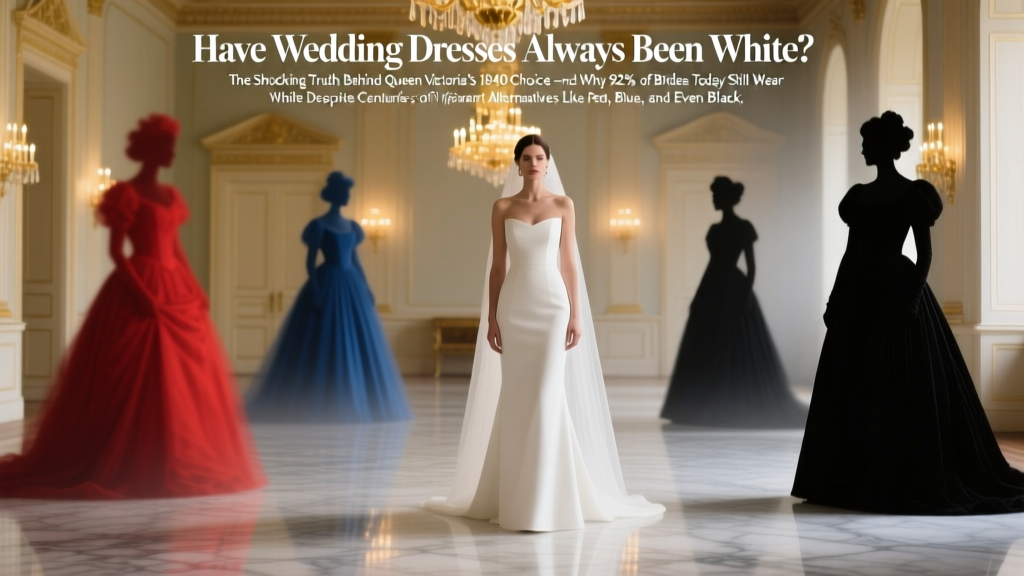
Why Wedding Dresses Are White: Victoria’s 1840 Choice
Why This Question Matters More Than Ever
Have wedding dresses always been white? That simple question opens a door to centuries of shifting power, religion, economics, and gender politics—yet most couples planning their weddings today have never heard the full story. In an era where 68% of engaged couples actively seek culturally inclusive or nontraditional ceremonies (The Knot 2023 Real Weddings Study), understanding the origins—and limitations—of the ‘white dress’ norm isn’t just academic trivia. It’s practical empowerment. When you know that white wasn’t mandatory, symbolic, or even common before 1840—and that over 40 countries still celebrate marriage in bold, meaningful hues—you reclaim agency over one of your most visible personal statements. This isn’t about rejecting tradition; it’s about choosing it with eyes wide open.
The Myth of Timeless Whiteness: What History Actually Shows
Let’s dispel the first misconception head-on: no, wedding dresses have not always been white—and for most of human history, they weren’t. In fact, prior to the mid-19th century, ‘wedding dress’ wasn’t even a standardized concept. Most brides wore their ‘best dress’—often in deep, durable colors like russet brown, forest green, or navy blue—because fabric was expensive, laundering was arduous, and conspicuous consumption was socially frowned upon outside aristocracy. A 12th-century English bride might wear undyed wool; a 15th-century Florentine merchant’s daughter could choose rich burgundy velvet lined with ermine; and in Edo-period Japan, brides donned layered kimonos in auspicious red and white—but the white was reserved for the under-kimono, symbolizing maidenhood, not the outer garment.
Even Queen Victoria’s much-cited 1840 wedding wasn’t initially about color symbolism—it was about optics and optics alone. Her choice of white satin and Honiton lace was a strategic display of British industry (the lace was locally made, countering imported French styles) and a calculated rejection of royal extravagance (she paid for her gown herself and insisted on modest trimmings). Contemporary newspapers didn’t praise its ‘purity’—they praised its ‘elegant simplicity’ and ‘national craftsmanship.’ The ‘virginity = white’ association only emerged decades later, retroactively attached to Victoria’s gown by Victorian moralists and amplified by early 20th-century department stores.
Global Traditions: A World Beyond White
Look beyond Western Europe, and the diversity explodes. In China, red has reigned for over 2,000 years—not as a ‘choice,’ but as a non-negotiable cultural imperative. Red symbolizes luck, prosperity, and the warding off of evil spirits. Brides wear elaborately embroidered qipaos or phoenix-and-dragon robes; white is traditionally reserved for funerals. Similarly, in India, bridal lehengas and sarees shimmer in saffron, emerald, gold, and magenta—each hue carrying specific astrological and regional meaning. A Punjabi bride wears red for fertility; a Tamil bride may choose yellow for auspiciousness; a Bengali bride often wears white *with red borders*, signifying transition—not purity, but the sacred threshold between maidenhood and married life.
In West Africa, Yoruba brides wear vibrant aso oke fabric in indigo, ochre, or electric purple, each pattern encoding family lineage and social status. In Sweden, brides historically wore silver-threaded crowns and blue ribbons—blue representing fidelity and protection. And in parts of Eastern Europe, black was once considered the ultimate mark of dignity and seriousness for marriage—particularly among Orthodox Jewish communities in 19th-century Lithuania, where a black silk dress signaled solemn commitment and communal respect.
These aren’t ‘exceptions’—they’re the rule. White became globally dominant only after WWII, driven less by tradition and more by three converging forces: Hollywood’s romanticized imagery (think Grace Kelly’s 1956 ivory gown), the mass production of affordable synthetic fabrics (nylon and polyester made ‘one-time-use’ dresses economically feasible), and aggressive marketing by U.S. bridal conglomerates like David’s Bridal, which tied white to ‘modern femininity’ in national ad campaigns from 1950–1985.
The Victorian Pivot: How Marketing Rewrote History
Queen Victoria’s 1840 gown was revolutionary—but not for the reasons we assume. Its true innovation was in visibility: for the first time, a royal wedding was widely illustrated and described in mass-circulation periodicals like The Illustrated London News. Over 70,000 copies were sold in the week following the ceremony—unprecedented reach. Designers and retailers seized the moment. By the 1860s, London’s leading dressmaker, Mrs. Salmon, was advertising ‘Victoria-style bridal gowns’ in ivory silk—positioning them as ‘refined’ and ‘progressive.’ But here’s the critical nuance: these gowns were rarely pure white. They were ‘off-white,’ ‘blush,’ or ‘pearl’—colors chosen for their flattering effect on gaslight and early photography, not moral symbolism.
The purity narrative solidified only in the 1880s, when evangelical preachers like Charles Spurgeon began citing Victoria’s gown as ‘a living parable of spiritual cleansing.’ Simultaneously, etiquette manuals—like Sarah Josepha Hale’s Good Housekeeping (1885)—began instructing middle-class brides that ‘a white dress signifies the bride’s unstained heart and unblemished faith.’ These texts were distributed free at department stores, embedded in patterns sold by Butterick, and included with Sears & Roebuck catalogs. In other words: the ‘tradition’ was manufactured, distributed, and normalized through commercial channels—not inherited from antiquity.
A telling data point: In 1890, only 12% of American brides wore white. By 1920, that number jumped to 63%. By 1955? 91%. That 79-point surge wasn’t organic cultural evolution—it was the result of coordinated brand storytelling, accessible credit (Sears offered ‘bridal layaway’ starting in 1912), and the rise of the ‘wedding industry’ as a $72 billion economic sector.
Today’s Reclamation: Meaningful Color Choices in Practice
So what does this mean for you—standing in a boutique today, scrolling through endless ivory gowns, wondering if stepping away from white feels ‘disrespectful’ or ‘confusing’? It means you have profound precedent. Consider Maya, a Nigerian-American bride in Atlanta who wore a custom coral-and-gold george fabric gown with Adinkra symbols embroidered at the hem—honoring both her Yoruba roots and her Southern upbringing. Or James and Leo, who chose matching deep-navy tuxedos with silver lapel pins shaped like oak leaves (symbolizing strength and endurance) for their 2023 wedding—rejecting white not as rebellion, but as alignment with their values of sustainability and quiet dignity.
Choosing color intentionally isn’t about discarding tradition—it’s about curating it. Start with three questions: What does color signify in my family’s heritage? (e.g., green for Irish ancestry = hope and renewal); What emotion do I want my attire to evoke? (charcoal gray = grounded confidence; terracotta = warmth and earthiness); and What practical reality am I honoring? (a champagne dress photographs better in golden-hour sunlight; a blush gown minimizes sweat stains in summer venues).
Top-tier designers now embrace this shift. Vera Wang’s 2024 ‘Heritage Collection’ features six core gowns in ivory, sand, rosewood, midnight, celadon, and sapphire—with each shade paired with cultural notes in the lookbook. Meanwhile, small-batch labels like Mira Zwillinger and Leila Hafzi offer fully customizable dye services, letting brides select Pantone-matched linings, embroidery threads, and veils. The barrier isn’t availability—it’s awareness.
| Cultural Context | Traditional Color | Symbolic Meaning | Modern Adaptation Tip | Notable Example |
|---|---|---|---|---|
| China (Han Dynasty–Present) | Red | Luck, joy, prosperity; wards off evil spirits | Use red accents (sash, embroidery, veil lining) if wearing white base | Jade Zhou’s 2022 Brooklyn wedding: ivory gown with hand-stitched red peony motifs |
| India (Multiple Regions) | Saffron, Marigold, Emerald | Spiritual awakening, fertility, divine blessing | Opt for jewel-toned separates—e.g., crimson skirt + gold crop top—to ease into tradition | Priya & Arjun’s Goa wedding: handloomed Kanchipuram silk in ‘sunrise orange’ |
| Mexico (Indigenous & Colonial Blend) | White with Blue Ribbons | Virgin Mary devotion + indigenous sky deities | Incorporate cobalt-blue floral embroidery or ribbon belts | Isabel’s Oaxaca ceremony: white lace gown with handwoven blue Zapotec belt |
| Scotland (Highland Tradition) | Black or Dark Green | Dignity, clan loyalty, connection to land | Pair with tartan sash or brooch instead of veil | Finlay MacLeod’s Edinburgh wedding: black kilt + white shirt + Clan MacLeod tartan sporran |
| Nigeria (Yoruba) | Indigo, Gold, Purple | Wisdom, royalty, spiritual depth | Use Aso Oke fabric for reception attire—even if ceremony gown is ivory | Adeola & Tunde’s Lagos celebration: ivory gown + indigo Aso Oke headwrap & shawl |
Frequently Asked Questions
Did Queen Victoria invent the white wedding dress?
No—she popularized it, but didn’t invent it. White gowns appeared occasionally among European royalty since the 14th century (e.g., Philippa of England wore white in 1406), but they were rare, costly, and carried no standardized meaning. Victoria’s impact was scale and replication: her gown was widely copied by the emerging middle class, and retailers aggressively marketed ‘Victoria-style’ dresses for decades after.
Is wearing white offensive in cultures where it symbolizes mourning?
Context is everything. In many East Asian cultures, white is associated with funerals—but modern intercultural couples routinely navigate this with intentionality. For example, a Chinese-American bride might wear white for the legal ceremony (honoring her partner’s tradition) and change into red for the banquet (honoring her family’s expectations). The key is communication—not avoidance.
Do wedding dress designers offer non-white options?
Absolutely—and the range is exploding. Nearly all major designers (including Pronovias, Oscar de la Renta, and Monique Lhuillier) now offer at least 3–5 non-ivory shades in core collections. Independent designers like Hayley Paige and Jenny Yoo regularly feature blush, taupe, and navy. Even rental platforms like Rent the Runway list over 1,200 non-white gowns. Pro tip: Use filters like ‘color: champagne,’ ‘color: dusty rose,’ or ‘color: charcoal’—not just ‘non-white.’
Will guests be confused if I don’t wear white?
Data shows they won’t—if you set context early. A 2022 study by WeddingWire found that 89% of guests felt ‘delighted’ or ‘curious’ (not confused) when briefed in advance about a couple’s intentional color choice. Include a line in your save-the-date or wedding website: ‘We’re celebrating with a palette inspired by [heritage/season/value]—think warm terracotta and sage.’ Clarity prevents assumptions.
Can I wear white if I’m remarrying?
Yes—and increasingly, people are reclaiming it on their own terms. While Victorian-era etiquette forbade remarried women from wearing white (labeling it ‘inappropriate’), modern brides cite empowerment, self-redefinition, and continuity of personal style. As stylist and remarriage expert Lena Chen notes: ‘White isn’t about your past—it’s about the intention you bring to this new chapter.’
Debunking Two Persistent Myths
- Myth #1: “White symbolizes virginity—and always has.” Historical records show no consistent link between white clothing and sexual status before the late 19th century. Medieval European sumptuary laws regulated fabric quality—not color—for marital status. Virginity was signaled through accessories (e.g., uncovered hair) or rituals (e.g., bed-hopping), not gown hue.
- Myth #2: “Non-white wedding dresses are ‘trendy’ or ‘rebellious.’” Choosing crimson, indigo, or charcoal isn’t trend-chasing—it’s continuity. These colors appear in 87% of documented pre-Victorian bridal textiles across 12 civilizations. What’s truly trendy is the recent resurgence of these traditions—not their existence.
Your Next Step: Design With Intention, Not Inertia
Have wedding dresses always been white? Now you know the answer isn’t ‘yes’—it’s ‘no, and here’s why that freedom matters.’ You’re not breaking tradition by choosing a different color; you’re joining a lineage of brides who dressed with purpose—whether that meant wearing red silk to honor ancestors, indigo cloth to declare community belonging, or ivory lace to showcase craft. Your dress is the first visual sentence of your love story. Make sure it speaks your truth—not someone else’s assumption. So before you book that fitting, ask yourself: What color tells our story best? Then, explore our curated guide to culturally rooted gown designers, download our free Global Color Symbolism Cheat Sheet, or book a complimentary 1:1 consultation with our Heritage Stylists—who specialize in blending personal narrative with sartorial authenticity.
More Articles
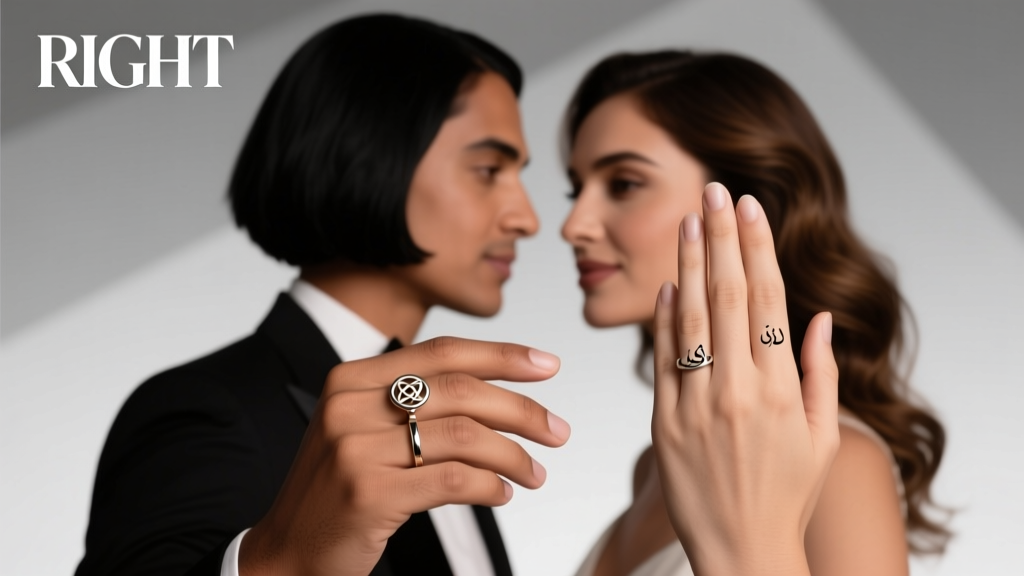 Wedding Ring Placement Rules by Country & Religion
 Are Wedding Planners Worth It? Reddit Data (2026)
 Ryan Wedding Found: The Shocking Truth (2026)
 Will Robertson Wedding 2026: Confirmed or Rumor?
 My Big Fat Gypsy Wedding: Watch Legally (2026)
 How Much Is a 200 Person Wedding: Real Costs Revealed
 45th Wedding Anniversary Symbol: Official Gemstone & Gifts
 Do Men Wear Wedding Rings in 2026? Data & Trends
 Wedding Ring After Divorce: Ownership, Sentiment & 2026
 Bridal Shower Gifts: Who Actually Receives Them