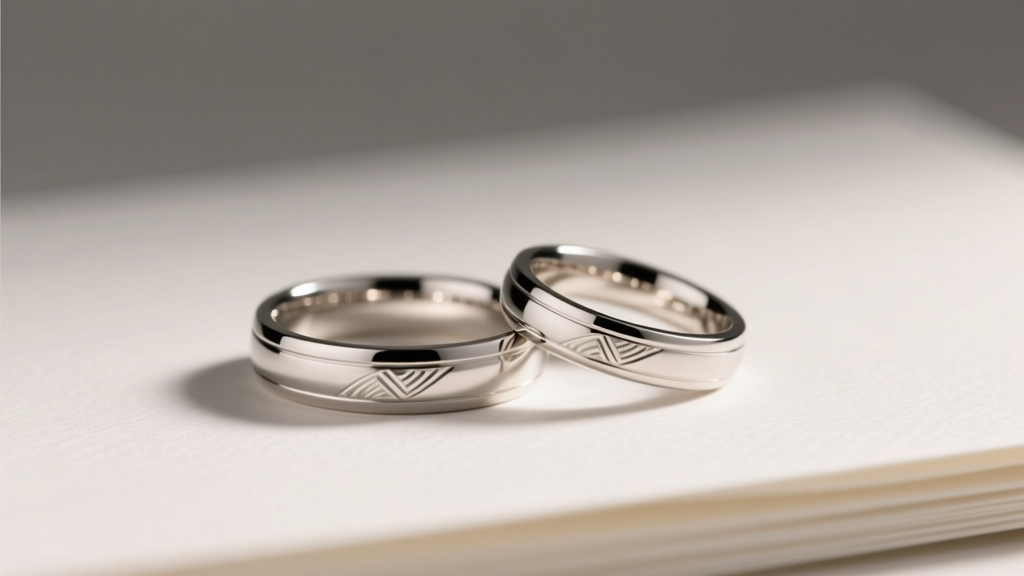
Wedding Rings: How to Wear Them Correctly (2026)
Why Getting This Right Matters More Than You Think
How are wedding rings supposed to be worn? That simple question carries surprising emotional weight — because your ring isn’t just jewelry; it’s a silent ambassador of your commitment, identity, and values. In an era where 68% of couples customize their wedding traditions (The Knot 2023 Real Weddings Study), confusion over ring-wearing etiquette isn’t just awkward — it can spark unintended tension: Is your partner misreading your choice to wear your ring on the right hand? Did you accidentally place your engagement ring *under* your wedding band — weakening its symbolism and risking damage? And what happens when cultural expectations clash with personal beliefs, disability needs, or LGBTQ+ relationship structures? This isn’t about rigid rules — it’s about making intentional, informed choices that honor both heritage and humanity. Let’s cut through the noise and build a framework that works for *your* love story.
The Historical & Cultural Blueprint (And Why It’s Not Set in Stone)
The ‘standard’ answer — ‘left hand, fourth finger’ — traces back to ancient Rome, where physicians wrongly believed a vein (the vena amoris, or ‘vein of love’) ran directly from that finger to the heart. Though anatomically debunked centuries ago, the symbolism stuck — and was reinforced by Christian liturgical tradition, British common law (which treated the wedding ring as legal evidence of marital status), and 20th-century U.S. marketing campaigns by De Beers and others that cemented the ‘left-hand-only’ norm in Anglophone cultures.
But here’s what rarely makes the headlines: over 50 countries — including Germany, Russia, India, Greece, Norway, and Colombia — traditionally wear wedding rings on the right hand. In Orthodox Christianity, the right hand symbolizes divine blessing and strength; in Hindu weddings, the right hand is associated with auspicious beginnings and active participation in dharma. Even within the U.S., 22% of married adults surveyed by YouGov (2024) reported wearing their wedding band on the right hand — often due to family heritage, occupational safety (e.g., surgeons, mechanics), or gender expression.
The takeaway? There is no universal ‘supposed to.’ Instead, there’s a rich tapestry of meaning — and your choice becomes a conscious act of cultural negotiation, not passive compliance.
Modern Ring-Wearing Realities: Beyond Tradition
Today’s couples face layered decisions far beyond left vs. right. Consider these real-world scenarios:
- The Stack Dilemma: Should your engagement ring sit above or below your wedding band? Traditionally, the wedding band goes *closest to the heart* — i.e., beneath the engagement ring. But 71% of millennial and Gen Z couples now reverse this order (Jewelers of America 2023 Survey), citing aesthetics, comfort, or symbolic emphasis on marriage over courtship. One Atlanta-based couple, Maya and Jordan, chose to wear only their wedding bands after their civil ceremony — storing their engagement rings safely until their vow renewal two years later. “Our marriage began when we said ‘I do,’ not when he proposed,” Maya explained.
- The Single-Band Shift: A growing number — especially among non-binary, queer, and minimalist partners — opt for one unified band instead of separate engagement/wedding rings. Jewelry designer Lila Chen notes demand for ‘unity bands’ has grown 300% since 2020. These are often wider, engraved with dual initials or coordinates, and worn on whichever hand feels most authentic.
- Functional Adaptations: For teachers, chefs, healthcare workers, or people with arthritis, constant ring-wearing poses safety or comfort risks. Many now use silicone ‘ring alternatives’ during work hours (sold by brands like Qalo and Groove Life), then switch to metal bands for ceremonies and evenings. Occupational therapist Dr. Elena Ruiz confirms: “Forcing rigid adherence to tradition can cause physical strain or anxiety — and that undermines the very peace the ring is meant to represent.”
Your ring-wearing practice should serve *you*, not vice versa.
Religious, Legal, and Identity-Aware Guidelines
When faith, law, or identity shape your decision, intentionality becomes essential:
- Judaism: During the ceremony, the ring is placed on the right index finger (for visibility and ease of placement). Post-ceremony, many wear it on the left ring finger — but some retain the right-hand placement as a continuous reminder of the chuppah moment.
- Muslim Traditions: While not mandated, many Muslim couples exchange rings as a cultural gesture. Gender norms vary widely: in Indonesia, brides often wear gold bands; in Saudi Arabia, men may wear simple platinum bands, while women avoid gold per certain interpretations of hadith. Consultation with local imams or community elders is strongly advised.
- LGBTQ+ Considerations: Same-sex couples frequently navigate unspoken assumptions — e.g., ‘Which partner wears the ring first?’ or ‘Do we need matching bands?’ Relationship coach Marcus Bell emphasizes: “There’s zero script. Some couples choose identical bands to signal unity; others select complementary styles reflecting individuality. One nonbinary client wore theirs on a chain around their neck — a powerful reclamation of autonomy.”
- Legal Nuance: In 9 U.S. states (including California and New York), wearing a wedding ring carries no legal weight — it’s purely symbolic. However, in immigration contexts (e.g., spousal visa interviews), consistent ring-wearing *can* serve as corroborating evidence of marital bona fides — though USCIS explicitly states it’s never required.
Ring-Wearing Decision Framework: A 5-Step Checklist
Forget memorizing rules. Use this actionable framework to arrive at your own confident answer to how are wedding rings supposed to be worn?
- Clarify Your ‘Why’: Is this about honoring ancestors? Expressing pride? Prioritizing safety? Marking a spiritual covenant? Write down your top 2 motivations before choosing.
- Map Cultural Anchors: Interview older relatives. Search your family’s country-of-origin customs. Note where traditions align — and where they diverge.
- Test Physical Realities: Wear your ring(s) for 3 full workdays. Note discomfort, snagging, or interference with tasks. Adjust fit or material if needed.
- Define Shared Symbolism: Sit down with your partner and ask: ‘What does this ring placement mean to us — today, and five years from now?’ Document your joint answer.
- Claim Your Narrative: If questioned, respond with warmth and clarity: ‘We wear them this way because [brief, positive reason].’ No justification needed — just joyful ownership.
| Scenario | Traditional Norm | Modern, Valid Alternatives | Key Consideration |
|---|---|---|---|
| Hand placement | Left ring finger (U.S./UK/Canada) | Right ring finger (Germany, India, LGBTQ+ affirmation), non-dominant hand (for manual workers), necklace chain (for safety or gender expression) | Check occupational safety policies and cultural resonance — not just geography.|
| Stacking order | Wedding band beneath engagement ring | Engagement ring beneath wedding band (aesthetic preference), single unified band, alternating hands (one partner left, one right), no stacking (separate fingers) | Consider metal hardness: softer gold under harder platinum prevents scratching.|
| Material & style | Gold or platinum bands, plain or engraved | Silicone, wood, ceramic, titanium, or recycled metals; mismatched metals; engraved with QR codes linking to vows; custom widths for knuckle comfort | 42% of couples now prioritize ethical sourcing — verify vendor certifications (e.g., Fairmined, SCS).|
| Ceremony vs. daily wear | Same ring worn continuously | Dual-ring system (ceremony band + everyday band), ‘ring sabbaticals’ during travel or high-risk activities, heirloom rotation (wearing Grandma’s band monthly) | Insurance riders often cover loss/damage — but only if you report wear patterns to your provider.
Frequently Asked Questions
Do I have to wear my wedding ring every day?
No — and increasingly, you’re not expected to. A 2024 Pew Research study found 39% of married adults remove their rings during work, sleep, or exercise. What matters is consistency with your stated values. If you value visibility as a public commitment, wear it daily. If you value practicality or bodily autonomy, define boundaries that feel sustainable — and communicate them openly with your partner and close circle.
Can I wear my wedding ring on a different finger than my engagement ring?
Absolutely — and it’s becoming more common. Some couples wear engagement rings on the left ring finger and wedding bands on the right (symbolizing ‘two lives, one union’). Others choose middle or index fingers for aesthetic balance or to accommodate joint mobility issues. Just ensure both rings are sized correctly for their intended finger — a professional jeweler can resize most metals (except tungsten or ceramic) with precision.
What if my religion or culture doesn’t use wedding rings at all?
That’s completely valid — and deeply meaningful. Many traditions use other symbols: Islamic nikah contracts, Hindu mangalsutra necklaces, Celtic handfasting cords, or Indigenous wampum belts. Your commitment isn’t diminished by absence of a ring. In fact, choosing *not* to wear one — or adapting the symbol to your roots — is a profound act of authenticity. As scholar Dr. Amara Lee writes: ‘Resistance to Western ring norms is often resistance to colonial erasure.’
My partner and I want different ring-wearing practices — how do we resolve this?
Start with curiosity, not compromise. Ask: ‘What memory, fear, or hope lives in your preference?’ One Portland couple discovered his insistence on right-hand wear stemmed from his Iranian grandmother’s resilience during war — while her left-hand stance honored her Irish mother’s immigrant journey. They now wear matching bands on *different* hands, engraved with each other’s ancestral hometowns. Difference isn’t conflict — it’s texture. Consider co-creating a new ritual (e.g., ‘We wear rings on the hand we write love letters with’) that honors both truths.
Is it bad luck to take off my wedding ring?
No — this is a persistent myth with no basis in major religious texts, folklore, or empirical data. The idea likely stems from Victorian-era superstitions conflating rings with binding magic. Modern therapists note that removing a ring during periods of stress or transition can actually support emotional processing — as long as it’s done intentionally, not reactively. What *does* matter is mutual agreement and transparency.
Debunking Common Myths
Myth #1: “Wearing your wedding ring on the wrong hand invalidates your marriage.”
Legally and spiritually, no jurisdiction or major faith tradition ties marital validity to ring placement. Marriage is solemnized by vows, licenses, and witnessed consent — not metallurgy or anatomy.
Myth #2: “You must wear your engagement ring *and* wedding band together forever.”
Not true — and increasingly outdated. 57% of couples now modify their ring stack within 2 years of marriage (McKinsey Luxury Report 2024), whether due to lifestyle shifts, evolving aesthetics, or relationship milestones (e.g., adding a birthstone band after having children).
Your Ring, Your Rules — Now What?
So — how are wedding rings supposed to be worn? They’re supposed to be worn with intention, respect for your story, and freedom from shame. There is no universal decree — only your shared truth, articulated through a small circle of metal. If this guide clarified one thing, let it be this: the most ‘correct’ way is the way that makes your heart feel steady, your hands feel free, and your love feel seen.
Your next step? Grab a notebook and answer these three questions tonight: (1) What does this ring symbolize to me — beyond ‘married’? (2) What would make wearing it feel like an act of care, not obligation? (3) What’s one small way I can honor both tradition *and* my authentic self tomorrow?
Then — go deeper. Book a 15-minute consultation with a culturally competent jeweler (we recommend checking Jewelers Board Certified listings), explore inclusive ring designers like Ethical Wedding Bands or Non-Binary Ring Designs, or join our free workshop “Redefining Ritual: Building Your Own Wedding Symbolism” — where couples craft personalized meaning maps for every element of their union.
More Articles
 How to Handle a Wedding Guest Who Brings Children Uninvited
 Caitlyn Jenner at Kourtney’s Wedding? Truth & Timeline
 Dutch Wedding Rings: Right Hand Tradition (2026)
 Who Was at Selena’s Wedding? Verified Guest List (2026)
 Bible Wedding Rings: No Command, But Deep Symbolic Roots
 Wedding Ring Marital Property: State-by-State Guide
 White Wedding Meaning: Symbolism, History & Truth (2026)
 Me at Wedding vs Meme: What It Reveals (2026)
 How Many Women Are Virgins on Their Wedding Day? (2026)
 Suit or Tux to a Wedding: How to Choose Right