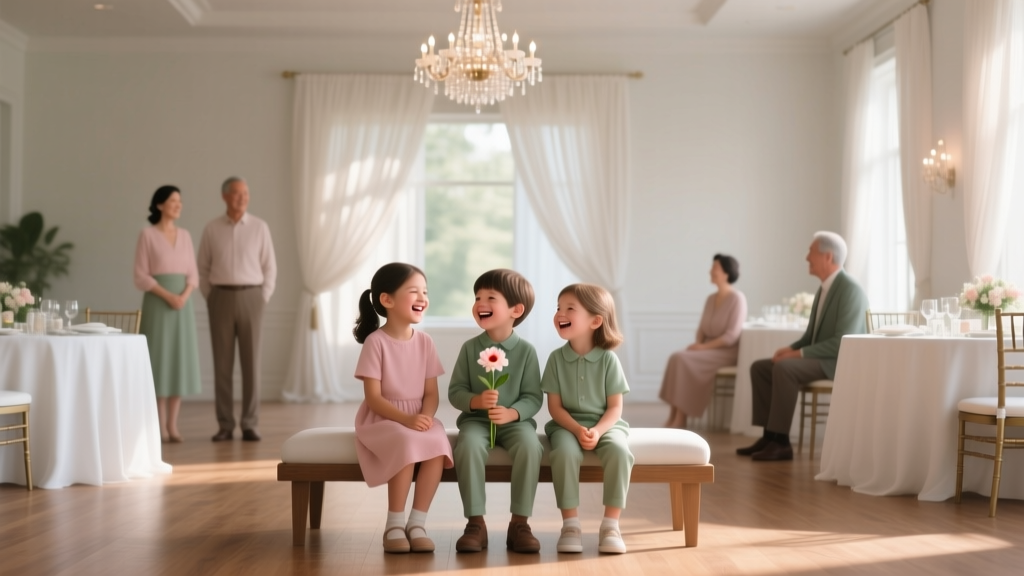
How to Handle Children at Weddings Policies and Etiquette
How to Handle Children at Weddings: Policies and Etiquette
Few wedding planning decisions spark as many feelings (and group texts) as whether kids are invited. Maybe you love your friends’ little ones but you’re worried about noise during vows. Maybe your venue has strict capacity limits, or your budget feels stretched already. Or you’re imagining your flower girl melting down halfway down the aisle and you’re not sure if that’s adorable or terrifying.
However you feel, you’re not alone. Children-at-weddings policies are one of those choices that can affect guest attendance, family dynamics, and the overall vibe of your day. The good news: there’s a respectful way to do this that protects your celebration and your relationships.
Quick answer: What’s the best way to handle children at weddings?
Decide early, set a clear policy, communicate it kindly and consistently, and then support your guests with practical options (like babysitting resources or an adults-only reception). Whether you choose a kid-friendly wedding, “ceremony-only” kids, or a fully child-free wedding, good etiquette comes down to clarity and compassion—no mixed messages, no public debates, and no exceptions you can’t explain.
Q: Is it rude to have a child-free wedding?
No. A child-free wedding (or adults-only wedding) is widely accepted modern etiquette, especially with evening receptions, destination weddings, limited venue capacity, or a formal vibe. What can feel rude is unclear wording—like addressing invitations to “The Smith Family” but expecting only the parents to attend.
Wedding planner “Danielle Kim, Lead Coordinator at Willow & Wren Events” puts it simply: The policy isn’t the problem—the confusion is. Couples get in trouble when they imply kids are invited, then correct guests later.
That said, it’s also not rude to invite children. A family-friendly wedding can be joyful, relaxed, and meaningful—particularly for daytime celebrations, cultural traditions where kids are expected, or when many guests are traveling with family.
Q: What are the most common “children at weddings” policies couples choose?
Most couples land in one of these scenarios:
- Fully kid-friendly: All children are welcome at ceremony and reception.
- Immediate family kids only: Your siblings’/close cousins’ children are invited, but not all guests’ kids.
- Wedding party kids only: Flower girl/ring bearer and a few related children are included.
- Ceremony-only kids: Children attend vows, then head home (or to a sitter) for the reception.
- Adults-only (child-free) wedding: No children invited, sometimes with an age cutoff (e.g., 16+ or 18+).
Current wedding trends lean toward intentional guest lists—smaller counts, higher per-guest costs, and curated experiences. That’s why you’re seeing more adults-only receptions, or hybrid approaches like “kids at the ceremony, adults at the party.”
Q: How do we choose what’s right for us (and not feel guilty)?
Start with your “why.” Your reason can be practical, emotional, or both:
- Budget: Kids add headcount quickly (and catering isn’t always cheaper).
- Venue restrictions: Fire-code limits or tight layouts make extra guests hard.
- Vibe and timing: A black-tie evening wedding reads differently than a brunch wedding.
- Travel realities: Destination weddings can be harder for parents without childcare.
- Noise concerns: If you’re anxious about disruptions, it’s okay to protect the ceremony moment.
One couple, “Maya and Jordan,” shared a common compromise: We wanted our nieces and nephews there, but we also wanted an adults-only dance floor. Kids came to the ceremony and dinner, then our sitter team took them to a suite with movies and snacks.
If you’re worried about fairness, remember: fairness isn’t always identical treatment—it’s consistent expectations. If you choose “immediate family kids only,” expect a few disappointed friends, but you’re not required to expand your guest list to avoid discomfort.
Q: What does modern etiquette say about exceptions?
Exceptions are where things get tricky. The cleanest etiquette is no exceptions, but real life isn’t always that neat. If you do make exceptions, keep them limited and easy to explain:
- Infants under 1 year: Common exception, especially for nursing parents.
- Wedding party children: If you have a ring bearer/flower girl.
- Immediate family: Siblings’ children often fall here.
Avoid exceptions that feel like ranking friendships (“Your kids can come but yours can’t”) unless you’re prepared for hurt feelings. As “Sofia Martinez, venue manager at Riverbend Hall,” notes: The couples who have the smoothest planning experience are the ones who set one simple rule and stick to it—guests may not love it, but they respect it.
Q: How do we communicate a kids policy without sounding harsh?
Use clear, warm language and repeat it in the right places: invitations, wedding website, and (if needed) word-of-mouth via close family.
Invitation addressing: Only list the invited names. If it’s adults-only, address it to “Alex Smith and Taylor Reed,” not “The Smith Family.”
Wedding website wording examples:
- Adults-only: “We love your little ones, but our wedding will be an adults-only celebration. We hope you can enjoy a night off and celebrate with us!”
- Limited children: “Due to space limitations, we’re only able to invite children in the immediate family.”
- Ceremony-only kids: “Children are welcome at the ceremony. Our reception will be adults-only.”
RSVP cards: Consider pre-printing the number of seats reserved (“We have reserved 2 seats in your honor”) to prevent surprise plus-ones or added children.
Q: What if someone asks to bring their kids anyway?
This happens even with perfect communication. Respond once, kindly, and don’t over-explain. Over-explaining invites negotiation.
A polite script: “We completely understand childcare can be tricky. Unfortunately, we’re keeping our wedding adults-only and can’t make exceptions. We’d still love to celebrate with you if you’re able to come.”
If the guest pushes, repeat the same message. If they can’t attend, accept the decline graciously. Etiquette works both ways: parents aren’t obligated to come, and you aren’t obligated to invite kids.
Q: If we invite kids, how do we make it go smoothly?
A kid-friendly wedding is easiest when you plan for kids like you plan for weather: assume they’ll be there, assume they’ll move around, and build in buffers.
- Consider a kids’ corner: Coloring books, puzzles, and quiet toys (skip anything noisy).
- Offer a children’s meal: Confirm with your caterer what “kid meal” actually includes.
- Time the speeches: Keep them shorter and earlier.
- Create a calm space: A side room for breaks helps parents manage meltdowns discreetly.
- Hire childcare: On-site babysitters are increasingly popular, especially for weddings with many guests traveling with children.
Real-world tip: If you do on-site childcare, ask your venue about insurance requirements and staffing ratios. Your planner can help you source a licensed service.
Q: Traditional vs. modern approaches—what should we expect from families?
Traditional expectation: In many families and cultures, weddings are community events where children are naturally included. If your parents or grandparents expect kids to attend, a child-free decision can feel like a break from tradition.
Modern expectation: Many couples now treat the wedding as a hosted experience with a specific mood—more like a dinner party or formal event. Adults-only receptions, late-night dancing, and intimate guest counts have made “no kids” a normal choice.
If you’re bridging generations, frame it positively: “We’re planning a more formal evening celebration” or “We’re keeping the guest list very small.” It’s less about what you’re excluding and more about what you’re creating.
Related questions and edge cases couples worry about
- What about teenagers? Set a clear cutoff (e.g., 16+). Teens can blend in with adults, but they still add headcount.
- What about newborns? If you allow infants, be prepared for the possibility of crying during the ceremony. Consider reserved aisle seats near an exit for quick breaks.
- What if our venue isn’t safe for kids? Be honest: “Due to venue limitations, we’re unable to accommodate children.” Safety is a strong, non-negotiable reason.
- What if we’re doing a destination wedding? Share childcare resources early (local sitter services, hotel nanny options) and consider a welcome event that’s family-friendly, even if the wedding is adults-only.
- Divorced co-parents and childcare logistics: Some guests need extra notice. Send save-the-dates early and make the policy visible on your wedding website.
Conclusion: The kindest policy is the one you communicate clearly
Children at weddings can be wonderful, and child-free weddings can be wonderful, too. The best choice is the one that fits your budget, venue, and vision—and that you communicate with clarity and warmth. Set the rule, share it early, and support your guests with practical options. Most people respond well when they understand what to expect, and they can tell you made the decision thoughtfully.
More Articles
 Do Men Wear Diamond Wedding Rings? (2026)
 Epstein at Clinton’s Wedding? Verified Timeline (2026)
 How to Write a Late Father's Name in Your Wedding Card
 What to Do If You Do Not Get Along With Your In-Laws
 How Much Is a Wedding in Cabo: Real Costs Revealed
 Proposing at a Wedding: Truth, Risks & Timing (2026)
 Can You Wear a Wedding Ring in the Military? (2026)
 OxiClean Wedding Dress Cleaning: Safe or Risky? (2026)
 When Is the Right Time to Have Your Engagement Party
 Jewish Wedding Glass Breaking: Meaning & Symbolism