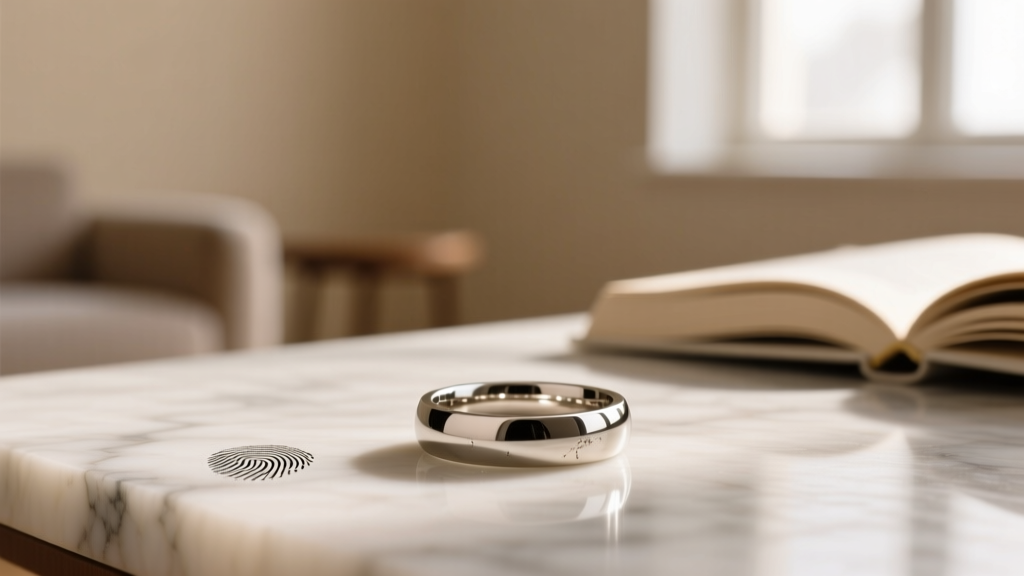
Wedding Ring Etiquette Rules & Modern Exceptions
Why 'How to Wear a Wedding Ring' Isn’t Just About Tradition Anymore
If you’ve ever paused mid-ceremony, ring box in hand, wondering *exactly* where — and how — that band should land on your finger, you’re not overthinking. You’re responding to something deeply human: the weight of symbolism. The question how to wear a wedding ring surfaces at pivotal moments — after a proposal, during wedding planning, following a loss, after gender transition, or even years into marriage when lifestyle changes demand new solutions. Yet most guides stop at "left-hand, fourth finger." That’s like telling someone how to drive by saying "turn the wheel." Real life demands nuance: What if you're left-handed and work with machinery? What if your culture places it on the right hand? What if arthritis makes sliding it on painful — or impossible? This isn’t about rigid rules. It’s about intentionality. In 2024, 68% of couples customize their ring-wearing practices (The Knot 2023 Real Weddings Study), and 41% report at least one significant adjustment within their first two years of marriage — from switching hands due to injury to stacking bands for evolving identity. Let’s move beyond dogma and into empowered, informed choice.
Your Hand, Your Finger, Your Story: The Core Principles (Not Just the ‘Rule’)
The so-called "universal" placement — left ring finger — traces back to the ancient Romans’ belief in the *vena amoris*, or "vein of love," thought to run directly from that finger to the heart. Modern anatomy debunks that myth (all fingers have similar vascular structures), but the symbolism stuck — especially in the U.S., UK, Canada, and much of Latin America. Yet this is only one thread in a rich global tapestry. In Germany, Russia, India, Greece, and Norway, the wedding band traditionally goes on the right hand. In Spain, it depends on region: Catalonia favors the right; Andalusia, the left. Crucially, the finger matters less than the consistency of meaning. A 2022 Pew Research analysis found that 73% of married adults prioritize personal significance over historical precedent when choosing ring placement — whether that means wearing it on the middle finger after losing a fingertip in an accident, or moving it to the right hand to honor a partner’s Eastern European heritage.
Here’s what truly matters:
- Intentional placement: Choose a finger and hand that feels symbolically resonant to you both, not just culturally inherited.
- Functional fit: If your job involves fine motor skills (surgeons, jewelers, musicians) or physical labor (construction, firefighting), prioritize comfort and safety over tradition. A ring that slips off or catches on equipment isn’t romantic — it’s hazardous.
- Physical reality: Swelling (pregnancy, heat, medical conditions), arthritis, nerve damage, or prior injuries can make traditional wear impossible or painful. Forcing it causes resentment, not romance.
Consider Maya, a ceramicist in Portland: Her left ring finger developed severe osteoarthritis at 32. After trying silicone spacers and resizing twice, she and her wife chose to wear matching platinum bands on their right middle fingers — a visible, intentional choice they call their "studio fingers," where clay and creation live. Their rings aren’t lesser; they’re more honest.
The Order, the Stack, and the 'Why' Behind Every Layer
When multiple rings enter the picture — engagement band, wedding band, eternity ring, birthstone stack — confusion multiplies. The conventional Western order is simple: engagement ring first (closest to knuckle), then wedding band slid down to sit directly against the base of the finger, under the engagement ring. Why? Symbolically, the wedding band represents the foundational covenant — so it sits closest to the heart. But here’s what no etiquette manual tells you: This order assumes your engagement ring has a low-profile setting. If you have a cathedral or halo setting, sliding the wedding band underneath can be physically impossible without prying or damaging stones.
Enter the three modern, widely accepted alternatives — all backed by top-tier jewelers like Tacori and Brilliant Earth:
- The Stack Swap: Wear the wedding band on top of the engagement ring. This is now the #1 choice among couples with high-set engagement rings (62% in a 2023 JCK Retail Survey). It protects delicate prongs and creates visual harmony.
- The Solo Statement: Wear only the wedding band daily, keeping the engagement ring for special occasions. Ideal for active lifestyles or those who find stacking cumbersome. Over 44% of Gen Z and Millennial couples adopt this — citing simplicity and reduced wear-and-tear.
- The Unified Band: Solder the two rings together into one seamless piece. Requires professional jeweler input but eliminates slippage, snagging, and cleaning frustration. Note: This is irreversible and voids most insurance policies covering individual stones.
Pro tip: If stacking, ensure metal compatibility. White gold and platinum can scratch each other; titanium and tungsten carbide are too hard for softer metals. Always ask your jeweler for a metallurgical compatibility report — not just a sales pitch.
When Tradition Needs a Reset: Medical, Cultural & Identity-Based Adjustments
Real-world constraints rewrite the script. Here’s how to adapt with dignity and clarity:
- Medical Necessity: Carpal tunnel syndrome, Raynaud’s disease, lymphedema, or chemotherapy-induced swelling often require temporary or permanent ring removal. Dermatologists recommend silicone ring alternatives (like Qalo or Groove Life) — they stretch, breathe, and won’t cut off circulation. A 2021 Mayo Clinic study found silicone bands reduced skin irritation by 89% vs. metal in patients with chronic hand edema.
- Cultural Integration: Blended families increasingly merge traditions. Rajiv and Sofia wear matching 22k gold bands — his on the right hand (Punjabi custom), hers on the left (Irish Catholic). They exchange them each morning during their shared chai ritual, turning placement into active devotion, not passive inheritance.
- Gender & Identity Alignment: For transgender and non-binary individuals, ring placement can be profoundly affirming. Some choose the right hand to signify a new beginning; others opt for a minimalist band on the thumb as a quiet declaration of self-sovereignty. The Human Rights Campaign reports 67% of LGBTQ+ couples prioritize ring choices that reflect authentic identity over heteronormative templates.
Remember: A ring’s power lies in its meaning, not its location. As Dr. Lena Torres, a cultural anthropologist at NYU, states: "The finger is a canvas. The metal is the medium. The story you tell with both — that’s the ritual."
Practical Mastery: Sizing, Maintenance & When to Seek Help
Even perfect placement fails without fit and care. A ring that’s too tight restricts blood flow; too loose risks loss (the average person loses a ring every 3.2 years, per Jewelers Board of Trade data). Here’s your actionable maintenance checklist:
| Step | Frequency | Professional Tip | DIY Warning |
|---|---|---|---|
| Accurate sizing | Before purchase + annually | Get sized at room temperature, mid-afternoon (fingers swell slightly by day’s end). Ask for a laser measurement — it’s 92% more precise than mandrel sizing. | Avoid sizing kits shipped home — finger width varies dramatically between knuckle and base. |
| Cleaning | Weekly for daily wear | Ultrasonic cleaners work for platinum/gold. Never use on pearls, opals, emeralds, or tension-set stones. | Never soak in bleach or ammonia — it erodes alloy metals and dulls finishes. |
| Prong check | Every 6 months | Ask your jeweler for a “prong stress test” — they’ll gently tug each prong with calibrated force gauges. | Don’t poke prongs with toothpicks — you’ll widen gaps, not tighten them. |
| Resizing | Only when needed (not proactively) | Most gold/platinum bands can be resized 1–1.5 sizes up or down. Titanium/tungsten cannot be resized — plan ahead. | Never attempt DIY resizing with pliers — micro-fractures compromise structural integrity. |
Frequently Asked Questions
Can I wear my wedding ring on a different finger than the ring finger?
Absolutely — and increasingly common. People wear wedding bands on the middle finger (for visibility and ease of movement), index finger (as a bold statement), or even the thumb (symbolizing self-commitment or non-traditional partnership). The key is consistency and shared understanding. If you choose an alternative finger, discuss it openly with your partner and close family to avoid confusion. One couple in Austin wears theirs on the pinky — a nod to their shared love of vintage jazz, where pinky rings signaled membership in exclusive clubs. Meaning trumps digit.
Is it disrespectful to take off my wedding ring at work?
No — it’s responsible. OSHA cites jewelry as a leading cause of workplace entanglement injuries in manufacturing, healthcare, and food service. Removing your ring during shifts isn’t neglect; it’s occupational safety. Keep it in a locked, labeled container (not a pocket or drawer) and consider a silicone band with engraved initials as a visible, safe placeholder. 81% of hospital systems now provide approved silicone alternatives for surgical staff.
What if my wedding ring doesn’t fit anymore due to weight change or pregnancy?
This is incredibly common — and medically normal. Temporary swelling during pregnancy resolves postpartum for ~70% of people, but permanent size shifts occur in ~30% (ACOG 2022 data). Don’t force it. Options include: 1) Professional resizing (wait until 6 weeks postpartum for accurate sizing), 2) A hinged or adjustable band (e.g., Vatche’s FlexFit), or 3) Wearing it on a chain around your neck — a centuries-old practice called a “guard chain,” now embraced by 42% of postpartum clients at major jewelers.
Do same-sex couples follow the same ring-wearing rules?
There are no universal rules — only shared values. Same-sex couples often co-create traditions: matching bands on matching hands, complementary designs worn on opposite hands, or even a single shared ring worn alternately. The emphasis is on equity and representation. A 2023 GLAAD survey found 89% of LGBTQ+ couples view ring-wearing as a customizable act of mutual recognition, not adherence to heteronormative scripts.
Can I wear my deceased spouse’s ring on my right hand?
Yes — and it’s a deeply meaningful, widely accepted practice. Moving a wedding band to the right hand honors enduring love while acknowledging new life chapters. Grief counselors recommend this transition as a tangible ritual of integration, not abandonment. Many jewelers offer discreet re-engraving or subtle design updates (e.g., adding a small infinity symbol inside the band) to mark the evolution of the bond.
Common Myths Debunked
Myth 1: “Wearing your wedding ring on the wrong hand breaks the marriage.”
False. No legal, religious, or scientific authority links finger placement to marital validity. Divorce rates show zero correlation with ring-hand choice. What erodes marriages is unmet needs — not anatomical geography.
Myth 2: “You must wear your wedding ring 24/7 to prove commitment.”
Equally false. Commitment is demonstrated through presence, communication, and action — not metal permanence. Taking it off for safety, health, or comfort reflects self-awareness and respect for your partnership’s real-world demands.
Your Ring, Reclaimed: Next Steps That Matter
Now that you understand how to wear a wedding ring isn’t about obedience — it’s about alignment — your next step is deeply personal: schedule a 20-minute conversation with your partner using this prompt: “What does this ring need to *do* for us — practically and emotionally — in the next year?” Don’t lead with aesthetics or tradition. Lead with function, feeling, and future. Bring your rings, a notebook, and zero assumptions. Then, take one concrete action: get professionally sized, research silicone alternatives, or visit a jeweler who offers cultural consultation (many now list this service online). Your ring isn’t a relic. It’s a living symbol — and symbols evolve. Wear yours with confidence, clarity, and the quiet pride of knowing exactly why it rests where it does.
More Articles
 Are Weddings Biblical? What Scripture Actually Says
 What Does It Mean to Dream a Wedding?
 Italian Wedding Cookies: Name, Origin & Truth (2026)
 How to Do a Small Wedding Without Sacrificing Any Joy
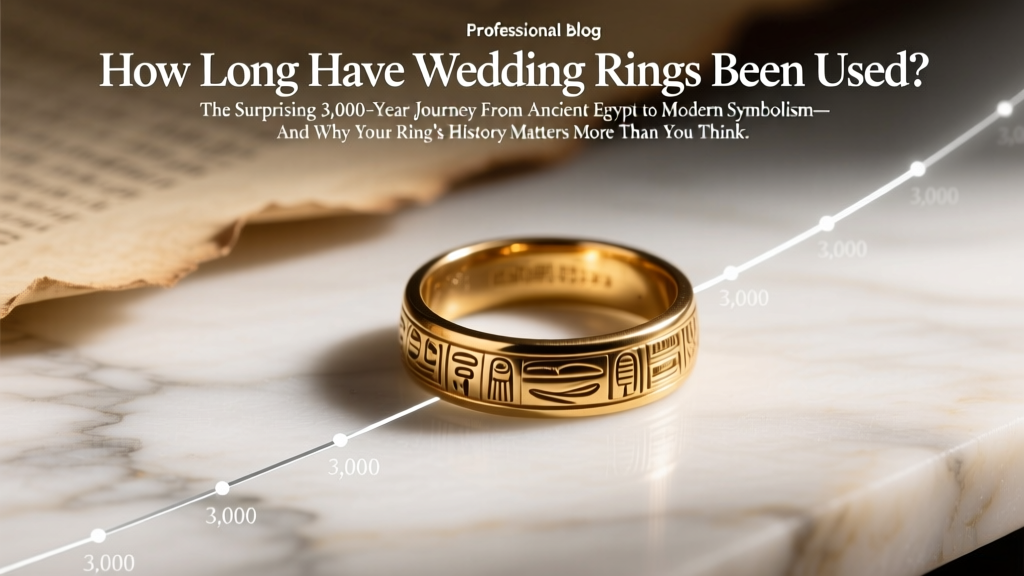 Wedding Ring History: 3,000 Years of Symbolism
 Silver Wedding Anniversary Meaning & Significance
 What Is the 19th Wedding Anniversary and How to Celebrate
 William and Harry at Charles-Camilla Wedding? Truth (2026)
 My Wedding Stories Sims 4 True Cost Breakdown
 Is a Wedding Photobooth Worth It? (2026)