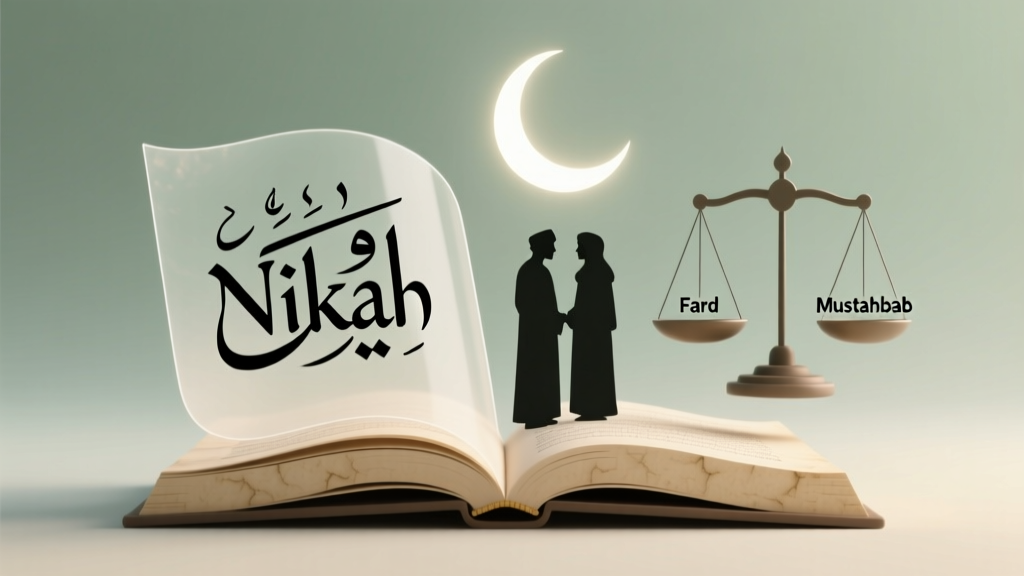
Is Wedding Farz in Islam? Scholars’ Verdict (2026)
Why This Question Matters More Than Ever Today
Across Muslim communities worldwide — from London to Lahore, Jakarta to Johannesburg — young adults are delaying marriage longer than any generation before them. Rising education costs, housing shortages, career uncertainty, and shifting social norms have made many wonder: Is wedding farz in Islam? Or is it merely recommended? This isn’t just theological curiosity — it’s a deeply personal, spiritually consequential question affecting life choices, mental well-being, and religious accountability. Misunderstanding the ruling can lead either to unnecessary guilt (if one believes it’s obligatory but delays without valid reason) or dangerous complacency (if one assumes it’s optional while struggling with persistent desire, isolation, or moral vulnerability). In this article, we go beyond surface-level answers — unpacking classical texts, modern fatwas, contextual conditions, and practical thresholds that transform nikah from mustahabb to fard.
What ‘Farz’ Really Means — And Why It’s Not Synonymous With ‘Good Idea’
In Islamic jurisprudence, farz (or fard) denotes an act that is absolutely obligatory — its omission without valid excuse incurs sin, and its performance earns divine reward. It differs sharply from mustahabb (recommended), mubah (permissible), makruh (disliked), and haram (forbidden). So when someone asks, is wedding farz in Islam?, they’re asking whether delaying or refusing marriage — under specific circumstances — constitutes disobedience to Allah.
The answer isn’t binary across all people at all times. Classical scholars unanimously agree: marriage is not universally fard for every Muslim at every age. Rather, it becomes fard conditionally — based on three interlocking factors: (1) physical maturity and sexual capacity, (2) genuine, persistent desire (shahwah) that cannot be reasonably controlled, and (3) the realistic ability to fulfill marital responsibilities (mahr, housing, maintenance).
Imam Nawawi (d. 1277 CE), in his authoritative Al-Majmu‘ Sharh al-Muhadhab, states: “If a person fears falling into zina due to strong desire and has the means, then marriage becomes fard upon him.” Similarly, Ibn Qudamah (Hanbali jurist) writes in Al-Mughni: “When one possesses desire and fears committing sin, and can afford marriage, it is obligatory — because preventing sin takes precedence over voluntary acts.”
When Does Nikah Cross From ‘Recommended’ to ‘Obligatory’? A Step-by-Step Threshold Analysis
Let’s move beyond abstract theory. Here’s how scholars assess real-world cases — using criteria validated across Hanafi, Shafi‘i, Maliki, and Hanbali schools:
- Physical & Psychological Readiness: Puberty is confirmed (via signs like menstruation, nocturnal emission, or age ~15–18), AND the individual experiences recurrent, intense sexual urges that disrupt worship, focus, or emotional stability.
- Moral Risk Assessment: There’s credible fear (khashyah) — not mere possibility — of committing zina, viewing haram content, or engaging in emotionally/physically compromising relationships. This isn’t hypothetical; it requires honest self-audit or consultation with a trusted mentor.
- Financial & Practical Capacity: The person can reliably provide mahr (even if modest), secure basic shelter (rental or family home with privacy), and sustain essential needs (food, clothing, healthcare) for themselves *and* a spouse — without debt that violates Islamic ethics (e.g., interest-based loans).
- No Valid Shariah-Permitted Excuse: Delaying due to sincere pursuit of knowledge (e.g., medical residency), caring for aging parents, or recovering from trauma may suspend the obligation — but only temporarily and with ongoing intention to marry when feasible.
A powerful real-world example comes from Darul Uloom Deoband’s 2022 fatwa archive: A 26-year-old software engineer in Bangalore reported chronic insomnia, anxiety, and repeated slips into haram interactions despite fasting and dhikr. After verifying his financial stability (₹45k/month income, ₹2L savings) and sincere effort, Mufti Mahmood Ashraf ruled: “Nikah is now fard upon you — not as a future ideal, but as immediate religious duty to protect your deen and akhlaq.”
What the Four Madhahib Agree On — And Where Nuances Emerge
While all major schools affirm conditional obligation, their emphasis and evidentiary weight differ slightly. Below is a comparative analysis grounded in primary sources and contemporary fatwa councils (Darul Ifta Egypt, Islamic Fiqh Academy Jeddah, UK’s Muslim Law Council):
| Madhhab | Core Position on Nikah Obligation | Key Evidence Cited | Practical Threshold Example |
|---|---|---|---|
| Hanafi | Strongly emphasizes affordability and stability. Nikah becomes fard only when one can meet *all* marital obligations without hardship. | Hadith: “O young people! Whoever among you can afford marriage, let him marry…” (Bukhari) | A 24-year-old teacher earning ₹28k/month with student loans may delay if debt repayment compromises long-term stability — even with desire. |
| Shafi‘i | Prioritizes moral safeguarding. Stronger emphasis on desire + fear of sin as primary triggers — even with modest means. | Quran 24:33: “And let those who find not the means for marriage keep themselves chaste…” — implying obligation *when means exist*. | A university student with part-time income and family support for housing may be advised to marry earlier if struggling with persistent temptation. |
| Maliki | Considers community context. If delaying marriage leads to widespread moral decline in one’s locality, collective responsibility increases individual urgency. | Maliki principle: dar’u al-mafasid muqaddamun ‘ala jalbi al-masalih (preventing harm takes priority over gaining benefit). | In neighborhoods with high rates of illicit relationships or social isolation, scholars may issue stronger encouragement — bordering on communal fard. |
| Hanbali | Most stringent on desire-based obligation. Even minimal financial capacity (e.g., shared accommodation, symbolic mahr) suffices if sin is feared. | Ibn Qudamah: “If he has desire and fears sin, and can afford even a simple ring, marriage is fard.” | A 22-year-old apprentice with ₹15k income and parental housing may be urged to marry — especially if engaged in frequent online interactions. |
Crucially, none of these schools consider nikah fard for minors, those with no sexual desire (e.g., due to medical conditions), or individuals with severe, untreated mental health conditions that impair consent or responsibility — unless medically reversible and addressed.
Frequently Asked Questions
Is nikah fard for women the same way it is for men?
Yes — the obligation applies equally to both genders when conditions are met. While cultural narratives sometimes frame marriage as ‘more urgent’ for women, classical fiqh treats the ruling identically: desire + capacity + fear of sin triggers fard status regardless of gender. Fatwa committees (e.g., Egypt’s Dar al-Ifta, 2021) explicitly reject gender-based double standards, citing Quran 24:30–31 commanding modesty and protection for *both* men and women.
Does being engaged (khitbah) fulfill the obligation instead of nikah?
No. Engagement is a non-binding agreement — not a legal contract. It carries no rights or responsibilities under Shariah. A person in khitbah remains fully subject to the same rules of interaction, dress, and seclusion as before. Only after the formal nikah contract — with witnesses, mahr, and mutual consent — does the marital relationship commence. Delaying nikah while remaining ‘engaged’ for years does *not* satisfy the fard condition.
What if I want to marry but can’t find a compatible partner? Is that a valid excuse?
It depends on effort. Scholars distinguish between ‘genuine difficulty’ (e.g., limited social circles, strict family vetting, geographic isolation) and passive waiting. The Prophet ﷺ said: “When a man whose religion and character please you approaches you [for marriage], marry [your daughter] to him” (Tirmidhi). Proactive, halal efforts — through family networks, reputable matchmakers, or community events — are expected. Years of inaction while scrolling dating apps or avoiding introductions invalidates the ‘excuse’.
Can student debt or unemployment permanently exempt me from this obligation?
No — but it may postpone it *temporarily*. The key is distinguishing between short-term hardship (e.g., 2-year master’s program) and long-term avoidance. If debt is interest-based (haram), resolving it becomes a priority *before* marriage. But if one earns enough for basic sustenance and has family support, scholars often advise proceeding with a simple, low-cost nikah — rejecting the myth that ‘big weddings’ are required.
Does converting to Islam make nikah immediately fard — even if newly Muslim?
No. New Muslims are granted a grace period to learn, stabilize, and assess readiness. However, if a revert experiences strong desire and lacks halal outlets, scholars (like Mufti Menk and Dr. Omar Suleiman) emphasize swift, supported steps toward marriage — including connecting with local masjids and marriage counselors. The obligation activates once conditions mature — not at shahadah.
Common Myths Debunked
Myth #1: “Marriage is always fard once you turn 25 — it’s written in hadith.”
No authentic hadith sets a fixed age. This misconception likely stems from misreading cultural norms as fiqh. Age alone is irrelevant; the determining factors remain desire, capacity, and moral risk — which vary widely by individual physiology, environment, and circumstance.
Myth #2: “If you’re pious — praying regularly and fasting — you don’t need to marry, because your ibadah protects you.”
Piety doesn’t negate biological reality or spiritual vulnerability. The Prophet ﷺ married Aisha (RA) young *and* instructed youth: “O young people! Whoever among you can afford marriage, let him marry…” (Bukhari). Worship and marriage are complementary protections — not substitutes. Many pious individuals still struggle with temptation; nikah provides divinely sanctioned structure for that reality.
Your Next Step Isn’t ‘Wait Until Perfect’ — It’s ‘Assess With Honesty and Act With Intention’
So — is wedding farz in Islam? The answer is nuanced but powerful: Yes — for those who meet the conditions. No — for those who don’t yet. And critically — it’s not about external pressure, but internal accountability before Allah. This isn’t a call to rush into marriage unprepared. It’s an invitation to conduct a sincere, confidential self-audit: Are you experiencing persistent, unmanageable desire? Do you fear slipping into haram? Can you meet the minimum Islamic requirements — not luxury expectations? If the answer to two or more is ‘yes’, then nikah shifts from a life goal to a religious duty.
Your next step isn’t booking a venue — it’s scheduling a conversation. Talk to a qualified, compassionate scholar who knows your context. Review your finances with transparency — not perfection. Involve your family early, but center your niyyah on pleasing Allah, not fulfilling expectations. And remember: the simplest nikah — witnessed, with agreed mahr, in a quiet masjid room — fulfills the fard just as powerfully as a grand celebration.
If you’re ready to move forward, download our free Nikah Readiness Checklist — a 7-point self-assessment tool co-developed with Islamic counselors and finance advisors. Or explore our directory of vetted, Shariah-compliant matchmaking services — all screened for transparency, privacy, and adherence to Islamic ethics.
More Articles
 Wedding Crisis Response: 7 Steps to Pivot with Dignity
 Is The Wedding Singer a Happy Madison Production?
 What Is Ash Weds? Wedding Industry Slang Explained
 Chandler Bing’s Wedding Budget: Salary, Rent & Ring
 Do Lefties Wear Wedding Rings on Right Hand?
 Victoria Beckham at Brooklyn’s Wedding: What Happened
 Did Kathy Attend Farrah's Wedding? The Truth
 How to Delay Your Period for Your Wedding Day Naturally
 What Is Wedding Anniversary? Meaning & History
 Wedding Soup: Does It Have Chicken? (2026)