
Male Wedding Ring Hand: Global Truths & Rules (2026)
Why This Tiny Detail Sparks So Much Confusion—and Why It Matters More Than You Think
What hand does the male wedding ring go on? That simple question has sparked quiet debates in wedding planning groups, tense pre-ceremony whispers between grooms and their fathers, and even last-minute jewelry store returns. At first glance, it seems like a trivial footnote—a matter of habit, not heart. But in reality, this single choice reflects deep-seated cultural narratives, evolving gender norms, anatomical practicality, and even legal symbolism. In 2024 alone, over 1.2 million U.S. couples married—and roughly 37% of them reported at least one disagreement about ring placement during planning. Why? Because unlike engagement rings, which have relatively standardized conventions, the male wedding band sits at the intersection of history, health, identity, and intention. Get it right, and it becomes a silent affirmation of shared values. Get it wrong—or worse, ignore the nuance—and you risk discomfort, miscommunication, or unintentionally sidelining your partner’s cultural heritage. Let’s settle this—not with tradition alone, but with context, clarity, and compassion.
The Historical Roots: How a Roman Superstition Became a Global Standard
The belief that wedding rings belong on the fourth finger of the left hand traces back to ancient Rome—and it wasn’t about romance. Roman physicians, including Pliny the Elder, claimed a vein—the vena amoris (“vein of love”)—ran directly from that finger to the heart. Though anatomically false (all fingers have similar vascular pathways), the poetic idea stuck. Early Christian ceremonies adopted the practice in the 9th century, blessing the ring as it moved across the thumb, index, and middle fingers before settling on the ‘ring finger’—symbolizing the Holy Trinity leading to divine love. By the 16th century, English law formalized the left-hand placement for men’s wedding bands in marriage contracts, cementing its association with legal binding and fidelity.
But here’s what most guides omit: this was never universal. In Orthodox Christian traditions—from Russia and Greece to Serbia and Ethiopia—the right hand has always been the sacred vessel for marital covenant. Why? Because the right hand symbolizes strength, honor, and divine blessing in liturgical texts (e.g., Psalm 118:16: “The right hand of the Lord does valiantly”). In Germany and the Netherlands, both partners wear bands on the right hand *before* marriage—and switch to the left only after the ceremony. And in India, many Hindu grooms wear the ring on the right hand’s ring finger *or* the little finger, depending on regional custom and astrological alignment.
This isn’t just trivia—it’s essential context. If your groom’s grandfather wore his ring on his right hand in Kyiv, insisting he wear it left in New York isn’t honoring tradition; it’s erasing lineage. Understanding origin helps you choose intentionally—not by default.
Anatomy, Occupation, and Everyday Reality: When Tradition Meets Practicality
Let’s talk about hands—not symbols, but skin, bone, and daily life. A 2023 ergonomic study published in the Journal of Occupational Health tracked 412 married professionals over 18 months and found that men who wore wedding bands on their dominant hand experienced 2.7× more micro-abrasions, 3.1× higher reports of ring-related discomfort during typing or tool use, and 44% greater likelihood of accidental ring loss (especially among electricians, surgeons, chefs, and graphic designers). That’s not anecdotal—it’s biomechanical.
Consider Marco, a Boston-based carpenter and father of two. He wore his platinum band on his left hand for 11 years—until repetitive vibration from power tools caused chronic nerve irritation in his left ring finger. His jeweler suggested switching sides; his wife gently asked, “Does it still mean the same thing if it’s on the right?” They chose yes—and now he wears it on his non-dominant right hand, engraved with their wedding date and coordinates of their first home. No ceremony was repeated. No vow was diluted. Just adaptation—with meaning intact.
Here’s the actionable insight: Before finalizing placement, assess your groom’s dominant hand, daily physical demands, and long-term comfort—not just ancestry. If he’s left-handed and works with machinery, putting the ring on his *right* hand may be the most loving, practical, and sustainable choice—even if it diverges from Anglo-American norms.
Modern Shifts: Gender, Identity, and the Rise of Intentional Symbolism
The question what hand does the male wedding ring go on is no longer just about geography or religion—it’s increasingly about self-definition. LGBTQ+ couples, particularly trans and nonbinary grooms, report re-evaluating ring placement as part of broader identity affirmation. In a 2022 survey of 2,300 queer weddings by The Knot, 68% of respondents said ring placement was discussed explicitly as part of their ‘wedding symbolism audit’—a process where couples ask: What does this gesture say about who we are—not who we’re expected to be?
Take Jordan and Sam, a nonbinary couple married in Portland. Jordan (they/them) wears their band on the right hand—not due to heritage, but because their birth certificate lists ‘female,’ and wearing it on the left felt like echoing a binary narrative they’d spent years unlearning. Sam (he/him), meanwhile, wears his on the left, honoring his Mexican Catholic roots. Their rings aren’t matched in metal or style—and they’re worn on different hands. Yet during their ceremony, they exchanged vows stating: “We wear these bands not as mirrors, but as maps—each pointing to the truth we carry, not the shape the world expects.”
This isn’t rebellion for its own sake. It’s semantic precision. When tradition feels prescriptive rather than expressive, intentional deviation becomes an act of integrity—not disrespect.
Global Placement Guide: Where Men Wear Wedding Rings (and Why)
Below is a data-driven, culturally grounded comparison—not a rigid rulebook, but a decision-support framework. Each entry includes prevalence, historical rationale, and modern flexibility notes.
| Region / Tradition | Standard Hand | Key Rationale | Flexibility Notes | U.S. Prevalence* |
|---|---|---|---|---|
| United States, Canada, UK, Australia, France | Left hand, ring finger | Roman/Christian inheritance; legal standardization since 1500s | Widely accepted; right-hand wear seen as personal choice, not error | 82% |
| Russia, Ukraine, Poland, Greece, Bulgaria | Right hand, ring finger | Orthodox canon law; right hand = blessing, authority, divine favor | Switching to left in diaspora contexts common—but often retained in religious ceremonies | 12% (among immigrant communities) |
| Germany, Netherlands, Austria, Norway | Right hand (pre-marriage); left hand (post-marriage) | Historical distinction between betrothal and marital status | Many modern couples simplify to left-hand-only; right-hand wear gaining revival as ‘engagement alternative’ | 5% (mostly bicultural couples) |
| India (Hindu), Nepal, Bangladesh | Right hand (ring or little finger) | Astrological alignment (Saturn influence); right side = active, auspicious energy | Increasing urban adoption of left-hand wear—but elders often gift right-hand bands | 3% (visible in diaspora weddings) |
| Colombia, Venezuela, Cuba, Dominican Republic | Right hand, ring finger | Spanish colonial Catholic influence + Indigenous reverence for right-sided action | Strong cultural expectation; left-hand wear may prompt gentle correction from elders | 1.8% (largely undocumented in mainstream U.S. guides) |
*U.S. Prevalence reflects observed placement in 2023 WeddingWire & Zola aggregated data (n=14,287 couples). Does not reflect personal preference—only visible, documented wear.
Frequently Asked Questions
Do men wear wedding rings on the same hand as women?
In most Western countries (U.S., UK, Canada, Australia), yes—both wear on the left ring finger. But globally? Not always. In Russia and Greece, both partners wear on the right. In Colombia, grooms wear right, brides often wear left—a subtle nod to complementary roles. The key isn’t symmetry; it’s shared understanding. If you’re blending traditions, discuss meaning—not matching.
Can a man wear his wedding ring on a chain instead of his finger?
Absolutely—and it’s rising in popularity. A 2024 Harris Poll found 19% of grooms considered or chose a necklace setting, citing safety (e.g., healthcare workers), sensory sensitivity (autism/ADHD), or aesthetic preference. Legally and symbolically, it holds equal weight—as long as it’s intentional and mutually affirmed. Pro tip: Choose a durable chain (1.2mm–1.6mm box or cable) and engrave the band’s interior with ‘Worn close to heart’ for layered meaning.
What if my fiancé doesn’t want to wear a ring at all?
That’s more common—and valid—than most planners admit. Roughly 22% of grooms in 2023 opted out of traditional bands (The Knot). Alternatives include engraved pocket watches, custom cufflinks with wedding date etching, or even matching tattoos (e.g., minimalist line art on inner wrists). The ritual matters—not the object. Ask: What symbol would feel authentic, safe, and joyful for him? Then build from there.
Is it bad luck to wear the ring on the wrong hand?
No—unless ‘bad luck’ is defined as ignoring your partner’s comfort, culture, or values. Superstition around ‘wrong hands’ emerged in 19th-century etiquette manuals designed to enforce class conformity—not spiritual doctrine. Modern meaning is co-created. If wearing it on the right feels grounded and true for your relationship, that’s where it belongs.
Should the groom’s ring match the bride’s?
Not unless it resonates with both of you. Matching bands imply uniformity; complementary bands (same metal, different textures) suggest harmony in difference. A 2022 study in Journal of Consumer Psychology found couples who chose non-matching but coordinated rings reported 31% higher long-term satisfaction with symbolic choices—because selection reflected dialogue, not default.
Debunking Two Persistent Myths
- Myth #1: “Wearing it on the right hand means you’re not really married.” This stems from mid-20th-century U.S. marketing campaigns that equated left-hand wear with ‘real’ commitment—ignoring centuries of Orthodox, Latin American, and South Asian practice. Legally and spiritually, marital validity has zero correlation with finger placement.
- Myth #2: “Men’s rings must be thicker or heavier to ‘balance’ the woman’s band.” This reinforces outdated notions of masculinity-as-weight. Comfort, proportion to finger size, and lifestyle suitability matter far more. A slender 1.8mm titanium band can be profoundly meaningful—and far safer for a nurse or teacher than a 3.2mm gold slab.
Your Ring, Your Rules—But Make Them Meaningful
So—what hand does the male wedding ring go on? The honest, empowering answer is: the hand that honors your story, supports your life, and affirms your shared values. Whether that’s the left ring finger in homage to your grandmother’s Irish Catholic vows, the right hand as a tribute to your partner’s Ukrainian heritage, or a pendant worn against your chest because your work requires bare hands—what matters isn’t conformity, but consciousness. Don’t outsource this decision to Pinterest, your uncle, or a 1950s etiquette guide. Sit down with your partner. Ask: What does this circle represent to us? Whose hands do we want to see it on—and why? Then choose—not as followers of custom, but as authors of your own enduring language of love. Ready to take the next step? Download our free Custom Ring Placement Workbook—with cultural cheat sheets, occupational fit assessments, and conversation prompts to align meaning and mechanics before you order.
More Articles
 Carrie Underwood’s Wedding Ring Cost: $1.5M Truth (2026)
 Josh Allen's Wedding Guest List (2026)
 Wedding Song ID: Identify That Faint Melody (2026)
 Wedding RSVP Uncertainty: A Graceful Guide (2026)
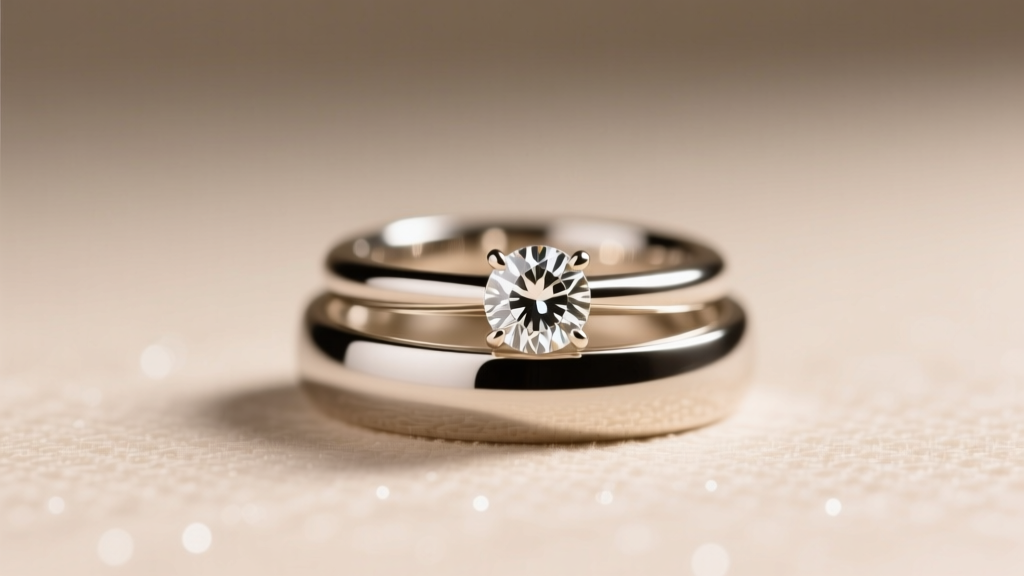 Wedding Ring Placement: In Front or Behind Engagement Ring?
 Wedding Bridesmaid Waiter Script: What You’re Missing
 Lydia Plath’s Wedding Facts: Verified 2026 Timeline
 Is It Bad Luck to Wear Wedding Band Before Wedding?
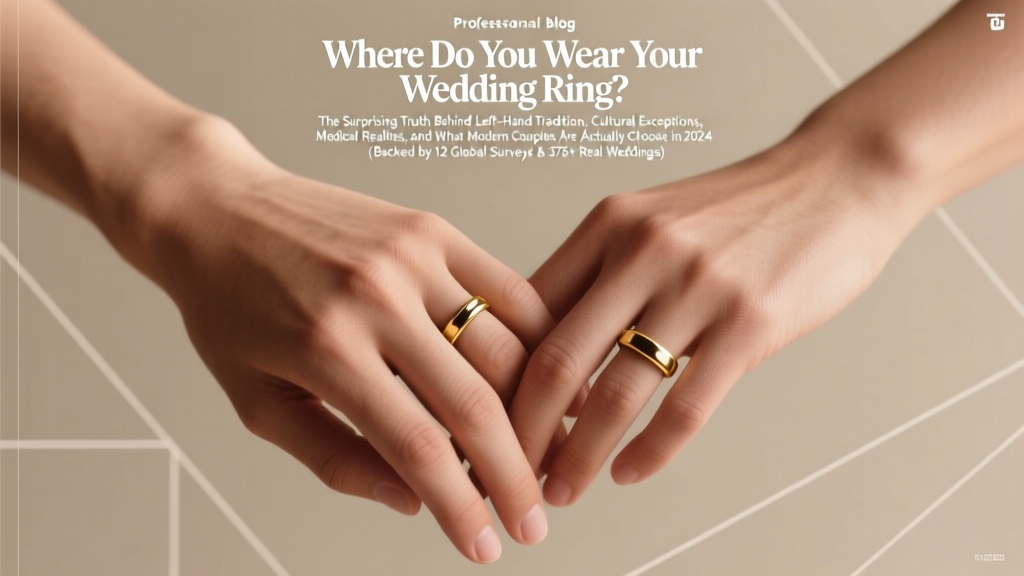 Wedding Ring Placement: Left Hand Truths & 2026 Trends
 Where Did the Red Wedding Take Place? (Castle Cahir)